Aterrados — The Rebirth of Ghost Stories in the Raw Grit of Buenos Aires
Demian Rugna revolutionizes paranormal horror—possessions, poltergeists, and all—by transplanting it to a residential neighborhood in Buenos Aires, armed with a devastating sound design that rattles your bones.

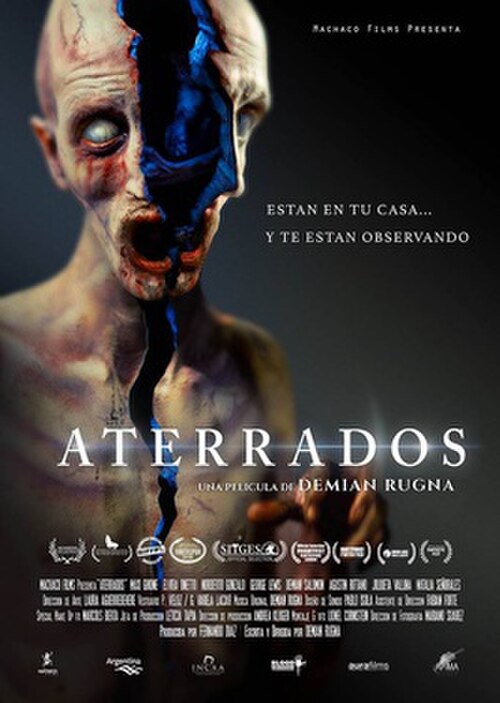


Here at the Claqueta Ácida headquarters, we’re sick and tired of Hollywood’s commercial horror—you know the drill: screeching violins cueing the jump scare three seconds before some digital ghost materializes in the mirror. We’re exhausted by the American film industry’s insistence on spoon-feeding fear to audiences, reducing horror to a pre-packaged biological reflex cooked up in some LA editing bay. That’s why Argentine director Demián Rugna’s knockout punch with Aterrados (2017) feels like one of the most thrilling, bizarre, and genuinely terrifying milestones in the history of Spanish-language paranormal cinema. With the force of a sledgehammer to the ribs, Rugna proves that the most nightmarish domestic horrors don’t need gothic Victorian mansions, posh European boarding schools, or London-imported fog. No—the horror, this iconoclastic filmmaker tells us, lurks in your neighbor’s living room, behind the cheap wallpaper, and under the laminate flooring you tread on barefoot every morning.
The premise unfolds with brutal efficiency, stripping away any melodramatic preamble: on an unremarkable, quiet street in the Buenos Aires suburbs, paranormal phenomena erupt with shocking, inexplicable physical violence. There’s no gradual escalation here—these horrors detonate in the viewer’s face. A woman is battered to death by an invisible force in her bathroom, her body ricocheting off the walls in a grotesque, blood-freezing dance; a hapless neighbor is tormented by a lurking presence with impossible limbs, skulking in the shadows of his bedroom; and, in a narrative masterstroke, a boy dead for weeks spontaneously returns from the cemetery to sit at his grieving mother’s kitchen table, leaving behind a trail of dirt and a tomb-like silence that chills to the marrow. Overwhelmed by a neighborhood that’s become the antechamber of hell itself, Commissioner Funes—an everyman with health issues who just wants a quiet retirement—gets dragged into the fray by a trio of veteran occult investigators and anomaly scientists. This motley crew decides to lock themselves in the three haunted houses overnight, documenting the spatial anomalies with technical equipment as events spiral beyond all human logic.
The best
- Devastating sound design: The bone-crunching thuds, the muffled blows tearing through walls, and the unnerving whispers craft an unforgettable auditory terror that haunts you long after the theater lights come up.
- The physicality of the supernatural: These aren’t ethereal digital specters—they feel real, corporeal, heavy, and dangerously tangible, giving every apparition a visceral, brutal violence.
- No Hollywood clichés: Rugna grounds horror in the everyday reality of a Buenos Aires neighborhood, swapping epic churches and exorcisms for the raw grit of a local precinct and the mundane dynamics of suburban life.
- Bold visual brutality: The film never flinches in its most disturbing moments, capturing death and decay with a brutal honesty that elevates pure horror to an art form.
The worst
- Fragmented structure: The film jumps between houses a bit abruptly in its middle act, which might disrupt the narrative flow for viewers accustomed to a single, linear storyline.
- Tight budget: Some very specific CGI effects (like the distant digital modeling of the woman floating in the bathroom during the opening flashbacks) betray the project’s modest means, slightly undercutting the otherwise spectacular and terrifying practical achievements.
Sounds that shatter sanity and shadows of flesh and blood
What makes Aterrados work on a masterful level is its sound design and the sheer physicality of its fear. Rugna doesn’t film translucent CGI ghosts that float through hallways without breaking a sweat—his creatures have weight. They shuffle, splinter furniture, claw at walls for real, and emit dry, cracking sounds that gnaw at the viewer’s mind. The film’s sound design is a masterpiece of psychological torture: the thuds from the neighbor’s wall, vibrating with a dull, metallic, obsessive rhythm, or the constant drip of putrid water seemingly seeping from unknown dimensions, build an atmosphere of sensory unease and absolute suspense from which there’s no escape. Every creak of the house’s structure becomes a potential threat, turning the acoustic space into a death trap where silence isn’t relief—it’s the prelude to imminent violence.
The screenplay, meticulously crafted by Rugna himself, stands out for its refusal to condescend with explanations. You won’t find any hack demonologists spouting musty Latin from some ecclesiastical handbook, no crucifixes flipping upside down for cheap scares, no saving religions bringing light to the end of the tunnel. There are only deeply human scientists, overwhelmed by a physical distortion of dimensions (some kind of "rift" or spatial contamination) they can’t fully grasp, systematically devoured as the night wears on. The iconic scene where Commissioner Funes stares at the dead boy sitting in the kitchen—rigor mortis cruelly etched into his waxy, damp skin, his gaze lost in absolute emptiness, surrounded by monotonously buzzing flies—is one of the most raw, chilling, and hauntingly beautiful shots in contemporary cinema. It’s an image seared into the retina precisely because it rejects cheap theatrics: the horror lies in the sheer stillness of what should be buried.
The Verdict of Claqueta Ácida
Aterrados is a timeless masterpiece of paranormal horror and the film that rightfully crowned Demián Rugna as the new messiah of Latin American genre cinema. It restores a sense of atavistic, primal, and utterly irrational fear to a sickly cinephilia, using ordinary spatial suspense, a fascinating original mythology, and a bold, uncompromising mise-en-scène. A must-watch from our "rare gems" section, this film dynamites established canons and, we swear on our cinematic soul, will have you checking under—and around—your bed immediately. 💀
🎬 Tráiler Oficial
Abrir en YouTube
Ending Explained: Aterrados
Ficha de Daños Colaterales en Sala
Certificado de impacto psicofísico emitido por Odin Lagbert
Cero. La pantalla absorbió cada segundo de atención disponible.
El móvil permaneció en el bolsillo donde debía estar.
Ninguna. Esta obra no necesita muletas estimulantes.
"No aplica. La obra se sostiene sola."
💬 El Veredicto de la Comunidad
¿Qué te ha parecido la película? Deja tu nota de 0 a 10 para contrastarla con el análisis de la redacción.
Aún no has votado
📢 ¿Te ha gustado el ácido?
Comparte esta crítica con tus amigos cinéfilos o desata la polémica en redes.
⚡ THE CINEMATIC VENOM YOUR INBOX CRAVES
No sugarcoated ratings, no corporate fluff. Subscribe for our uncensored weekly analysis or join the private Telegram for press previews, poll clashes, and instant alerts.
Alertas de estrenos en 1 segundo, encuestas en caliente y audios al salir de pases de prensa.
Recibe la dosis semanal en tu mail + regalo inmediato del PDF con 50 joyas ocultas de culto.
Related Reviews
Recommended autopsies for demanding film buffs.
 🔥 Fusión Nuclear9.5
*"When Evil Lurks: The Rural Gut-Punch That Redefined Satanic Horror"*
⚡Del mismo director (Demian Rugna): analiza la evolución o degradación de su estilo.
*Demian Rugna delivers a rural horror masterpiece about a demonic possession epidemic in the Argentine pampas that shatters every moral boundary in its path.*
 🔥 Fusión Nuclear8.5
*Alleluia: Love as a Terminal Illness (or How to Turn Crimes of Passion into a Sweaty, Fleshy Spectacle)*
⚡Afinidad temática directa en atmósfera, estilo y fijaciones visuales.
Fabrice Du Welz reimagines the myth of the lonely hearts killers in a feverish whirlwind of jealousy, submission, and blood, led by Lola Dueñas in a performance that’s equal parts hypnotic and harrowing.
 🔥 Fusión Nuclear8.5
*High Tension (Haute Tension): The Brutal Birth of the New French Extremism – Or How to Turn Flesh into Poetry with a Machete*
⚡Afinidad temática directa en atmósfera, estilo y fijaciones visuales.
Alexandre Aja shocked global screens with a relentless rural bloodbath, redefined by breakneck pacing and a divisive twist that splits serious cinephiles right down the middle.
Editorial Ecosystem
Cinephile connections, archive interviews and related analyses.
🎞️ In Claqueta Cinematheque1
💬 Debate Cinéfilo & Autopsia de Lectores
0 veredictos¿Discrepas con nuestra nota? ¿Es una obra maestra o veneno puro? Deja tu veredicto abajo sin necesidad de registro.


Aún nadie ha dejado su veredicto para esta película.
Sé el primero en clavarle el colmillo rellenando el formulario de arriba.