Live — The Dissolution of Flesh in the Mediatic Mud
Dhruv Tripathi films a descent into the depths of journalism in Live, where identity dissolves like stolen sand.
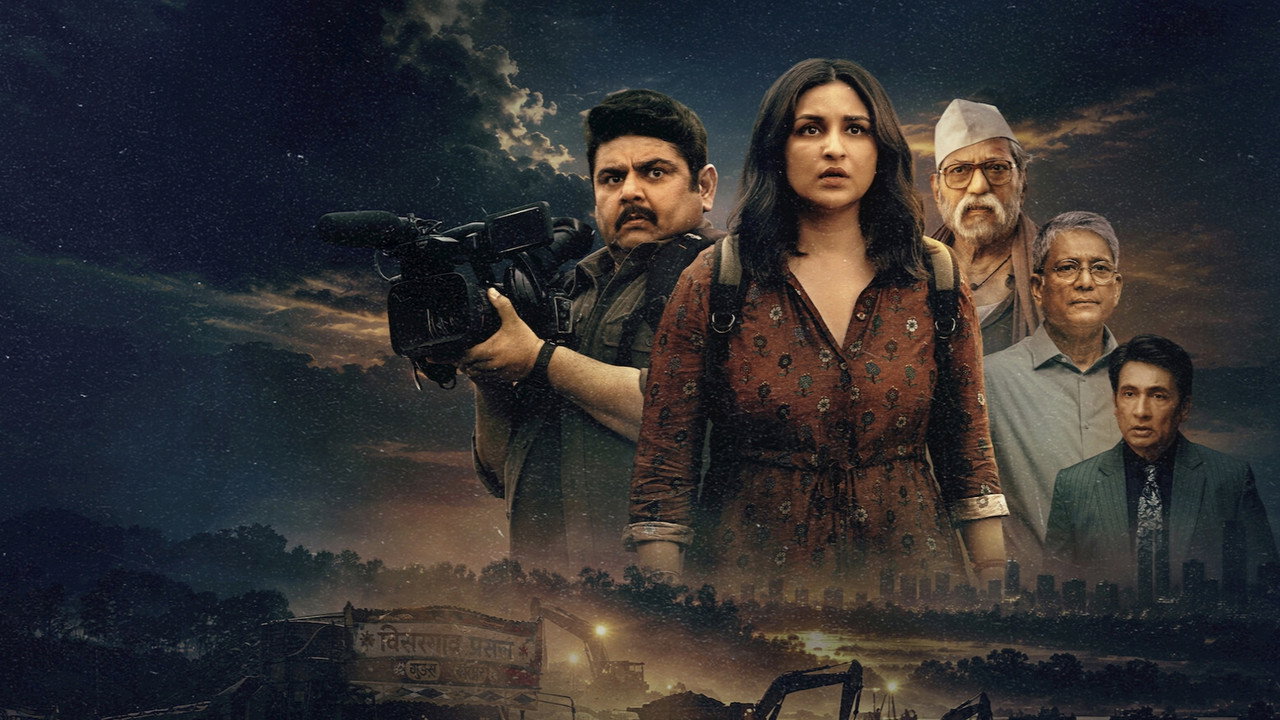
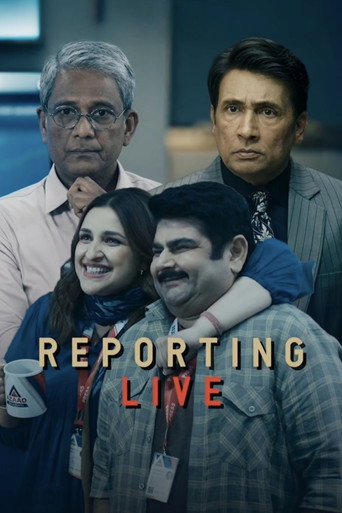
Live: full review
There is a morbid fascination in contemplating how contemporary journalism devours itself, swallowing its own informational entrails until only the hollow echo of a headline remains. When we approach screens saturated with manufactured urgency, we rarely find an honest dissection of what it means to hunt for an exclusive on the margins of the mud. Old Monk Entertainment produces this harsh immersion that places us before the whirlwind of an industrial system where the earth itself disappears from under the feet of those who try to document it. We are not facing a typical well-intentioned tale about civic bravery against the offices of power, but rather an exercise in constant friction where the very act of recording reality becomes just another contaminant of the landscape.
Dhruv Tripathi builds a proposal that rejects the clichés of the conventional denunciation thriller to immerse us in a dynamic of perpetual suction. The premise presents a reporter and her camera venturing into the territories where a ruthless network of illegal sand extraction operates. We might be tempted to read this conflict as a simple ecological metaphor about corporate greed, but the true engine of the film runs on a much more intimate and desolate plane. The sand disappearing from the riverbeds is not just the resource stolen by faceless mafias; it is the very matter that sustains the identity of those who observe it, a physical reminder that what you try to capture ends up erasing you.
Tripathi's staging relies on the accumulation of tense silences and the suffocation of open spaces turned into deadly traps. Far from seeking gratuitous visual pyrotechnics, the direction trusts in the physicality of bodies and the weight of the elements to convey the wear and tear of its protagonists. Every frame breathes a dense humidity, an accumulated fatigue that pierces the screen and turns the act of informing into a biological sentence. The narrative structure advances with the patience of an oil slick, dragging the viewer into gray zones where the distinction between seeking the truth and being complicit in the disaster becomes imperceptible.
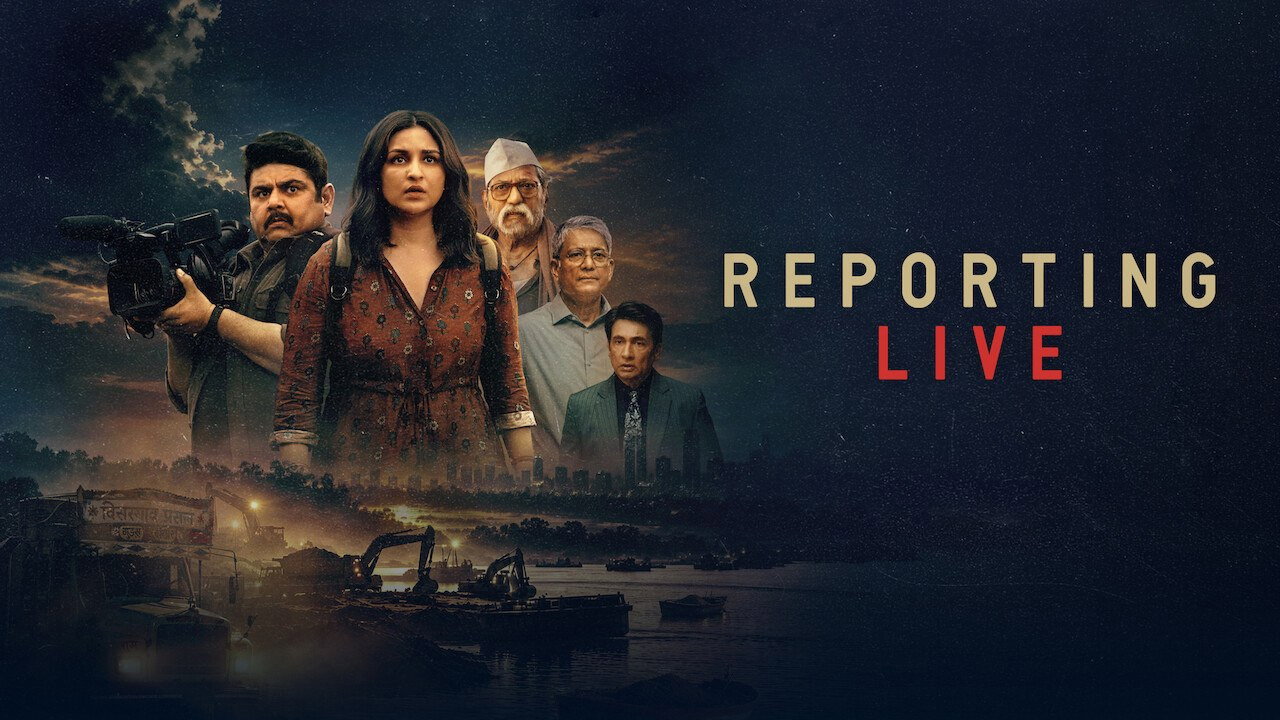
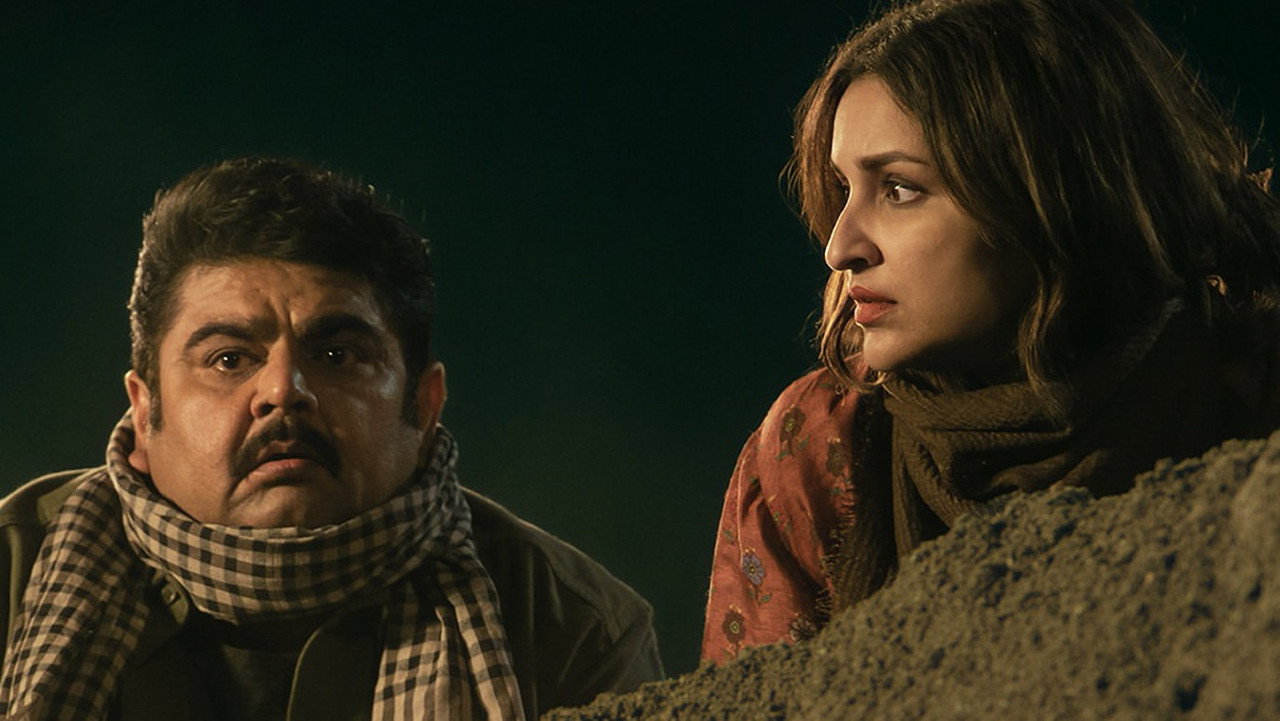
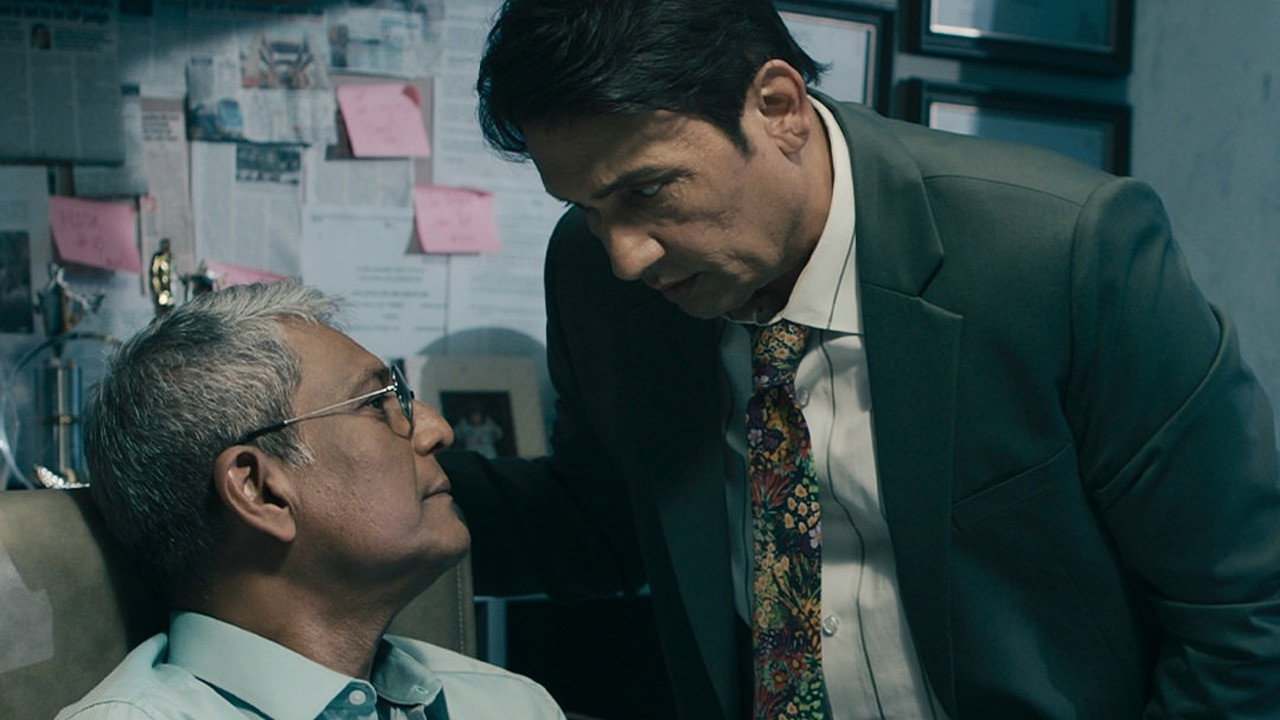
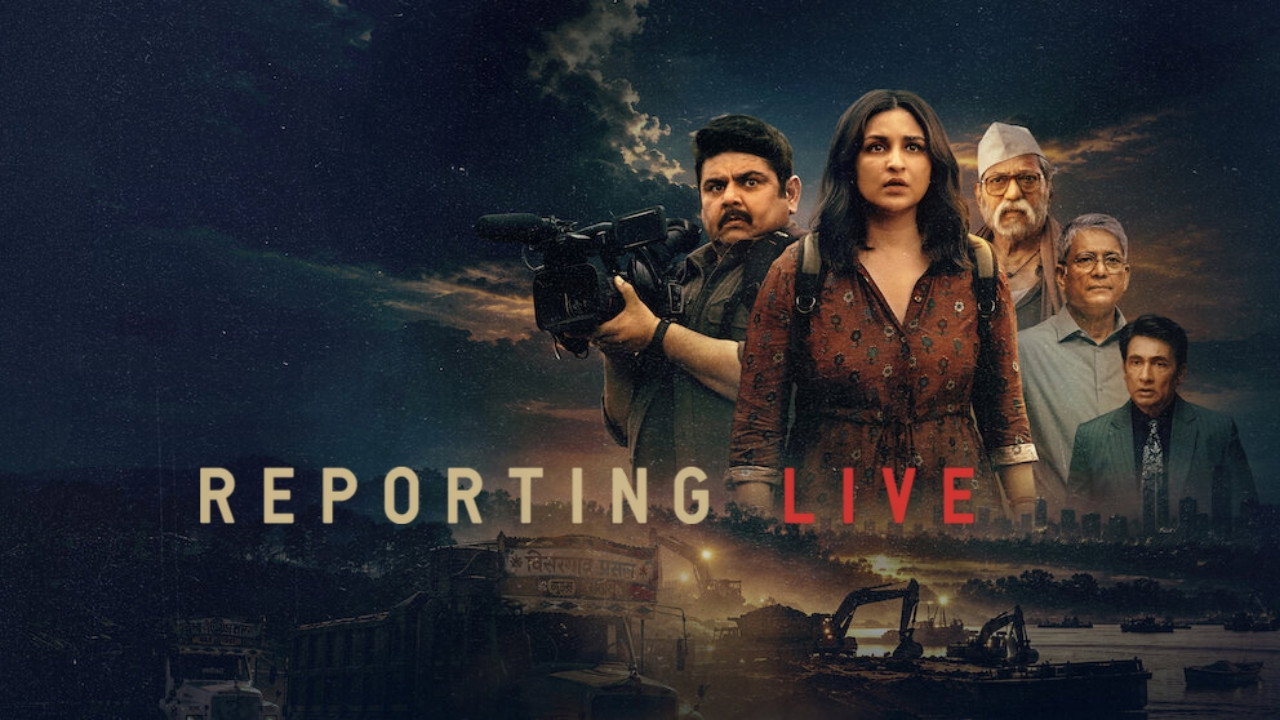
At the center of this suffocating gear, the interpretive work provides the necessary flesh so that the tragedy does not remain a mere abstract concept. Parineeti Chopra embodies Sandhya with a feverish urgency, giving her character a weariness that transcends the script and settles directly into her tired gaze. Beside her, Deven Bhojani acts as a faithful but fragile counterpoint, the cameraman whose only anchor to objective reality is the viewfinder of his equipment. The interventions of a well-dosed ensemble cast, where names like Adil Hussain and Shekhar Suman stand out, amplify the sensation that this mafia web is not a one-off exception, but the stale air breathed in every corner of the territory.
Direction and Staging
Dhruv Tripathi opts for a radical sobriety that unsettles, moving away from the aesthetic artifices of modern television to embrace the rigor of trench documentary. The camera moves with deliberate heaviness, recording the environment as if it were a living creature stalking the characters. There are no concessions to visual effect; the staging fully trusts in spatial tension, making every wasteland and every dusty office function as invisible cells from which escape is impossible.
Performances and Dramatic Pulse
The cast's work avoids the histrionics of commercial cinema to take refuge in contained and dry interpretations. Parineeti Chopra conveys with absolute physical precision the transformation of an ambitious professional into a traumatized spectator of her own finding. The chemistry of wear and tear with Deven Bhojani sustains the moments of greatest dialectical tension, while the secondary appearances of figures like Nassar and Saswata Chatterjee provide the dull threat of a system that does not even need to raise its voice to crush the unsuspecting.
Technical and Sound Department
The work of R. Velraj in cinematography dispenses with chromatic artifices, betting on an earthy and dusty palette that imbues every frame with a sensation of tangible dirt. For its part, the soundtrack composed by Zubin Balaporia avoids sentimental or epic underlines, preferring grave electronic textures and low frequencies that simulate the dull heartbeat of the earth being excavated in the shadow. The sound design accompanies this unease, making the crunch of gravel and the distant murmur of the wind function as a constant reminder of the imminent catastrophe.
The best
- The performance of Parineeti Chopra: She brings a physical vulnerability and emotional wear that avoid any temptation of posed heroism.
- The direction of Dhruv Tripathi: It maintains a firm and suffocating pulse without resorting to the shortcuts of the most predictable commercial thriller.
- The earthy atmosphere: The cinematography and sound design build an unhealthy physical environment that absorbs the viewer from the first minute.
The worst
- Some bumps in the central rhythm: Certain script transitions unnecessarily slow down the narrative pulse before the final stretch.
- The treatment of some antagonists: Certain profiles of the mafia organization brush against the archetype instead of delving into their everyday perversity.
The Verdict of Claqueta Ácida
Live demonstrates that cinematic journalism can still smell of sweat and real mud when it dares to look into the abyss without a safety net. Dhruv Tripathi does not offer us a lesson in comfortable morality, but an autopsy without anesthesia to ambition and the informational void. It is a work that unsettles, that dirties the hands, and that reminds us that the truth is never clean when it is forcibly torn from the entrails of the earth. A wild reminder that sometimes, when you turn on the camera, the only thing you manage to record is your own disappearance. 💀
Live: frequently asked questions
- What is the rating of "Live" on Claqueta Ácida?
- "Live" scored 6.8/10 on Claqueta Ácida in the review by Lúa Ácida.
- Is "Live" worth watching?
- With reservations. We gave it 6.8/10 (Citric Acid), our rating for uneven films with something worth saving.
- Who directed "Live"?
- "Live" was directed by Dhruv Tripathi.
Theater Collateral Damage Report
Psychophysical impact certificate issued by Lúa Ácida
Cero bostezos; la arena se mete en los ojos demasiado rápido como para cerrar los párpados.
Ninguna tentación de mirar el cronómetro; el lodo atrapa la mirada desde el primer plano.
Un trago de café amargo y frío, tomado de pie y con la pantalla parpadeando en la oscuridad.
"El instante en que la cámara deja de registrar la noticia para convertirse en un objeto más abandonado en la orilla."

The rebuttal from Odin Lagbert (Senior Cynicism Academic)
In stark disagreement with the review given by Lúa Ácida.
“La ingenuidad de Lúa Ácida, que confunde la miseria con la profundidad, me resulta casi conmovedora en su ignorancia. Tripathi no disecciona el periodismo; lo embalsama en un *pastiche* de thriller social que huele a guion de taller de escritura. Su *mise-en-scène* es tan plana como la arena que supuestamente roba, careciendo de la tensión rítmica que exige el género. No hay fricción, solo un *onanismo autoral* disfrazado de denuncia, donde la cámara se esconde tras la comodidad de un *nihilismo burgués* que observa el sufrimiento ajeno sin mojarse las botas. Es una *mignardise* amarga, servida con la pretensión de ser un manjar, pero que deja el paladar vacío. La reportera no es un símbolo, es un estorbo narrativo. El cine de autor no se construye con buenas intenciones, sino con una arquitectura visual que aquí no existe. Tripathi filma el lodo, pero no lo habita. Es cine de museo, no de calle.
💬 Community Verdict
What did you think of the film? Rate it from 0 to 10 to compare it with the editorial review.
You haven't voted yet
📢 ¿Te ha gustado el ácido?
Comparte esta crítica con tus amigos cinéfilos o desata la polémica en redes.
⚡ THE CINEMATIC VENOM YOUR INBOX CRAVES
No sugarcoated ratings, no corporate fluff. Subscribe for our uncensored weekly analysis or join the private Telegram for press previews, poll clashes, and instant alerts.
Alertas de estrenos en 1 segundo, encuestas en caliente y audios al salir de pases de prensa.
Recibe la dosis semanal en tu mail + regalo inmediato del PDF con 50 joyas ocultas de culto.
Related Reviews
Recommended autopsies for demanding film buffs.
 ⚡ Ácido Cítrico 6.0
Adolescence, Sex, and Death at Camp Miasma: The Slasher That Reeks of Teen Sweat and a Recycled Script
⚡ Hermana de saga: otro capítulo diseccionado con rigor forense.
Jane Schoenbrun turns a summer camp into a dumpster fire of hormones and clichés. Art or autopsy of a dying subgenre?
 ⚠️ Ácido Sulfúrico 3.0
Babybacks: The Low-Budget Knockout Nobody Asked For (And We All Deserved)
⚡ Hermana de saga: otro capítulo diseccionado con rigor forense.
Geno Marx serves up a platter of rotten ribs in 'Babybacks,' a gore-laden disaster with more fat than script. Art? Not even in your wildest nightmares. Fun? Only if you enjoy pain.
 ⚠️ Ácido Sulfúrico 4.0
Bad Haircut: The Haircut Nobody Asked For and the Cinema Nobody Deserves
⚡ Hermana de saga: otro capítulo diseccionado con rigor forense.
Kyle Misak gifts us a 'hood thriller' with more dandruff than suspense and more clichés than hair in a brush. Dr. Cynicism dissects this disaster with a barber’s scalpel.
Editorial Ecosystem
Cinephile connections, archive interviews and related analyses.
💬 Debate Cinéfilo & Autopsia de Lectores
0 veredictos¿Discrepas con nuestra nota? ¿Es una obra maestra o veneno puro? Deja tu veredicto abajo sin necesidad de registro.


Aún nadie ha dejado su veredicto para esta película.
Sé el primero en clavarle el colmillo rellenando el formulario de arriba.