Gladiator II — Ridley Scott’s Roman Circus—Where Digital Sharks and Testosterone Overdoses Rule the Arena
A review of Ridley Scott’s long-awaited sequel—a colossal spectacle that dazzles in its naval battles but lacks the dramatic nobility and mystique of the original classic.

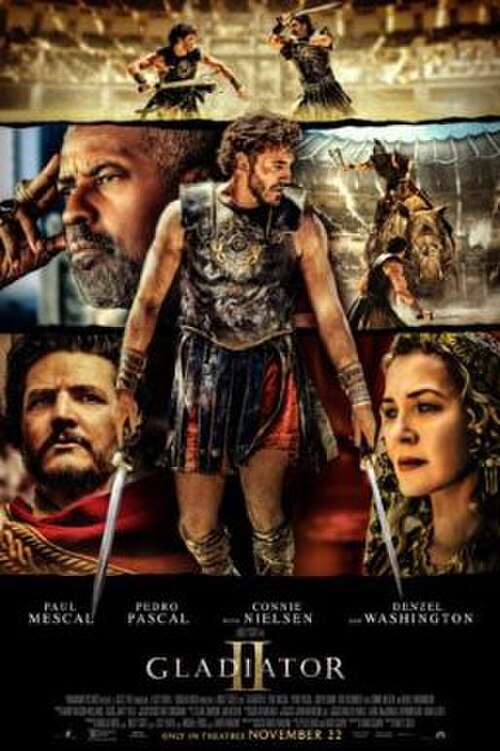


Gladiator II: Ridley Scott Opens the Coliseum… and Drops the Curtain on Historical Shame
Twenty-four years after Gladiator (2000) gifted us one of the most parodied lines in cinema history—"What we do in life… echoes in eternity"—Ridley Scott has decided it was high time to dig up his own film’s corpse and give it a second chance… or rather, a second burial. Because Gladiator II isn’t a sequel; it’s a Roman sideshow where historical accuracy, narrative coherence, and good taste were crucified in the arena before the show even started. At eighty-six, Scott has lost not just his social filter but any semblance of self-awareness. The result is a hyper-caffeinated circus that oscillates between accidental fun and unintentional delirium, as if someone blended 300 with Jurassic Park and drizzled some I, Claudius on top for a veneer of prestige.
Lucius: Maximus’s Bastard Son Who Never Asked to Be a Hero (And Neither Did We)
The protagonist of this epic is Lucius (Paul Mescal), the supposed secret son of Maximus Decimus Meridius—a character Ridley Scott and screenwriter David Scarpa (the same genius behind Napoleon) pulled out of thin air like a telenovela plot twist. Lucius has been living under an alias in North Africa, as if the Roman Empire were an episode of The Fugitive, until the Roman army, led by General Marcus Acacius (Pedro Pascal, playing yet another noble, weary hero in his career), decides to invade his home. The result? Lucius is captured, sold into slavery, and thrown into the arena, where he discovers his destiny is to avenge the twin emperors Geta and Caracalla (Joseph Quinn and Fred Hechinger), two psychopaths with more feathers than a peacock at a Pride parade.
The problem? Lucius has half the charisma and dramatic weight of Maximus. Russell Crowe in the first film was a wounded titan, a man broken by betrayal but still standing like a colossus. Mescal, on the other hand, plays an angry young man who looks more like an ancient influencer than a legendary gladiator. His performance isn’t bad—he’s got chops—but he lacks that magnetic presence that made Maximus unforgettable. It’s as if Scott tried to clone Crowe but only managed to get a community theater understudy.
Denzel Washington: The Only Emperor Worth a Damn in This Circus
If there’s one thing saving Gladiator II from total shipwreck, it’s Denzel Washington, who steals the movie as Macrinus, a hedonistic, manipulative villain with more layers than a rotten onion. Washington is in a different acting league compared to the rest of the cast: every glance is a dagger, every line a veiled threat. Macrinus isn’t just another villain; he’s a shadow emperor, a man who savors the game of power like a cat toying with a mouse before devouring it. His chemistry with Mescal is the closest this film gets to a moral compass, though even here, Scott seems more interested in digital effects than deepening their dynamic.
The rest of the cast gets lost in the chaos. Pedro Pascal does what he can with a character who’s little more than a walking cliché: the noble general, tired of war, finding redemption in the arena. Connie Nielsen reprises her role as Lucilla, but her part is so reduced she feels like a cameo. And then there are Geta and Caracalla, the twin emperors, played by Joseph Quinn and Fred Hechinger like two punk drag queens at an Ibiza afterparty. Their over-the-top histrionics border on the ridiculous, as if Scott confused Gladiator with Baz Luhrmann’s Romeo + Juliet. No nuance, no depth—just two clowns with crowns screaming, insulting, and stabbing each other for the throne like they’re on an ancient reality show.
Ridley Scott and His CGI Obsession: When the Coliseum Becomes a Water Park
What defined the original Gladiator was its physical brutality. The arena battles were dirty, bloody, and real: real tigers, swords cutting flesh, gladiators sweating and bleeding like human beings. In his infinite wisdom, Ridley Scott has decided that realism is boring and turned Gladiator II into a feast of mediocre digital effects. The most glaring example is the naumachia (naval battle inside the Coliseum), where gladiators fight in a pool infested with computer-generated sharks straight out of Sharknado. Yes, you read that right: sharks in the Roman Coliseum. Apparently, the Romans didn’t just build the Pantheon and the Segovia Aqueduct—they also invented the ancient world’s Jurassic Park.
But the sharks aren’t the worst of it. Oh no. Scott also treats us to digital rabid mandrills attacking gladiators like extras from Dawn of the Planet of the Apes: The War. These monkeys aren’t just ridiculous in their animation—they look like 1990s stop-motion puppets—they suck all credibility out of the action scenes. Instead of feeling the tension of a life-or-death battle, the audience is left wondering: "Seriously? A monkey? Seriously?"
John Mathieson’s cinematography, however, does manage to capture some visual grandeur. Rome remains a spectacle of gold, marble, and blood, with a color palette shifting between imperial gold and bloody red. But even here, Scott sabotages his own work with unnecessarily cluttered shots and editing that feels sped up in post-production, as if someone hit fast-forward in the third act.
The Score: When Harry Gregson-Williams Surrenders to Dolby Atmos
The music of Gladiator was a masterpiece by Hans Zimmer and Lisa Gerrard—a symphony of ethereal choirs and epic percussion that elevated every scene to mythic status. In Gladiator II, Harry Gregson-Williams—Scott’s go-to composer—tries to emulate that style but ends up sounding like a cheap remix. There are moments when the score achieves some grandeur, especially in Macrinus’s themes, but overall, it sounds generic, like it was composed by a Spotify algorithm for an "Epic Cinematic" playlist.
The problem isn’t just the music—it’s how it’s used. Scott employs it as a constant emotional highlighter, as if he fears the audience won’t grasp that a scene is dramatic. Instead of letting the action speak for itself, the score screams: "THIS IS SAD! THIS IS EPIC!", like a high school teacher explaining Don Quixote to students who just want to go to recess.
Odious Comparisons: When the Original Is a Mirror That Reflects Your Ugliness
Comparing Gladiator II to its predecessor is like comparing a filet mignon to a gas station burger: both are meat, but one has texture, flavor, and dignity, while the other is a shapeless mass of grease and regret. The original Gladiator was a Shakespearean tragedy dressed as a Roman epic: a betrayed man, a corrupt empire, a vengeance that transcended the personal to become something almost mythic. Gladiator II, on the other hand, is a soulless action blockbuster, where revenge is just a MacGuffin to justify two and a half hours of digital fights and dialogue that sounds like it was written by an AI bot.
The first film had dramatic weight. Maximus wasn’t just a gladiator; he was a symbol: of loyalty, honor, resistance against tyranny. Lucius, meanwhile, is nothing. He’s an angry young man who wants to kill two emperors because… well, because the script says so. There’s no deep motivation, no emotional arc to connect with. It’s as if Scott forgot that cinema isn’t just spectacle—it’s emotion too.
The Target Audience: Who the Hell Is This For?
Gladiator II isn’t made for fans of the original, nor for lovers of historical cinema, nor even for audiences seeking a memorable movie experience. It’s made for the crowd that goes to the theater on a Sunday afternoon with a bucket of popcorn and a giant Coke, who don’t care if the plot makes sense or if the digital effects look like they’re from a 2000s video game. It’s pure, unpretentious entertainment, with no depth, no ambition, nothing to make you think or feel beyond the ninety minutes it runs.
And in that sense, it succeeds. It’s not a bad movie in the traditional sense—it’s not The Room or Catwoman—but it’s an empty movie, like a sandcastle built on quicksand. You have fun while it lasts, but as soon as you leave the theater, nothing remains. No character to remember, no scene that moved you, not even a line worth repeating.
The best
- Denzel Washington is the true emperor: Macrinus is such a charismatic villain that the rest of the cast looks like a bunch of extras from a low-budget casting call. Denzel doesn’t just steal scenes—he steals the whole movie and sells it on the black market.
The worst
The twin emperors: A reality show in ancient Rome: Geta and Caracalla are so over-the-top they feel like they walked out of a Saturday Night Live* sketch. If the goal was to show the empire’s decadence, all they’ve achieved is an unintentional parody of the British monarchy.- The CGI overkill: Sharks, mandrills, and gladiators that look like they’re made of Play-Doh: Ridley Scott has decided realism is for cowards, and the result is a Roman theme park where digital effects make historians weep and kids laugh.
The Verdict of Claqueta Ácida (6.5/10)
Gladiator II is the cinematic equivalent of a Sunday afternoon all-you-can-eat buffet: lots of noise, lots of color, lots of movement, but in the end, you’re left with the feeling that you ate something that tasted good in the moment but didn’t sit well. Ridley Scott delivers a colossal spectacle, yes, but as soulless as the Coliseum after a failed naumachia. It’s got action, stars, even a few moments of isolated brilliance (thanks, Denzel), but it lacks the one thing that mattered in the original: heart. A sequel you’ll enjoy with a large soda and popcorn, but you’ll forget before the credits finish rolling. If this is the best epic cinema can offer in 2024, maybe it’s time to let the Roman Empire fall once and for all.🎬 Tráiler Oficial
Abrir en YouTube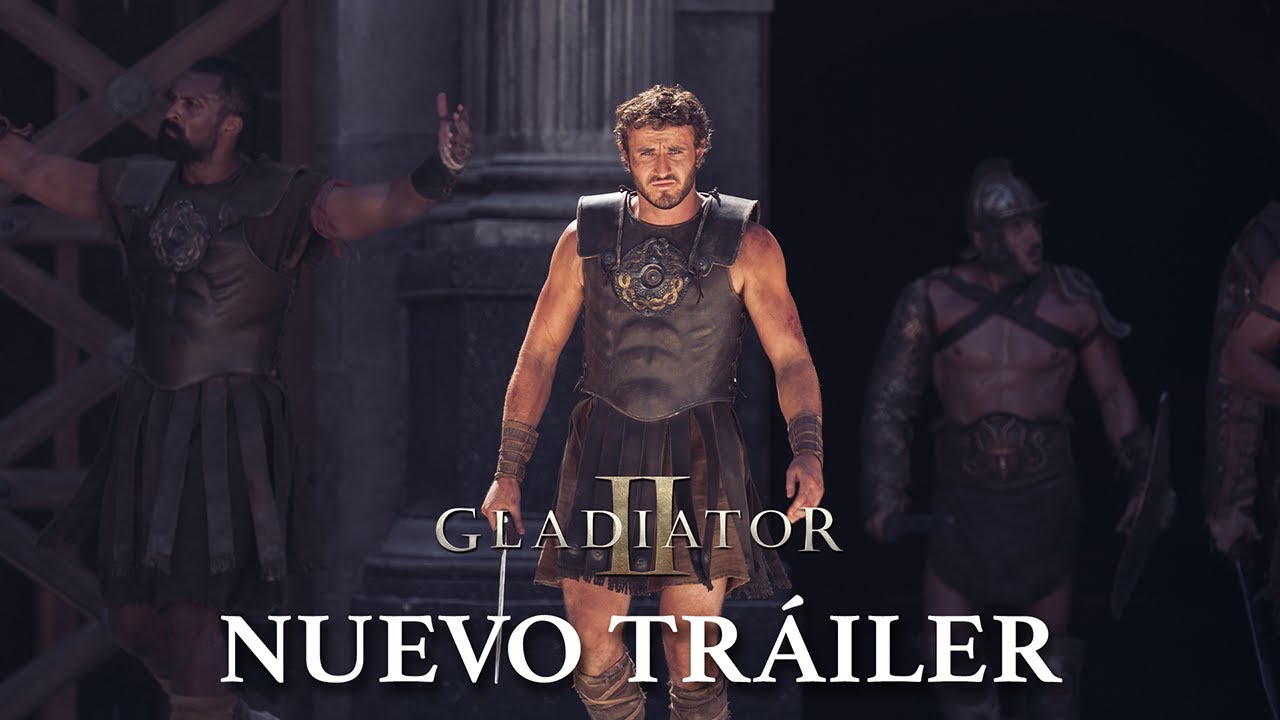
Ending Explained: Gladiator II
Ficha de Daños Colaterales en Sala
Certificado de impacto psicofísico emitido por Camilo K.O.
1 amago en el tramo intermedio; pestañeo pesado en las transiciones más innecesarias.
Minuto 52 y minuto 90 (comprobando cuánto quedaba de suplicio).
2 espresso para no dejarse vencer por la mediocridad cómoda.
"A mitad del segundo acto cuando la subtrama secundaria empezó a pesar más de lo que aportaba."
💬 El Veredicto de la Comunidad
¿Qué te ha parecido la película? Deja tu nota de 0 a 10 para contrastarla con el análisis de la redacción.
Aún no has votado
📢 ¿Te ha gustado el ácido?
Comparte esta crítica con tus amigos cinéfilos o desata la polémica en redes.
⚡ THE CINEMATIC VENOM YOUR INBOX CRAVES
No sugarcoated ratings, no corporate fluff. Subscribe for our uncensored weekly analysis or join the private Telegram for press previews, poll clashes, and instant alerts.
Alertas de estrenos en 1 segundo, encuestas en caliente y audios al salir de pases de prensa.
Recibe la dosis semanal en tu mail + regalo inmediato del PDF con 50 joyas ocultas de culto.
Related Reviews
Recommended autopsies for demanding film buffs.
 ⚠️ Ácido Sulfúrico4.2
Napoleon: Ridley Scott vs. Ridicule (And He Gets Crushed)
⚡Del mismo director (Ridley Scott): analiza la evolución o degradación de su estilo.
Ridley Scott turns Napoleon’s life into a cardboard spectacle with Joaquin Phoenix playing a carnival sideshow attraction. History for dummies.
 ⚡ Ácido Cítrico7.5
A Ghost Story: A Journey Through Time and Memory
⚡Afinidad temática directa en atmósfera, estilo y fijaciones visuales.
The Claqueta Ácida review of A Ghost Story, a film that explores existence and human connection.
 ⚡ Ácido Cítrico7.2
Acid in the Veins: Fede Álvarez Revives the Tactile Panic of Alien
⚡Afinidad temática directa en atmósfera, estilo y fijaciones visuales.
Industrial claustrophobia and pure physical terror. A merciless critique of Ian Holm's CGI and the cheap nostalgia that stains the franchise's return.
Editorial Ecosystem
Cinephile connections, archive interviews and related analyses.
🎞️ In Claqueta Cinematheque1

💬 Debate Cinéfilo & Autopsia de Lectores
0 veredictos¿Discrepas con nuestra nota? ¿Es una obra maestra o veneno puro? Deja tu veredicto abajo sin necesidad de registro.

Aún nadie ha dejado su veredicto para esta película.
Sé el primero en clavarle el colmillo rellenando el formulario de arriba.