World War Z — A Masterclass in Controlled Chaos (Or How to Waste $200 Million on Zombies That Don’t Scare Anyone)
A scathing takedown of World War Z—where the undead run faster than the script’s IQ, and Brad Pitt’s heroics are the only thing more predictable than the zombie horde’s lack of originality.


World War Z: full review


World War Z isn’t a movie. It’s a symptom. A symptom of an industry so desperate to sell tickets it’s turned the zombie apocalypse into a luxury blockbuster product, complete with a premium price tag and all the emotional depth of a Yelp review. Marc Forster, the director who once gifted us the saccharine sensitivity of Finding Neverland before torturing us with the narcoleptic sludge of Quantum of Solace, here faces an impossible challenge: making an army of shuffling corpses feel like a credible global threat when the real pandemic is corporate blandness. And the worst part? For a few fleeting moments, he almost pulls it off. Almost.
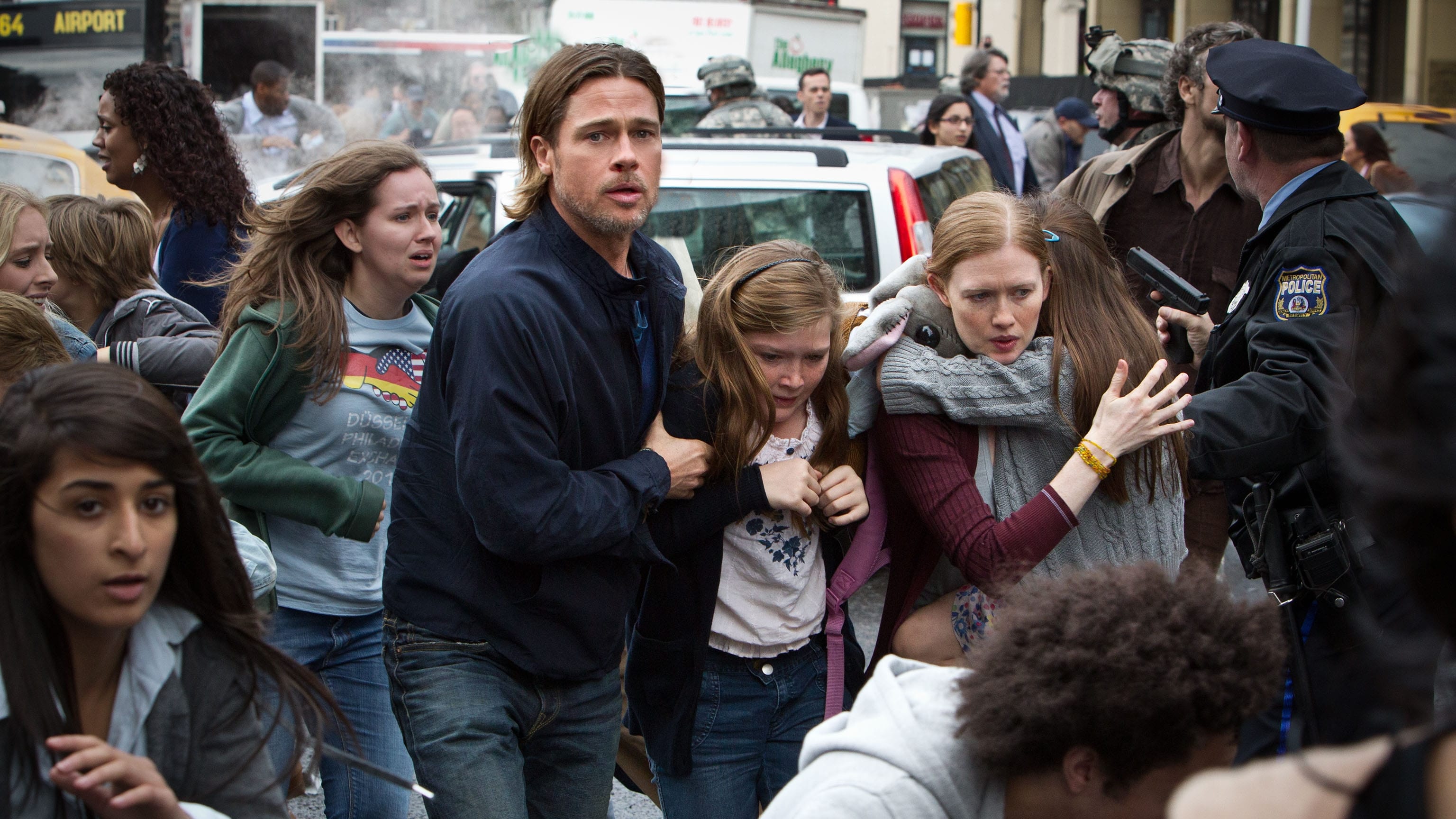
The film kicks off like a panic attack in a shopping mall. Forster’s camera clings to Brad Pitt like a tick, tracking every ragged breath as Gerry Lane scrambles to save his family from a zombie invasion that looks like it was ripped straight from a video game trailer. The first act is pure, controlled chaos: cars flipping, crowds stampeding, a kid projectile-vomiting black bile in a shot designed to make audiences scream. But here’s the first problem: the chaos has no weight. It’s as if someone edited a documentary about the end of the world using only the most expensive, spectacular shots—minus the grime, the sweat, or the stench of decay that should permeate every frame. The world is ending, but it’s the Disneyland version of the apocalypse.
The script, credited to Matthew Michael Carnahan (with uncredited rewrites by Drew Goddard and Damon Lindelof, who were presumably brought in to salvage the initial train wreck), is a Frankenstein’s monster of borrowed ideas. The premise—a family man turned UN hero—screams Taken but with more zeros on the budget, and the “race around the world to find a cure” structure reeks of Indiana Jones on fast-forward. The real crime isn’t its predictability (we all know the zombies will drop like flies once someone discovers they’re allergic to cats or something), but its utter lack of personality. No memorable dialogue, no narrative twists that surprise, not even a halfway interesting villain. The zombies, those beings who should be the stars of the show, are reduced to high-end extras: thousands of them sprinting in packs like BTS fans chasing Jungkook. Not a single shot that evokes the primal terror of Night of the Living Dead. Not one.
Brad Pitt, for his part, does what he can with a character who’s little more than a sack of muscles with a midlife crisis. Gerry Lane is the quintessential action hero: knows everything, never makes mistakes, and, of course, has a perfect family waiting at home to justify every idiotic decision he makes. Pitt delivers his A-game, but his performance is so generic you could replace him with an Abercrombie mannequin and no one would notice. The real tragedy of World War Z is that, in its desperate bid to be politically correct and globalist, it ends up soulless. Even the supporting cast, like Mireille Enos’ scientist (who feels like she wandered in from a CSI episode), fail to leave a mark. They’re all cogs in a machine designed to keep the plot moving smoothly, like a guided tour through hell.
Direction and Production Design: The Art of Spending $200 Million Without Leaving a Mark
Marc Forster directs this film like he’s solving a Rubik’s Cube blindfolded. There are moments where his touch is undeniable—that opening long take in Philadelphia, with the camera weaving through traffic as zombies devour the populace, is genuinely impressive—but then he remembers he’s making a zombie movie for families and rushes to dilute any hint of real horror. The problem isn’t the spectacle; it’s the lack of coherence. Forster wants us to feel the panic of the crowd, but he also wants the film to be PG-13. He wants the zombies to be scary, but not so scary that Paramount executives get nervous and slash the budget. The result is a movie that vacillates between action thriller and family drama, never committing to a single tone.
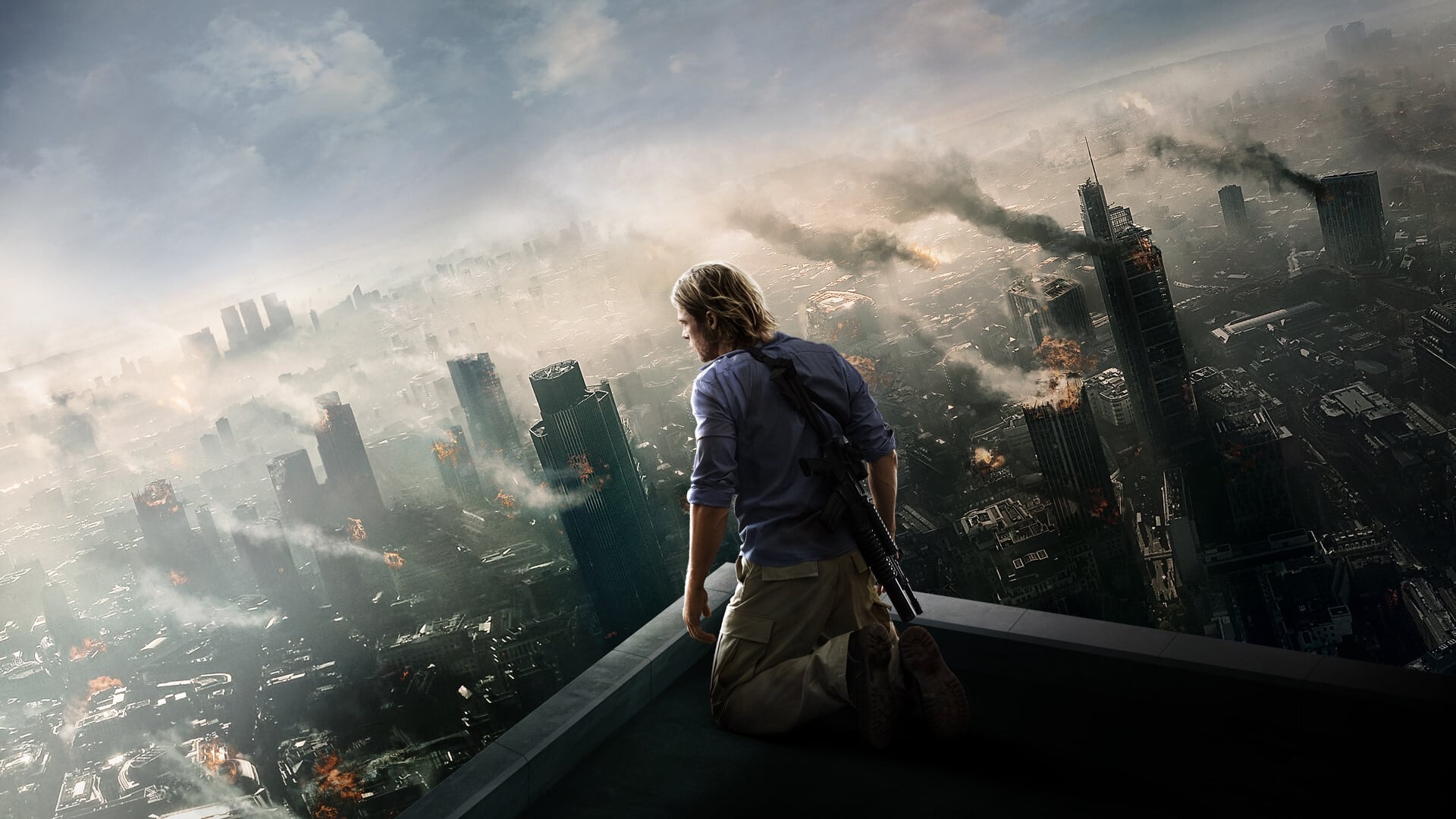
The cinematography by Ben Seresin is, without a doubt, the film’s standout technical achievement. Seresin, who proved his knack for capturing chaos in Mad Max: Fury Road, outdoes himself here, turning every city into a neon-lit hellscape of shadows and despair. The aerial shots of Jerusalem, with its walls crawling with zombies like ants on a carcass, are among the few elements that justify the ticket price. But even at its best, the cinematography clashes with Forster’s direction. There are too many close-ups of Pitt sweating, too many slow-motion shots of zombies toppling like dominoes, and too many helicopter shots of pristine blue skies that look like they were lifted from a tourism ad. Genre cinema needs grit, not glamour.
The editing, handled by Roger Barton and Matt Chesse, is another highlight. The film has a breakneck pace, with action scenes that never let up. The problem? After two hours of chases and jump scares, you start to feel like you’re watching the same set piece on loop. Zombies attack, Gerry escapes by the skin of his teeth, someone delivers a cheesy one-liner, rinse and repeat. Repetition is the enemy of terror. If there’s one thing George A. Romero taught us, it’s that real fear lies in what you don’t see—the silence before the attack, the uncertainty of not knowing when or how the next blow will come. World War Z prefers constant noise, as if it’s terrified the audience will get bored and leave before the credits roll.
Performances: When the Cast Is as Generic as the Script
Brad Pitt is Brad Pitt. That should be enough, but it isn’t. Gerry Lane is a character so flat you could use him as an ironing board. Pitt does what’s expected of him: runs, shouts, broods, and saves the world, but he never conveys the desperation a father should feel as the world crumbles around him. It’s like he’s playing an action hero instead of a human being. And that’s a problem, because World War Z tries to sell itself as a film with heart, but its heart beats with the vigor of a smartwatch in power-saving mode.
Mireille Enos, who plays Gerry’s wife, has even less to do. Her character exists solely to scream into phones, cry in corners, and remind the audience that Gerry has a family to save. She’s the most stereotypical female role since action movies decided women only serve two purposes: dying or waiting to be rescued. The supporting cast, like Daniella Kertesz (the Israeli soldier) or Fana Mokoena (the UN bureaucrat), have fleeting moments where they almost shine, but the script ensures they remain little more than extras with lines.
The real crime of World War Z isn’t that its characters are flat—it’s that it doesn’t even try to hide it. In a pivotal scene, Gerry has a phone conversation with his wife while fleeing a zombie horde. The dialogue is so forced, so packed with clichés about “saving the world” and “coming home,” that you can’t help but laugh. It’s like the screenwriter followed a How to Write Emotional Dialogue in 5 Easy Steps manual.
Technical Aspects: When Money Can’t Buy Taste
The production design by Nigel Phelps is undeniably impressive. The ruined cities, refugee camps, and secret labs are all meticulously crafted to feel real, albeit with that blockbuster sheen that makes them look like an apocalypse theme park. The problem is that the design serves no purpose if the story doesn’t give it context. Jerusalem, for example, is a visual feast: zombies scaling walls, crowds scattering, planes crashing into buildings. But the scene lacks real tension because, in the end, it’s just another set piece, another moment of empty spectacle.
Marco Beltrami’s score is another element that fades into the background. Beltrami, known for his work on Scream and Logan, delivers a soundtrack that oscillates between epic and generic. There are moments where the music tries to elevate the emotion, like the plane scene, but it ends up sounding like a superhero movie score. Zombie cinema needs silence, not fanfare. The sound design, meanwhile, is competent but forgettable. The zombies’ growls, the gunshots, the helicopter blades—it’s all there, but nothing stands out. It’s as if the sound department was given the directive to “make it realistic, but not too realistic.”
The makeup and zombie effects are, arguably, the film’s biggest technical failure. The zombies in World War Z don’t scare—they sadden. They look like Halloween props on steroids: pale bodies, bloodshot eyes, and robotic movements. Instead of inspiring terror, they inspire pity. It’s impossible not to compare them to the zombies of 28 Days Later or The Walking Dead, which managed to convey real danger. Here, the zombies are little more than obstacles in a video game, designed to be dodged or mowed down en masse. Zombie cinema deserves better.
The best
- Ben Seresin’s cinematography: Not everything is terrible in this film, and the cinematography is proof. Seresin captures the scale of the apocalypse with shots that are both spectacular and terrifying. The contrast between light and dark, the saturated colors of burning cities, the aerial shots of panicked crowds—it’s all designed to make you feel like you’re witnessing the end of the world. It’s the only thing that justifies the 3D.
The worst
The predictable, generic script: There isn’t a single surprise in World War Z’s script. From the first minute, you know exactly how the film will end, which characters will die, and what twists the plot will take. It’s like watching a remake of Independence Day* but with zombies.- The lack of character development: Gerry Lane is a flat character, his wife is a stereotype, and the supporting cast are little more than extras with lines. The film feels like it was written by a Netflix algorithm.
The Verdict of Claqueta Ácida
World War Z has everything it needs to be a genre classic, but it ends up as a generic blockbuster with delusions of grandeur. It has spectacular moments, a relentless pace, and stunning cinematography, but it’s also saddled with a predictable script, flat characters, and zombies that are more laughable than terrifying. It’s the cinematic equivalent of a luxury buffet: so much to choose from, but nothing that truly satisfies. If you like action movies with zombies, you might find it entertaining. If you’re looking for something more, go rewatch 28 Days Later or Train to Busan. The zombie apocalypse deserves better than this. It deserves, at the very least, a shred of dignity. 💀
🎬 Tráiler Oficial
Abrir en YouTube
World War Z: frequently asked questions
- What is the rating of "World War Z" on Claqueta Ácida?
- "World War Z" scored 6.8/10 on Claqueta Ácida in the review by Odin Lagbert.
- Is "World War Z" worth watching?
- With reservations. We gave it 6.8/10 (Citric Acid), our rating for uneven films with something worth saving.
- Who directed "World War Z"?
- "World War Z" was directed by Marc Forster.
Theater Collateral Damage Report
Psychophysical impact certificate issued by Odin Lagbert
2 amagos en el tramo intermedio; pestañeo pesado en las transiciones más innecesarias.
Alguna consulta furtiva al móvil en el segundo acto. Nada que no se perdone.
2 espresso para no dejarse vencer por la mediocridad cómoda.
"A mitad del segundo acto cuando la subtrama secundaria empezó a pesar más de lo que aportaba."
💬 Community Verdict
What did you think of the film? Rate it from 0 to 10 to compare it with the editorial review.
You haven't voted yet
📢 ¿Te ha gustado el ácido?
Comparte esta crítica con tus amigos cinéfilos o desata la polémica en redes.
⚡ THE CINEMATIC VENOM YOUR INBOX CRAVES
No sugarcoated ratings, no corporate fluff. Subscribe for our uncensored weekly analysis or join the private Telegram for press previews, poll clashes, and instant alerts.
Alertas de estrenos en 1 segundo, encuestas en caliente y audios al salir de pases de prensa.
Recibe la dosis semanal en tu mail + regalo inmediato del PDF con 50 joyas ocultas de culto.
Related Reviews
Recommended autopsies for demanding film buffs.
 ⚠️ Ácido Sulfúrico 4.1
 War of the Worlds (2025): Ice Cube vs. the Martians, or How to Waste 90 Minutes of Your Existence
⚡ Hermana de saga: otro capítulo diseccionado con rigor forense.
Universal Pictures gifts us an alien invasion thriller so predictable even the extraterrestrials are yawning. Ice Cube and Eva Longoria try to salvage something, but the script is flatter than a roadmap.
 ⚠️ Ácido Sulfúrico 3.2
 On the Run: A Senseless Sprint
⚡ Afinidad temática directa en atmósfera, estilo y fijaciones visuales.
A marathon of clichés and marketing sweat that leaves the audience feeling like they've run in circles. 💀
 ⚡ Ácido Cítrico 6.8
 Azrael: Samara Weaving and the Hell of Silence
⚡ Afinidad temática directa en atmósfera, estilo y fijaciones visuales.
E.L. Katz and Simon Barrett deliver a brutal, relentless mute survival horror film where Samara Weaving once again proves why she is the modern scream queen.
Editorial Ecosystem
Cinephile connections, archive interviews and related analyses.
💬 Debate Cinéfilo & Autopsia de Lectores
0 veredictos¿Discrepas con nuestra nota? ¿Es una obra maestra o veneno puro? Deja tu veredicto abajo sin necesidad de registro.


Aún nadie ha dejado su veredicto para esta película.
Sé el primero en clavarle el colmillo rellenando el formulario de arriba.