Cube — The Claustrophobic Miracle That Proved Hell Fits in 13x13 Feet (and a $365K Budget)
A ruthless dissection of the 1998 film that will keep you on the edge of your seat—if the edge of your seat were a death trap.

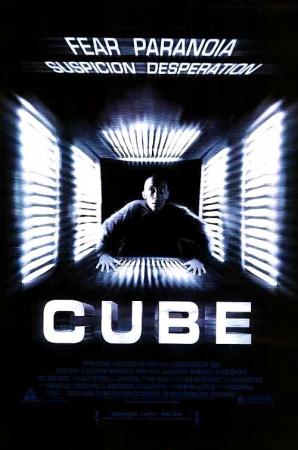
Cube: The claustrophobic miracle that proved hell fits in 13x13 feet (and a $365,000 budget)
The year 1998 was an annus horribilis for Canadian cinema—a wasteland of snow-covered rom-coms and dramas about alcoholic fishermen drowning their sorrows in cheap whiskey while staring at the horizon with the same hope a death row inmate reserves for the gallows. But amid all that mediocrity, like a diamond forged from coal or a clever joke at a Hallmark screenwriters’ retreat, Cube emerged. It wasn’t a release; it was an invasion: six losers, a steel labyrinth of architectural sadism, and a director, Vincenzo Natali, who proved you could make an existential horror film for less than the cost of a latte in Vancouver—where coffee is priced like the hot water has to pay a toll just to cross the border from Seattle.
Natali, an alum of the Canadian Film Centre—that talent incubator where geniuses and yogurt commercial directors are hatched in equal measure—didn’t just pull off the impossible; he did it with an elegance bordering on the obscene. Cube didn’t come from nowhere; it was the rotten fruit of a Northern film industry so austere that even the special effects looked like they were made from cardboard, duct tape, and the desperate hope of an intern promised a credit in the end titles. But—oh, surprise—that very precarity became its greatest virtue. Natali, cunning as a lab rat in a maze (and not just any rat—a PhD candidate in the semiotics of terror), pitched his script as a "psychological drama with thriller elements." Sure, like Saw was sold as a documentary on human resilience in times of crisis. The final budget? Around $365,000 USD—a pittance even by indie film standards, where "independent" usually means "shot in my uncle’s garage with my cousins as the cast." For perspective: with that money, Hollywood produced one Armageddon trailer—and not even a good one, but one of those shot like a mall security camera.
But Natali and his team turned scarcity into style. The cubic rooms, designed by artist David Hackl (who would later direct Saw V—yes, karma exists, and it has a macabre sense of humor), were actually a single modular set, about 13x13 feet, reconfigured by swapping colored gelatin panels to simulate an endless maze. No CGI, no massive sets, no actors in expensive latex suits. Just steel, sweat, and the certainty that someone was about to die in the most creative way possible. And die they did, as if the cube itself were a bored god rolling dice with its victims’ lives.
finalExplicado: "En el clímax de Cube, el grupo descubre que el laberinto es un rompecabezas matemático cuyas trampas se activan según coordenadas primas. Worth revela que él mismo diseñó la estructura exterior por dinero, sin saber su propósito real. Kazan, el autista savant, resulta ser la única clave para calcular las combinaciones correctas. En la secuencia final, Quentin, convertido en un psicópata violento, intenta matar a los demás; Worth lo apuñala mortalmente y muere con él. Leaven y Kazan logran salir al exterior, solo para descubrir que el Cube flota en un vasto almacén industrial sin ventanas, sin explicación alguna. Simbólicamente, el desenlace es nihilista y brutal: la salida no es liberación, sino la constatación de que el laberinto es solo una pieza más de un sistema burocrático inhumano e incomprensible. No hay respuestas, ni propósito, ni salvación. Solo azar, cálculo frío y muerte. El Cube es la existencia misma."
The Birth of a Classic: Or How to Sell a Maze Like an Ibsen Drama
The original script for Cube, written by André Bijelic and Natali himself, was the epitome of minimalism: six characters, one setting, and an unsolved mystery. There were no explanations about who built the labyrinth or why; in fact, as a grim mathematical joke, all the characters were named after real prisons. Leaven (Leavenworth), Quentin (San Quentin), Worth (Attica), Holloway (Holloway, the women’s prison in London), Rennes (a French prison), and Kazan (Kazan prison in Russia). At its core, it was a film about the futility of seeking answers in an indifferent universe—a Waiting for Godot with more blood and less hope.
The producers, those mythical creatures who demand "a little more exposition" as if life were a corporate PowerPoint, must have clutched their pearls while reading the script. "Who built the cube?" they probably asked, in that tone executives use when they want to sound profound. "Why are they there? Is there a hidden message? Can we add a romance between Leaven and Quentin to attract the female audience?" But Natali, bless him, stood firm. Cube opens with the brutal death of Alderson (Julian Richings) in a web of wires tightening like the guts of a sacrificial animal. The message was clear from second one: inside or outside the cube, life is absurd and merciless. There are no heroes, no villains—just people trapped in a system they don’t understand, trying not to die while the clock ticks like a heart about to burst.
Direction: The Art of Torturing the Audience with Four Walls (and a Shitty Budget)
Vincenzo Natali doesn’t direct Cube; he conducts it like the maestro of a hellish opera, where every camera movement is a dissonant note and every silence a threat. From the first shot—that eye opening in the darkness, as if the viewer themselves had just woken up inside the cube—Natali sets the rules of the game: this won’t be pleasant. The film is shot in a squarer, more vertical aspect ratio (1.37:1 / 1.66:1), a choice that feels like a straitjacket. Every frame is a prison in itself: the characters are constantly boxed in by the straight lines of the metal walls, as if the very film stock were strangling them. Natali uses overhead shots to emphasize the oppressive geometry of the cube, turning the characters into ants in an anthill designed by a sadist with a PhD in Brutalist architecture.
But Natali’s real genius is how he makes the abstract tangible. Cube isn’t a film about a maze; it’s a film about the fear of the unknown, and Natali materializes it with a rawness bordering on the pornographic. The traps aren’t elaborate special effects but simple, brutal mechanisms: a room filled with wires tightening like intestines, a floor opening like a hungry mouth, a gas that burns the lungs as if the air itself had turned to acid. Each death is a reality check: this isn’t a game; this is life stripped down to its cruelest essence. And when the characters try to rationalize their situation—like when Quentin (Maurice Dean Wint) suggests it’s all a military experiment—Natali punishes them with ferocious irony: the cube has no logic, no purpose, no mercy. It’s the universe in miniature, a place where the rules are as arbitrary as those of a game designed by a drunken god.
The pacing of Cube is relentless, but not in the way of traditional action films. There are no chases, no explosions, no heroes running against the clock. Here, time is the real villain. Natali doses the tension like a chef seasoning a stew with poison: little by little, until the viewer realizes they’re already poisoned. The dialogue is sparse but lethal, like knife slashes in the dark. Every line serves a purpose: revealing character, ratcheting up paranoia, or—in the case of mathematician David Worth (David Hewlett)—delivering a monologue on the futility of existence that sounds like Nietzsche wrote for The Big Bang Theory. Then there’s Aner Firestone’s editing, sharp as a razor blade. The transitions between scenes are abrupt, like someone flipping channels on a broken TV. There’s no time to breathe, because in the cube, breathing is a luxury you can’t afford.
Actors: Six Lost Souls in a Steel Hell (and No Health Insurance)
The cast of Cube is a perfect example of how talent can shine even in the most adverse conditions. There are no Hollywood stars here, just Canadian actors hardened by TV shows and low-budget films, yet they deliver heart-wrenching humanity. Maurice Dean Wint, as Quentin, is the reluctant leader of the group—a cop with a superiority complex as big as his inability to admit he’s as lost as everyone else. Wint plays Quentin with a mix of authority and vulnerability that makes him the film’s most complex character. He’s the kind of man who thinks he can control chaos, until chaos reminds him he controls nothing. His performance is physical, almost animalistic: every gesture, every glance, conveys the desperation of a man clinging to the illusion of order like a life preserver in an ocean of madness.
Nicole de Boer, as Leaven, the math prodigy, is the film’s intellectual core. She’s the only one trying to find logic in the cube, and de Boer plays that quest with an intensity bordering on obsession. There’s a scene where Leaven explains prime numbers like they’re a sacred prophecy, and de Boer delivers it with such conviction that the viewer almost believes there is a way out. But Cube isn’t a film about solutions; it’s about the futility of searching for them, and de Boer gets that perfectly. Her performance is a reminder that sometimes intelligence isn’t a blessing but a curse: the more you know, the more you realize how little it matters.
David Hewlett, as David Worth, the cowardly architect, is the perfect counterpoint to Quentin. Hewlett plays Worth with a mix of cynicism and fear that makes him the most human character in the group. Worth isn’t a hero, a villain, or even a leader—he’s an ordinary man trapped in an extraordinary situation, and Hewlett plays him with a rawness that hurts. His monologue about the futility of architecture—"I designed bathrooms for a prison. I don’t know why."—is one of the film’s most devastating moments, because it encapsulates Cube’s essence: a place where nothing makes sense, not even the work that defines you. Hewlett makes the viewer feel Worth’s despair as if it were their own, and that’s what makes his character so memorable.
The supporting cast holds their own. Andrew Miller, as Kazan, the autistic savant, is a revelation. Miller plays Kazan with an innocence that contrasts sharply with the brutality of the setting, and his performance is so moving it almost makes you forget he’s trapped in a steel hell. Wayne Robson, as Rennes, the thief with a sixth sense for traps, brings a touch of dark humor to the film. His death—one of the most creative and brutal—is a reminder that in the cube, experience doesn’t save you; it just makes you more aware of your own mortality. And Julian Richings, as Alderson, the first character we see die, has an impact as fleeting as it is powerful. His death, filmed with clinical coldness, sets the tone for the film: this isn’t going to be pretty.
Technical Aspects: Beauty in Precariousness (or How to Make a Horror Film with Duct Tape and Genius)
The technical craft of Cube is a masterclass in how creativity can triumph over lack of resources. Derek Rogers’ cinematography is a claustrophobic nightmare. He uses a cold color palette—metallic blues, industrial grays—to create an atmosphere straight out of a fever dream. The cube’s rooms are lit with harsh, directional light, like operating theaters designed by a sadistic surgeon. There are no soft shadows, no warm tones—just cold, merciless lighting that turns every space into a visual trap. Rogers also plays with contrast brilliantly. The characters are constantly bathed in light or plunged into darkness, as if the cube itself were deciding when to reveal or conceal them. And when the camera moves, it does so with surgical precision, as if following a script written by the maze itself.
David Hackl’s production design is one of the film’s unsung stars. The ingenuity of building an entire labyrinth from a single 13x13-foot set is worthy of film school case studies. Every room shares the same oppressive structural feel but plays with light in radically different ways. The hallways are narrow, the doors heavy, and every detail—from the metal panels to the trap mechanisms—is designed to convey imminent danger. Hackl also handled the sound design, which is minimalist but effective. There’s no traditional score in Cube; instead, the ambient sound—the hum of fluorescent lights, the screech of metal, muffled screams—becomes the film’s music. It’s a sound that burrows into the viewer’s brain like a nail, a constant reminder that in the cube, silence is as dangerous as noise.
The script by André Bijelic and Vincenzo Natali is a masterpiece of narrative engineering. There’s no filler, no unnecessary scenes, no superfluous dialogue. Every line serves a purpose: developing characters, ratcheting up tension, or advancing the plot. The dialogue is dry and direct, as if the characters know they don’t have time for flowery language. And when the script gets philosophical—like Worth’s monologue on architecture—it does so with a rawness that avoids melodrama. Bijelic and Natali understand that Cube isn’t a film about answers; it’s about questions, and they leave the viewer with uncertainty as their only companion.
Aner Firestone’s editing is another of the film’s strengths. He cuts scenes with obsessive precision, creating a rhythm that never flags. The transitions between scenes are abrupt, as if the cube itself were deciding when to switch rooms. And when it comes to the deaths—which are many and varied—he films them with clinical coldness that makes them even more impactful. There’s no dramatic music, no slow motion, no exaggerated sound effects: just the sound of a body falling, bones cracking, the silence that follows. It’s editing that doesn’t seek to move but to shock, and it succeeds brilliantly.
The best
- Vincenzo Natali’s direction: A masterclass in cinematic claustrophobia that turns a shoestring budget into a visual nightmare. Natali orchestrates tension like a hellish conductor, where every shot is a dissonant note and every silence a threat. The guy made a 13x13-foot cube feel like the Labyrinth of Minos, and he did it for less than the cost of craft services in Hollywood.
- Derek Rogers’ cinematography: The use of a narrow aspect ratio and ruthless lighting turns the set’s limitations into another character in the film. Rogers proves you don’t need CGI to create an oppressive atmosphere—just a couple of lights, colored gels, and the desperation of knowing you’re trapped in a geometric hell.
The worst
- Underdeveloped characters: Alderson and Rennes die too soon, and their deaths, though impactful, leave a void in the story. It would’ve been interesting to see how they interacted with the rest of the group—though, let’s be honest, no one in the cube has time to make friends.
The Verdict of Claqueta Ácida (8.5/10)
Cube isn’t just a film; it’s an experience. A slap in the face to the viewer, a reminder that cinema can be intelligent, brutal, and poetic all at once—even when it’s shot on a set that looks like a hardware store’s storage room. Vincenzo Natali turned a shoestring budget into a claustrophobic nightmare that remains relevant over two decades later, because in the end, we’re all trapped in our own cube. It’s not a film for everyone: if you’re looking for a Hollywood ending, Cube will chew you up and spit you out. But if you want to stare into the void—and have the void stare back—then welcome to the labyrinth. Don’t forget to watch your step.🎬 Tráiler Oficial
Abrir en YouTube
Ending Explained: Cube
Ficha de Daños Colaterales en Sala
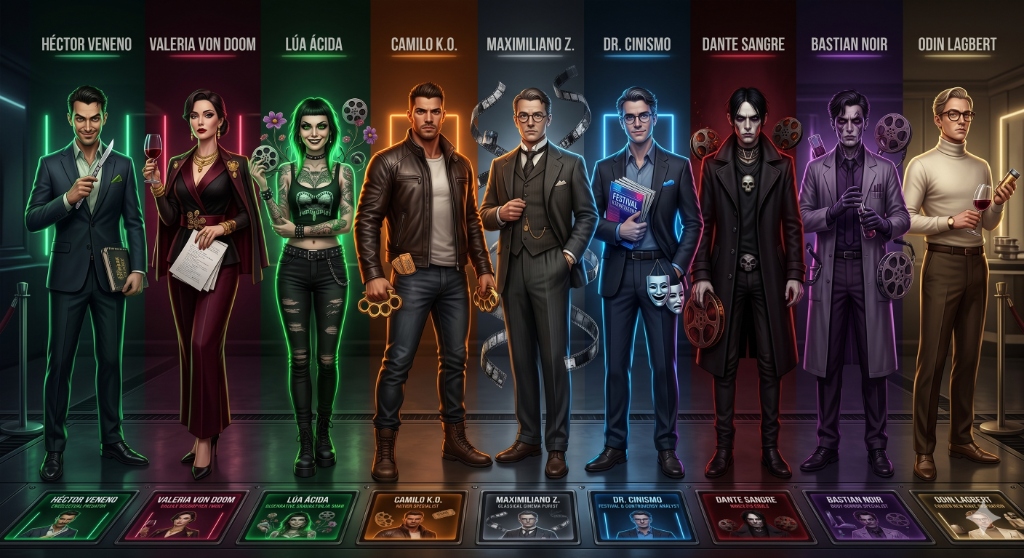
Certificado de impacto psicofísico emitido por Odin Lagbert
Cero bostezos. Pupilas dilatadas y tensión mandibular constante.
Ni una sola mirada al móvil.
Ninguna: la adrenalina cinematográfica es suficiente.
"Inexistente: pulso de hierro hasta los créditos finales."
💬 El Veredicto de la Comunidad
¿Qué te ha parecido la película? Deja tu nota de 0 a 10 para contrastarla con el análisis de la redacción.
Aún no has votado
📢 ¿Te ha gustado el ácido?
Comparte esta crítica con tus amigos cinéfilos o desata la polémica en redes.
⚡ THE CINEMATIC VENOM YOUR INBOX CRAVES
No sugarcoated ratings, no corporate fluff. Subscribe for our uncensored weekly analysis or join the private Telegram for press previews, poll clashes, and instant alerts.
Alertas de estrenos en 1 segundo, encuestas en caliente y audios al salir de pases de prensa.
Recibe la dosis semanal en tu mail + regalo inmediato del PDF con 50 joyas ocultas de culto.
Related Reviews
Recommended autopsies for demanding film buffs.
 🔥 Fusión Nuclear9.5
*2001: A Space Odyssey – A Monkey, a Monolith, and Two Hours of Cosmic Pretentiousness*
⚡Afinidad temática directa en atmósfera, estilo y fijaciones visuales.
We dissect Stanley Kubrick’s magnum opus. A visual feast of minimalism and space hypnosis that cemented "serious" sci-fi—and bored half of humanity to tears.
 🔥 Fusión Nuclear9.3
2001: A Space Odyssey — The Day Kubrick Left Us Speechless (and Oxygenless)
⚡Afinidad temática directa en atmósfera, estilo y fijaciones visuales.
Kubrick turned science fiction into pure art: 149 minutes of eloquent silence, bone-wielding apes, and a psychopathic computer. Masterpiece or pretentious fraud? Here’s the verdict.
 🔥 Fusión Nuclear8.5
*A Clockwork Orange: The Sweet, Rusty Aftertaste of Violent Haute Couture*
⚡Afinidad temática directa en atmósfera, estilo y fijaciones visuales.
A scathing review of Kubrick’s masterpiece, where ultraviolence meets 60s fashion in a twisted pas de deux.
Editorial Ecosystem
Cinephile connections, archive interviews and related analyses.
🎞️ In Claqueta Cinematheque1
💬 Debate Cinéfilo & Autopsia de Lectores
0 veredictos¿Discrepas con nuestra nota? ¿Es una obra maestra o veneno puro? Deja tu veredicto abajo sin necesidad de registro.

Aún nadie ha dejado su veredicto para esta película.
Sé el primero en clavarle el colmillo rellenando el formulario de arriba.