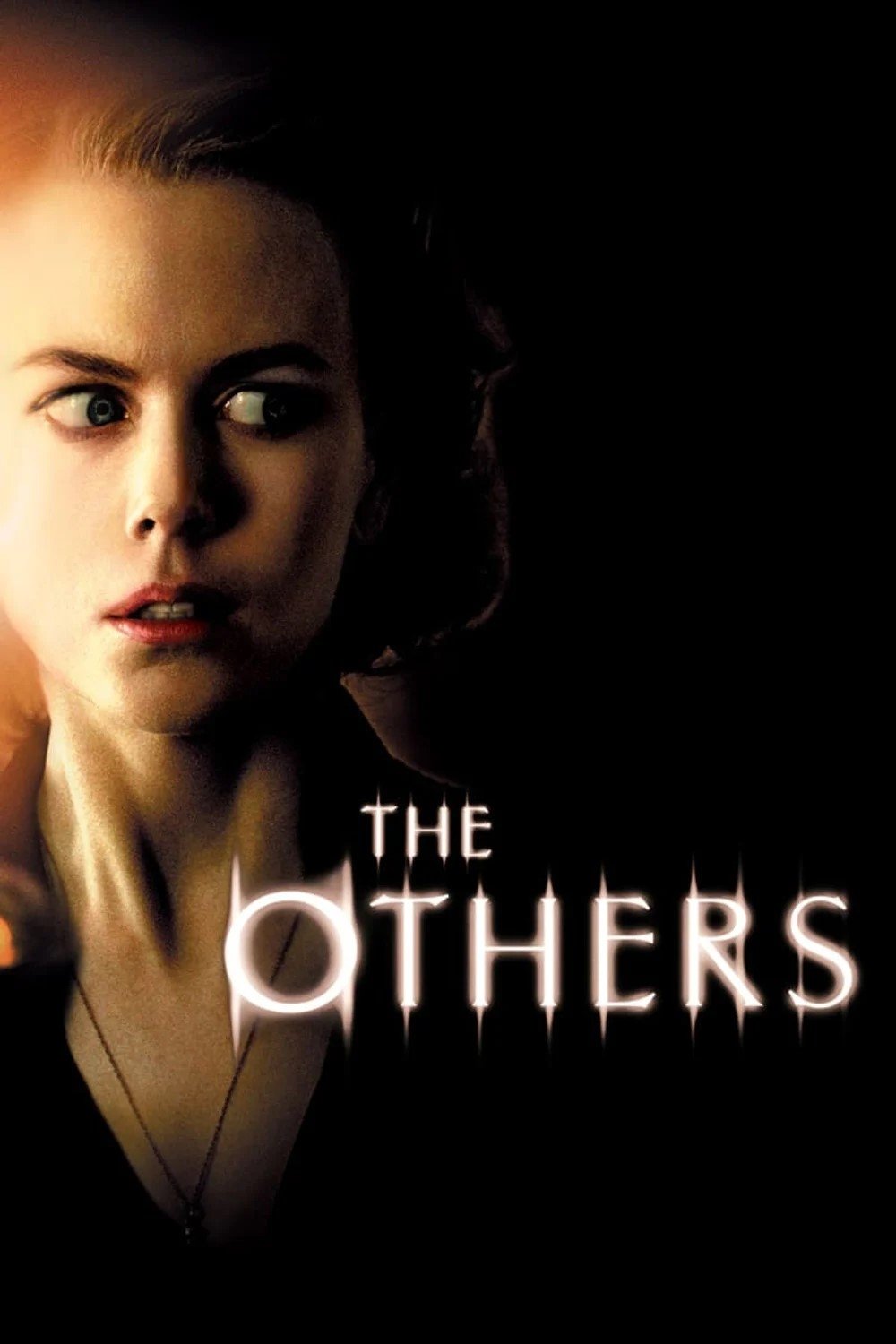
The Others — The Phantom of the Victorian Opera in Light Gore (Or How Amenábar Sold Us Canned Fear with Class)
Alejandro Amenábar turns a gothic manor into a labyrinth of curtains and whispers. Nicole Kidman shines, but the script reeks of mothballs. A scalpel-sharp critique.



'''''''''''''''tweets_alternativos:'''''''''''''''
The year 2001-una-odisea-del-espacio-kubrick-y-el-monolito-que-nos-dejo-mudos" class="text-amber-400 font-black hover:text-amber-300 transition underline decoration-amber-500/40 hover:decoration-amber-300" title="[9.3/10 🔥 Fusión Nuclear] Lee nuestra autopsia de «2001»" data-acid-interlink="2001-una-odisea-del-espacio-kubrick-y-el-monolito-que-nos-dejo-mudos">2001 was a feast for lovers of classy horror, but also a stark reminder that Hollywood remained obsessed with recycling the same Sunday-best ghost. The Others arrived like a whisper amid the din of The Blair Witch Project and the unbridled CGI of Jurassic Park III, promising something that, in theory, horror cinema had forgotten: atmosphere. Alejandro Amenábar, that Spanish wunderkind who had already proven with Thesis and Open Your Eyes that he knew how to toy with the viewer’s mind, hopped on the American dollar train hand in hand with Tom Cruise (yes, the very same who produced the film while Nicole Kidman, his then-wife, screamed her lungs out on screen). The result was a fascinating hybrid: a horror film that smelled of 1960s mothballs but boasted the technical polish of a French perfume ad. The problem? Beneath all that velvet and gloom, the script remained the same rusty skeleton as always, dressed up as an English aristocrat with a twist ending that, while effective, already reeked of rot upon its release.
The gestation of The Others is almost as gothic as its plot. Amenábar, obsessed with classic horror cinema—from Jack Clayton’s The Innocents to Don Siegel’s Invasion of the Body Snatchers—decided it was time to rescue psychological terror from the clutches of slashers and teen gore. To do so, he chose a setting that had already proven infallible: the Victorian mansion as a character. Not just any mansion, of course, but one plucked straight from a John Atkinson Grimshaw painting, where fog tangles in the trees like cobwebs and every room smells of melted wax and family secrets. The problem is that, in his eagerness to pay homage to classic horror, Amenábar fell into the trap of believing atmosphere was everything. No, dear Alejandro, atmosphere is just the wrapping. What matters is what’s inside the package, and in this case, what lay within was a script that, despite its clever twists, limped along like a ghost with a broken leg.
The cast, however, was a godsend. Nicole Kidman, at the peak of her post-Moulin Rouge career, slipped into the skin of Grace Stewart with the ferocity of someone who knew she was facing a role that could define her career. And define it she did. Her performance is a masterclass in contained hysteria, that brand of madness only Victorian mothers could afford: polite, religious, and with a knife hidden under her apron. The children, Alakina Mann and James Bentley, deliver admirably, though it’s hard not to wonder if their performances weren’t more the result of Amenábar’s direction than their own talent. And then there’s Fionnula Flanagan, that Irish actress who seems plucked straight from a dark fairy tale, playing the servant Bertha Mills with a mix of sweetness and menace that recalls the best villains of classic cinema. But even with this dream cast, the film stumbles in its own attempt to be too elegant. Because, let’s be honest, when terror becomes so refined it feels like a five-o’clock tea ad, something has been lost along the way.
The filming of The Others, according to contemporary accounts, was an experience almost as claustrophobic as the film itself. Amenábar, a perfectionist to the point of obsession, demanded that every shot breathe authenticity, from the mansion’s furniture—real pieces sourced from English antique dealers—to the lighting, which Javier Aguirresarobe handled with surgical precision. The result is a cinematography that looks painted in oils, where every shadow has weight and every ray of light seems filtered through a veil of mourning. But, as often happens with films that take themselves too seriously, the excess of style ended up drowning the substance. There are entire scenes where the only thing that matters is the how it’s told, not the what. And that, in horror cinema, is like building a haunted house with empty rooms: the facade may be impressive, but in the end, all that’s left is the echo of your own footsteps.
Direction: The Art of Scaring with a Whisper (and a Hefty Budget)
Alejandro Amenábar is, without a doubt, a master of contained tension. In The Others, he proves he knows how to craft a horror scene without resorting to cheap scares or easy gore. His direction is meticulous, almost obsessive, and every shot seems calculated to generate discomfort. From the first minutes, the film immerses itself in an oppressive atmosphere, where the sound of curtains moving or the creak of floorboards become characters in their own right. Amenábar understands that psychological terror doesn’t need visible monsters, but rather the suggestion of their presence, and in that regard, the film is flawless. However, its greatest virtue is also its Achilles’ heel: the slowness. There are moments when the film seems to drag like a ghost in chains, and not exactly by design. The pacing, at times, becomes so leisurely that the viewer starts to wonder if they’ve dozed off and lost the thread.The use of space is another of Amenábar’s strengths. The mansion in The Others isn’t just a setting; it’s a labyrinth of secrets, where every closed door hides an uncomfortable truth and every mirror reflects something that shouldn’t be there. The director plays with the architecture of the place to create a sense of claustrophobia, even in the most spacious scenes. Staircases, narrow hallways, and dimly lit rooms generate a feeling of disorientation that’s key to the plot’s development. But once again, the excess of style ends up working against it. There are shots so carefully composed they look like they’ve been lifted from a Victorian decor catalog, and that, in a horror film, can be counterproductive. Because when everything is perfect, when every detail is calculated to the millimeter, fear loses its spontaneity. And fear, after all, is a wild animal that can’t be tamed.
Performances: Nicole Kidman and the Art of Screaming with Class
If anything saves The Others from fading into obscurity, it’s undoubtedly the cast. Nicole Kidman carries the film on her shoulders with a performance that oscillates between the brilliant and the overacted, depending on the moment. Her Grace Stewart is a woman on the verge of collapse, but always with the composure of someone who knows that, in Victorian England, ladies don’t lose their cool. Kidman conveys that inner tension with a mastery that borders on the unsettling. Her hysterical scenes are memorable not for being exaggerated, but for how restrained they are. It’s as if, instead of screaming, her character were bleeding out internally, and that’s something few actresses can convey.The children, Alakina Mann and James Bentley, do their job, though it’s clear their performances are more directed than acted. Mann, in particular, has moments where her Anne Stewart seems plucked from a Brothers Grimm tale, with that mix of innocence and malice only children can pull off. Bentley, for his part, does what he can with a character who’s little more than a prop. But the real discovery of the cast is Fionnula Flanagan, who plays the servant Bertha Mills with an ambiguity that borders on the sinister. Flanagan has that unique quality of character actresses: she can shift from sweetness to menace in the blink of an eye, and in The Others, that’s pure gold.
Technical Aspects: When Style Devours Substance
The technical aspects of The Others are, without a doubt, its greatest virtue and, at the same time, its greatest flaw. Javier Aguirresarobe’s cinematography is a masterclass in chiaroscuro, where light seems to filter through a veil of mourning and every shadow has a life of its own. Aguirresarobe, who had already worked with Amenábar on Open Your Eyes, proves here that he’s one of the great cinematographers of Spanish cinema. His work in The Others is so impeccable that, at times, you feel like you’re watching a moving painting. But, as we’ve mentioned, such perfection can be counterproductive. There are scenes where the beauty of the framing distracts more than it scares, and that, in a horror film, is a cardinal sin.The production design, handled by Benjamín Fernández, is another strong point. The mansion in The Others is a character in itself, with its endless hallways, furniture covered in sheets, and rooms forever half-lit. Fernández creates an atmosphere that’s both familiar and unsettling, as if the house had been waiting for years for someone to uncover its secrets. The costumes, meanwhile, are flawless, especially Nicole Kidman’s, whose outfits look like they’ve been lifted from a Victorian fashion catalog. But once again, the excess of style ends up working against it. There are moments when the film seems more interested in showcasing its good taste than in telling a horror story.
Alejandro Amenábar’s score, in collaboration with José Luis Castiella, is another success. The music in The Others is minimalist, almost ethereal, composed mainly of strings and choirs that evoke religious hymns. It’s a soundtrack that blends with the film’s atmosphere, creating a constant sense of unease. But, like everything in this film, it also errs on the side of excess. There are moments when the music feels too present, as if Amenábar didn’t trust silence to do its job.
The best
- Javier Aguirresarobe’s cinematography: A chiaroscuro exercise that looks like it’s been lifted from a Rembrandt painting, but with ghosts.
- Nicole Kidman: A performance that oscillates between the sublime and the histrionic, but is never less than fascinating.
- The atmosphere: Amenábar creates a sense of oppression that lingers long after the film ends.
- Fionnula Flanagan: The servant Bertha Mills is one of those characters that make horror cinema worth it.
- The production design: The mansion is a character in itself, so well-crafted you can almost smell the mold on its walls.
The worst
- The pacing: There are moments when the film drags like a ghost in chains, and not exactly by design.
- The script: Despite its twist ending, the script limps like a ghost with a broken leg, especially in the first half.
- The excess of style: When everything is perfect, fear loses its spontaneity, and The Others is too elegant for its own good.
- The children: Alakina Mann and James Bentley deliver, but their performances feel more directed than acted.
- The score: Sometimes it feels like Amenábar doesn’t trust silence, and that’s a mistake in a horror film.
The Verdict of Claqueta Ácida
The Others is one of those films that prove horror can be elegant, sophisticated, and, at the same time, deeply irritating. Alejandro Amenábar gifts us an atmosphere that smells of mothballs and family secrets, but beneath all that velvet and gloom, the script remains the same rusty skeleton as always. Nicole Kidman shines like a beacon in the fog, but even her performance can’t save this film from its own attempt to be too perfect. In the end, The Others is like a Victorian mansion: impressive on the outside, but with empty rooms on the inside. And in horror cinema, that’s a sin even ghosts can’t forgive. 💀🎬 Tráiler Oficial
Abrir en YouTube
Theater Collateral Damage Report
Psychophysical impact certificate issued by Bastian Noir
Cero. La pantalla absorbió cada segundo de atención disponible.
Ninguna comprobación del tiempo. Se agradece la rareza.
Ninguna. Guarda el café para la sesión siguiente.
"No hubo. La coherencia se mantuvo hasta el último fotograma."
💬 Community Verdict
What did you think of the film? Rate it from 0 to 10 to compare it with the editorial review.
You haven't voted yet
📢 ¿Te ha gustado el ácido?
Comparte esta crítica con tus amigos cinéfilos o desata la polémica en redes.
⚡ THE CINEMATIC VENOM YOUR INBOX CRAVES
No sugarcoated ratings, no corporate fluff. Subscribe for our uncensored weekly analysis or join the private Telegram for press previews, poll clashes, and instant alerts.
Alertas de estrenos en 1 segundo, encuestas en caliente y audios al salir de pases de prensa.
Recibe la dosis semanal en tu mail + regalo inmediato del PDF con 50 joyas ocultas de culto.
Related Reviews
Recommended autopsies for demanding film buffs.
 🔥 Fusión Nuclear9.0
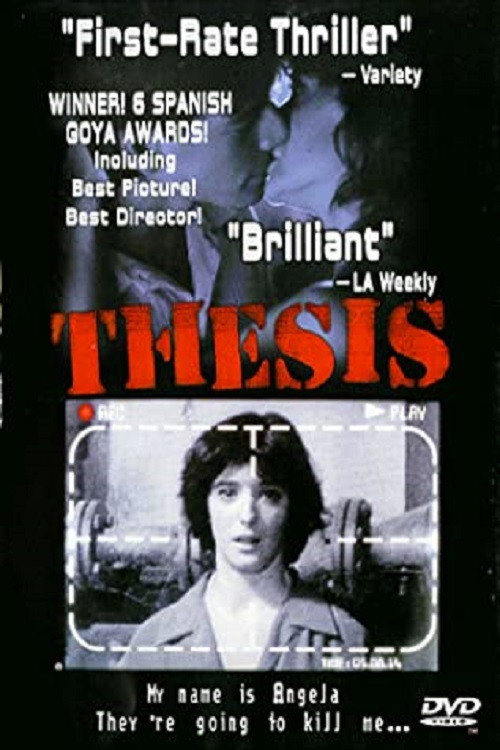
Thesis: A Masterclass in Darkness (Or How to Stab Your Audience in the Back Without Them Noticing)
⚡Del mismo director (Alejandro Amenábar): analiza la evolución o degradación de su estilo.
Claqueta Ácida dissects Alejandro Amenábar’s *Thesis*—the film that turned cinematic violence into a psychological autopsy of the human soul.
 🔥 Fusión Nuclear9.5
*2001: A Space Odyssey – A Monkey, a Monolith, and Two Hours of Cosmic Pretentiousness*
⚡Afinidad temática directa en atmósfera, estilo y fijaciones visuales.
We dissect Stanley Kubrick’s magnum opus. A visual feast of minimalism and space hypnosis that cemented "serious" sci-fi—and bored half of humanity to tears.
 🔥 Fusión Nuclear9.3
2001: A Space Odyssey — The Day Kubrick Left Us Speechless (and Oxygenless)
⚡Afinidad temática directa en atmósfera, estilo y fijaciones visuales.
Kubrick turned science fiction into pure art: 149 minutes of eloquent silence, bone-wielding apes, and a psychopathic computer. Masterpiece or pretentious fraud? Here’s the verdict.
Editorial Ecosystem
Cinephile connections, archive interviews and related analyses.
🎞️ In Claqueta Cinematheque1
💬 Debate Cinéfilo & Autopsia de Lectores
0 veredictos¿Discrepas con nuestra nota? ¿Es una obra maestra o veneno puro? Deja tu veredicto abajo sin necesidad de registro.


Aún nadie ha dejado su veredicto para esta película.
Sé el primero en clavarle el colmillo rellenando el formulario de arriba.