Love’s Irony (Mile End Kicks) — When Indie Film Embraces Clichés Like a Toxic Ex at an Airbnb Party
Barbie Ferreira stars in a charming and witty indie rom-com that tackles the creative crises and emotional entanglements of your twenties—with just the right amount of millennial angst and indie-rock pretension.

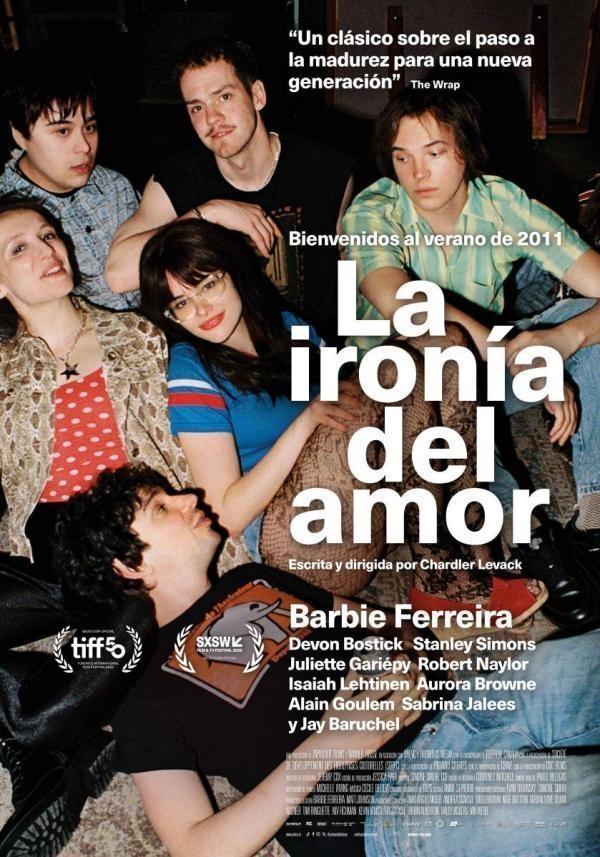

Love’s Irony (Mile End Kicks): When Indie Film Embraces Clichés Like a Toxic Ex at an Airbnb Party
Montreal—Canada’s self-proclaimed "Paris of North America" (spoiler: it’s not, but at least it has decent bagels and a music scene that hasn’t drowned in autotune)—sets the perfect backdrop for Love’s Irony, Chandler Levack’s directorial debut, which insists on portraying Gen Z and late millennials as if they were characters from a Girls episode directed by a Noah Baumbach intern. And look, that’s not necessarily a bad thing. North American indie cinema has been jerking off to the same premise for decades—lost youth, hipster cafés, struggling bands, and relationships that oscillate between awkward and unbearable—but Levack, at least, makes the result palatable, like a mint gum after a night of cheap tequila.
The film follows a group of twenty-somethings drifting through Mile End (that Montreal neighborhood where rents haven’t yet hit Toronto levels and dive bars still serve craft beer at reasonable prices), tangled in a web of failed romances, artistic dreams that vanish like pot smoke, and that eternal existential question: "Why the hell does no one in this city know what they want, yet everyone acts like they’re the protagonist of a Sally Rooney novel?" The answer, of course, is that Levack’s script has no intention of answering it. Its goal is more modest: to capture the zeitgeist of a generation that mistakes anxiety for depth and memes for life philosophy.
Direction: Chandler Levack or the Art of Not Reinventing the Wheel (But Painting It Pastel)
Levack, who until now had been writing scripts for dubiously prestigious Canadian series (think Schitt’s Creek but with less budget and more angst), makes her feature debut with a surprisingly steady hand for contemporary indie film. Her greatest virtue is understanding that the rhythm of a modern rom-com can’t be that of Before Sunrise (where people still had the patience to listen to some guy talk about Nietzsche for two hours), but rather that of a TikTok: fast, fragmented, and with the attention span of a golden retriever in a ball pit. The shots are clean, the camera rarely stays still for more than five seconds, and the editing—courtesy of an editor who’s clearly watched too much Fleabag—plays with time jumps and musical transitions that give it a dynamic, almost frenetic feel.
That said, Levack falls into the same trap as 90% of indie cinema: the obsession with authenticity. There’s a scene where the characters discuss whether capitalism is a social construct while smoking on a balcony that reeks of pretension from a mile away. It’s the kind of moment that in Frances Ha felt endearing, but in Love’s Irony seems lifted from a beginner’s creative writing workshop. But hey, at least she doesn’t turn her characters into sugar-coated versions of themselves, like Greta Gerwig did in Lady Bird (where even the most mundane conflict felt like it was plucked from an Instagram-Worthy Life manual).
Cinematography: Montreal as an Apple Music Ad
Cinematographer Maya Bankovic (who worked on The Nest, a family drama so cold it could freeze hell) opts for a desaturated, earthy color palette that gives the film a mumblecore-with-a-budget vibe. The interiors—apartments crammed with vinyl records, indie band posters, and plants no one waters—are lit with natural light straight out of a VSCO filter, while the outdoor scenes take advantage of Mile End’s industrial architecture to create compositions that, let’s be honest, are designed to make viewers sigh and say, "God, Montreal is so beautiful." Spoiler: It’s not that beautiful. It’s a city with eight-month winters and a cultural scene that survives on government subsidies, but Bankovic sells it as a paradise for starving artists.
The problem is that, in her quest to capture the indie aesthetic, the cinematography sometimes falls into the trap of being too pretty. There’s a shot of Barbie Ferreira walking down a cobblestone street in an oversized coat with a coffee in hand that looks like it was ripped straight from a Pinterest mood board. It’s not ugly, but it’s calculated, as if Levack and Bankovic said, "Let’s make this movie look like a Spotify ad, but with more existential angst."
Soundtrack: The Film’s True Protagonist (and Its Only Emotional Lifeline)
If there’s one thing that saves Love’s Irony from becoming another forgettable episode of New Girl, it’s its soundtrack. Curated with the care of a DJ who’s spent too many nights in dive bars, the music selection is a love letter to Montreal’s indie scene, featuring cameos from local bands like Men I Trust, The Barr Brothers, and Grimes (before she became a cyborg obsessed with AI). The songs don’t just accompany the scenes—they elevate them, adding a layer of emotion the script sometimes fails to convey on its own.
There’s a moment where Barbie Ferreira’s character, Jesse, dances alone in her room to "La Femme" by The Blaze, and it’s so genuine, so real, that you almost forgive the rest of the film for feeling like a collage of clichés. The music doesn’t just set the mood—it explains these characters better than any dialogue. When a Car Seat Headrest song plays, you know you’re in for some forced introspection; when an Arcade Fire track kicks in, it’s a sign someone’s about to have a (probably fake) epiphany about love or life.
It’s ironic—pun intended—that the soundtrack is the most original thing about a movie that otherwise follows the genre’s rules like they’re Moses’ commandments. But at least Levack had the good taste not to include "Yellow" by Coldplay in the climax, so points for that.
Performances: Barbie Ferreira Saves the Ship (And Devon Bostick Sinks It a Little)
Barbie Ferreira, that Brazilian-American goddess who rose to fame as Kat in Euphoria before HBO turned her into a walking meme, proves here why she’s one of the most interesting actresses of her generation. Her Jesse is a whirlwind of contradictions: funny, insecure, self-centered but endearing, with explosive chemistry with the rest of the cast. Ferreira has a gift for making even the most hackneyed dialogue sound fresh, as if she’s improvising rather than reciting a script. There’s a scene where she argues with her love interest (Stanley Simons, who does a competent but forgettable job) about whether polyamory is just an excuse to avoid commitment, and Ferreira makes the moment both hilarious and painfully real. It’s not Meryl Streep in The Devil Wears Prada, but it’s close.
The rest of the cast, however, sails in rougher waters. Devon Bostick, that Canadian actor doomed to play weirdos with social issues (see: Diary of a Wimpy Kid), plays Liam, the musician friend everyone has in their group who serves as the plot’s catalyst. The problem is that Bostick seems to be in a completely different movie: his performance is so exaggerated it borders on caricature, as if someone told him "indie cinema is about acting like you have an anxiety disorder, but with style." It doesn’t help that his character is the archetype of the tortured artist who listens to Elliott Smith and cries in the shower—a cliché Levack doesn’t bother to subvert.
Stanley Simons, meanwhile, does what he can with Eli, Jesse’s love interest, but his character is so generic—the nice guy who’s always there but never interesting enough—that it’s hard to understand why someone like Jesse would waste her time on him. He’s the kind of role that in a better movie would’ve been played by someone like Paul Mescal or Timothée Chalamet, but in Love’s Irony he’s just hot guy with a three-day beard and communication issues.
Script: When Sarcasm Isn’t Enough to Hide the Lack of Originality
Levack’s script has brilliant moments, especially in the dialogue, which sounds like someone recorded real conversations from a group of drunk friends at an afterparty and then edited out the awkward silences. There’s a scene where Jesse and her friend Mira (played by a solid but underused Alexandra Roberts) debate whether it’s ethical to ghost someone, and the exchange is so sharp it almost hurts. But these flashes of genius are overshadowed by Levack’s insistence on following the classic indie rom-com structure: the chance encounter, the crush, the silly fight, the forced reconciliation, and the ambiguous ending that leaves everyone unsatisfied but hopeful.
The script’s biggest problem is that it doesn’t dare to go beyond the safe zone. Jesse is a likable protagonist, but her emotional arc—learning not to sabotage her relationships out of fear of commitment—is so predictable you could guess every twist before it happens. And let’s not even talk about the secondary characters, who are little more than bearded, tattooed stereotypes: the gay friend who gives love advice, the feminist friend who’s always right, the toxic ex who shows up at the worst possible moment. They’re the same archetypes we’ve seen in 500 Days of Summer, The O.C., and even Sex and the City, but with Instagram filters.
Levack tries to give the story a satirical edge, especially in scenes critiquing modern dating culture ("Why doesn’t anyone say what they want? Why does everything have to be a game of mixed signals?"), but in the end, the movie falls into the same traps it mocks. It’s like someone making a documentary about how toxic sugar is and then offering you a chocolate cake.
Cinematic Comparisons: Is Love’s Irony the Lovechild of Frances Ha and High Fidelity?
If we had to place Love’s Irony in the indie film family tree, it’d be the result of a ménage à trois between Frances Ha (for its portrait of a young artist in crisis), High Fidelity (for its obsession with music and failed relationships), and The Social Network (but with fewer memorable lines and more angst over not getting likes). There’s also a touch of Scott Pilgrim vs. The World in how the film blends digital and analog, though without Edgar Wright’s visual energy or absurd humor.
But where films like Frances Ha or Lady Bird managed to transcend genre clichés thanks to complex characters and bold direction, Love’s Irony stays on the surface, like a tourist taking photos of Montreal without bothering to talk to the locals. It’s not bad, but it’s not memorable either. It’s the kind of movie you’ll watch at a festival, enjoy for its soundtrack, and then forget within a week—like a Tinder match that showed promise but led to nothing.
The best
- Barbie Ferreira: A performance so magnetic it makes even the most clichéd dialogue sound like modern poetry. If this woman isn’t starring in an A24 film within the next two years, cinema is broken.
The worst
Predictable formulas: Levack follows the indie rom-com handbook like an overachieving student cheating on a test. "What if we mix some millennial sarcasm with an ambiguous ending? Revolutionary!"*- Caricatured side characters: The tortured musician friend, the feminist friend who’s always right, the toxic ex… They’re the same old archetypes, just with three-day beards and band T-shirts no one’s heard of.
The Verdict of Claqueta Ácida (6/10)
Love’s Irony (Mile End Kicks) is the kind of movie that makes you smile, hum its soundtrack for a week, and then forget it like an unanswered text. Chandler Levack proves she knows how to capture a generation’s zeitgeist, but she lacks the courage (or originality) to subvert it. Barbie Ferreira shines like a beacon in a sea of clichés, the music saves scenes that would otherwise be unbearable, and Montreal has never looked so cool (though it’s still a city where the cold could freeze hell). It’s not the indie rom-com the world needs, but it’s the one it deserves: harmless, pleasant, and as shallow as an Instagram reel. 💀🎬 Tráiler Oficial
Abrir en YouTube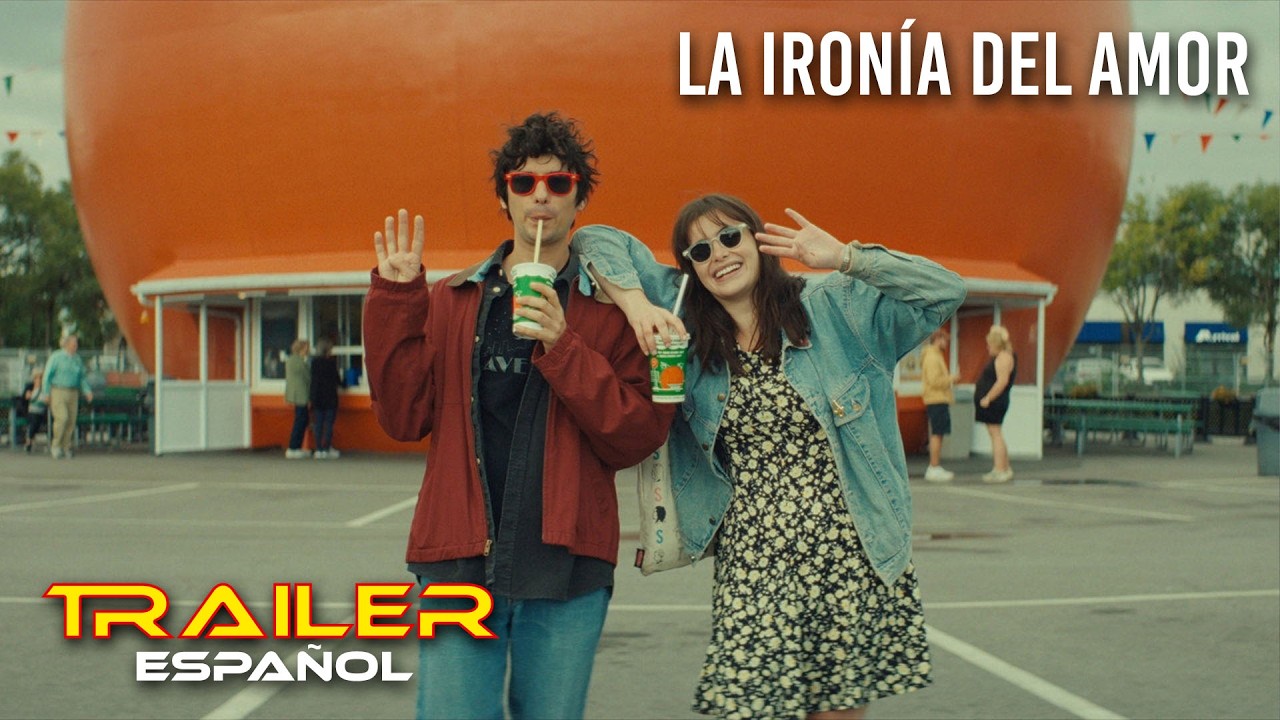
Ending Explained: Love’s Irony (Mile End Kicks)
Ficha de Daños Colaterales en Sala
Certificado de impacto psicofísico emitido por Odin Lagbert
2 amagos en el tramo intermedio; pestañeo pesado en las transiciones más innecesarias.
Minuto 36 y minuto 89 (comprobando cuánto quedaba de suplicio).
1 espressos para no dejarse vencer por la mediocridad cómoda.
"A mitad del segundo acto cuando la subtrama secundaria empezó a pesar más de lo que aportaba."
💬 El Veredicto de la Comunidad
¿Qué te ha parecido la película? Deja tu nota de 0 a 10 para contrastarla con el análisis de la redacción.
Aún no has votado
📢 ¿Te ha gustado el ácido?
Comparte esta crítica con tus amigos cinéfilos o desata la polémica en redes.
⚡ THE CINEMATIC VENOM YOUR INBOX CRAVES
No sugarcoated ratings, no corporate fluff. Subscribe for our uncensored weekly analysis or join the private Telegram for press previews, poll clashes, and instant alerts.
Alertas de estrenos en 1 segundo, encuestas en caliente y audios al salir de pases de prensa.
Recibe la dosis semanal en tu mail + regalo inmediato del PDF con 50 joyas ocultas de culto.
Related Reviews
Recommended autopsies for demanding film buffs.
 ⚡ Ácido Cítrico7.5
A Ghost Story: A Journey Through Time and Memory
⚡Afinidad temática directa en atmósfera, estilo y fijaciones visuales.
The Claqueta Ácida review of A Ghost Story, a film that explores existence and human connection.
 ⚡ Ácido Cítrico7.2
Acid in the Veins: Fede Álvarez Revives the Tactile Panic of Alien
⚡Afinidad temática directa en atmósfera, estilo y fijaciones visuales.
Industrial claustrophobia and pure physical terror. A merciless critique of Ian Holm's CGI and the cheap nostalgia that stains the franchise's return.
 🔥 Fusión Nuclear8.0
Backrooms: A Descent into the Void
⚡Afinidad temática directa en atmósfera, estilo y fijaciones visuales.
A film that flings wide the door to mystery and terror—if you dare to step through
Editorial Ecosystem
Cinephile connections, archive interviews and related analyses.
💬 Debate Cinéfilo & Autopsia de Lectores
0 veredictos¿Discrepas con nuestra nota? ¿Es una obra maestra o veneno puro? Deja tu veredicto abajo sin necesidad de registro.


Aún nadie ha dejado su veredicto para esta película.
Sé el primero en clavarle el colmillo rellenando el formulario de arriba.