He-Man and the Masters of the Universe — When Nostalgia-Porn Dons Armor (and Fails to Avoid Looking Like a Mattel Catalog)
Travis Knight directs an ambitious adaptation of the classic Eternia universe, striving to balance cutting-edge digital effects with the heart and soul of the original franchise.

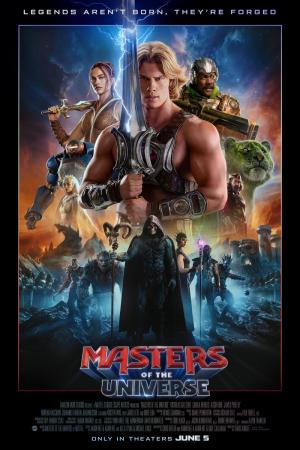

He-Man and the Masters of the Universe: When Nostalgia-Porn Dons Armor (and Fails to Avoid Looking Like a Mattel Catalog)
Ah, nostalgia. That sweet poison Hollywood has turned into its top export, right alongside cardboard-flavored popcorn and genetically modified popcorn engineered to leave no residue in your teeth. He-Man and the Masters of the Universe (2024) arrives with the impossible mission of resurrecting a franchise that, in its original form, was little more than an extended commercial for action figures with plastic muscles and swords that gleamed under the glow of an '80s TV. But make no mistake—Travis Knight, that director who went from crafting wonders in Kubo and the Two Strings to selling his soul to Hasbro for a fistful of dollars and a contract to direct Transformers 4, isn’t here to play. He’s here to prove that, with enough money and an army of digital animators, even an '80s toy can become a blockbuster that smells like hospital disinfectant and focus group meetings.
finalExplicado: "En el clímax, Adam, tras fracasar repetidamente y casi morir, acepta por fin su rol como He-Man. Levanta la espada (que brilla con un CGI dorado excesivo) y, en una secuencia de transformación interminable, derrota a Skeletor en un duelo que mezcla golpes de power metal con slow-motion. Teela, convertida en He-Ro, le salva el pellejo en el último segundo. Simbólicamente, el desenlace es un triste epitafio: la espada que antes era símbolo de poder divino se reduce a un juguete caro de Mattel. El héroe ya no nace de la mitología, sino de la nostalgia manufacturada y los focus groups. Eternia muere convertida en un blockbuster genérico que solo quiere vender más figuras de acción. El verdadero villano no es Skeletor: es el algoritmo."
The Myth, the Man, the Hero (and His Sword That Looks Like It Was Bought on AliExpress)
The premise is as old as cinema itself: a spoiled prince (Nicholas Galitzine, whose acting oscillates between the brooding of a depressed TikToker and the charisma of a Zara mannequin) discovers his destiny is to wield a magical sword and become the most powerful warrior in the universe. Yes, like Arthur in Excalibur, but with less poetry and more product placement for swords that look like they were pulled from a beginner’s Dungeons & Dragons set. Adam of Eternia—or He-Man, as his fans (and Mattel executives) call him—is the classic hero by the book: muscular, noble, a little dim, and with a jaw so square it could double as a construction tool. Galitzine does what he can with the material, but his performance lacks the camp of the original He-Man (where the Spanish dub gave him the flair of a Mexican luchador—pure delight) and the charisma of a Chris Hemsworth in Thor. Instead, we get a guy who seems more concerned about keeping his hair perfectly styled mid-battle than saving the universe.
Then there’s Teela (Camila Mendes), the warrior accompanying Adam on his journey. Mendes, fresh off Riverdale (where she already proved she could survive dialogue more ridiculous than this movie’s), brings some freshness to the cast. But her character suffers from the "strong woman in a movie full of strong men" syndrome: she has skills, personality, and agency... until the plot sidelines her into being the obligatory love interest. Because, of course, in 2024, a He-Man movie can’t afford not to have a will-they-won’t-they between the hero and his female sidekick. It’s as if the writers got a studio note that read: "Add 15% sexual tension, but don’t let it distract from the toy sales."
Skeletor: The Villain Who Deserved More (and Got Less)
If there was one thing the original '80s series nailed, it was its villain. Skeletor wasn’t just some guy with a skull for a face and an inferiority complex—he was a showman, a method actor who relished every minute of his villainy with the over-the-top flair of a British pantomime baddie. In this adaptation, the character is played by Mark Hamill—yes, Luke Skywalker—in what feels like a desperate attempt by the producers to say, "Look, we’ve got a real actor here, not just some guy in a Halloween mask." Hamill does what he can with the material, but the script reduces him to a generic fantasy villain: grandiose monologues, plans that always fail due to a deus ex machina, and a lack of charisma that makes even the original Skeletor (with his drag queen voice) seem like Laurence Olivier in comparison.
The saddest part is that this Skeletor’s design is too realistic. In the '80s, his skull was a caricature, a symbol of evil that worked because it didn’t try to be real. Here, we get CGI that looks like it was lifted from a The Walking Dead episode directed by an intern. It’s as if someone said, "We want Skeletor to be terrifying," and the result was a guy with a bone face that looks like a poorly rendered deepfake. Thankfully, Hamill injects some life into the role with his voice—otherwise, this Skeletor would go down as the most forgettable villain since Malekith in Thor: The Dark World.
Travis Knight: The Man Who Wanted to Be Spielberg (and Ended Up Directing an Extended Commercial)
Travis Knight arrives at He-Man with a résumé that includes Kubo and the Two Strings (a stop-motion animation gem) and Bumblebee (a Transformers movie that, miraculously, wasn’t trash). With that track record, you’d think Knight was the ideal person to bring He-Man to the big screen—someone who understands the balance between visual spectacle and emotional heart. And, in part, he succeeds. The movie is visually ambitious, with a design for Eternia that blends the organic and the digital in a way that recalls Avatar (but with fewer trees and more swords). Castle Grayskull, that childhood icon, is recreated with a level of detail that will make die-hard fans grin. But here’s the problem: no matter how hard Knight tries to give this world depth, at the end of the day, He-Man is still a movie based on an '80s toyetic property. And it shows.
Knight’s direction is competent, but it lacks the magical touch of the original series. Where the '80s cartoons were pure excess—saturated colors, over-the-top villains, and humor that bordered on the absurd—this movie opts for a more serious and epic tone, as if someone at the studio said, "We can’t make it look like a cartoon; people will think it’s for kids." The result is a film that doesn’t quite know what it wants to be: a family adventure full of action and humor? A dark fantasy drama in the vein of The Witcher? An extended Mattel commercial? In the end, it’s a little of everything and nothing at all.
The Script: The Hero’s Journey (or How to Recycle the Same Story for the Umpteenth Time)
If there’s one thing this movie proves, it’s that Hollywood has exhausted every possible variation of the hero’s journey. Adam of Eternia is the classic protagonist who goes from spoiled prince to chosen warrior, hitting all the mandatory beats: the wise mentor (here, a live-action Man-At-Arms who looks like he wandered off a Game of Thrones cosplay), the loyal friend (a character who exists solely for comic relief and to die heroically), and the villain who, of course, is a former ally turned traitor. The script doesn’t invent anything new, but it doesn’t need to—He-Man isn’t a movie that aspires to originality; it aspires to familiarity. The problem is that, in its eagerness to please the fans, it falls into the trap of being too predictable.
The dialogue swings between the epic ("For the power of Grayskull!") and the generic ("I can’t do this alone"), with the occasional joke that feels like it was written by an AI trained on '90s movie scripts. There are moments when the movie seems aware of its own ridiculousness—like when He-Man lifts a giant boulder with one hand while Skeletor screams, "This can’t be happening!"—but instead of embracing that camp, it plays it straight. It’s as if the filmmakers forgot that He-Man was born as a toy commercial, not a Greek tragedy.
Visual Effects: When CGI Becomes the Silent Villain
One of He-Man and the Masters of the Universe’s biggest problems is its reliance on CGI. It’s not that the digital effects are bad per se—there are action sequences that are well-choreographed and visually striking—but there are moments when the movie feels like a demo reel for a VFX company. The large-scale battles, in particular, suffer from the same issue plaguing modern cinema: when there are too many characters on screen, everything becomes a blur, and the impact is lost. It’s like watching a Fortnite fight scene but with real actors—you know there are hits, but you don’t feel any of them.
The creature and beast designs are another weak point. In the original series, Skeletor’s monsters were absurd designs that worked because they were cartoons: a guy with a snake head, a stone giant, a dragon with bat wings. Here, the creatures try to be realistic and end up looking like they were pulled from a poorly optimized Skyrim mod. There’s a moment when He-Man fights a giant tiger that looks like it escaped from a digital safari park, and the scene is so ridiculous you don’t know whether to laugh or cry.
The Soundtrack: An Homage to the '80s (or How to Sound Like a '90s Movie)
The music for He-Man is composed by Lorne Balfe, a composer who’s worked on everything from Mission: Impossible to The Crown. Here, he tries to capture the epic essence of the franchise, resulting in a score that sounds like a hybrid of Hans Zimmer and '80s synthwave, complete with grandiose choirs and percussion that feels lifted from an Assassin’s Creed trailer. It’s not bad, but it’s not memorable either. There are moments when the music tries to elevate scenes that don’t deserve it—like when He-Man discovers his destiny and the score swells as if the universe’s greatest secret is about to be revealed—and others where it simply gets lost in the noise of sound effects.
The most interesting part of the soundtrack is its nods to the original series. There are a few themes that sound suspiciously like the cartoon’s score, and at one point, you even hear a guitar riff reminiscent of He-Man’s iconic theme. These are details fans will appreciate, but they also serve as a reminder that this movie exists in a limbo between homage and remake with no personality of its own.
The Cast: Actors in Search of a Character (and a Script to Help Them)
Nicholas Galitzine as He-Man is... well, someone playing He-Man. He’s not bad, but he’s not memorable either. He has the physical presence for the role—tall, muscular, with a jaw that could cut glass—but he lacks that special something that made the original He-Man so iconic. Galitzine tries to give his character depth, but the script doesn’t make it easy: Adam of Eternia goes from spoiled prince to noble hero in the span of two scenes, with little development in between.
Camila Mendes as Teela is, by far, the best part of the cast. She has chemistry with Galitzine, handles both humor and drama well, and her character is the only one who seems to have any agency in the story. Too bad the script reduces her to the obligatory love interest, because Mendes deserved better. Alison Brie, meanwhile, plays the Sorceress—a character who, in the original series, was little more than a voiceover and here is... well, little more than a voiceover with more lines. Brie does what she can, but her character is so generic you wonder why they didn’t just replace her with a hologram.
And then there’s Mark Hamill as Skeletor. Hamill is a fantastic actor, but even he seems aware he’s playing a villain who’s neither scary nor deep, and whose master plan is "steal the magic sword to rule the universe." Hamill leans into the grandiosity of his dialogue, as if he knows he’s in a movie that doesn’t take itself seriously and decides to have fun with it. It’s the only moment the film seems aware of its own ridiculousness, and for that, it’s one of the few highlights.
Nostalgia as a Double-Edged Sword (or How to Sell the Past for a Fistful of Dollars)
He-Man and the Masters of the Universe is a movie that lives and dies by nostalgia. For fans of the original series, there are constant easter eggs: from the design of Castle Grayskull to the appearance of side characters like Orko (who here is an abominable CGI creation that looks like it wandered off a Beetlejuice set). But nostalgia only works if the movie manages to transcend it, and that’s where He-Man fails. Instead of using the original material as a jumping-off point for something new, the movie just repeats it with modern visual effects. It’s as if someone took the '80s cartoons, ran them through an Unreal Engine filter, and said, "Voilà! We’ve got a movie!"
The problem isn’t that the movie is faithful to the original material—many fans wanted that—but that this fidelity comes with a lack of ambition. He-Man doesn’t try to reinvent anything, doesn’t offer a fresh take on these characters, and, worst of all, lacks soul. It’s a competent movie, well-made and visually impressive, but it feels like a product before it feels like a work of art. And in a world where blockbuster cinema is dominated by franchises that don’t know when to die, He-Man is just another link in the chain of movies designed to sell toys and merchandising.
The Verdict of Claqueta Ácida: Is He-Man and the Masters of the Universe Worth Watching?
If you’re a fan of the original series, you’ll probably enjoy the easter eggs and Eternia’s design. If you’re a parent looking to take your kids to see something spectacular, this movie delivers. But if you’re looking for a film with heart, originality, or something to say, He-Man will leave you feeling like you just ate a Happy Meal: satisfied for a moment, but hungry for something more substantial five minutes later.
Travis Knight has made a movie that’s respectful of the original material, with a cast that tries hard and a production design that impresses. But he’s also made a movie that’s safe, predictable, and ultimately forgettable. He-Man and the Masters of the Universe isn’t bad, but it’s not good either. At best, it’s fine. And in a world where blockbuster cinema is dominated by movies that bet on bigness over greatness, that’s not enough.
The best
Castle Grayskull in all its glory: Finally, a live-action* version that does justice to the '80s icon—even if it’s just to sell more Mattel playsets. Mark Hamill as Skeletor: The only one who seems to be having fun, probably because he knows this is better than doing cameos in The Flash*.The worst
The CGI that will age like milk left in the sun: In ten years, this movie will look like a Power Rangers episode directed by a deepfake* of Michael Bay. The wasted potential of Teela: A strong female character reduced to the will-they-won’t-they trope, because heaven forbid a He-Man* movie not have a love subplot.🎬 Tráiler Oficial
Abrir en YouTube
Ending Explained: He-Man and the Masters of the Universe
Ficha de Daños Colaterales en Sala
Certificado de impacto psicofísico emitido por Odin Lagbert
1 amago en el tramo intermedio; pestañeo pesado en las transiciones más innecesarias.
Minuto 48 y minuto 79 (comprobando cuánto quedaba de suplicio).
1 espressos para no dejarse vencer por la mediocridad cómoda.
"A mitad del segundo acto cuando la subtrama secundaria empezó a pesar más de lo que aportaba."
💬 El Veredicto de la Comunidad
¿Qué te ha parecido la película? Deja tu nota de 0 a 10 para contrastarla con el análisis de la redacción.
Aún no has votado
📢 ¿Te ha gustado el ácido?
Comparte esta crítica con tus amigos cinéfilos o desata la polémica en redes.
⚡ THE CINEMATIC VENOM YOUR INBOX CRAVES
No sugarcoated ratings, no corporate fluff. Subscribe for our uncensored weekly analysis or join the private Telegram for press previews, poll clashes, and instant alerts.
Alertas de estrenos en 1 segundo, encuestas en caliente y audios al salir de pases de prensa.
Recibe la dosis semanal en tu mail + regalo inmediato del PDF con 50 joyas ocultas de culto.
Related Reviews
Recommended autopsies for demanding film buffs.
 ⚡ Ácido Cítrico7.5
A Ghost Story: A Journey Through Time and Memory
⚡Afinidad temática directa en atmósfera, estilo y fijaciones visuales.
The Claqueta Ácida review of A Ghost Story, a film that explores existence and human connection.
 🔥 Fusión Nuclear8.0
Backrooms: A Descent into the Void
⚡Afinidad temática directa en atmósfera, estilo y fijaciones visuales.
A film that flings wide the door to mystery and terror—if you dare to step through
 ⚡ Ácido Cítrico7.5
**Bugonia: The Cosmic Snatch**
⚡Afinidad temática directa en atmósfera, estilo y fijaciones visuales.
Two young men convinced an executive is an alien kidnap her. Will they save Earth—or just their own delusions?
Editorial Ecosystem
Cinephile connections, archive interviews and related analyses.
💬 Debate Cinéfilo & Autopsia de Lectores
0 veredictos¿Discrepas con nuestra nota? ¿Es una obra maestra o veneno puro? Deja tu veredicto abajo sin necesidad de registro.

Aún nadie ha dejado su veredicto para esta película.
Sé el primero en clavarle el colmillo rellenando el formulario de arriba.