"The Light" — When God’s Wi-Fi Fails and Guilt Still Gets 5G Coverage
Alberto San Juan stars in a harrowing, intimate psychological drama about a priest’s moral dilemmas when confronted with the dark secrets of his congregation.

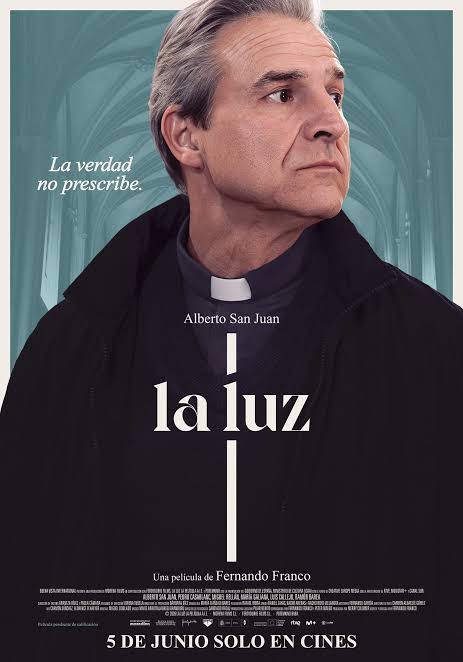
‘The Light’: When God’s Wi-Fi Fails and Guilt Still Gets 5G Coverage
Under the motto "Truth doesn’t expire"—because, apparently, the Church’s sins go on a 3-for-2 sale in hell—Fernando Franco delivers The Light, a clerical drama that reeks of stale incense and secrets better guarded than the Vatican’s UFO files. This isn’t a movie; it’s a cinematic exorcism where the demon isn’t a kid with a voice from beyond, but a priest’s conscience discovering his cassock is more stained than a brotherhood’s dinner tablecloth after Holy Week.
Alberto San Juan, as Father Daniel, delivers a performance so restrained it looks like his lips have been sewn shut with gold communion thread. He’s not an actor; he’s an emotional tightrope walker balancing on the Catholic repression’s high wire without a safety net. Every glance is a spoiler that something stinks in the diocese—not because the fish on Friday went unblessed. San Juan pulls off the impossible: a man in black against an equally dark backdrop conveying more nuances than a Turner watercolor palette. Alongside him, Pedro Casablanc and Miguel Rellán—two old sea wolves of Spanish cinema—form an acting trio that works like a Greek chorus in cassocks and collars, whispering uncomfortable truths between rosary murmurs.
finalExplicado: "El clímax de La luz ocurre cuando el sacerdote, tras descubrir que uno de los miembros más respetados de su congregación ha abusado sistemáticamente de menores durante décadas, decide no denunciarlo a las autoridades civiles. En su lugar, lo confronta en privado, lo obliga a confesar y luego lo absuelve en un ritual frío y mecánico, mientras la cámara permanece fija en su rostro vacío. Simbólicamente, el desenlace representa la bancarrota total de la institución eclesiástica: la luz que da título a la película se apaga por completo. La redención se convierte en complicidad, la misericordia en encubrimiento y la fe en un mecanismo podrido que protege al verdugo y abandona a las víctimas. El sacerdote no se salva; se condena junto al monstruo que perdona."
Direction: Franco, the Surgeon of Open Wounds
Fernando Franco isn’t a director; he’s a forensic pathologist. In The Light, as he did in The Wound, he dissects his characters with the precision of a scalpel and the coldness of a coroner’s report. There are no concessions to the audience, no cheap jump scares, no plot twists smelling of a desperate screenwriter’s cliffhanger. Here, the suspense isn’t about what’s going to happen, but how everything will rot before it does.
Franco proves Spanish cinema can be sober without being boring, and solemnity doesn’t have to mean nap time. His mise-en-scène is minimalist to the point of exhaustion: long takes, symmetrical frames reminiscent of Baroque altars (coincidence? I think not), and cinematography painted in the sepia tones of a 1950s photo album, as if the film unfolds in a limbo between memory and purgatory. The light—redundancy intended—is a character in itself: cold, clinical, sometimes blinding like an interrogation lamp, other times dim like a candle flame about to go out. It’s the kind of lighting that makes you feel like you’re in a confession, minus the comfort of absolution.
The editing, meanwhile, is so measured it seems Franco timed the cuts with a Pope-blessed metronome. There’s no rush because guilt, like sacramental wine, improves with age. The silences aren’t empty; they’re spaces filled with tension, like those moments when your mother-in-law stares at you while you chew, and you know she’s about to drop an uncomfortable truth. Here, the silences are so eloquent you can almost hear the characters’ thoughts—not exactly reciting the Our Father.
Screenplay: A Thriller Without Car Chases, But With More Internal Persecution Than an Episode of ‘El Ministerio del Tiempo’
The Light’s script is like a fine wine: it needs time to breathe, and if you’re not used to it, it might knock you out. This isn’t a typical thriller, the kind that keeps you glued to your seat with car chases or kitchen-knife murders. No, this is a psychological thriller that leaves you turning it over in your head for days, like a dog chasing its own tail. The plot revolves around a dark secret within the congregation—no spoilers, but imagine something worse than finding out your local priest is a Rosalía fan—and how Father Daniel faces the moral dilemma of keeping silent or becoming the Church’s Julian Assange.
What’s fascinating about the script is its avoidance of easy moral binaries. There are no good guys or bad guys, just people trapped in an institution that functions like a heavenly version of The Godfather, where omertà isn’t an option but a baptismal obligation. The dialogue is sharp but never grandiose. There are no faith monologues sounding like Sunday sermons, just short, almost whispered phrases hiding more venom than a snake in a confessional. Franco and his writing team (rumored to include a repentant ex-seminarist) make even the most mundane scenes—a meal in the refectory, a prayer in the chapel—drip with almost unbearable tension.
That said, if you’re looking for breakneck pacing, The Light will feel slower than a Latin Mass. But Franco’s cinema isn’t made for the impatient; it’s for those who enjoy the guilty pleasure of watching a man bleed out emotionally in real time. It’s the cinematic equivalent of reading The Brothers Karamazov on a rainy afternoon: not light, but it leaves you feeling like you’ve experienced something profound.
Score: Silence Is the New Heavy Metal
If anything defines The Light’s atmosphere, it’s its score—or rather, its lack of one. Franco opts for a minimalist soundscape where the only musical chords come from a church organ tuned by the devil himself. The rest is silence, sighs, footsteps on marble floors, and the rustle of psalm book pages. It’s a risky choice, but it fits like a glove: in a film about repression and guilt, what better than letting the characters drown in their own muteness?
When music does appear, it’s almost subliminal, like a divine whisper reminding you God is there—but not to lend a hand. It’s the kind of score you don’t notice until the film ends, and you realize you’ve been holding your breath for two hours.
Cinematic Comparisons: Between Bergman and Berlanga, But With More Dandruff
The Light draws from illustrious and eclectic sources. On one hand, it has the psychological rigor and solemnity of Ingmar Bergman—particularly Winter Light (1963), coincidentally—where the crisis of faith is explored with a rawness that makes the viewer feel like an intruder in a group therapy session for priests with existential crises. But there are also echoes of Spanish social cinema, that tradition of portraying institutional miseries with a dark humor reminiscent of Berlanga, though here the humor is absent (or maybe the joke is just too dark to get).
If Spotlight (2015) was the journalistic thriller about church abuses, The Light is its intimate, claustrophobic counterpart: no newsrooms or headlines, just a man facing his conscience, as if Kafka had written an episode of The Young Pope. And while it doesn’t reach the brilliance of Pablo Larraín’s The Club (2015)—where the priests were so human they were terrifying—Franco achieves something equally valuable: humanizing a character who, in other hands, would have been a cliché of goodness or evil.
Performances: San Juan, the Man Who Whispers to Sinners
Alberto San Juan doesn’t act in The Light: he inhabits Father Daniel as if it were a second skin, or rather, a cassock two sizes too small. His performance is a masterclass in restraint, where every gesture—a blink, a tremor in his voice, a hand clutching a rosary like a lifeline—is calculated to the millimeter. He’s not a character who speaks; he’s a character who suffers in silence, and San Juan makes that silence more eloquent than a prime minister’s inaugural address.
Pedro Casablanc, as the bishop, is pure moral ambiguity. He’s not a villain, but a man trapped in his own web of lies, like a politician in an election year. His performance is subtle but lethal: every smile hides a threat, every gesture of complicity hides blackmail. Then there’s Miguel Rellán, who steals the spotlight in just a few scenes as the veteran priest who’s seen too much and prefers silence over self-immolation. It’s the kind of performance that makes you wonder why Rellán isn’t in more leading roles.
Atmosphere: Welcome to Purgatory, No All-You-Can-Eat Buffet
The Light’s atmosphere is so oppressive that after leaving the theater, you’ll need a holy water shower and a shot of something stronger than sacramental wine. Franco turns ecclesiastical spaces—churches, offices, seminary rooms—into psychological cages where characters move like trapped animals. The cinematography, by Santiago Racaj, is a chiaroscuro marvel: some scenes are lit with such cold light it feels like the characters are in spiritual Antarctica, while others are so dark you can almost smell the mold of unconfessed sins.
The sound design is perfect: the echo of footsteps in empty hallways, the creak of wooden doors, the whisper of prayers… Everything is crafted to make you feel like you’re inside the film—not as the good priest, but as the guilty bystander. It’s such an intense sensory experience that if you close your eyes, you can almost feel the weight of guilt on your shoulders.
The best
- Alberto San Juan: An actor who proves silence can be more powerful than a scream—just don’t doze off on the pew.
- The oppressive atmosphere: So thick you could cut it with a communion wafer and spread it on bread like holy butter.
The worst
Pacing: If your idea of a thriller is Fast & Furious: Vatican Drift*, you’ll be bored out of your mind—like an atheist during Holy Week.- Solemn tone: Some films punch you in the gut; this one punches you in the soul, and not everyone’s ready for that.
The Verdict of Claqueta Ácida (8/10)
The Light is the kind of film that doesn’t leave you indifferent—though sometimes you wish it would. Fernando Franco crafts a clerical drama so sober it seems carved from Carrara marble, with performances that shine brighter than a chalice in a procession and an atmosphere so oppressive you’ll feel like confessing your sins afterward. It’s not cinema for everyone, but if you dare to venture into its shadows, you’ll come out feeling like you’ve attended an exorcism… and not the kind your TV needed. 🔥⛪🎬 Tráiler Oficial
Abrir en YouTube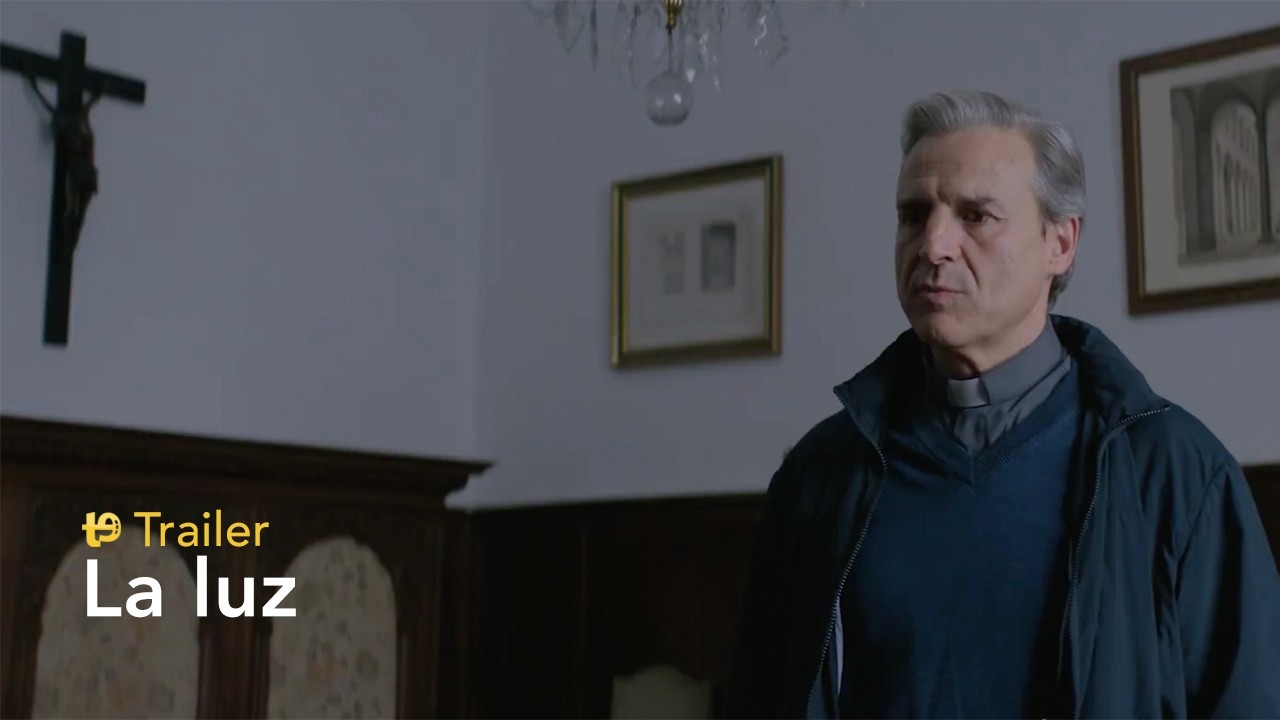
Ending Explained: "The Light"
Ficha de Daños Colaterales en Sala
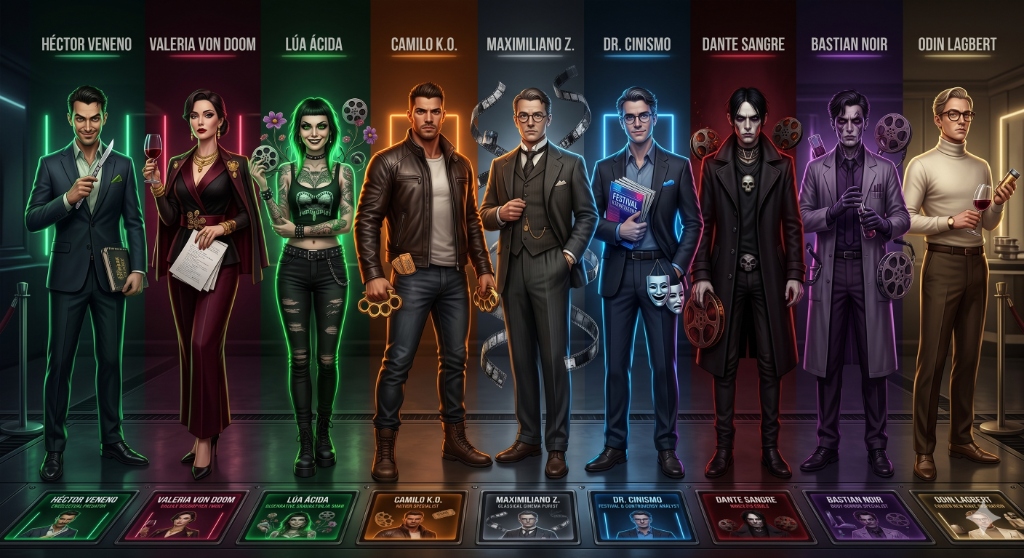
Certificado de impacto psicofísico emitido por Odin Lagbert
Cero bostezos. Pupilas dilatadas y tensión mandibular constante.
Ninguna comprobación del tiempo. Se agradece la rareza.
Ninguna: la adrenalina cinematográfica es suficiente.
"No hubo. La coherencia se mantuvo hasta el último fotograma."
💬 El Veredicto de la Comunidad
¿Qué te ha parecido la película? Deja tu nota de 0 a 10 para contrastarla con el análisis de la redacción.
Aún no has votado
📢 ¿Te ha gustado el ácido?
Comparte esta crítica con tus amigos cinéfilos o desata la polémica en redes.
⚡ THE CINEMATIC VENOM YOUR INBOX CRAVES
No sugarcoated ratings, no corporate fluff. Subscribe for our uncensored weekly analysis or join the private Telegram for press previews, poll clashes, and instant alerts.
Alertas de estrenos en 1 segundo, encuestas en caliente y audios al salir de pases de prensa.
Recibe la dosis semanal en tu mail + regalo inmediato del PDF con 50 joyas ocultas de culto.
Related Reviews
Recommended autopsies for demanding film buffs.
 ⚡ Ácido Cítrico7.5
A Ghost Story: A Journey Through Time and Memory
⚡Consagradas en el olimpo transgresor con 🔥 Fusión Nuclear.
The Claqueta Ácida review of A Ghost Story, a film that explores existence and human connection.
 🔥 Fusión Nuclear8.0
*Backrooms: The Maze of Madness – A Descent into Overhyped Nothingness*
⚡Consagradas en el olimpo transgresor con 🔥 Fusión Nuclear.
*A scathing takedown of the horror series everyone’s raving about—spoiler: it’s not that deep.*
 🔥 Fusión Nuclear8.0
Backrooms: A Descent into the Void
⚡Consagradas en el olimpo transgresor con 🔥 Fusión Nuclear.
A film that flings wide the door to mystery and terror—if you dare to step through
Editorial Ecosystem
Cinephile connections, archive interviews and related analyses.
💬 Debate Cinéfilo & Autopsia de Lectores
0 veredictos¿Discrepas con nuestra nota? ¿Es una obra maestra o veneno puro? Deja tu veredicto abajo sin necesidad de registro.

Aún nadie ha dejado su veredicto para esta película.
Sé el primero en clavarle el colmillo rellenando el formulario de arriba.