Lapönia — When the Nougat Tastes Like Ashes and the Christmas Spirit Smells Like Rot
David Serrano turns Christmas into an emotional landfill. Santa Claus doesn’t exist, but the real tragedy is that this movie does. 🎄🔥


Lapönia: full review

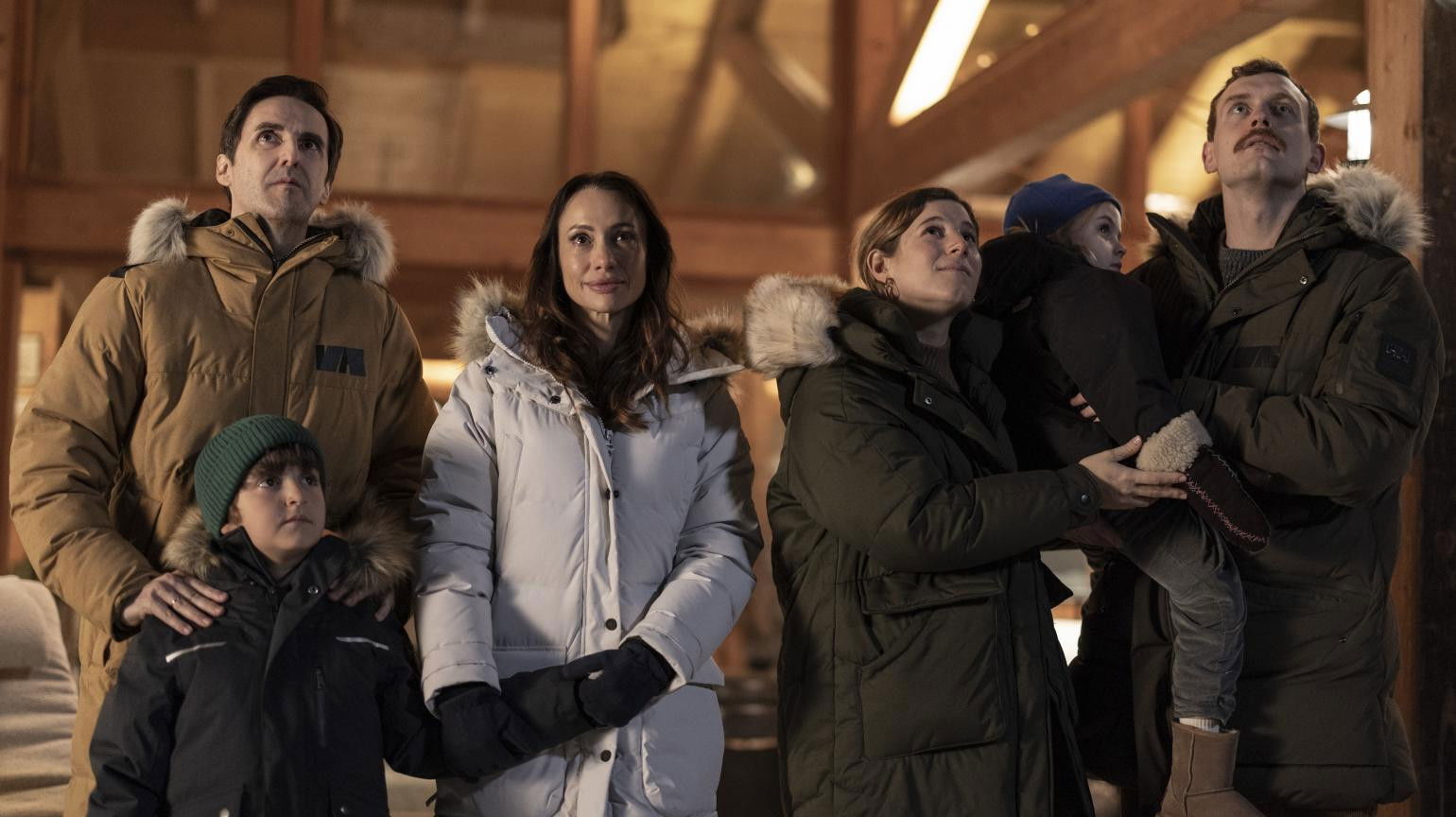
Lapönia arrives like a Christmas gift wrapped in tissue paper, but inside there’s only coal, ashes, and the grim certainty that someone at Mediapro Studio mistook “family drama” for “midday TV movie.” David Serrano, the same guy who brought us Football Days and One More Hour in the Canaries, ventures into the frozen landscapes of Lapland with the subtlety of a reindeer in a china shop. The premise is as old as 80s carols: a family reunites for Christmas, secrets spill out, and a kid learns Santa isn’t real. Spoiler: neither is this movie—at least not as anything worth remembering after the closing credits.
The problem isn’t that Lapönia is predictable—it is, to the point where you could guess every plot twist just from the trailer—but that it doesn’t even bother to disguise its lack of originality. Marc Angelet’s script reads like it was written using a Word template: dialogue that sounds like bad stand-up jokes, characters who drift in and out of scenes like failed auditionees, and a central conflict—the Santa revelation—that resolves with the emotional depth of a nougat commercial. The saddest part is that, amid all the clichés, there are glimpses of something that could’ve been interesting. For instance, the contrast between the Spanish family and Olavi, the Norwegian played by Vebjørn Enger, who at least tries to inject some authenticity into the mess. But even that drowns in a sea of Christmas tropes about forgiveness, family unity, and redemption, as if someone blended Love Actually with No One Can Live Here and sprinkled it with fake snow.
The shoot, according to the few reports that have surfaced, took place in Rovaniemi (Finland) and studios in Barcelona, which explains why Lapland looks more like an IKEA set than a real landscape. Joan Bordera, the cinematographer, does what he can with material that’s beyond saving: pretty shots of snow and Christmas lights, but devoid of soul. The camera moves as if afraid to stay still, as if it knows that the moment it stops, the audience will realize there’s nothing behind it. Joan Martorell’s score, meanwhile, is so intrusive it feels designed to paper over the script’s holes. Every time a character says something remotely emotional, a whiny violin kicks in, as if the film doesn’t trust the audience to feel anything on their own. It’s the sonic equivalent of a hug with boxing gloves.
And then there’s the cast. Natalia Verbeke and Julián López, two actors with enough chops to salvage any shipwreck, seem lost here, as if someone told them they were in a family drama when they’re actually in a graceless black comedy. Ángela Cervantes, as Nuria, has moments where she almost sells her character’s pain, but the script abandons her at the worst possible times. The only one who emerges unscathed is Vebjørn Enger, whose Olavi is the sole character who seems to have arrived from another planet—or at least another movie. His presence is so odd, so out of place, that it ends up being the most interesting thing about the whole affair. The rest of the ensemble, including a José Luis Cartes playing a Santa more fake than a three-euro bill, just recite their lines like they’re in a dress rehearsal, not an actual shoot.

Direction: The Cold That Doesn’t Freeze
David Serrano directs Lapönia like he’s helming an Antena 3 Christmas special: in a hurry, risk-free, and with one eye on the ratings. There isn’t a single shot that surprises, not a sequence that feels alive. Everything is calculated to avoid discomfort, to avoid making you think. It’s the kind of cinema that fades from memory before the credits roll, like a carol playing in the background of a shopping mall. The worst part is that Serrano knows how to do better—his early films had a certain charm—but here, he seems to have abandoned any artistic ambition in favor of a safe, predictable, and, above all, cheap product. The staging is so bland you could swap the dialogue with that of any other Christmas comedy and no one would notice the difference.
The editing, meanwhile, is so rushed it feels designed to keep the audience from questioning what they’re watching. Scenes flash by like slides in a PowerPoint presentation, with no transitions, no rhythm, no tension. There’s a moment where Nuria and Mónica (Natalia Verbeke) have a kitchen argument that could’ve been emotional, but the editing cuts it off at the worst possible moment, like someone hit the fast-forward button on a remote. It’s as if the film is afraid the audience will get bored, but it doesn’t realize that what’s truly boring is its own lack of courage.
Performances: A Cast That Deserved Better
Natalia Verbeke and Julián López are two actors with solid careers, but here they seem to be on autopilot. Verbeke, as Mónica, has moments where she almost conveys her character’s frustration, but the script forces her to deliver lines like “Christmas is a time for forgiveness” with a seriousness that borders on the ridiculous. López, as Ramón, plays the typical annoying brother-in-law who says the wrong thing at the worst moment. His character is so one-dimensional it’s painful to see an actor of his caliber wasted on a role that could’ve been played by any Sálvame extra.
Ángela Cervantes, as Nuria, suffers the most. Her character is the story’s emotional core, but the script reduces her to a collection of motherhood, divorce, and guilt clichés. There’s a moment where she sobs uncontrollably in the bathroom, and while Cervantes plays it with conviction, the dialogue she’s given—“I don’t know how to keep going”—is so generic it sounds like a parody. The only one who escapes unscathed is Vebjørn Enger, whose Olavi is the only character who seems to have a life of his own. His Norwegian accent, his movements, even the way he looks at the other characters, convey an otherness that contrasts with the rest of the film’s artificiality. It’s as if Enger understood something the rest of the team didn’t: that Lapönia isn’t a movie about Christmas, but about loneliness.
The best
- Vebjørn Enger as Olavi: The only character who seems to have arrived from another movie—or at least another planet. His Olavi has more nuance than the entire script combined, and his presence is so strange it ends up being the most interesting thing about the film.
- Joan Bordera’s cinematography in exterior shots: When the camera forgets about the characters and focuses on Lapland’s snowy landscapes, there are visually beautiful moments. Too bad they last shorter than a snowflake in hell.
- The production design in the Romanievi house: The family home’s interior is well-decorated, with Christmas details that almost convey the warmth the script fails to deliver. Almost.
The worst
- Marc Angelet’s script: A compendium of Christmas clichés, TV-movie dialogue, and conflicts resolved with the depth of a puddle. If the goal was to make a predictable film, mission accomplished.
- Joan Martorell’s score: So intrusive it feels designed to cover the script’s holes. Every time a character says something emotional, a whiny violin kicks in, as if the film doesn’t trust the audience to feel anything on their own.
- David Serrano’s direction: Risk-free, surprise-free, soulless. Lapönia feels directed on autopilot, as if the goal was to finish the shoot as quickly as possible and cash the check.
- Natalia Verbeke and Julián López’s characters: Two talented actors wasted in roles that seem plucked from a 90s soap opera. Verbeke deserved better, and López deserved a character with more than one dimension.
- The editing: So rushed it feels designed to keep the audience from questioning what they’re watching. Scenes flash by like slides in a PowerPoint presentation, with no rhythm or tension.
The Verdict of Claqueta Ácida
Lapönia is the kind of film that makes you wonder how, in 2026, anyone still believes Christmas clichés are enough to make cinema. David Serrano and his team have turned a premise that could’ve been sweet—or at least entertaining—into a midday TV movie with fake snow and actors who seem to be reading their lines for the first time. There are glimmers of something that could’ve been interesting, but they drown in a sea of clichés, ridiculous dialogue, and a score that sounds like it was lifted from a nougat commercial. If you were looking for a movie to remind you why you hate Christmas, Lapönia delivers. If you were looking for something more, prepare for a disappointment as crushing as a kid learning Santa isn’t real. 💀
Lapönia: frequently asked questions
- What is the rating of "Lapönia" on Claqueta Ácida?
- "Lapönia" scored 3.2/10 on Claqueta Ácida in the review by Dante Sangre.
- Is "Lapönia" worth watching?
- No. We gave it 3.2/10 (Sulfuric Acid), our rating for films we don't recommend.
- Who directed "Lapönia"?
- "Lapönia" was directed by David Serrano.
Theater Collateral Damage Report
Psychophysical impact certificate issued by Dante Sangre
7 bostezos, 2 con quejido audible distribuidos con inquietante regularidad.
Más miradas al reloj que planos memorables, y ninguna trajo buenas noticias.
2 espressos triples o aceptar la derrota con dignidad.
"Desde el primer acto, cuando quedó claro que nadie en la sala de montaje había visto la película completa."
💬 Community Verdict
What did you think of the film? Rate it from 0 to 10 to compare it with the editorial review.
You haven't voted yet
📢 ¿Te ha gustado el ácido?
Comparte esta crítica con tus amigos cinéfilos o desata la polémica en redes.
⚡ THE CINEMATIC VENOM YOUR INBOX CRAVES
No sugarcoated ratings, no corporate fluff. Subscribe for our uncensored weekly analysis or join the private Telegram for press previews, poll clashes, and instant alerts.
Alertas de estrenos en 1 segundo, encuestas en caliente y audios al salir de pases de prensa.
Recibe la dosis semanal en tu mail + regalo inmediato del PDF con 50 joyas ocultas de culto.
Related Reviews
Recommended autopsies for demanding film buffs.
 ⚠️ Ácido Sulfúrico 4.2
 The Priest: Thanksgiving Massacre – When the Turkey’s a Cannibal and the Sermon Smells Like Blood
⚡ Afinidad temática directa en atmósfera, estilo y fijaciones visuales.
Steve Lawson serves up a low-budget terror feast with more salt than scares. Folk horror for microwave fans: fast, cheap, and leaves the same aftertaste.
 ⚠️ Ácido Sulfúrico 4.2
 Good Boy: The Dog That Saved No One (Not Even Itself)
⚡ Afinidad temática directa en atmósfera, estilo y fijaciones visuales.
A supernatural canine stars in a film that barks up the wrong tree. *Claqueta Ácida* dissects this rural dud with the precision of a scalpel in a slaughterhouse.
 ⚠️ Ácido Sulfúrico 4.0
 *Humane*: The Family Euthanasia That Leaves Us Deader Than the Weather
⚡ Afinidad temática directa en atmósfera, estilo y fijaciones visuales.
Caitlin Cronenberg serves up this nightmare dinner where emotional cannibalism outdoes the ecological kind. Euthanasia or scam? Claqueta Ácida dissects the corpse.
Editorial Ecosystem
Cinephile connections, archive interviews and related analyses.
💬 Debate Cinéfilo & Autopsia de Lectores
0 veredictos¿Discrepas con nuestra nota? ¿Es una obra maestra o veneno puro? Deja tu veredicto abajo sin necesidad de registro.


Aún nadie ha dejado su veredicto para esta película.
Sé el primero en clavarle el colmillo rellenando el formulario de arriba.