Slaughterhouse — The Cinematic Feast That Leaves Your Plate Spotless (and Your Stomach Empty)
Santiago Fillol serves up a rotten meat platter in 'Slaughterhouse': visual ambition, ravenous actors, and a script bleeding out across the Pampas. Is this art—or just a slaughterhouse of ideas?

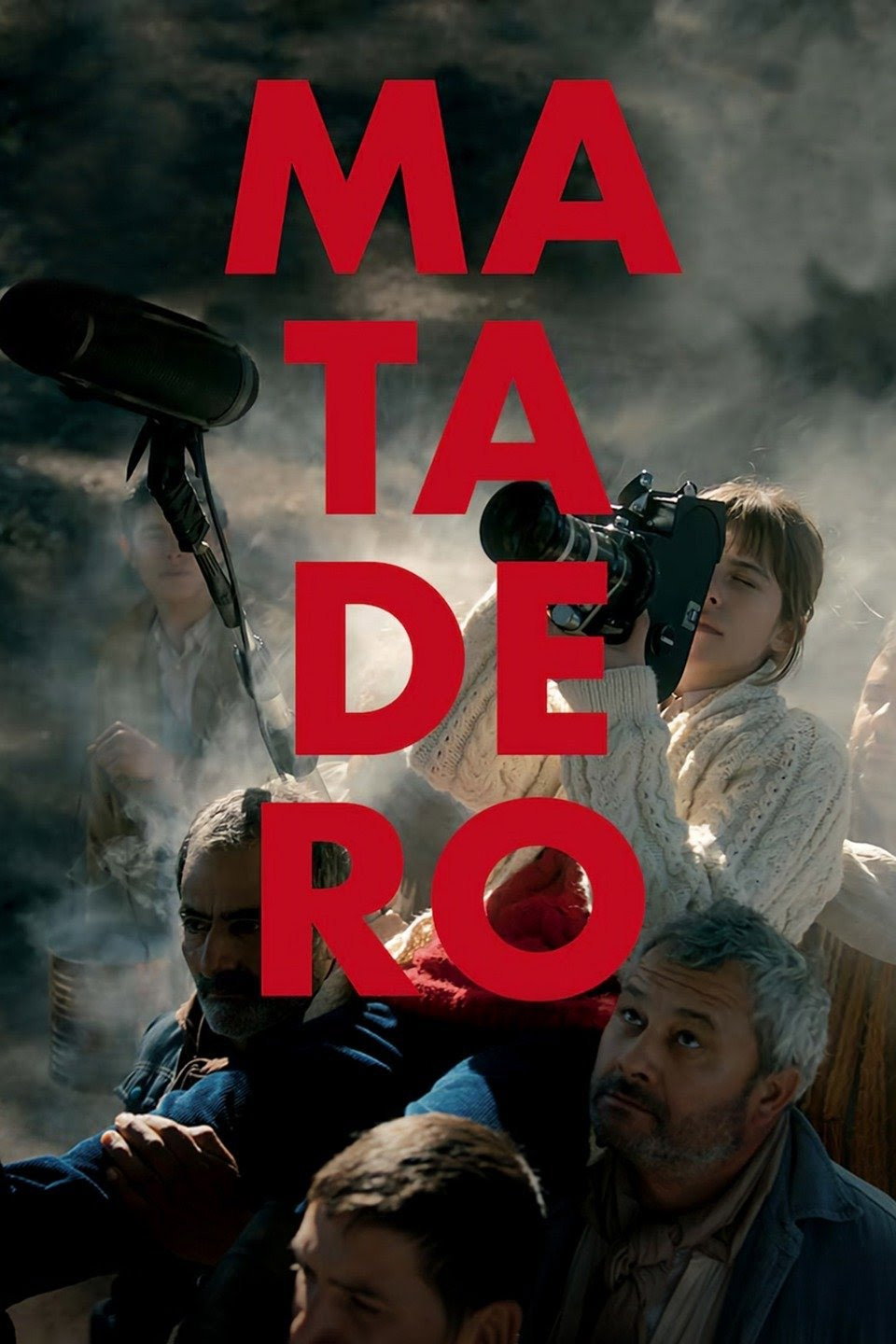

Celluloid groans under the weight of expectations when a filmmaker decides to dig into history’s guts with a rusty scalpel and a third-rate recipe. Slaughterhouse, the second feature from Santiago Fillol, arrives like a exquisite corpse dragged through the murky waters of Latin American auteur cinema: ambitious to the point of suffocation, pretentious to the point of ridicule, and, above all, profoundly uneven. It’s no coincidence its premise—a 1975 American director filming an adaptation of Esteban Echeverría’s El matadero, where gauchos devour their bosses—sounds like a macabre joke only festival programmers would dare applaud. Because, let’s be honest, who in their right mind would finance a gore western about rural cannibalism with political allegory pretensions today? The answer, dear readers, is as obvious as the stench of rot wafting from this project: someone who mistook cinema for a poorly written college essay and the Pampas for a The Texas Chain Saw Massacre set on a shoestring budget.
Fillol, a director who’d previously flirted with documentary and hybrid cinema (I See Red People, 2018), seems obsessed with the idea that film should hurt, as if every shot must be a kick to the viewer’s stomach. And oh, does Slaughterhouse hurt—but not in the way he thinks. Here, the pain isn’t cathartic, nor even uncomfortable: it’s the dull throb of a bruise that can’t decide if it’s art or just clumsiness. The film teeters between a homage to 1970s political cinema (with that La hora de los hornos vibe but none of its fury or urgency) and a B-movie gore pastiche, as if someone had tossed Glauber Rocha and Herschell Gordon Lewis into a blender and forgotten to add the booze. The result is a two-headed creature staring in opposite directions without committing to either: is this a meditation on violence as a tool for social change or just a viscera feast for an audience hardened by The Walking Dead? Spoiler: it fails at both.
The historical context—Argentina in the death throes of Peronism, with the long shadow of the Triple A and political violence simmering—should be the perfect breeding ground for incendiary cinema. Yet Slaughterhouse prefers to skim the surface, like a tourist photographing poverty without understanding it. Fillol seems more interested in recreating the look of a 1970s film (with those faux film grains, desaturated colors, and frames reeking of bargain-basement cinéma vérité) than delving into what actually matters: the characters, their motivations, and that very Argentine idea that meat—whether animal or human—always ends up in the same place: the slaughterhouse. The script, penned by Fillol himself, is a Frankenstein’s monster of pretentious dialogue ("Violence is the language of the voiceless," a character intones, in a moment straight out of a discount philosophy textbook) and scenes oscillating between the ridiculous and the outright incomprehensible. Example? A sequence where gauchos, after murdering their bosses, feast on their entrails in a banquet shot like a first-year film student’s homework—budget: three euros, plus a Mercadona chicken.
But if anything saves Slaughterhouse from total disaster, it’s—ironically—its technical department. Mauro Herce, the cinematographer, delivers work that wavers between notable and pretentious but at least has the decency to be coherent. Herce, known for collaborations with directors like Albert Serra (The Death of Louis XIV), infuses every frame with a grainy, sickly texture, as if the film were being projected onto a screen of raw flesh. The Pampas exteriors have a harsh, desolate beauty, with those leaden skies threatening to collapse onto the characters like a tombstone. The problem? Once again, Fillol confuses style with substance. There are long takes designed to impress festival juries (like that circular tracking shot around a cannibal banquet table) that contribute nothing to the narrative. It’s as if the director had read too much Tarkovsky and decided every frame must be a metaphor—even if no one, not even him, knows what it means.
The direction: A style exercise drowning in its own bile
If one thing becomes clear after watching Slaughterhouse, it’s that Santiago Fillol has an unhealthy obsession with visual control. Every shot seems meticulously calculated, as if the director had spent hours measuring the distance between the camera and Malena Villa’s face to ensure her sweat looked sufficiently "authentic." The problem? In his eagerness to emulate 1970s political cinema, Fillol falls into the trap of mistaking realism for the mere accumulation of grime. Actors wear clothes caked in mud (or something mud-like that reeks of acrylic paint), interiors are bathed in that sickly yellow light favored by directors who want to convey "decadence," and the dialogue sounds like it was written by someone who just discovered Brecht but didn’t quite grasp the concept. The result is a film that resembles a documentary about sausage-making: technically detailed, yes, but leaving you with the nagging feeling you’ve been sold a pig in a poke.
The pacing, meanwhile, is as erratic as a drunkard’s pulse. Scenes drag on to exhaustion (like that static shot of a gaucho sharpening a knife, lasting longer than a scoreless soccer match) while others fly by so quickly you wonder if Fillol dozed off in the editing room. The film lurches forward like a wounded animal, limping between moments of well-built tension (like a sequence where characters argue as the wind lashes the fields, with ambient sound recorded in hell itself) and others that plummet into outright absurdity (can anyone explain why a character recites poetry mid-massacre?). It’s as if Fillol aimed for Andrei Tarkovsky but got stuck in the "copy the shots without understanding the soul" phase.
The actors: A ravenous cast with nothing to sink their teeth into
The Slaughterhouse ensemble looks like a group of actors handed the script five minutes before shooting and told, "Improvise—but not too much, this is serious cinema." Malena Villa, as a gaucha with more resentment than coherent dialogue, is the sole performer who manages to convey something resembling genuine emotion. Her character—a rural femme fatale meets system victim—has moments where she seems on the verge of breaking the fourth wall to tell the audience, "Look, I know this is garbage, but they’re paying me to be here." The rest of the cast, however, moves like they’re in a high school rehearsal of The House of Bernarda Alba directed by a sleep-deprived teenager. Julio Perillán, as the American director, exudes the charisma of an IKEA bookshelf, while Ailín Salas seems more interested in chewing imaginary gum than her character. The saddest part? At one point, a gaucho drops a line that could double as the film’s motto: "Here, we’re all meat." And oh, are they ever—cannon fodder, festival meat, rotten meat.
The technical department: When the wrapping paper outshines the gift
If Slaughterhouse were a fine-dining dish, it’d be one of those plates that looks like a masterpiece on Instagram but tastes like recycled cardboard. Mauro Herce works miracles with the cinematography, turning the Pampas into something straight out of Andrei Zvyagintsev’s fever dreams. The wide shots of endless fields, bathed in that golden, dusty light filtering through the clouds, are the closest this film gets to beauty. The problem? Once again, Fillol seems more interested in how the film looks than what it’s saying. The sound design, for instance, is so exaggerated it occasionally feels like self-parody: characters’ screams echo as if they’re being tortured in an echo chamber, and the wind sounds so artificial you half-expect a Foley artist to burst in with a hairdryer.
The editing, handled by Santiago Fillol and Natalia López, is another weak point. Transitions look lifted from a Premiere Pro tutorial for beginners (fade-to-black every two minutes? Really?), and scenes feel taped together-la-cueva-de-los-espejos-rotos" class="text-amber-400 font-black hover:text-amber-300 transition underline decoration-amber-500/40 hover:decoration-amber-300" title="[6.5/10 ⚡ Ácido Cítrico] Lee nuestra autopsia de «Together»" data-acid-interlink="together-la-cueva-de-los-espejos-rotos">together with duct tape. The score, composed by Lucio Capece, is a collage of ambient sounds and dissonant notes that sound like someone recorded a violin’s sobs in an actual slaughterhouse. It’s not bad, but it’s so intrusive it sometimes drowns out the dialogue—as if the film were terrified the audience might notice how vacuous the conversations are.
The best
- Mauro Herce’s cinematography: A visual tour de force that rescues the film from the abyss of obscurity, with frames that look painted by a hungover Goya.
- Malena Villa: The only actor who breathes life into a character that reeks of mothballs and a poorly written script.
- The Pampas exteriors: Landscapes that convey that sense of infinity and desolation the script only grazes.
- The unbridled ambition: At least Fillol dares to dream big, even if the result is a Frankenstein’s monster of poorly stitched ideas.
The worst
- The script: A hodgepodge of pretentious dialogue, incomprehensible scenes, and metaphors so obvious they hurt.
- The pacing: The film lurches forward like a zombie with arthritis, alternating between soporific sequences and others shot by a different crew.
- The pretension: Moments where the film feels like a college essay filmed with paid actors.
The Verdict of Claqueta Ácida
Slaughterhouse is like that friend who shows up to dinner with an expensive bottle of wine and then spends the night droning on about their doctoral thesis on the ontology of being. It’s got good ingredients, impeccable presentation, and even flashes of genuine beauty—but in the end, you’re left with the nagging feeling you’ve been sold a pig in a poke. Santiago Fillol proves he has a talent for imagery and boundless ambition, but also an alarming inability to craft characters or narratives that transcend intellectual posturing. The film is an auteur cinema banquet where the meat is raw, the wine sour, and the guests eye each other with suspicion. Recommended? Only if you enjoy the taste of beautifully presented disappointment. 💀
Ending Explained: Slaughterhouse
Ficha de Daños Colaterales en Sala
Certificado de impacto psicofísico emitido por Odin Lagbert
1 amago en el tramo intermedio; pestañeo pesado en las transiciones más innecesarias.
Minuto 55 y minuto 74 (comprobando cuánto quedaba de suplicio).
2 espressos para no dejarse vencer por la mediocridad cómoda.
"A mitad del segundo acto cuando la subtrama secundaria empezó a pesar más de lo que aportaba."
💬 El Veredicto de la Comunidad
¿Qué te ha parecido la película? Deja tu nota de 0 a 10 para contrastarla con el análisis de la redacción.
Aún no has votado
📢 ¿Te ha gustado el ácido?
Comparte esta crítica con tus amigos cinéfilos o desata la polémica en redes.
⚡ THE CINEMATIC VENOM YOUR INBOX CRAVES
No sugarcoated ratings, no corporate fluff. Subscribe for our uncensored weekly analysis or join the private Telegram for press previews, poll clashes, and instant alerts.
Alertas de estrenos en 1 segundo, encuestas en caliente y audios al salir de pases de prensa.
Recibe la dosis semanal en tu mail + regalo inmediato del PDF con 50 joyas ocultas de culto.
Related Reviews
Recommended autopsies for demanding film buffs.
 ⚡ Ácido Cítrico7.1
28 años después
⚡Afinidad temática directa en atmósfera, estilo y fijaciones visuales.
Una secuela que huele a podrido desde el primer fotograma. Garland y DaCosta intentan revivir el género, pero el resultado es un KO técnico disfrazado de obra maestra.
 ⚡ Ácido Cítrico5.8
**A Serbian Film: The Snuff That Thought It Was Art (and Ended Up a High-School Nightmare)**
⚡Afinidad temática directa en atmósfera, estilo y fijaciones visuales.
**Srđan Spasojević serves up a depravity feast swinging between gratuitous shock and social commentary. Genius or pretentious trash? Claqueta Ácida dissects it with surgical precision.**
 ⚡ Ácido Cítrico6.0
Adolescence, Sex, and Death at Camp Miasma: The Slasher That Reeks of Teen Sweat and a Recycled Script
⚡Afinidad temática directa en atmósfera, estilo y fijaciones visuales.
Jane Schoenbrun turns a summer camp into a dumpster fire of hormones and clichés. Art or autopsy of a dying subgenre?
Editorial Ecosystem
Cinephile connections, archive interviews and related analyses.
💬 Debate Cinéfilo & Autopsia de Lectores
0 veredictos¿Discrepas con nuestra nota? ¿Es una obra maestra o veneno puro? Deja tu veredicto abajo sin necesidad de registro.


Aún nadie ha dejado su veredicto para esta película.
Sé el primero en clavarle el colmillo rellenando el formulario de arriba.