

It Follows — The Most Stylish and Slow-Moving STD in Cinema History
David Robert Mitchell revolutionized indie horror with a hypnotic, beautiful nightmare about teenage paranoia, latent AIDS, and the walking dead.


It Follows: full review

As an Amazon Associate, Claqueta Ácida earns from qualifying purchases.
It Follows: When sex becomes a death sentence (and cinema turns into macabre poetry)

In a film landscape where horror had been reduced to a parade of prefab jump scares, badly digested found footage and zombie franchises resurrected with the grace of a decomposing corpse, It Follows (2014) burst in like a breath of stale but refreshing air. David Robert Mitchell, a Michigan director with more ideas in his head than most of his Hollywood colleagues, decided it was time to rescue the tropes of ’80s horror without falling into the peddled nostalgia Blumhouse executives love so much. The result was a film that not only revitalized the genre but raised it to the level of art, proving that fear can be elegant, melancholic and, above all, intelligent.
The premise: The scariest STD in film history

The genius of It Follows starts with its premise, a twisted metaphor for the transmission of death that works both as an allegory of adolescent fear of sex and as a critique of the chain of human irresponsibility. Jay (Maika Monroe, in a performance that moves between fragility and determination with enviable naturalness) is a nineteen-year-old who, after a hookup in the back seat of a car with her boyfriend Hugh (a Jake Weary who nails the role of the jerk with an angel’s smile), wakes up tied to a chair in an abandoned building. There, Hugh confesses the truth: he has passed a curse on to her. It isn’t herpes, or chlamydia, or even an unwanted pregnancy. It’s something worse: a being invisible to everyone else that can take the form of any person (known or unknown) and will walk toward her at a constant pace, slow but inexorable. If it reaches her, it will kill her. The only way to get rid of it is to pass the curse on to someone else through sex. If that person dies, the being will go back to chasing the previous carrier.
Sounds like a joke? It is. Sounds like a nightmare? That too. Mitchell achieves something extraordinary: turning a premise that could have been ridiculous into a reflection on guilt, fear of commitment and existential loneliness. It’s as if The Ring and Carrie had a bastard child with Invasion of the Body Snatchers, but instead of hysterical screaming and cheap digital effects, they gave us a meditation on mortality wrapped in a thriller of sustained tension.
360-degree paranoia: The art of looking over your shoulder

What really makes It Follows a masterpiece is its staging, an exercise in visual paranoia that turns the viewer into an involuntary accomplice of the pursuit. Mitchell and his cinematographer, Mike Gioulakis, use wide-angle lenses to create shots that rotate 360 degrees on their own axis, forcing us to scan every corner of the frame for the threatening figure. It’s a technique that recalls John Carpenter’s open framing in Halloween (1978), taken to an almost obsessive level of sophistication.
Every scene is a visual trap. That blurry figure at the back of the park? Could be the monster. That neighbor walking toward the camera on a deserted street? Also. The tension doesn’t come from what we see clearly but from what we sense, from what could be lurking just out of focus. Mitchell plays with our perception, turning the act of watching a film into an interactive experience. It’s as if the director whispered in our ear: “Look carefully, because if you don’t, she’ll die. And you’ll be next.”
Detroit: The perfect setting for the end of the world (or of adolescence)
The Detroit of It Follows isn’t the one on tourist postcards or in documentaries about urban decay. It’s a suburban limbo, a place where time seems to have stopped on an eternal autumn afternoon. The houses are big and empty, the parks deserted, and the adults conspicuously absent. The protagonists’ parents are blurry shadows, absent figures who offer neither protection nor comfort. This group of young people, played with near-documentary naturalness by Monroe, Gilchrist, Olivia Luccardi, Lili Sepe and Jake Weary, is condemned to wander a landscape that is both familiar and alienating.
Mitchell turns Detroit into another character, a reflection of his protagonists’ emotional desolation. There’s no future here, only an eternal present in which the only certainty is the approaching death. It’s a perfect metaphor for adolescence: a period of life in which you feel trapped between lost innocence and unreachable maturity, where every decision seems to carry irreversible consequences. And in the middle of all this, sex becomes a currency, a way of postponing the inevitable.
The score: Disasterpeace and the sound of death walking

If Gioulakis’ cinematography is the skeleton of It Follows, the score by Rich Vreeland (aka Disasterpeace) is its soul. Vreeland composes a score of analog synthesizers that evokes Carpenter’s classic sound, but with an industrial, modern touch that makes it unique. The themes are hypnotic, repetitive, almost obsessive, like the steady rhythm of the monster’s footsteps. There’s something deeply unsettling about the way the music merges with the image, creating an atmosphere of tension that never lets up.
The main theme, with its high notes and pulsing rhythm, is a masterpiece of suspense. There are no cheap scares here. The music keeps us on edge, reminding us that the danger is always present, even when we can’t see it. It’s the sound of death walking toward us, slow but sure, and there’s no escape.
The monster’s rules: Inconsistency or deliberate genius?
One of the most debated points of It Follows is the apparent inconsistency in the monster’s rules. For most of the film, the being is an ethereal, inexorable figure walking toward its victim at a steady pace. However, in the final climax at the public pool, the monster gains abilities that clash with its previous nature, like hurling appliances or moving with unnatural speed.

Is this a script flaw? Or deliberate genius? Mitchell plays with ambiguity, and the answer may lie in the very nature of the curse. The monster doesn’t follow fixed rules because it is a manifestation of fear, and fear isn’t logical. It can take any form, any behavior, because its goal isn’t to kill physically but to destroy psychologically. In that sense, the inconsistency isn’t a bug but a feature.
Temporal ambiguity: Mistake or statement of intent?
Another aspect that has sparked controversy is the film’s mix of time periods. The characters drive classic cars from the ’70s and ’80s but use modern electronic devices, like an e-reader shaped like a seashell. Is this a continuity error? Or an artistic decision?
Mitchell has said the temporal ambiguity is deliberate, a way of reflecting the timelessness of fear. The monster doesn’t belong to a specific era because fear is universal. Adolescence, with its fears and desires, is a state that transcends time. In that sense, the mix of vintage and modern elements isn’t a flaw but a statement of intent: It Follows isn’t a film about a particular era but about the human condition.
Cinephile comparisons: From Carpenter to Lynch
It Follows drinks from many sources but manages to transcend them to create something unique. John Carpenter’s influence is evident in the open framing, the synth score and the atmosphere of paranoia. However, Mitchell adds a layer of melancholy and visual poetry that sets it apart from more conventional horror.
There are also echoes of David Lynch in the way the film plays with the dreamlike and the real. The desolate suburbs of Detroit recall the landscapes of Blue Velvet or Twin Peaks, places where the everyday mixes with the sinister. And, as in Lynch, the true horror isn’t in what we see but in what we sense.
The ending: Hope or resignation?
The ending of It Follows is as ambiguous as the rest of the film. Jay and her friend Paul (Gilchrist) decide to face the monster at the public pool, but the resolution isn’t clear. Have they defeated the curse? Or have they simply postponed the inevitable?
Mitchell leaves the answer open, and that’s where the film’s genius lies. Fear isn’t defeated, only postponed. Death is always there, walking toward us, and there’s no escape. All we can do is keep going, even though we know that, in the end, it will catch us.
The best
- The staging and framing: Every shot is a picture of paranoia in motion, an invitation to play “Where’s Waldo?” with death. Mitchell turns watching a film into an exercise in constant vigilance.
- Disasterpeace’s score: Synthesizers that sound like an industrial nightmare, as if Carpenter and Kraftwerk had co-written the theme of an ’80s horror movie directed by a robot with existential anxiety.
The worst
- Some inconsistency in the monster’s rules: One moment it’s an ethereal being walking slowly, the next it’s throwing appliances like the Hulk of the suburbs. Creative flexibility or sloppiness? You decide.
The Claqueta Ácida Verdict (9.1/10)
It Follows isn’t just a horror film; it’s a work of art that proves the genre can be intelligent, poetic and deeply disturbing without resorting to Hollywood’s cheap tricks. David Robert Mitchell has created a suburban nightmare that sticks in your mind like a thorn, reminding us that true horror lies not in monsters but in the certainty that, sooner or later, something (or someone) will come for us. And the worst part is that, like Jay, all we can do is keep walking forward, knowing that, in the end, it will catch us. 9.1/10, and top marks in “how to mess with the viewer’s head without them noticing.” 💀🎬 Tráiler Oficial
Abrir en YouTube
Ending Explained: It Follows
It Follows: frequently asked questions
- What is the rating of "It Follows" on Claqueta Ácida?
- "It Follows" scored 9.0/10 on Claqueta Ácida in the review by Héctor Veneno.
- Is "It Follows" worth watching?
- Yes. We gave it 9/10 (Nuclear Fusion), our rating for must-see films.
- Who directed "It Follows"?
- "It Follows" was directed by David Robert Mitchell.
- How does "It Follows" end?
- Spoilers in It Follows ending explained .
Theater Collateral Damage Report
Psychophysical impact certificate issued by Héctor Veneno
Ni un solo parpadeo voluntario. El asiento, inusualmente cómodo.
Ninguna comprobación del tiempo. Se agradece la rareza.
How much second-hand embarrassment the film causes (10 = maximum). It is not the review score.
Ninguna: la adrenalina cinematográfica es suficiente.
"No aplica. La obra se sostiene sola."
💬 Community Verdict
What did you think of the film? Rate it from 0 to 10 to compare it with the editorial review.
You haven't voted yet
📢 ¿Te ha gustado el ácido?
Comparte esta crítica con tus amigos cinéfilos o desata la polémica en redes.
⚡ THE CINEMATIC VENOM YOUR INBOX CRAVES
No sugarcoated ratings, no corporate fluff. Subscribe for our uncensored weekly analysis or join the private Telegram for press previews, poll clashes, and instant alerts.
Alertas de estrenos en 1 segundo, encuestas en caliente y audios al salir de pases de prensa.
Recibe la dosis semanal en tu mail + regalo inmediato del PDF con 50 joyas ocultas de culto.
By subscribing you agree that we use your email only to send you the newsletter. Unsubscribe at any time. Privacy policy
Related Reviews
Recommended autopsies for demanding film buffs.
 🔥 Fusión Nuclear 8.0
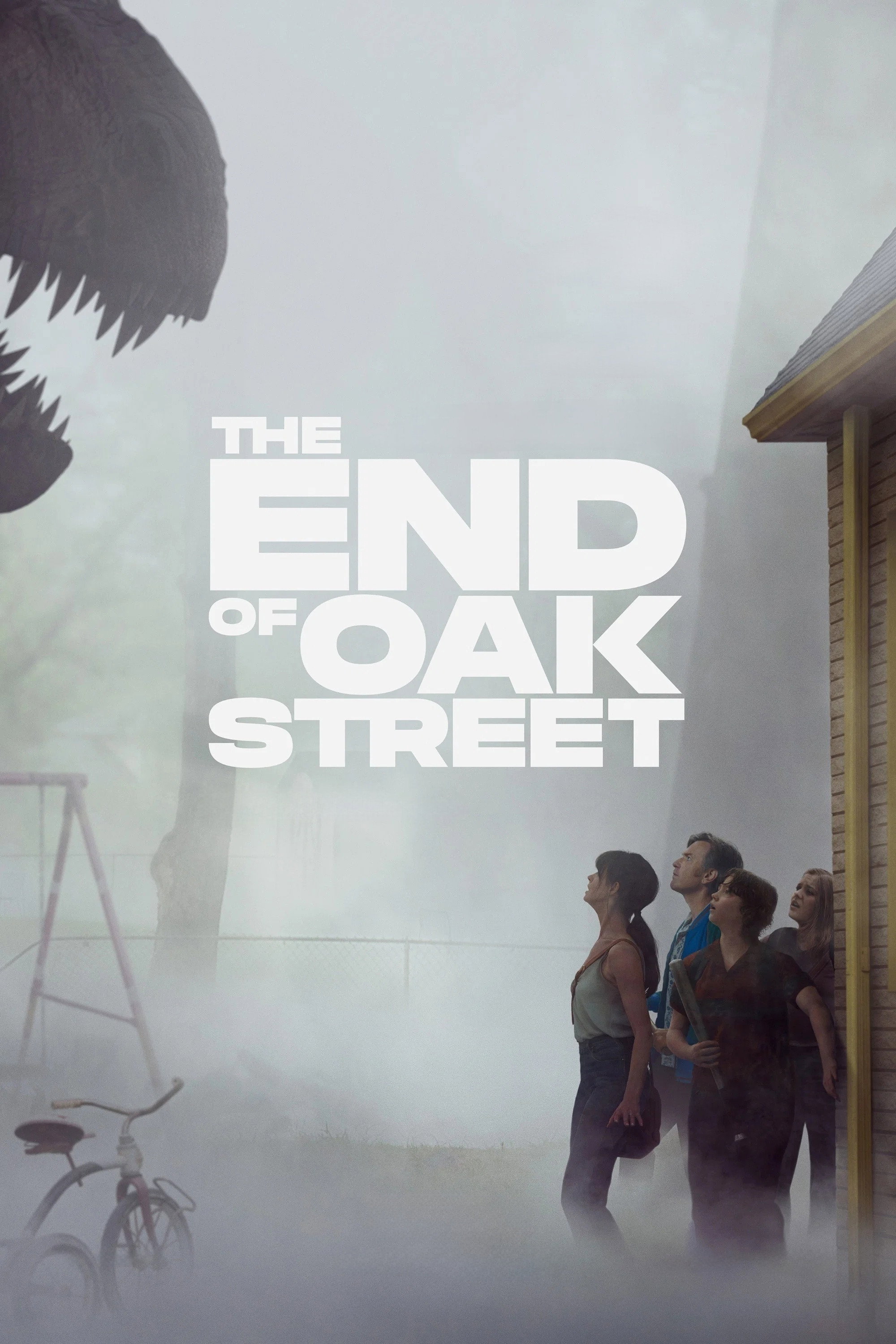
The End of Oak Street: David Robert Mitchell Reinvents Cosmic Horror Without Losing Its Human Core
⚡ Del mismo director (David Robert Mitchell): analiza la evolución o degradación de su estilo.
Anne Hathaway and Ewan McGregor lead this claustrophobic descent where the unknown isn’t a monster—it’s reality itself unraveling at the seams. Mitchell proves once again that the most terrifying horror is the kind that festers in the intimate.
 🔥 Fusión Nuclear 8.5
*Alleluia: Love as a Terminal Illness (or How to Turn Crimes of Passion into a Sweaty, Fleshy Spectacle)*
⚡ Afinidad temática directa en atmósfera, estilo y fijaciones visuales.
Fabrice Du Welz reimagines the myth of the lonely hearts killers in a feverish whirlwind of jealousy, submission, and blood, led by Lola Dueñas in a performance that’s equal parts hypnotic and harrowing.
 🔥 Fusión Nuclear 8.5
*High Tension (Haute Tension): The Brutal Birth of the New French Extremism – Or How to Turn Flesh into Poetry with a Machete*
⚡ Afinidad temática directa en atmósfera, estilo y fijaciones visuales.
Alexandre Aja shocked global screens with a relentless rural bloodbath, redefined by breakneck pacing and a divisive twist that splits serious cinephiles right down the middle.
Editorial Ecosystem
Cinephile connections, archive interviews and related analyses.
🎞️ In Claqueta Cinematheque 1
💬 Debate Cinéfilo & Autopsia de Lectores
¿Discrepas con nuestra nota? ¿Es una obra maestra o veneno puro? Deja tu veredicto abajo sin necesidad de registro.
📏 Normas: se critica la película, no a las personas. Los insultos y los ataques personales se pueden borrar.


