Mickey 17 — Bong Joon-ho Clones His Genius (And Almost Succeeds)
Bong Joon-ho adapts a book of disposable clones with Robert Pattinson in a frozen planet. Masterpiece or cold calculation? Here's the autopsy.

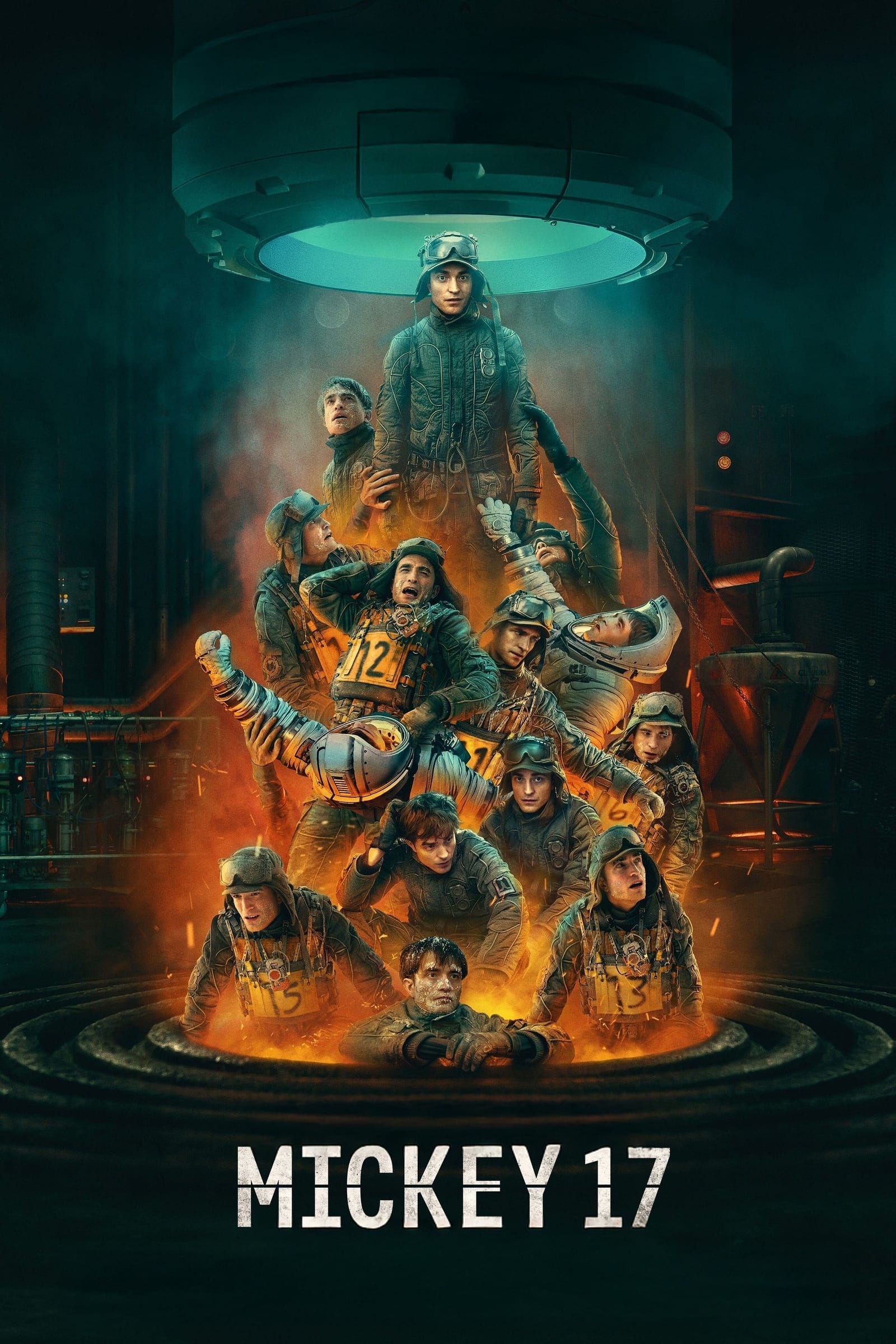

Bong Joon-ho's cinema has always been a mutant organism, a narrative Frankenstein that devours genres with the same voracity as a Hollywood executive devouring predictable blockbuster scripts. From Parasites (2019), that masterpiece that dissected class struggle with a surgeon's scalpel and a worker's hammer, to Snowpiercer (2013), where the apocalypse train became a metaphor for capitalism as cold as the tail cars, the South Korean has proven he can make social cinema with the elegance of a thriller and a thriller with the depth of a political treatise. But Mickey 17, his foray into the coldest and most existential science fiction, arrives at a time when the genre seems trapped between two extremes: either drowning in the mud of soulless reboots (look no further than Denis Villeneuve's latest Dune, as spectacular as a windless desert) or taking refuge in the self-complacency of low-budget indie films that confuse minimalism with boredom. Bong, as always, chooses the middle path: that of unbridled ambition, calculated risk, and uncomfortable questions. What happens when a disposable man discovers his life is worth nothing... but his death makes everything more interesting? The answer, as we will see, is a philosophical thriller that smells like a Venice prize and a nightmare in the Plan B Entertainment studios, where someone surely took their hands to their head upon reading the script and discovering there wasn't a single Avengers joke in its 137 pages of ice and despair.
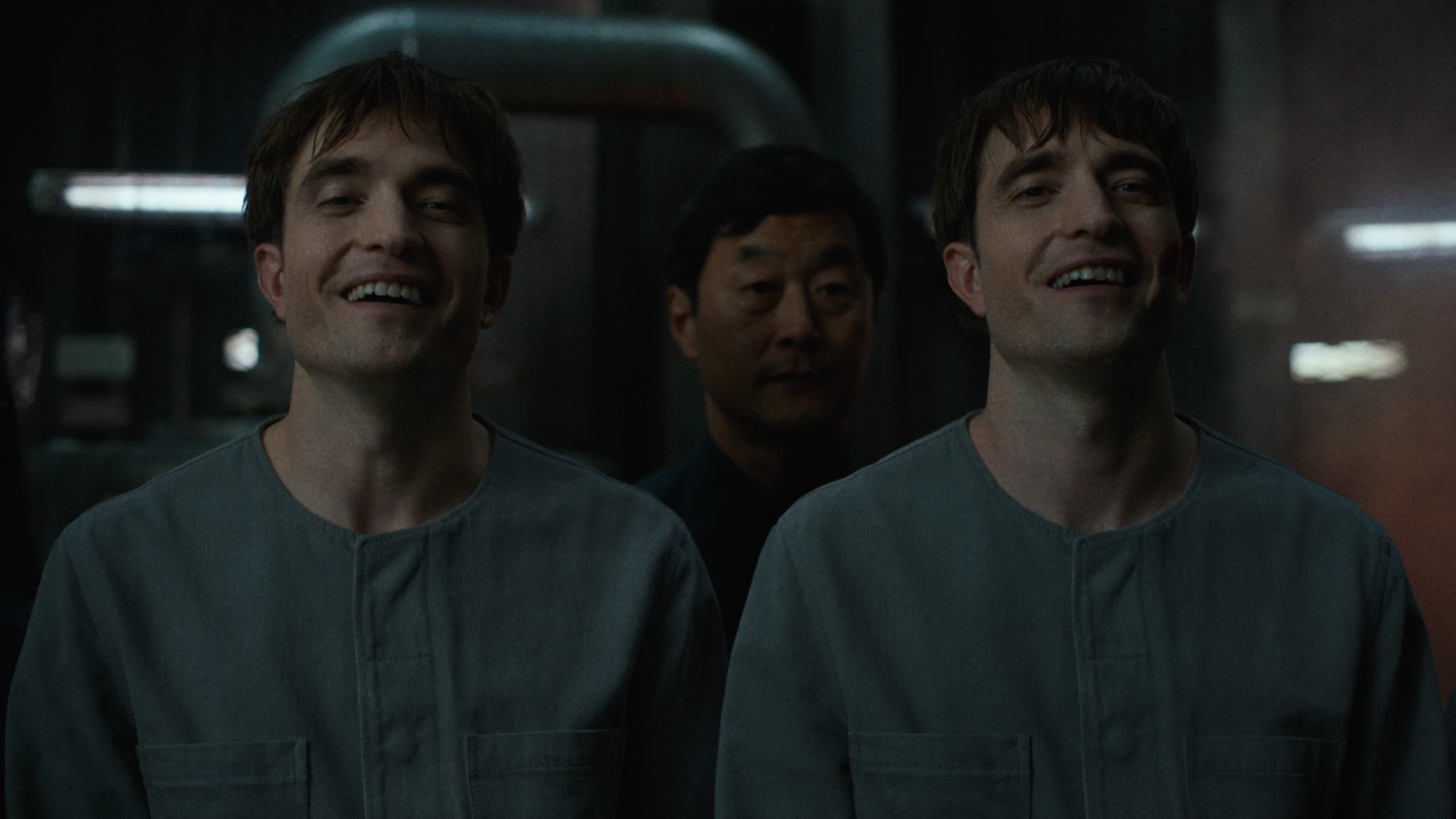
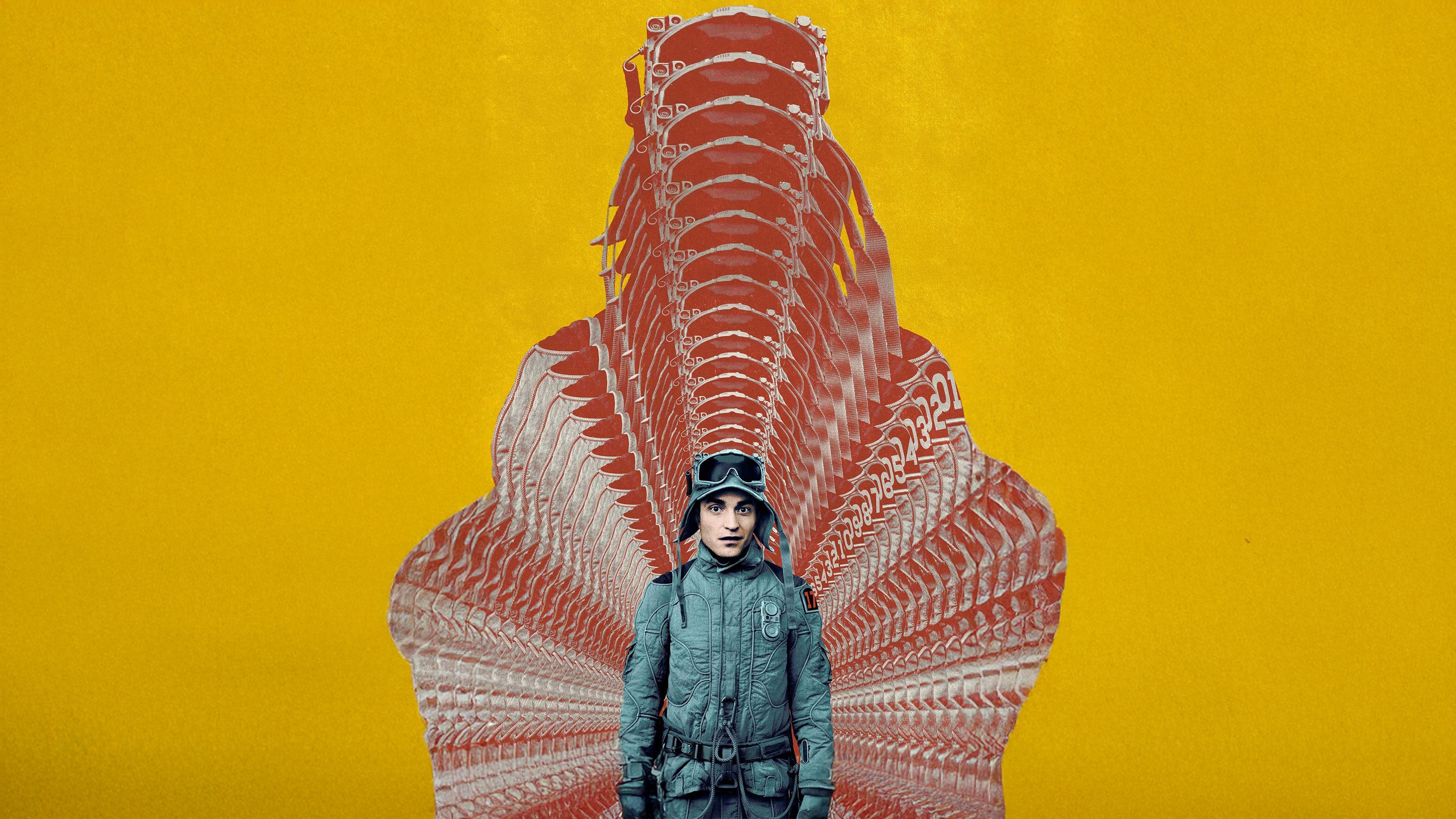
The Mickey 17 project was born from the pages of Mickey7, Edward Ashton's novel, a writer who, like Bong, seems obsessed with the idea that humans are, at the core, just another resource in the universe's production chain. The premise is as simple as it is terrifying: in a dystopian future, humanity sends colonizers to a frozen planet called Niflheim (yes, like the realm of the dead in Norse mythology, because subtlety is not their thing), where disposable workers like Mickey Barnes (Robert Pattinson) are cloned time and again to perform the most dangerous tasks. When Mickey 7 dies on a mission, his clone, Mickey 8, awakens with all his memories... except those of his death. The problem? Mickey 7 isn't quite dead, and now he must deal with the idea that his replacement is living his life, having sex with his girlfriend, and probably laughing at his old memes. Bong's adaptation not only respects this premise but takes it to an even darker territory: that of identity, memory, and the value of a life that, at the core, is as replaceable as a smartphone with a dead battery. It's no coincidence that the director chose Robert Pattinson for the lead role. After his transformation from teenage vampire to The Batman (2022), where he proved he could be more than a pretty face in a tight suit, Pattinson has become the favorite actor of directors seeking fragility and strength in the same dose. And in Mickey 17, this duality is key: Mickey Barnes is a broken man, but not because of the impossible missions, rather because of the certainty that his existence is as ephemeral as a snowflake in hell.
But let's talk about the elephant in the room: Bong Joon-ho doing mainstream science fiction. Yes, the same director who gave us Okja (2017), that ecological fable with a giant pig that seemed to come from a Miyazaki dream, but with more blood and more anti-capitalist critique. Mickey 17 isn't exactly mainstream, but it's not the auteur cinema some expected after Parasites either. Here, there are no breathtaking long takes or dialogue that sticks in your memory like knives. Instead, there's something more subtle, colder, more... clonable. Bong seems to have understood that, in the era of streamers and algorithms, science fiction can no longer afford to be just spectacular or just intelligent. It has to be both, and it also has to sell tickets. And boy, does he succeed. Mickey 17 is a film that you watch with your eyes, with your skin, and, above all, with that part of your brain that still believes the future can be something more than a Black Mirror dystopia or a Star Trek utopia. It's, in short, the kind of film that makes you wonder why there aren't more directors like Bong Joon-ho in Hollywood: filmmakers who know that genre is not a cage, but a canvas.
The filming of Mickey 17 was, according to the chronicles, as icy as the planet Niflheim. Shot in UK studios and with locations in Iceland, the production had to deal with the whims of the weather, the delays due to the pandemic, and, above all, the pressure of being Bong Joon-ho's first film after his historic Oscar for Parasites. But if something has been proven by the South Korean director throughout his career, it's that he knows how to work under pressure. It's no coincidence that he chose Darius Khondji as the cinematographer. The Frenchman, known for his work in Se7en (1995) and Amour (2012), is a master of light and shadow, and in Mickey 17, his color palette is reduced to a range of blues, grays, and whites that seem to be taken from a fever dream. The planet Niflheim is not just a setting; it's another character: a place where sunlight never quite reaches and where ice is not just a decorative element, but a constant threat. Khondji and Bong play with lighting as if it were another character, using long shadows and cold lights to create an atmosphere that is, at the same time, beautiful and claustrophobic.
Direction: Bong Joon-ho in Thriller Existential Mode
If there's something that defines Bong Joon-ho's cinema, it's his ability to mix genres as if they were ingredients in a cocktail shaker. In Mickey 17, the South Korean delves into existential thriller territory with the same naturalness with which he previously ventured into social horror (The Host, 2006) or political satire (Parasites). But here, there are no monsters or poor families infiltrating rich mansions. Here, the real monster is the idea that, in the future, humans will be as disposable as an obsolete piece of software. Bong doesn't just tell a story of clones and frozen planets; he goes further, exploring themes like identity, memory, and the value of a life that, at the core, is worth nothing. And he does it with a narrative pulse that oscillates between the tension of a Hitchcock thriller and the melancholy of a Denis Villeneuve drama. There are scenes in Mickey 17 that seem to be taken from a manual on how to make intelligent science fiction cinema: sequence shots that follow Mickey Barnes through the spaceship corridors, close-ups of the actors' faces that reveal more with a gesture than with dialogue, and a rhythm that never falters, not even in the most philosophical moments.
The script, written by Bong himself, is one of the film's great virtues. Based on Edward Ashton's novel, the screenplay adapts the original premise with intelligence, adding layers of complexity that didn't exist in the book. For example, the relationship between Mickey Barnes and his clone, Mickey 8, is much more ambiguous and tense in the film than in the novel. In the book, Mickey 7 accepts his fate with a almost Buddhist resignation; in the film, there's anger, there's pain, there's an internal struggle that makes Mickey Barnes a much more human character (ironically). Bong also delves deeper into the relationship between Mickey and Nasha (Naomi Ackie), the engineer who becomes his ally and, possibly, something more. The chemistry between Pattinson and Ackie is palpable, and their dialogue is full of those kinds of phrases that seem casual but actually hide philosophical depth. For instance, in a key scene, Nasha tells Mickey: 'You're not disposable. You're replaceable'. A line that summarizes, in a single phrase, the entire existential angst of the film.
Actors: Robert Pattinson Shines Brighter Than Niflheim's Ice
If there's an actor who can carry a film like Mickey 17 on his shoulders, that's Robert Pattinson. The Brit, who already demonstrated his versatility in films like The Lighthouse (2019) and The Batman (2022), slips into Mickey Barnes' skin with a naturalness that's frightening. It's not an easy role: Mickey is a fragile, yet strong man, and Pattinson conveys that fragility with minimal gestures: a lost gaze, a contained sigh, a tremble in his hands. There's a scene where Mickey Barnes discovers his clone is alive and, technically, he's no longer needed. The way Pattinson reacts, with a mix of incredulity, anger, and resignation, is pure acting magic. He doesn't need to scream, he doesn't need to cry; it's enough for him to stay still and let the audience read everything he's feeling on his face. It's, without a doubt, one of the best performances of his career.
But Pattinson isn't alone. By his side, Naomi Ackie (Nasha) shines with her own light. The actress, known for her role in Star Wars: The Rise of Skywalker (2019), proves she can be more than just a pretty face in a franchise. Nasha is a complex character: intelligent, strong, yet also vulnerable. Ackie conveys that duality with a naturalness that makes the audience wonder why we don't see her more often in roles of this caliber. The rest of the cast doesn't lag behind. Steven Yeun (Hwang) does solid work as the traitor, although his character is, as we've said, the weakest link in the casting. Mark Ruffalo, in a secondary but key role, brings that touch of humanity that sometimes lacks in science fiction films. And Toni Collette, as the ship's captain, demonstrates once again that she's one of the best actresses of her generation. Her final scene, where she has to make an impossible decision, is one of the film's most intense moments.
Technical Department: A Frozen Planet That Burns
The production design of Mickey 17 is, simply, spectacular. The planet Niflheim is not just a setting; it's another character in the film. The production designers, led by Fiona Crombie (Oscar winner for The Favourite, 2018), have created a world that is, at the same time, beautiful and terrifying. The landscapes of ice and rock, the alien structures that seem to come from an H.R. Giger dream, and the spaceship's cold, metallic interiors are a visual delight. But the most interesting thing about the production design is how it manages to convey the feeling that Niflheim is a living place, a planet that breathes and, in a way, is watching the humans who have come to colonize it. There's a scene where Mickey Barnes walks through an ice tunnel and, suddenly, the ice seems to move around him, as if the planet is reacting to his presence. It's a brief moment, but it perfectly summarizes the film's atmosphere: a place where man is not the master, but an uncomfortable guest.
The photography by Darius Khondji is, as we've mentioned, one of Mickey 17's great virtues. The Frenchman, known for his work in films like Se7en and Midnight in Paris (2011), manages to create a color palette that is, at the same time, cold and warm. Blues and grays dominate the film, but there are moments where the light seems to break through the ice and create golden flashes reminiscent of Blade Runner 2049's (2017) sunsets. Khondji plays with lighting as if it were another character, using long shadows and cold lights to create an atmosphere that is, at the same time, beautiful and claustrophobic. There's a scene where Mickey Barnes and Nasha are trapped in an ice cave, and the light that filters through the cracks creates an almost oneiric effect. It's the kind of moment that makes you forget you're watching a film and completely immerse yourself in the world Bong Joon-ho has created.
The editing, handled by Yang Jin-mo (a frequent Bong collaborator), is another of the film's strong points. Yang manages to maintain a constant rhythm, even in the most philosophical moments, and knows when to accelerate and when to brake. There's a sequence where Mickey Barnes and Mickey 8 face off in a duel to the death that is, simply, brilliant. The editing alternates between the two Mickeys, creating a sense of confusion and tension that recalls the best thrillers of the 70s. And the soundtrack, composed by Jung Jae-il (another frequent Bong collaborator), is a perfect mix of retro synthesizers and ethereal choirs that reinforces the feeling that Mickey 17 is, at the same time, a film of the future and of the past.
The Best
- Bong Joon-ho's Direction: An existential thriller that mixes genres with the elegance of a surgeon and the brutality of a hammer. Bong proves, once again, that he's one of the few directors who can make intelligent and commercial cinema at the same time.
- Robert Pattinson's Performance: Mickey Barnes is a complex, fragile, and strong character, and Pattinson plays him with a naturalness that's frightening. One of the best performances of his career.
- Darius Khondji's Photography: A frozen planet that burns, a color palette that's cold but hides warm flashes. Khondji turns Niflheim into another character in the film.
- Production Design: Fiona Crombie and her team have created a world that is, at the same time, beautiful and terrifying. A living planet that observes the humans who have come to colonize it.
- The Script: Bong Joon-ho adapts Edward Ashton's novel with intelligence, adding layers of complexity that didn't exist in the book. Sharp dialogue and a premise that lends itself to hours of debate.
The Worst
- Hwang's Subplot (Steven Yeun): A character that seems to come from an 80s spy film and clashes with the more introspective tone of the rest of the film. Less is more, Bong.
- The Pace in the Second Act: The film loses some steam in the central part, when Mickey Barnes and Nasha explore the planet. Some philosophical dialogues stretch on a bit too long.
- Mark Ruffalo's Character: A secondary role that doesn't add much to the plot. Ruffalo does what he can, but his character is little more than a glorified cameo.
The Verdict of Claqueta Ácida
Mickey 17 is one of those films that arrives when you least expect it and leaves you with the feeling that science fiction cinema still has a lot to say. Bong Joon-ho proves, once again, that he's a master of the genre, capable of mixing thriller, drama, and philosophy with the same naturalness with which others mix popcorn and soda. Robert Pattinson shines in a role that is, at the same time, fragile and strong, and Darius Khondji's photography turns the planet Niflheim into another character in the film. It's not perfect: there are subplots that are unnecessary, moments where the rhythm falters, and characters that seem to come from another film. But when Mickey 17 works, it does so with an intensity that few directors can match. It's a film that you watch with your eyes, with your skin, and, above all, with that part of your brain that still believes the future can be something more than a Black Mirror dystopia or a Star Trek utopia. In short, a cold, calculated, and brilliant masterpiece. Or, as Bong Joon-ho himself would say: 'It's not disposable. It's replaceable'. But, fortunately for us, Mickey 17 isn't. 💀
🎬 Tráiler Oficial
Abrir en YouTube
Ending Explained: Mickey 17
Ficha de Daños Colaterales en Sala
Certificado de impacto psicofísico emitido por Silvia Mordaz
Cero. La pantalla absorbió cada segundo de atención disponible.
Ninguna comprobación del tiempo. Se agradece la rareza.
Ninguna. Guarda el café para la sesión siguiente.
"No hubo. La coherencia se mantuvo hasta el último fotograma."
💬 El Veredicto de la Comunidad
¿Qué te ha parecido la película? Deja tu nota de 0 a 10 para contrastarla con el análisis de la redacción.
Aún no has votado
📢 ¿Te ha gustado el ácido?
Comparte esta crítica con tus amigos cinéfilos o desata la polémica en redes.
⚡ THE CINEMATIC VENOM YOUR INBOX CRAVES
No sugarcoated ratings, no corporate fluff. Subscribe for our uncensored weekly analysis or join the private Telegram for press previews, poll clashes, and instant alerts.
Alertas de estrenos en 1 segundo, encuestas en caliente y audios al salir de pases de prensa.
Recibe la dosis semanal en tu mail + regalo inmediato del PDF con 50 joyas ocultas de culto.
Related Reviews
Recommended autopsies for demanding film buffs.
 🔥 Fusión Nuclear9.5
*Parasite*: The Sharpest, Most Darkly Humorous Dissection of Class Warfare
⚡Del mismo director (Bong Joon-ho): analiza la evolución o degradación de su estilo.
Bong Joon-ho delivers a cinematic gem that effortlessly leaps across genres, morphing from pitch-black comedy about real estate scams into a bloody social tragedy.
 ⚡ Ácido Cítrico7.5
A Ghost Story: A Journey Through Time and Memory
⚡Afinidad temática directa en atmósfera, estilo y fijaciones visuales.
The Claqueta Ácida review of A Ghost Story, a film that explores existence and human connection.
 🔥 Fusión Nuclear8.0
Backrooms: A Descent into the Void
⚡Afinidad temática directa en atmósfera, estilo y fijaciones visuales.
A film that flings wide the door to mystery and terror—if you dare to step through
Editorial Ecosystem
Cinephile connections, archive interviews and related analyses.
🎞️ In Claqueta Cinematheque1
💬 Debate Cinéfilo & Autopsia de Lectores
0 veredictos¿Discrepas con nuestra nota? ¿Es una obra maestra o veneno puro? Deja tu veredicto abajo sin necesidad de registro.

Aún nadie ha dejado su veredicto para esta película.
Sé el primero en clavarle el colmillo rellenando el formulario de arriba.