Mr. Mercedes — When the Thriller Becomes a Midday TV Movie
Brendan Gleeson tries to salvage a script that reeks of mothballs and a pace slower than a Mercedes stuck in '90s traffic.

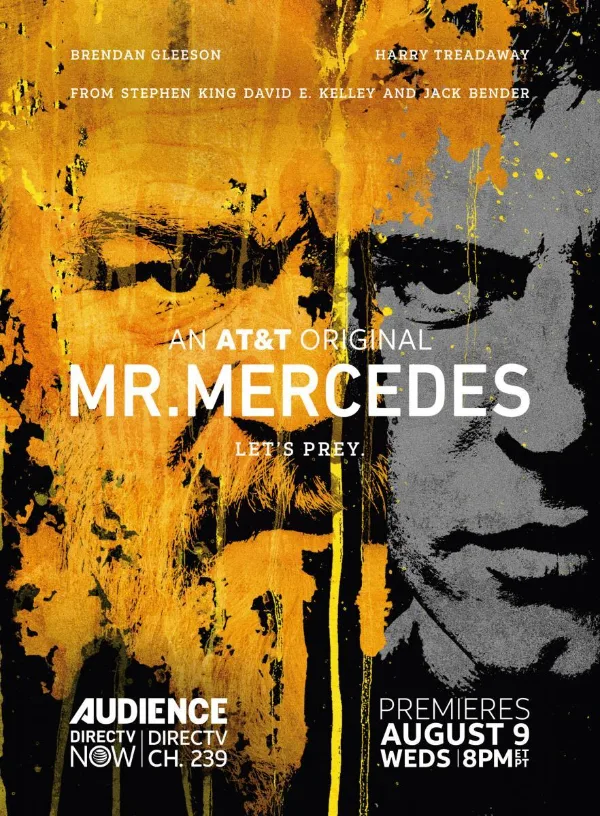

The world of TV thrillers has a recurring problem: it thinks darkness is measured in Instagram filters and that suspense is built with awkward silences and side-eye glances. Mr. Mercedes, that unholy spawn of the unnatural union between David E. Kelley—the same guy who blessed us with gems like Ally McBeal and The Practice—and a Stephen King novel, arrives to remind us that hell is paved with good intentions and tight budgets. Because, let’s be honest, when a project is born with the ambition of being True Detective but ends up feeling like an extended episode of Law & Order: SVU, something has gone terribly wrong. Or, in this case, terribly mediocre.
The series clings to its premise like a castaway to a piece of driftwood: a serial killer who uses a Mercedes to mow down a crowd of unemployed folks at a job fair, and a retired cop, Bill Hodges (Brendan Gleeson), obsessed with solving the case. On paper, it sounds like a promising thriller—one that smells like stale coffee and sleepless nights. But this is where Mr. Mercedes decides its real enemy isn’t the psychopath behind the wheel, but narrative laziness and a lack of cinematic pulse. Kelley, a man who built a career turning legal dramas into high-end soap operas, seems to have confused the tempo of a thriller with that of an episode of Boston Legal. The result is a series that moves slower than a bumper car at an abandoned fair, where every cliffhanger feels like someone paused the DVD to grab popcorn.
And here’s the thing: Mr. Mercedes isn’t bad in the traditional sense—it’s not a The Room of thrillers, where every scene is a crime against cinema—but it’s insufferably bland. It has all the ingredients of a gourmet dish: a killer with twisted motivations, a tormented detective, a cast of quirky side characters, and even a dash of Stephen King to give it that literary horror aroma that sells so well. But like those trendy restaurants where the food is designed for Instagram, not the palate, everything tastes like recycled cardboard. The script, penned by Jonathan Shapiro, seems more concerned with padding episodes than building real tension. The dialogue sounds like a transcript from a self-help manual for retired cops ("Evil never rests, Bill"), and the plot twists are so predictable you could guess them blindfolded with a 20-sided die.
But not all is lost, because in this desert of mediocrity, one performance shines like a beacon in the fog: Brendan Gleeson. The man has a knack for turning even the most insipid script into something, if not memorable, at least digestible. Gleeson doesn’t act; he inhabits Bill Hodges with a mix of existential weariness and Irish stubbornness that makes every scene he’s in feel like a sigh of relief in a sea of clichés. It’s as if someone remembered, at the last minute, that this series needed at least one actor who knew what acting was, not just reciting lines. The rest of the cast, however, seems lost in a limbo between overacting and indifference. Jharrel Jerome, who later gave us a standout performance in Moonlight, here feels like a teenager trapped in the body of a budding psychopath, and Holland Taylor—an actress who deserves better—is reduced to playing the archetype of the eccentric old lady with more facial tics than psychological depth.
Direction: When Suspense Becomes a Yawn
If Mr. Mercedes proves anything, it’s that David E. Kelley has no clue how to direct a thriller. His style, if you can even call it that, boils down to a string of medium shots, intense close-ups, and digital zooms straight out of a 2005 YouTube tutorial. The series completely lacks visual rhythm, that cadence that makes a thriller tick like a Swiss watch. Instead, Kelley opts for a televisual approach in the worst sense of the word: static, predictable, and with lighting that oscillates between flat and just plain ugly. There’s no tension in the framing, no play with light and shadow, no cinematic language that turns a scene into more than two people talking in a room. It’s as if someone decided suspense is built with expository dialogue, not images.
And then there’s the editing, that forgotten art of modern TV. Mr. Mercedes feels like it was cut with preschool scissors: the cuts are abrupt when they should be fluid, and slow when they should be fast. The action scenes—yes, there are a few—are so clumsy they look choreographed by someone who’s only ever watched CSI. The climax of each episode, instead of leaving you on the edge of your seat, leaves you wondering if the editor fell asleep at their desk. There’s no narrative drive, no momentum that makes you want to binge the next episode. Instead, there’s a sense of duty fulfilled, as if Kelley and his team checked off boxes on a "Things a Thriller Must Have" list without really understanding why.
Performances: Gleeson vs. the Rest of the World
As mentioned earlier, Brendan Gleeson is the sole beacon in this storm of mediocrity. His Bill Hodges isn’t just a retired cop obsessed with an unsolved case; he’s a man broken by life, someone who carries the weight of failure in every wrinkle on his face. Gleeson doesn’t need grand gestures to convey emotion; a raised eyebrow or a sigh is enough to make you understand this man has seen too much and yet still stands. It’s a subdued, restrained, and deeply human performance, and it’s the only thing keeping Mr. Mercedes from sinking into oblivion as just another forgettable series.
The problem is the rest of the cast isn’t up to par. Jharrel Jerome, who plays young Jerome Robinson, has moments where he seems to be in a completely different show—one where characters have personality and aren’t just cardboard cutouts serving the script. His chemistry with Gleeson is the only thing that saves their scenes, but even that feels forced, as if someone told them they had to get along because the script demanded it. Holland Taylor, meanwhile, is reduced to playing the eccentric old lady stereotype with a grin from ear to ear, like she’s in a '90s sitcom instead of a psychological thriller. And then there’s Harry Treadaway, who plays the killer Brady Hartsfield and seems to have confused psychopathy with a bad Heath Ledger impression from The Dark Knight. His performance is so over-the-top it’s almost comical, like someone told him psychopaths must laugh like hyenas and whisper dramatically.
Technical Aspects: When the Budget Shows (and Not in a Good Way)
If Mr. Mercedes does one thing right—or at least, less wrong—it’s the production design. The series has a retro vibe that fits its setting in a decaying American city, where abandoned malls and middle-class homes look like they’re straight out of an X-Files episode. However, that same production design is a victim of a tight budget, and it shows in the details. The sets, while functional, lack the texture that would make them memorable. The locations are generic, like someone rented the same sets used in Dexter but with less care.
The cinematography, meanwhile, is flat and functional, with no style or personality. There’s no play with light, no interesting contrasts, no visual language that elevates the series above mediocrity. It’s as if the cinematographer decided their job was to light the actors’ faces and nothing more. The score, composed by David Buckley, is another weak point. Instead of creating tension or emotion, it just repeats the same themes over and over, like someone forgot music should do more than fill awkward silences. There are moments when the soundtrack sounds so generic you could be watching an NCIS episode and not notice the difference.
The script, of course, is the series’ Achilles’ heel. Written by Jonathan Shapiro, it seems more concerned with dragging out the plot than developing characters or building real tension. The dialogue is flat and expository, like it was written for the most clueless viewer to follow. The plot twists are so predictable you could guess them within the first five minutes of each episode. And worst of all, the series doesn’t trust its audience. Instead of letting viewers draw their own conclusions, Mr. Mercedes insists on explaining everything, as if afraid someone might miss the most obvious subtext in the world.
The Best
- Brendan Gleeson: His performance is the only thing saving this series from being a complete disaster. Gleeson brings a depth and humanity to Bill Hodges that the script doesn’t deserve.
- The initial premise: The idea of a killer using a Mercedes to commit a massacre is intriguing and has potential to be something great. Too bad the execution isn’t up to par.
- The production design: Though limited by budget, it manages to create a retro, decaying atmosphere that fits the series’ setting.
- A few tense moments: There are a couple of scenes—like the first encounter between Hodges and Brady—that manage to generate some suspense, even if it’s fleeting.
The Worst
- The pacing: The series moves slower than a funeral in the rain. Every episode feels like an eternity, and the cliffhangers are so predictable they lose all impact.
- The script: Flat, expository, and full of clichés. The dialogue sounds like it was transcribed from a self-help manual, and the plot twists are so obvious they’re insulting.
- The direction: David E. Kelley proves he has no idea how to direct a thriller. The series completely lacks visual rhythm and the cinematic language that makes a scene memorable.
- The supporting performances: Aside from Gleeson, the rest of the cast seems lost between overacting and indifference. Harry Treadaway, in particular, plays the killer Brady Hartsfield in a way that borders on comedy.
- The score: Generic, repetitive, and completely forgettable. It adds nothing to the series’ atmosphere and often sounds like elevator music.
The Verdict of Claqueta Ácida
Mr. Mercedes is the kind of series that makes you wonder how something with so much potential could end up so bland and predictable. It has all the ingredients for a memorable thriller—a charismatic killer, a tormented detective, a talented cast—but lacks the direction, script, and pacing needed to turn those ingredients into more than a bowl of reheated soup. Brendan Gleeson does everything he can to save the ship, but even he seems aware he’s rowing in an ocean of mediocrity. The series isn’t bad in the traditional sense; it’s not an epic disaster like The Room or an insult to intelligence like Sharknado. It’s simply boring, forgettable, and deeply disappointing, like that restaurant that promised so much but left you hungry and feeling like you wasted your time. If you’re looking for a psychological thriller that keeps you on the edge of your seat, keep looking. Mr. Mercedes is nothing more than a Mercedes stuck in the traffic jam of TV mediocrity. 💀Ending Explained: Mr. Mercedes
Ficha de Daños Colaterales en Sala
Certificado de impacto psicofísico emitido por Dante Sangre
3 amagos en el tramo intermedio; pestañeo pesado en las transiciones más innecesarias.
Minuto 42 y minuto 72 (comprobando cuánto quedaba de suplicio).
2 espresso para no dejarse vencer por la mediocridad cómoda.
"A mitad del segundo acto cuando la subtrama secundaria empezó a pesar más de lo que aportaba."
💬 El Veredicto de la Comunidad
¿Qué te ha parecido la película? Deja tu nota de 0 a 10 para contrastarla con el análisis de la redacción.
Aún no has votado
📢 ¿Te ha gustado el ácido?
Comparte esta crítica con tus amigos cinéfilos o desata la polémica en redes.
⚡ THE CINEMATIC VENOM YOUR INBOX CRAVES
No sugarcoated ratings, no corporate fluff. Subscribe for our uncensored weekly analysis or join the private Telegram for press previews, poll clashes, and instant alerts.
Alertas de estrenos en 1 segundo, encuestas en caliente y audios al salir de pases de prensa.
Recibe la dosis semanal en tu mail + regalo inmediato del PDF con 50 joyas ocultas de culto.
Related Reviews
Recommended autopsies for demanding film buffs.
 ⚡ Ácido Cítrico6.6
28 Years Later: The Rage Virus Returns... Along with the Boredom
⚡Comparten trinchera editorial en la sección de Perros Verdes.
Danny Boyle and Alex Garland attempt to resurrect post-apocalyptic terror with an iPhone 15 Pro Max. Spoiler: it doesn’t work.
 ⚡ Ácido Cítrico7.1
28 años después
⚡Comparten trinchera editorial en la sección de Perros Verdes.
Una secuela que huele a podrido desde el primer fotograma. Garland y DaCosta intentan revivir el género, pero el resultado es un KO técnico disfrazado de obra maestra.
 ⚡ Ácido Cítrico5.8
**A Serbian Film: The Snuff That Thought It Was Art (and Ended Up a High-School Nightmare)**
⚡Comparten trinchera editorial en la sección de Perros Verdes.
**Srđan Spasojević serves up a depravity feast swinging between gratuitous shock and social commentary. Genius or pretentious trash? Claqueta Ácida dissects it with surgical precision.**
Editorial Ecosystem
Cinephile connections, archive interviews and related analyses.
💬 Debate Cinéfilo & Autopsia de Lectores
0 veredictos¿Discrepas con nuestra nota? ¿Es una obra maestra o veneno puro? Deja tu veredicto abajo sin necesidad de registro.


Aún nadie ha dejado su veredicto para esta película.
Sé el primero en clavarle el colmillo rellenando el formulario de arriba.