Oldboy — The Ritual of Revenge in Blood-Soaked Celluloid
Park Chan-wook distills Korean venom in this revenge masterpiece: 15 years of imprisonment, a hammer, and a live octopus. Art or nightmare? You decide.

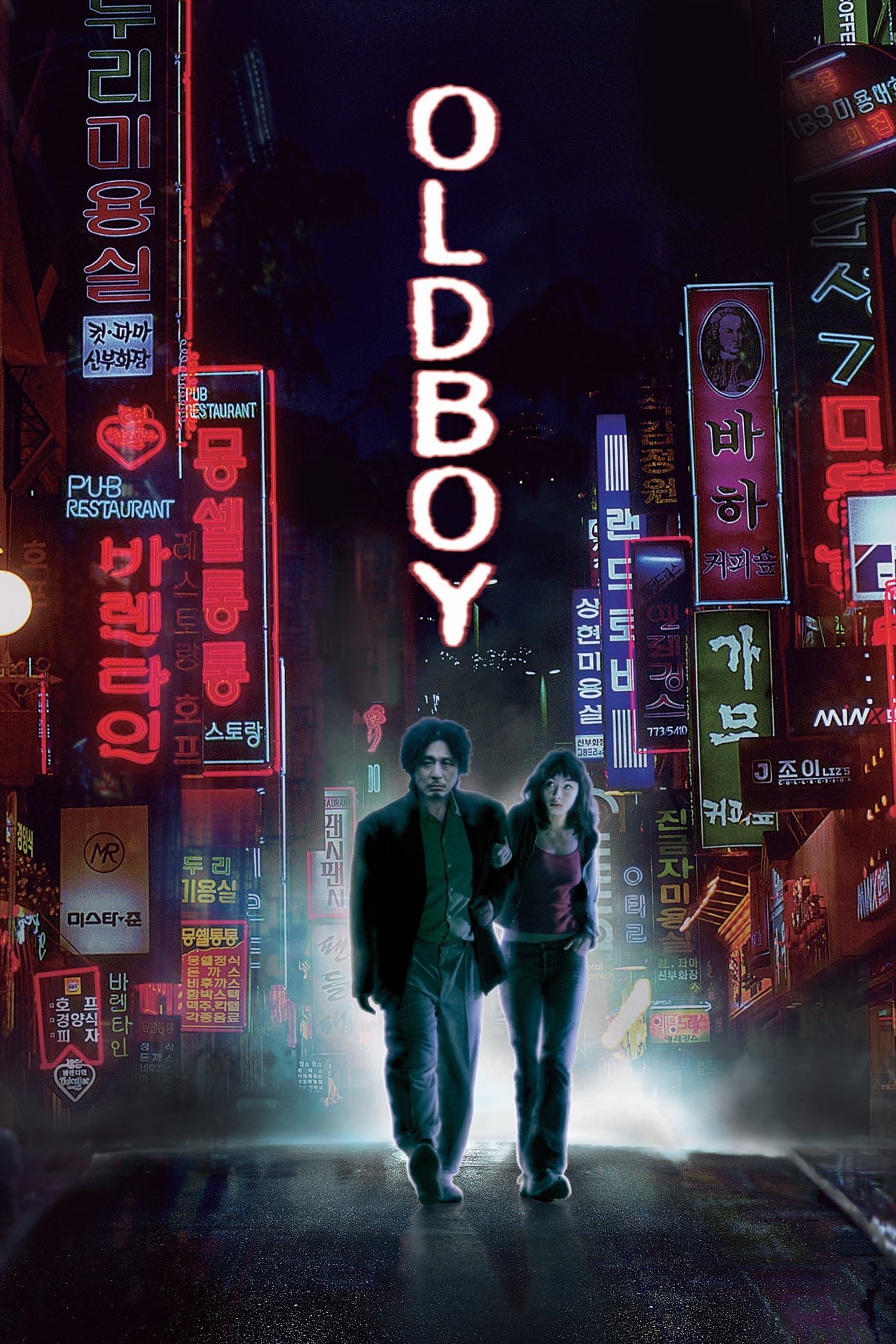

The air in the screening room reeks of burnt celluloid and nervous sweat, as if Park Chan-wook himself had cast a spell to summon the demons of vengeance from the bowels of Seoul. Oldboy isn’t a film; it’s a pagan ritual shot on 35mm, where every frame bleeds red ink and every shot breathes the rotten breath of obsession. It was 2003, and Korean cinema, after decades of kowtowing to Hollywood’s dictates, decided to spit in its face with a vengeance trilogy that would make Tarantino blush. But while Sympathy for Mr. Vengeance was a lyrical poem about guilt and Lady Vengeance a gothic fable of redemption, Oldboy emerged as the bastard child of Nietzsche and a drunk yakuza: pure will to power, pure instinct for destruction, pure cinema in the wild.
The project was born from the ashes of Park’s previous commercial flop, Sympathy for Mr. Vengeance, which left the director with his heart in his hands and his bank account in the red. But instead of surrendering, the Korean did what he does best: turn pain into art. With a shoestring budget (a paltry $3 million) and a script adapted from the eponymous manga by Nobuyuki Fukumoto and Garon Tsuchiya, Park set out to create not just a film, but a physical experience. And damn, did he succeed. The shoot was a 120-day hellscape in which Choi Min-sik, the lead, subjected himself to voluntary torture: he ate live octopuses (yes, live), took beatings to the point of exhaustion, and lost 33 pounds to embody Oh Dae-su, a man who goes from being a pathetic drunk to an angel of death wielding a hammer. Legend has it that in a key scene, the actor refused a stunt double and took a real hit that knocked him unconscious for several minutes. That’s how cinema is made, folks: with blood, sweat, and tears—not plastic CGI and actors crying over Zoom.
But Oldboy isn’t just a film of cheap shots and shocking scenes; it’s a masterpiece of hypnotic editing, sound design that drives needles into your eardrums, and cinematography that turns Seoul into a labyrinth of nightmares. Chung Chung-hoon, the cinematographer, used wide-angle lenses to distort faces into the grotesque, as if the camera’s lens were a funhouse mirror. And then there’s that hallway long take, a nearly three-minute lateral tracking shot where Oh Dae-su hacks his way through a dozen thugs with a hammer, choreographed like a ballet of death. It’s pure cinematic physics: bones breaking, blood splattering, and a rhythm that leaves you breathless. If this isn’t cinema in its purest form, then celluloid doesn’t deserve to exist.
The script, penned by Hwang Jo-yun, is a double-edged razor: on one side, it’s a classic revenge tale with plot twists that leave you gaping (that ending... God, that ending!); but on the other, it’s a dark meditation on free will, fate, and the cyclical nature of suffering. Park Chan-wook doesn’t settle for mere entertainment; he wants you to leave the theater with your soul poisoned, wondering if revenge is truly sweet or just another link in the chain of pain. And he succeeds—oh, how he succeeds. Oldboy is like a live octopus in your stomach: it churns your guts, suffocates you, but you can’t look away.
The best: A surgeon with a hammer
Park Chan-wook doesn’t direct; he carves pain into celluloid with the precision of a surgeon and the brutality of an executioner. Every frame of Oldboy seems designed to wound, to unsettle, to leave a scar on the viewer’s retina. The Korean master of sustained tension like few others: from the claustrophobic confinement of Oh Dae-su in his prison-cell to the hallway long take (which, by the way, was shot in one take after 17 exhausting attempts), every scene breathes a near-physical urgency. Park doesn’t fear excess; on the contrary, he embraces it with religious devotion. A man eating a live octopus? Yes. A hammer fight in a narrow hallway? Of course. A plot twist that leaves your jaw on the floor? Always.
But what’s most fascinating about his direction is how he balances the grotesque with the poetic. There are moments in Oldboy that seem plucked from a fever dream: Oh Dae-su breaking free from his prison with bloodied hands, rain falling on his face like the tears of an indifferent god, or that final shot in the snow, where pain freezes into eternal silence. Park doesn’t judge his characters; he observes them with clinical detachment, as if they were insects trapped in a glass jar. Yet there’s a heartbreaking humanity in each of them, even the most monstrous. Lee Woo-jin, the villain played by Yoo Ji-tae, isn’t a textbook psychopath; he’s a man shattered by pain, a puppeteer pulling the strings of revenge with a sad smile. Park films him with the same compassion as his protagonist, and that’s what makes Oldboy more than just exploitation cinema: it’s a Greek tragedy shot on 35mm.
The film’s pacing is relentless but never rushed. Park knows when to accelerate (the hallway long take) and when to slow down (the psychological torture scenes), crafting a symphony of tension that keeps you on the edge of your seat. And then there’s the sound: that constant buzz in Oh Dae-su’s ears, the pounding of his racing heart, the crunch of breaking bones. The sound design of Oldboy is as crucial as its cinematography; it’s a nightmare soundtrack that burrows into your brain like a rusty nail. Park doesn’t just want you to see the film; he wants you to feel it, to suffer it, to live it in the flesh.
The worst: Pain made flesh
If there’s one thing that elevates Oldboy above mere genre cinema, it’s the performances. Choi Min-sik doesn’t play Oh Dae-su; he becomes him, with an intensity that borders on the unbearable. His physical transformation is staggering: from a fat, drunken man in the opening minutes to a gaunt specter with bloodshot eyes, Choi Min-sik wears suffering in every pore. But the most impressive thing isn’t his physique—it’s his ability to convey emotion with a single gesture. That moment when, after 15 years of imprisonment, Oh Dae-su tastes alcohol for the first time and his face lights up with a mix of pleasure and pain... that’s pure cinematic magic. Choi doesn’t act; he bleeds on screen, and every drop of sweat, every tear, every guttural scream is real.
Opposite him, Yoo Ji-tae crafts Lee Woo-jin, the most fascinating villain in Korean cinema since Hannibal Lecter. Yoo doesn’t play a psychopath; he plays a broken man, a puppeteer manipulating the strings of revenge with an almost supernatural elegance. His smile is as unsettling as his coldness, and his chemistry with Choi Min-sik is electric. Every scene between them is a duel of glances, a power play where the viewer doesn’t know whether to laugh, cry, or vomit. And then there’s Kang Hye-jung, who plays Mi-do, the young woman who falls for Oh Dae-su. Her performance is more restrained, but no less impactful. Kang conveys an almost childlike innocence amid so much horror, like a ray of light in a dark tunnel.
But if there’s one moment that defines the acting in Oldboy, it’s the live octopus scene. Choi Min-sik doesn’t just eat a live octopus on screen; he devours it with a ferocity that leaves you breathless. No tricks, no doubles, no special effects: it’s an actor giving his all, body and soul, to his art. And that, dear readers, is what separates the greats of cinema from the industry’s mere mercenaries.
The technical department: A nightmare in 35mm
The script by Hwang Jo-yun is a masterclass in narrative structure, but what truly makes Oldboy an unforgettable film is its technical department. The cinematography by Chung Chung-hoon is a visual nightmare: distorted frames, colors saturated to the point of sickness, and lighting that seems plucked from a Francis Bacon painting. Chung uses wide-angle lenses to warp faces, creating a sense of claustrophobia and disorientation that perfectly mirrors Oh Dae-su’s mental state. And then there are those close-ups that nail you to your seat: Oh Dae-su’s bloodied hands, Mi-do’s tearful eyes, Lee Woo-jin’s icy smile. Every frame is a work of art in itself—but also a gut punch.
The production design is another of the film’s strengths. Oh Dae-su’s prison-cell is a claustrophobic, almost minimalist space where every object (the TV, the bed, the toilet) seems designed to torture him. And then there’s the hotel, a labyrinth of hallways and rooms that feels like an extension of Lee Woo-jin’s sick mind. The costumes, meanwhile, are functional but effective: Lee Woo-jin’s elegant suits contrast with Oh Dae-su’s dirty, worn-out clothes, reinforcing the clash of two opposing worlds in a spiral of violence.
But if there’s one technical element that stands above the rest, it’s the editing. Park Chan-wook and his editor, Kim Sang-beom, craft a relentless rhythm, alternating frenetic action scenes with moments of absolute silence. The hallway long take is a masterpiece of editing in itself, but so are the transitions between scenes, which often use sound as a bridge. And then there’s the score, composed by Jo Yeong-wook, which blends electronic sounds with traditional Korean instruments to create an oppressive, dreamlike atmosphere. The music doesn’t accompany the action; it devours it, like a parasite feeding on the characters’ pain.
The best
- Park Chan-wook’s direction: A surgeon with a hammer, capable of carving pain into celluloid with surgical precision and poetic brutality.
- Choi Min-sik’s performance: A titan of suffering, turning pain into art with an intensity that borders on the unbearable.
- The hallway long take: Three minutes of bloody ballet, choreographed like a fever dream and executed with millimetric precision.
- Hwang Jo-yun’s script: A double-edged razor, blending shocking plot twists with a dark meditation on free will and fate.
- Chung Chung-hoon’s cinematography: A visual nightmare in 35mm, where every frame is a stab to the retina.
The worst
- Some forced plot twists: The ending, though shocking, may feel too convoluted for some viewers, as if Park Chan-wook tried to outdo his own genius.
- Mi-do’s characterization: Kang Hye-jung does a great job, but her character sometimes feels more like a symbol than a real person, as if she were a narrative device rather than a human being.
- Pacing in the second half: After the hallway long take’s climax, the film loses some steam, as if Park didn’t know how to sustain the tension until the end.
- Excessive gratuitous violence: There are moments when the film seems to revel too much in suffering, as if the director forgot that horror can also be subtle.
The Verdict of Claqueta Ácida
Oldboy isn’t a film; it’s an exorcism shot on celluloid, a Korean nightmare that will haunt you long after the credits roll. Park Chan-wook doesn’t invite you to watch his work; he kidnaps you, tortures you, and sets you free with your soul poisoned and a macabre smile on your lips. It’s cinema in its purest form: brutal, poetic, hypnotic, and profoundly human. But beware—once you enter its labyrinth, there’s no way out. Revenge, as Oh Dae-su knows all too well, always comes at a price. And in this case, the price is your sanity. 💀
🎬 Tráiler Oficial
Abrir en YouTube
Ending Explained: Oldboy
Ficha de Daños Colaterales en Sala
Certificado de impacto psicofísico emitido por Lúa Ácida
Cero. La pantalla absorbió cada segundo de atención disponible.
Ni una sola mirada al móvil.
Ninguna: la adrenalina cinematográfica es suficiente.
"Inexistente: pulso de hierro hasta los créditos finales."
💬 El Veredicto de la Comunidad
¿Qué te ha parecido la película? Deja tu nota de 0 a 10 para contrastarla con el análisis de la redacción.
Aún no has votado
📢 ¿Te ha gustado el ácido?
Comparte esta crítica con tus amigos cinéfilos o desata la polémica en redes.
⚡ THE CINEMATIC VENOM YOUR INBOX CRAVES
No sugarcoated ratings, no corporate fluff. Subscribe for our uncensored weekly analysis or join the private Telegram for press previews, poll clashes, and instant alerts.
Alertas de estrenos en 1 segundo, encuestas en caliente y audios al salir de pases de prensa.
Recibe la dosis semanal en tu mail + regalo inmediato del PDF con 50 joyas ocultas de culto.
Related Reviews
Recommended autopsies for demanding film buffs.
 🔥 Fusión Nuclear9.5
*2001: A Space Odyssey – A Monkey, a Monolith, and Two Hours of Cosmic Pretentiousness*
⚡Consagradas en el olimpo transgresor con 🔥 Fusión Nuclear.
We dissect Stanley Kubrick’s magnum opus. A visual feast of minimalism and space hypnosis that cemented "serious" sci-fi—and bored half of humanity to tears.
 🔥 Fusión Nuclear9.3
2001: A Space Odyssey — The Day Kubrick Left Us Speechless (and Oxygenless)
⚡Consagradas en el olimpo transgresor con 🔥 Fusión Nuclear.
Kubrick turned science fiction into pure art: 149 minutes of eloquent silence, bone-wielding apes, and a psychopathic computer. Masterpiece or pretentious fraud? Here’s the verdict.
 🔥 Fusión Nuclear8.5
*A Clockwork Orange: The Sweet, Rusty Aftertaste of Violent Haute Couture*
⚡Consagradas en el olimpo transgresor con 🔥 Fusión Nuclear.
A scathing review of Kubrick’s masterpiece, where ultraviolence meets 60s fashion in a twisted pas de deux.
Editorial Ecosystem
Cinephile connections, archive interviews and related analyses.
💬 Debate Cinéfilo & Autopsia de Lectores
0 veredictos¿Discrepas con nuestra nota? ¿Es una obra maestra o veneno puro? Deja tu veredicto abajo sin necesidad de registro.

Aún nadie ha dejado su veredicto para esta película.
Sé el primero en clavarle el colmillo rellenando el formulario de arriba.