Nightcrawler — The Power of Obsession (Or How to Sell Your Soul for a Front-Page Shot)
A razor-sharp evisceration of Nightcrawler—the film that exposes journalism’s dark underbelly while making you root for the monster.


Nightcrawler: full review

The first time I saw Nightcrawler in a dingy Madrid neighborhood cinema—seats half-broken, the air thick with the stench of stale popcorn—I knew I wasn’t watching a movie. I was witnessing a social experiment disguised as a thriller. Dan Gilroy, a Hollywood scribe who’d spent decades churning out garbage like The Bourne Legacy (yes, that Jeremy Renner abomination), suddenly decided he wanted to direct. And boy, did he deliver. With Nightcrawler, Gilroy didn’t just make his directorial debut; he gifted us one of the most unsettling and hypnotic films of the 21st century. A film that sinks its teeth into your neck and refuses to let go until the final credits spit you back into reality, leaving you wondering what the hell you just watched—and, worse, why you loved it so much.
The opening is pure poison. Lou Bloom (Jake Gyllenhaal) slithers onto the screen like a nocturnal predator, his bulging eyes and shark-like grin carved from ice. He’s stealing a metal fence in some Los Angeles wasteland, and he does it with terrifying efficiency. No music, just the sound of bolt cutters snipping through steel and his controlled, almost mechanical breathing. Gilroy doesn’t give you a second to catch your breath. In under five minutes, Lou’s already sold the stolen materials, scammed some poor sap in a job interview, and discovered the world of freelance crime journalism. And this is where the film becomes a funhouse mirror of our society. Because Lou isn’t a monster—not any more than the system that created him. He’s the logical product of a world where success is measured in likes, in shocking images, in fresh blood served on a silver platter.
The scene where Lou recruits Rick (Riz Ahmed), a desperate young man in need of work, is one of the best things I’ve seen in years. There’s no physical violence, no direct threats—just words. Lou speaks in that soft, almost hypnotic voice, explaining to Rick that the world is a jungle and only the strong survive. And the worst part? He’s right. Rick, with his wide, doomed eyes, nods. He knows Lou is a psychopath, but he also knows Lou is his only way out. That sequence, shot in an empty parking lot under the sickly yellow glow of a flickering streetlamp, is pure cinema. Gilroy doesn’t need special effects or absurd plot twists. A medium shot of Gyllenhaal smiling while chewing gum is enough to make your skin crawl.
And then there’s the performance. Jake Gyllenhaal doesn’t play Lou Bloom—he is Lou Bloom. He lost 20 pounds for the role, spent hours studying real-life crime reporters, and even learned to operate a video camera like a pro. The result is chilling. Lou isn’t your typical villain—no tragic backstory to justify his behavior, no grand monologue explaining his motives. He’s an empty man, a human-shaped black hole that sucks in everything around him. Gyllenhaal plays him with a coldness that hurts, but also with a charisma that forces you to keep watching. It’s as if Hannibal Lecter and Patrick Bateman had a child and raised him on energy drinks and self-help manuals. There’s a moment when Lou, after witnessing a car crash, leans in and whispers something to one of the victims. We don’t hear what he says, but the woman’s expression of sheer terror says it all. That shot, that goddamn shot, is the perfect summary of the film: evil doesn’t always come with a knife—sometimes it arrives with a smile and a job offer.
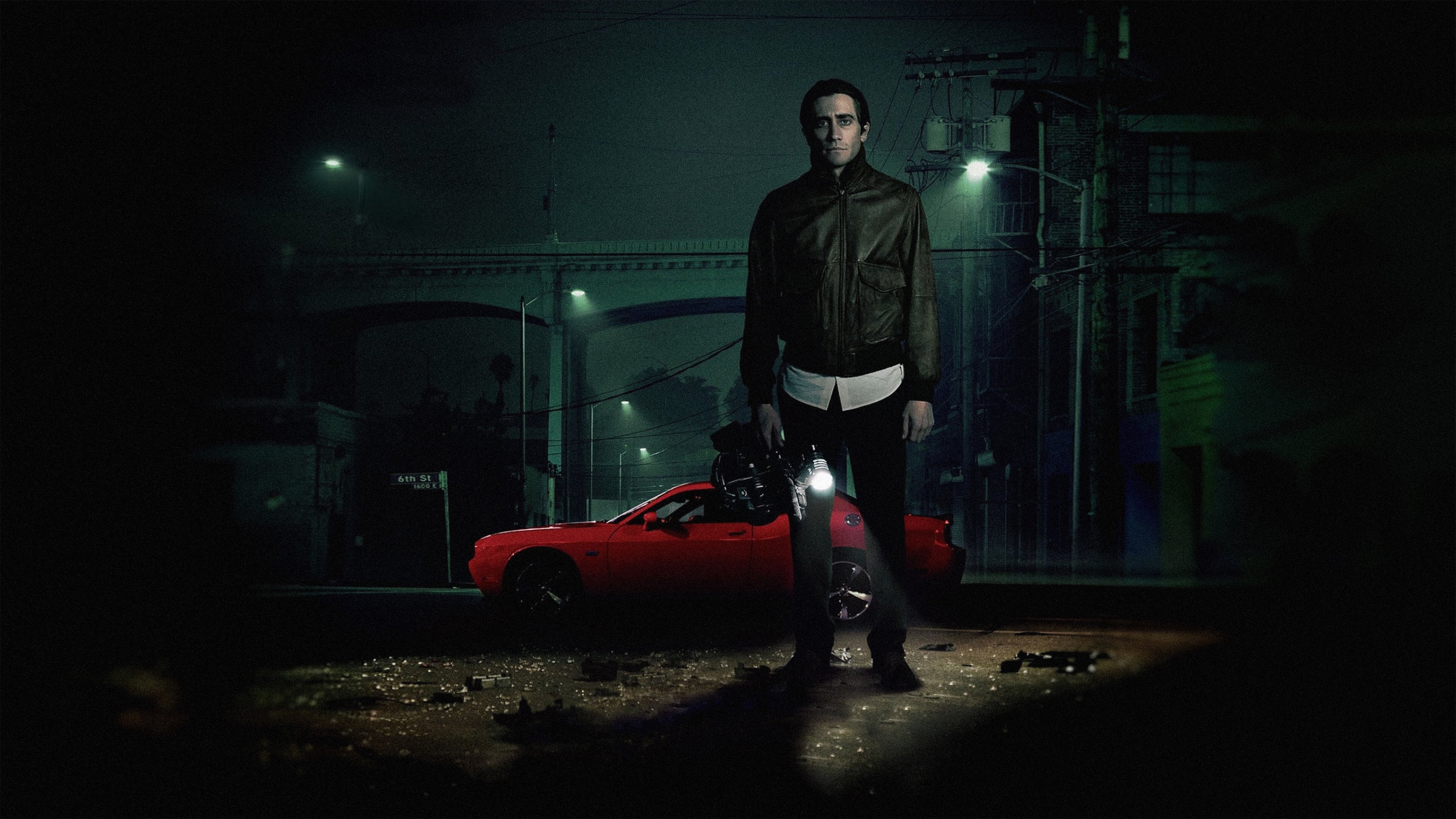
Direction and Mise-en-Scène: The Art of Making Ugly Hypnotic
Dan Gilroy isn’t your typical director. He doesn’t have David Fincher’s visual elegance or Paul Thomas Anderson’s controlled madness, but he has something few directors possess: a clinical, merciless gaze into the human condition. Nightcrawler isn’t a pretty film, nor is it well-lit. It’s ugly, grimy, with a color palette that oscillates between the bilious green of fluorescent lights and the burnt orange of Los Angeles sunsets. But that ugliness is deliberate—it’s part of the film’s DNA. Gilroy and cinematographer Robert Elswit (a frequent collaborator of PTA) shot the film on high-definition digital cameras but chose not to correct the color in post-production. The result is a raw, almost documentary-like image that makes you feel like you’re watching the 3 AM news.
The editing is another standout. John Gilroy, the director’s brother and Tony Gilroy’s go-to editor (yes, the Gilroys are like the Coppolas, but with less talent and more cynicism), delivers a masterclass. The transitions between scenes are abrupt, almost violent, as if the film itself is in a hurry to get to the next crime. There’s a sequence where Lou and Rick chase a police car through the streets of Los Angeles, and the editing is so frenetic it leaves your heart in your throat. No music, just the wail of sirens, screeching tires, and the characters’ ragged breathing. It’s pure adrenaline, proving you don’t need a $200 million budget to craft a memorable chase scene.
But where Gilroy truly shines is in his direction of actors. Not just with Gyllenhaal, but with the entire cast. Riz Ahmed, in one of his first major Hollywood roles, is heartbreaking as Rick, Lou’s assistant. His transformation from wide-eyed idealist to psychopath’s accomplice is one of the saddest character arcs I’ve seen in years. Then there’s Rene Russo as Nina, the director of a sensationalist news network. Russo, an actress who’s always exuded elegance, sheds every ounce of glamour to become a predator just as cold and calculating as Lou. The scene where Nina and Lou negotiate the price of crime footage is pure dynamite. No shouting, no threats—just two people talking money while a corpse flickers on a TV in the background. This is capitalism in its purest, most terrifying form.
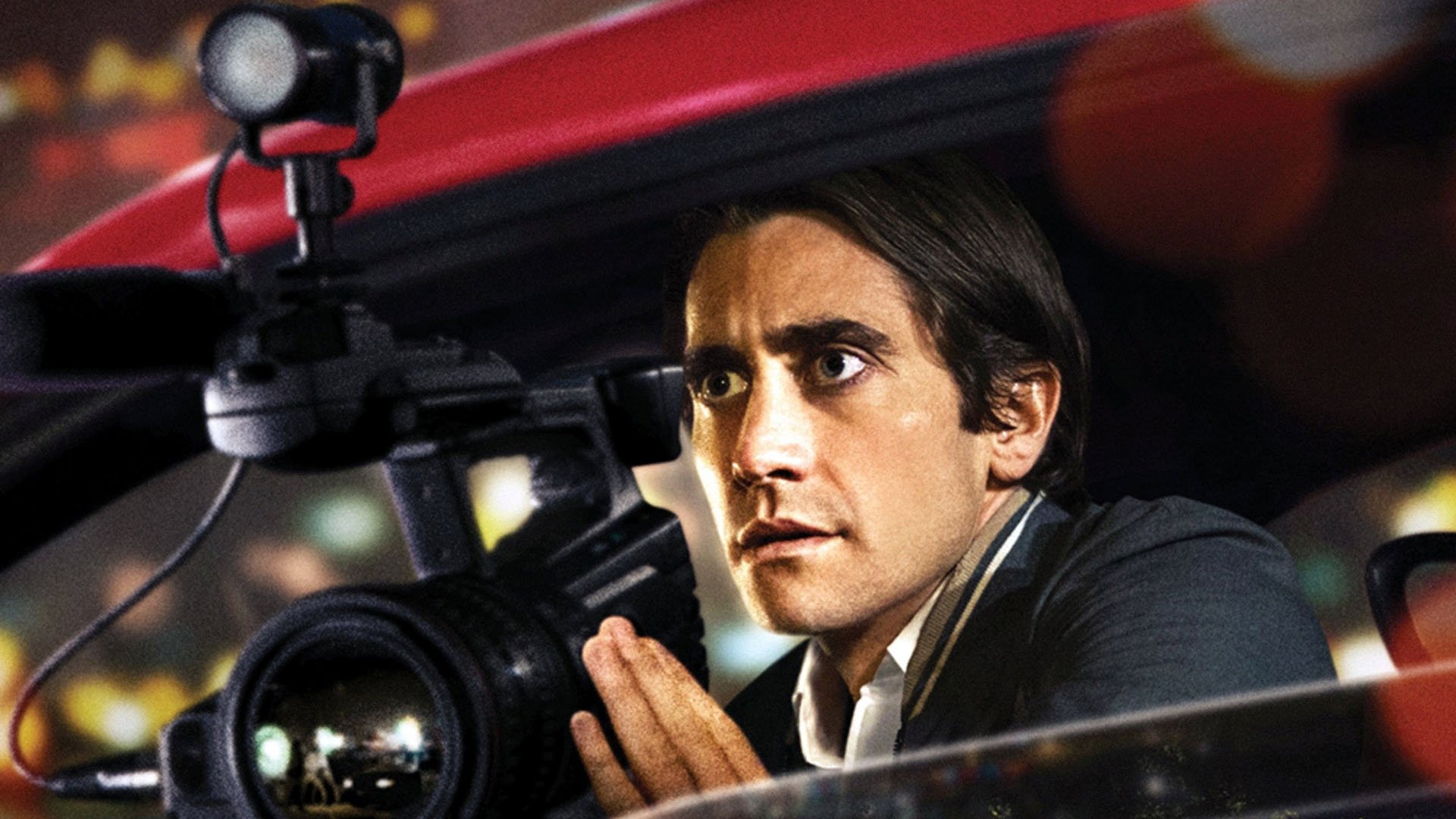
Technical Breakdown: When Music, Sound, and Design Become Characters
James Newton Howard’s score is another triumph. It’s not an epic or grandiose soundtrack, but something far more subtle and disturbing. Howard, a Hollywood veteran who’s worked with directors like M. Night Shyamalan and Francis Lawrence, composes music that feels like it’s seeping out of a fever dream. There are moments when the score almost vanishes, leaving only ambient noise: the hum of fluorescent lights, the distant roar of freeway traffic, Lou’s breathing. But when the music does appear, it hits like a sledgehammer. The main theme—a mix of dark synths and tense strings—is like a knife twisting in your gut. This isn’t a score you listen to; it’s a score you feel.
The sound design is equally crucial. The Los Angeles of Nightcrawler isn’t the city of stars and palm trees—it’s an urban hellscape where sirens, gunshots, and screams blend into a symphony of chaos. There’s a scene where Lou films a shooting from a distance, and the sound of the gunfire arrives a few seconds late, as if the violence is happening in another dimension. It’s a small detail, but it changes everything. It makes you feel like you’re seeing the scene through Lou’s eyes, like violence is something distant, something you can consume from the safety of your couch.
Production designer Kevin Kavanaugh also deserves praise. The sets in Nightcrawler are cold, impersonal, as if the city itself is a character in the film. Lou and Rick’s apartments are small, claustrophobic, filled with cheap furniture and functional objects. There’s nothing to suggest anyone actually lives there—just empty spaces that mirror the minds of their inhabitants. Even Lou’s van, that filthy, beat-up vehicle that becomes his mobile command center, is a character in its own right. It’s the perfect symbol of his ambition: something old and broken, but still running on sheer willpower.
The best
- Jake Gyllenhaal’s performance: It’s not just that Gyllenhaal is brilliant—he redefines what it means to play a psychopath. Lou Bloom isn’t some over-the-top villain; he’s a real man, with fears, insecurities, and an obsession with success. Gyllenhaal plays him with a coldness that freezes your blood, but also with a charisma that forces you to keep watching. It’s as if Hannibal Lecter and Patrick Bateman had a child, and that child grew up watching self-help tutorials on YouTube.
- Dan Gilroy’s direction: Gilroy doesn’t just debut with a masterpiece—he delivers a film that shatters every thriller convention. No heroes, no clear villains, no happy endings. Just a cold, unflinching look at a world that rewards cruelty and punishes empathy. Gilroy doesn’t judge his characters; he simply shows them as they are, and that’s the most terrifying thing of all.
- Robert Elswit’s cinematography: Elswit, a frequent collaborator of Paul Thomas Anderson, turns Los Angeles into a character. The city isn’t a pretty backdrop—it’s an urban hellscape of fluorescent lights and long shadows. It’s ugly, dirty, and mesmerizing, just like Lou Bloom’s mind.
- Dan Gilroy’s screenplay: A script that doesn’t waste a single line of dialogue. Every word, every silence, every glance is calculated to perfection. No filler, no unnecessary scenes—just a story told with surgical precision.
The worst
- Underdeveloped secondary characters: While Riz Ahmed and Rene Russo shine, others like Bill Paxton’s Joe Loder or Kevin Rahm’s Frank Kruse feel a bit thin. They’re functional characters, but they lack the depth they deserve.
- Pacing in the second half: The film loses some steam in the final act, especially during the scenes where Lou tries to sell his footage to the news network. It’s not bad, but it’s not on par with the rest of the film.
- Predictable twists: While the ending is shocking, some moments feel too telegraphed. It’s not a major flaw, but it does detract from an otherwise near-perfect film.
The Verdict of Claqueta Ácida
Nightcrawler isn’t a film—it’s a mirror. A dirty, broken, blood-smeared mirror, but a mirror nonetheless. Dan Gilroy doesn’t ask us to identify with Lou Bloom, but he doesn’t let us judge him either. Because in the end, Lou isn’t a monster—he’s the logical product of a world that rewards ruthless ambition and punishes empathy. This is a film that hurts, that unsettles, that leaves a bitter taste in your mouth. But it’s also a necessary film, one of those rare works that forces you to question not just cinema, but the society we live in. Jake Gyllenhaal is sublime, Gilroy’s direction is flawless, and Elswit’s cinematography turns Los Angeles into a character in its own right. It’s not a film for everyone, but if you’ve got the stomach for it, I guarantee you won’t forget it. Welcome to the dark side of the American Dream. 💀
🎬 Tráiler Oficial
Abrir en YouTube
Nightcrawler: frequently asked questions
- What is the rating of "Nightcrawler" on Claqueta Ácida?
- "Nightcrawler" scored 8.5/10 on Claqueta Ácida in the review by Odin Lagbert.
- Is "Nightcrawler" worth watching?
- Yes. We gave it 8.5/10 (Nuclear Fusion), our rating for must-see films.
- Who directed "Nightcrawler"?
- "Nightcrawler" was directed by Dan Gilroy.
Theater Collateral Damage Report
Psychophysical impact certificate issued by Odin Lagbert
Cero. La pantalla absorbió cada segundo de atención disponible.
El móvil permaneció en el bolsillo donde debía estar.
Ninguna: la adrenalina cinematográfica es suficiente.
"No aplica. La obra se sostiene sola."
💬 Community Verdict
What did you think of the film? Rate it from 0 to 10 to compare it with the editorial review.
You haven't voted yet
📢 ¿Te ha gustado el ácido?
Comparte esta crítica con tus amigos cinéfilos o desata la polémica en redes.
⚡ THE CINEMATIC VENOM YOUR INBOX CRAVES
No sugarcoated ratings, no corporate fluff. Subscribe for our uncensored weekly analysis or join the private Telegram for press previews, poll clashes, and instant alerts.
Alertas de estrenos en 1 segundo, encuestas en caliente y audios al salir de pases de prensa.
Recibe la dosis semanal en tu mail + regalo inmediato del PDF con 50 joyas ocultas de culto.
Related Reviews
Recommended autopsies for demanding film buffs.
 🔥 Fusión Nuclear 9.3
 2001: A Space Odyssey — The Day Kubrick Left Us Speechless (and Oxygenless)
⚡ Afinidad temática directa en atmósfera, estilo y fijaciones visuales.
Kubrick turned science fiction into pure art: 149 minutes of eloquent silence, bone-wielding apes, and a psychopathic computer. Masterpiece or pretentious fraud? Here’s the verdict.
 ⚡ Ácido Cítrico 7.5
 Baghead: A Nightmare in the Dark (And We Mean *Literal* Darkness)
⚡ Afinidad temática directa en atmósfera, estilo y fijaciones visuales.
A scathing, gut-punch review of *Baghead*, the psychological thriller that drags you into the abyss—kicking, screaming, and probably tripping over your own feet.
 🔥 Fusión Nuclear 8.7
 *Blow Out* (1981): When Brian De Palma Stopped Imitating Hitchcock to Piss on His Grave—With Style
⚡ Afinidad temática directa en atmósfera, estilo y fijaciones visuales.
An in-depth review of Brian De Palma’s definitive paranoid thriller. We dissect his obsession with sound, his visual suspense tricks, and a devastating finale that still packs a punch.
Editorial Ecosystem
Cinephile connections, archive interviews and related analyses.
💬 Debate Cinéfilo & Autopsia de Lectores
0 veredictos¿Discrepas con nuestra nota? ¿Es una obra maestra o veneno puro? Deja tu veredicto abajo sin necesidad de registro.


Aún nadie ha dejado su veredicto para esta película.
Sé el primero en clavarle el colmillo rellenando el formulario de arriba.