The Devil Wears Prada 2 — The Unnecessary Return of Luxury Brands and Corporate Nostalgia
A review of the sequel to the iconic fashion comedy. Miranda Priestly returns to try and save the dying print media industry with a mix of stylish workplace abuse and million-dollar budgets.

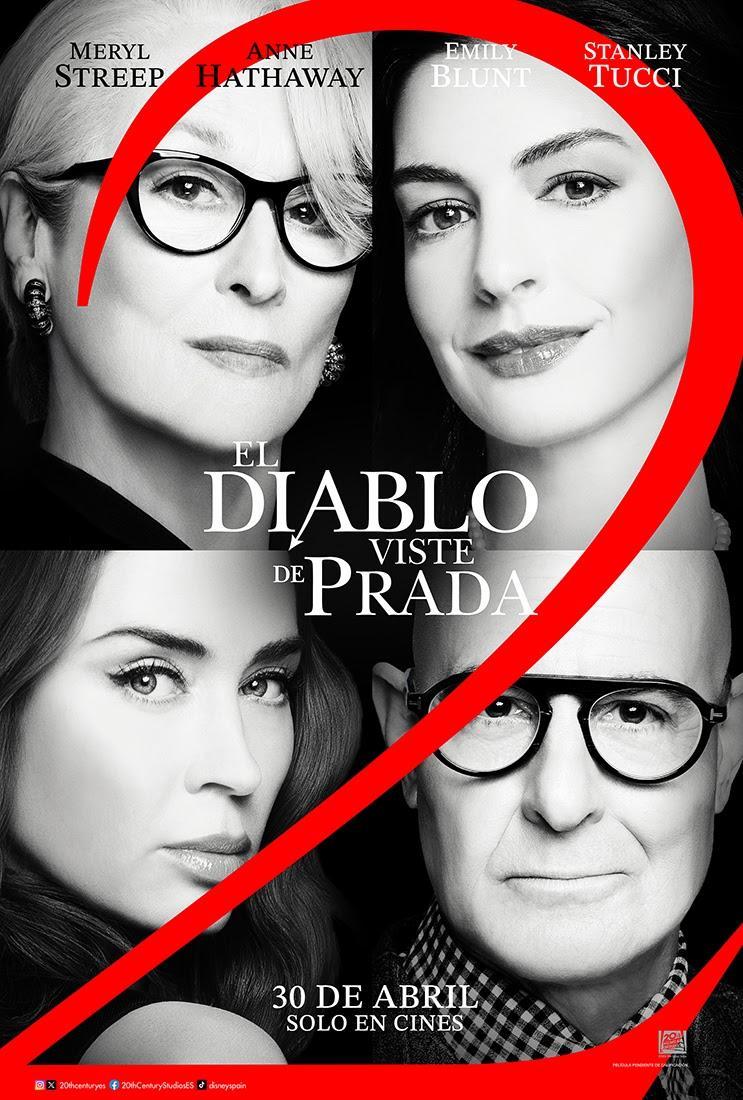

The Devil Wears Prada 2: When Nostalgia Smells Like Mothballs and Capitalism Dons a Chanel Disguise
Twenty years. Two whole decades had to pass before Hollywood—that insatiable beast of celluloid and greenbacks—decided the world needed a sequel to The Devil Wears Prada. Not because the story demanded it—God forbid—but because Disney+ algorithms and executives in Tom Ford suits and Hermès ties caught a whiff of nostalgia’s sweet, rotting scent. And so, like someone dusting off a haute couture dress for a party no one wants to attend, they’ve foisted The Devil Wears Prada 2 upon us: a corporate cynicism exercise masquerading as a fashionista comedy, where 2006’s editorial elitism tries to flirt with the TikTok era and ends up tripping over its own stilettos.
In theory, the premise could have worked. Imagine: Miranda Priestly, the undisputed queen of Runway, facing the collapse of her empire in the age of digital media. Fashion is no longer decided in champagne-soaked salons with withering glances, but in Instagram feeds, where a teenager with an iPhone and a beauty filter can dictate trends with a single swipe. In the hands of a bold screenwriter, this conflict could have been a ferocious satire of late-stage capitalism, a dark comedy about how luxury becomes obsolete when even the tackiest influencer can sell you a "lifestyle" with an affiliate link. But no. Instead, what we get is a parade of Chanel coats costing more than the GDP of a small country, dialogue that sounds like it was written by a marketing committee, and a central conflict that drags on like a model in sky-high heels on a slippery runway.
finalExplicado_en: "In the climax, Andy Sachs, now a jaded editor herself, returns to Runway for a glitzy anniversary gala where Miranda Priestly faces a boardroom coup from younger, social-media-savvy executives. Andy betrays her former mentor by leaking damaging information, toppling Miranda’s empire in a rain-soaked confrontation outside the Met. The film ends with Andy walking away triumphant yet empty, as the camera lingers on discarded designer garments floating in puddles. Symbolically, the ending is a cynical shrug: the cycle of corporate cruelty and luxury fetishism is unbreakable. Even the supposed heroine has become the monster she once despised, proving that resistance to fashion-world capitalism is futile and that nostalgia is just another branded product. The puddle shot mocks any hope of purity or escape; everything valuable eventually ends up trashed."
Miranda Priestly in the Age of the "Like": Meryl Streep and the Art of Selling Smoke with Elegance
Meryl Streep returns as Miranda Priestly, and she does so with that signature glacial elegance. But there’s a problem: this time, her character feels like a budget version of herself. In 2006, Miranda was the devil incarnate—a woman who ruled the fashion world with an iron fist and a smile that could freeze blood. She was cruel, yes, but also fascinating, because behind her frostiness lay a ruthless intelligence and an absolute mastery of her craft. In this sequel, however, Miranda is reduced to a relic of the past, an editorial dinosaur stammering about "algorithms" and "engagement" like someone explained social media to her five minutes before shooting the scene.
Streep, of course, does what she can. Her performance is flawless, as always, but the script forces her to recite lines that sound as natural as a corporate tweet written by an intern. "Fashion is no longer created, it’s curated," she sneers at one point, while glaring at an assistant showing her a mood board on an iPad. The issue isn’t that Miranda doesn’t understand the digital world—after all, the character has always been a brilliant strategist—but that the script turns her into a caricature of herself, as if the writers watched The Social Network once and decided that was enough to write dialogue about the digital age.
Then there’s the matter of the character’s evolution. In the first film, Miranda was a complex villain—a woman who had sacrificed everything, including her humanity, for power, and who, in a moment of vulnerability, hinted that even she had limits. In this sequel, though, Miranda seems to have lost all ambiguity. Now she’s just another executive, a CEO desperate to save her magazine in a world that no longer needs her. No nuances, no contradictions, just a woman clinging to her throne as the castle crumbles around her. Streep, with her usual mastery, tries to give her depth, but the script won’t let her. It’s like watching a violin virtuoso forced to play Baby Shark on a plastic recorder.
Emily Blunt: The Only One Who Gets the Joke (and Has a Blast)
If there’s a glimmer of light in this parade of mediocrity, it’s Emily Blunt. Her Emily Charlton—the former Miranda assistant turned successful marketing executive—is, by far, the best thing about the movie. Blunt doesn’t just steal every scene she’s in; she seems to be the only one who understands the tone this sequel should have: an exaggerated, almost cartoonish comedy where humor comes from hyperbole and absurdity.
Emily Charlton in 2024 is an even more stressed and ambitious version of herself. Now she leads a team of millennials who don’t know what a fax is and communicates with them via Slack while sipping coffee from a mug that reads "I survived Miranda Priestly." Blunt has a field day with the character, exaggerating her tics—like that signature move of adjusting her glasses while shooting a death glare—and giving her a charisma that contrasts with Miranda’s frostiness and Andy’s apathy. In one particularly memorable scene, Emily faces off against a group of influencers trying to negotiate payment in "exposure" and "collabs," and Blunt makes the moment both hilarious and painfully real.
The most interesting thing about Emily is that, unlike Miranda, she has adapted to the new world. She’s not a relic of the past but a predator who’s learned to navigate the digital jungle. And yet, the script wastes this opportunity to explore her dynamic with Miranda. Instead of a clash of titans between two women representing different eras of the industry, we get a couple of scenes where Emily explains Instagram to Miranda, as if Miranda were her grandma asking for help setting up Wi-Fi.
Anne Hathaway: Andy Sachs, or How to Waste a Character in the Name of Nostalgia
And then there’s Andy Sachs, played by Anne Hathaway. Her return is, by far, the most forced aspect of the movie. In the first film, Andy was the heart of the story: a young idealist who stumbles into the fashion world without knowing what she’s getting into, only to be transformed by the experience. She was the audience’s alter ego, the person we could all relate to as we laughed (and cringed) at Miranda’s antics.
In this sequel, however, Andy is little more than a plot device. She’s gone from an aspiring journalist to an "influential opinion columnist"—yes, that’s how they describe her—but her character has no depth. We don’t know what she’s been up to for the past twenty years, why she’s decided to re-enter Miranda’s orbit, or what she really thinks about the fashion industry in the digital age. Hathaway does what she can, but the script leaves her in limbo: Andy is no longer the naive girl from the first movie, but she’s not a seasoned professional either. She’s just… Andy, an excuse to reunite the original cast and make fans of the first film sigh nostalgically.
The most frustrating thing is that Andy’s conflict—should she go back to work for Miranda?—could have been interesting. Imagine: a woman who once hated the fashion world but now wonders if she’s been romanticizing her past. A reflection on how time distorts our memories and how, sometimes, what we thought we’d moved on from still holds power over us. But no. Instead, we get a couple of scenes where Andy complains about how "toxic" Miranda is, as if we’re watching an episode of Sex and the City written by someone who’s only seen Sex and the City clips on YouTube.
David Frankel: Luxury Direction, but Soulless
David Frankel, the director of the first film, returns behind the camera, and the result is… well, technically impeccable. The cinematography is elegant, the fashion show scenes are spectacular, and the production design recreates the suffocating luxury of Runway’s offices in exquisite detail. But therein lies the problem: The Devil Wears Prada 2 is a film that seems made to be admired, not felt.
Frankel has a keen eye for visual detail—the reflections of New York skyscrapers in office windows, the close-ups of haute couture fabrics—but he seems to have forgotten that cinema isn’t just about images; it’s also about rhythm, tone, and, above all, heart. The first film worked because, beneath its layer of glamour and sarcasm, there was a story about personal growth, about how power corrupts, and about how sometimes the only way to survive is to become what you hate. This sequel, however, has none of that. It’s a cold, calculated film, as if Frankel decided the only thing that mattered was that the outfits were beautiful and the locations spectacular.
The editing, meanwhile, is as predictable as an episode of Gossip Girl. Scenes unfold with mechanical precision: a shot of Miranda looking disdainful, a close-up of a designer dress, a line about how awful Gen Z is, rinse and repeat. There are no surprises, no moments that make you laugh out loud or leave you stunned. It’s like watching a fashion show where every model wears the same dress, just in different colors.
And then there’s the soundtrack. In the first film, the music—from KT Tunstall’s Suddenly I See to Madonna’s Vogue—helped define the tone, sometimes ironic, sometimes melancholic, of the story. In this sequel, however, the soundtrack is generic pop that sounds like it was pulled from a Spotify playlist titled "Hits for Millennials in Marketing." There’s a particularly painful moment where a cover of Material Girl plays while Miranda and Emily discuss the future of Runway. It’s as if the film is saying, "Look, we know this is a sequel, and we’re going to remind you every five minutes."
The Conflict That Never Was: Satire of Capitalism or Nostalgic Elegy?
The Devil Wears Prada 2’s biggest problem is that it doesn’t know what it wants to be. Is it a ferocious satire of capitalism in the digital age? A comedy about generational clash? A nostalgic elegy for the golden age of fashion magazines? The answer, unfortunately, is: a little of everything, but nothing in depth.
There are moments when the film seems like it wants to be a biting critique of how social media has turned fashion into a circus of influencers and Shein hauls. In one scene, Miranda visits a "content factory" where young creators churn out fashion videos like assembly-line workers. The problem is that the script doesn’t explore this idea. The scene lasts two minutes, and then the film goes back to its routine of forced dialogue and expensive outfits.
At other times, the movie seems like it wants to be a comedy about the clash between the old guard and millennials. But even here, the script stays on the surface. The young Runway assistants are grotesque caricatures: one won’t stop talking about her "mental health," another only communicates in memes, and all of them seem like they were plucked from an episode of Silicon Valley written by someone who’s never interacted with anyone under 30. No nuance, no humanity, just cheap stereotypes.
And then there’s the nostalgia. The film is obsessed with reminding us that this is a sequel, that we’re witnessing a reunion of beloved characters. There are unnecessary flashbacks to the first movie, nods to iconic scenes (like the moment Miranda throws a coat at Andy), and even a scene where Emily and Andy visit Andy’s old apartment, as if we’re in an episode of Friends: The Reunion. But nostalgia, when not backed by a solid story, is just a cheap trick. It’s like serving caviar on a plastic plate: no matter how good the caviar is, the plate ruins the experience.
Odious Comparisons: When the Sequel Doesn’t Measure Up
To understand just how flawed The Devil Wears Prada 2 is, just compare it to other sequels that did capture the essence of their originals. Take, for example, Before Sunset (2004), the sequel to Before Sunrise (1995). Richard Linklater didn’t just maintain the magic of the first film; he deepened it, exploring how time had changed his characters. Or Toy Story 3 (2010), which took the themes of childhood and the loss of innocence and elevated them to a devastating emotional level.
The Devil Wears Prada 2, on the other hand, is more like Sex and the City 2 (2010): a sequel that mistakes luxury for substance, that thinks dressing its characters in expensive clothes and taking them to exotic locations is enough to justify its existence. Like that film, this sequel is more interested in selling a lifestyle than telling a story. And like that film, it ends up feeling hollow, like a beautiful display window with nothing inside.
Even within the genre of fashion-world comedies, there are films that managed to satirize the industry with more sharpness. Zoolander (2001), for example, was an absurd, exaggerated parody, but at least it had a clear point of view and humor that worked. The original The Devil Wears Prada balanced humor with a subtle critique of elitism and superficiality. This sequel, however, has neither the humor of the first nor the audacity of Zoolander. It’s as if someone blended both films in a blender and served the result in a cheap champagne flute.
The best
- Emily Blunt steals the show: Emily Charlton remains the best character in the franchise, and Blunt has a blast exaggerating every gesture and death glare. If this movie had a spin-off centered on her, it might actually be worth watching.
- The haute couture wardrobe: Patricia Field is still a magician. The outfits, the fashion shows, and the accessories are a visual feast, though one suspects the costume budget exceeded the script’s.
The worst
A dated and artificial script: The dialogue about social media and technology sounds like it was written by a boomer who just discovered TikTok. "Fashion is no longer created, it’s curated," Miranda declares at one point. Yes, and hell has frozen over.*- No real conflict: The film goes in circles without deciding if it wants to be a satire, a comedy, or a drama. In the end, it’s none of the above—just a parade of expensive clothes with famous actors.
The Verdict of Claqueta Ácida (5/10)
The Devil Wears Prada 2 is what happens when Hollywood confuses nostalgia with talent: a hollow haute couture parade where the outfits are spectacular, but the mannequin has no soul. Meryl Streep and Emily Blunt do their best to save the furniture with style and elegance, but the script abandons them on a slippery runway, forcing them to recite lines about "algorithms" and "engagement" like interns at a marketing agency. Miranda Priestly deserved to retire in 2006, in her fur coat and icy smile, rather than be reduced to a pathetic relic stammering about likes like someone’s aunt in a WhatsApp group. A design fail, a barely passing grade in wardrobe, and a reminder that not everything that glitters is gold—sometimes it’s just cheap glitter.🎬 Tráiler Oficial
Abrir en YouTube
Ending Explained: The Devil Wears Prada 2
Ficha de Daños Colaterales en Sala
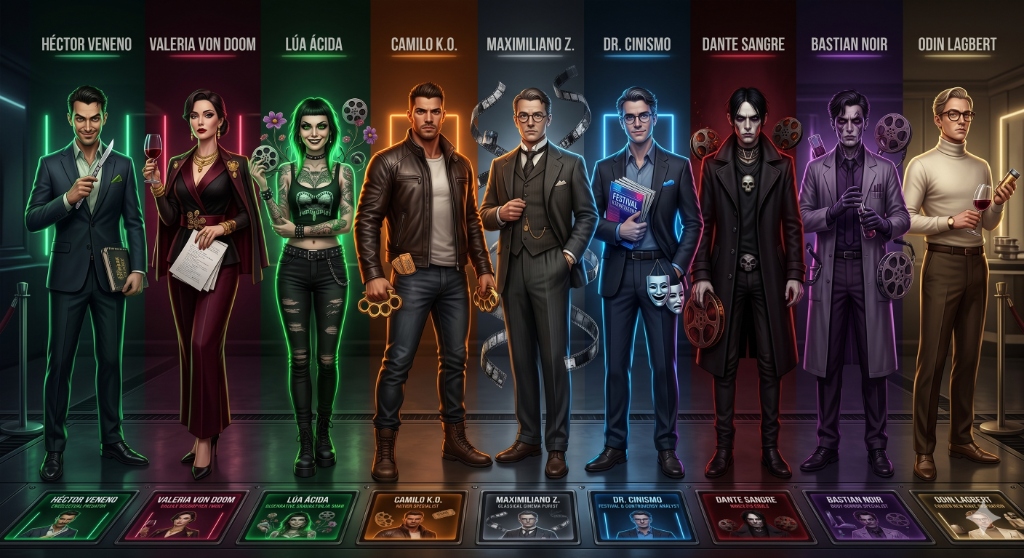
Certificado de impacto psicofísico emitido por Camilo K.O.
3 amagos en el tramo intermedio; pestañeo pesado en las transiciones más innecesarias.
Minuto 41 y minuto 68 (comprobando cuánto quedaba de suplicio).
1 espressos para no dejarse vencer por la mediocridad cómoda.
"A mitad del segundo acto cuando la subtrama secundaria empezó a pesar más de lo que aportaba."
💬 El Veredicto de la Comunidad
¿Qué te ha parecido la película? Deja tu nota de 0 a 10 para contrastarla con el análisis de la redacción.
Aún no has votado
📢 ¿Te ha gustado el ácido?
Comparte esta crítica con tus amigos cinéfilos o desata la polémica en redes.
⚡ THE CINEMATIC VENOM YOUR INBOX CRAVES
No sugarcoated ratings, no corporate fluff. Subscribe for our uncensored weekly analysis or join the private Telegram for press previews, poll clashes, and instant alerts.
Alertas de estrenos en 1 segundo, encuestas en caliente y audios al salir de pases de prensa.
Recibe la dosis semanal en tu mail + regalo inmediato del PDF con 50 joyas ocultas de culto.
Related Reviews
Recommended autopsies for demanding film buffs.
 ⚡ Ácido Cítrico7.5
A Ghost Story: A Journey Through Time and Memory
⚡Afinidad temática directa en atmósfera, estilo y fijaciones visuales.
The Claqueta Ácida review of A Ghost Story, a film that explores existence and human connection.
 ⚡ Ácido Cítrico7.2
Acid in the Veins: Fede Álvarez Revives the Tactile Panic of Alien
⚡Afinidad temática directa en atmósfera, estilo y fijaciones visuales.
Industrial claustrophobia and pure physical terror. A merciless critique of Ian Holm's CGI and the cheap nostalgia that stains the franchise's return.
 🔥 Fusión Nuclear8.0
Backrooms: A Descent into the Void
⚡Afinidad temática directa en atmósfera, estilo y fijaciones visuales.
A film that flings wide the door to mystery and terror—if you dare to step through
Editorial Ecosystem
Cinephile connections, archive interviews and related analyses.
💬 Debate Cinéfilo & Autopsia de Lectores
0 veredictos¿Discrepas con nuestra nota? ¿Es una obra maestra o veneno puro? Deja tu veredicto abajo sin necesidad de registro.

Aún nadie ha dejado su veredicto para esta película.
Sé el primero en clavarle el colmillo rellenando el formulario de arriba.