The Last Jedi — The Saga That Fell Down the Intergalactic Troll Hole
A scathing review of Star Wars: The Last Jedi, the biggest fan controversy in the galaxy—where the Force drowns in debates and memes.

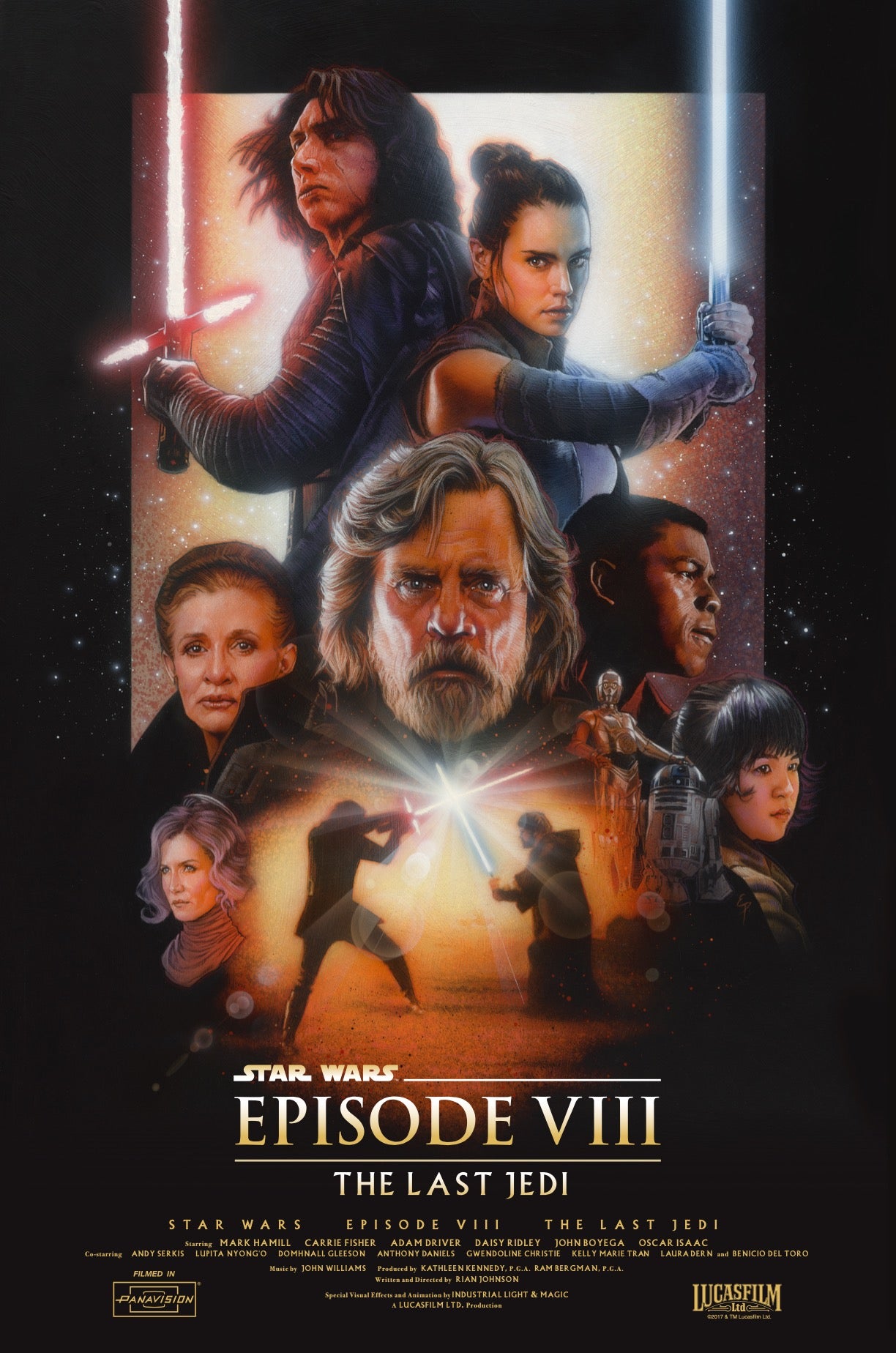

finalExplicado_en: "In the climax, Luke Skywalker projects a flawless Force illusion across the galaxy to confront the First Order on Crait, buying time for the Resistance to escape while Kylo Ren hacks at a phantom that was never really there. The real Luke dies peacefully on Ahch-To, one with the Force. Symbolically, the ending is a giant middle finger to fan expectations and sacred lore: heroism is redefined as clever deception, legacy is a burden to be burned, and the saga’s grand myth collapses into ironic, self-aware trollery, leaving the franchise floating in the void it dug for itself."
The Last Jedi (2017) isn’t a movie—it’s a sociological experiment disguised as a blockbuster. A desperate attempt by Disney to prove that, even with a $300 million budget and the Star Wars legacy in its hands, it can turn myth into a product as generic as a Starbucks coffee: overpriced, pretentious, and with a bitter aftertaste that makes you wonder why you paid so much for something that tastes like dirty water. Rian Johnson, the director chosen to "reinvent" the saga, tackled the project with the subtlety of a bull in a Jedi china shop, stomping all over decades of lore under the guise of "subverting expectations." Spoiler: the only expectation it subverted was that science fiction cinema could have even a shred of coherence.
A Script Scribbled in the Margins of a High School Notebook
The plot of The Last Jedi is a labyrinth of narrative decisions so arbitrary they seem lifted from a rejected Lost draft. The film kicks off with an action sequence that tries to emulate the frenetic pace of A New Hope but ends up feeling like an extended episode of The A-Team in space: lots of noise, little payoff, and a constant sense that the writers forgot to connect the dots. The Resistance, reduced to a handful of characters on a ship that looks like a luxury cruise with plumbing issues, spends the first hour fleeing the First Order in a chase that feels more like Mario Kart than an epic battle. The tension dissipates in every scene, as if Johnson mistook "dramatic pauses" for "moments for the audience to wonder what the hell is going on."
The central conflict—the relationship between Rey (Daisy Ridley) and Kylo Ren (Adam Driver)—is the only thread holding any tension, though not for the reasons the script intends. Driver, in a masterclass of controlled overacting, makes his character the most interesting thing in the movie: a villain with existential crises so deep they make Anakin Skywalker look like a teenager throwing a tantrum over not getting Instagram likes. Yet, the Rey-Kylo dynamic is constantly sabotaged by dialogue that oscillates between the ridiculous ("The Force doesn’t belong to the Jedi!") and the outright cringeworthy ("Do you feel the conflict within me?" Kylo whispers while clutching his chest like he’s got heartburn). It’s as if Johnson tried to write a Shakespearean drama, but the end result sounds more like a Wattpad fanfic written at 3 a.m.
And then there’s Luke Skywalker. Oh, Luke. The hero who once inspired a generation reduced to a bitter hermit tossing lightsabers like empty beer cans. Mark Hamill, in a performance that veers between poignant and bewildering, seems to be playing a Luke Skywalker who’s spent the last few years binge-watching Breaking Bad and questioning all his life choices. The justification for his exile—that he saw the dark side in Ben Solo and, in a moment of weakness, considered killing him—is so forced it feels like a plot twist lifted from a Turkish soap opera. Seriously? The same Luke who refused to kill his father, who believed in redemption above all else, now contemplates murdering a sleeping teenager? The excuse that "the Force showed him a vision" is so vague it might as well have been a bad dream after eating spicy tacos. And the worst part isn’t the twist itself, but that Johnson treats it like a moment of philosophical depth, when it’s really the narrative equivalent of tripping over the mic cord mid-speech.
The Aesthetic: When Product Placement Eats the Galaxy
Visually, The Last Jedi is a hodgepodge of styles that looks designed by a marketing committee. On one hand, we have Ahch-To, filmed in Ireland with a color palette that tries to emulate the nostalgia of A New Hope but ends up looking like a Windows 95 screensaver. The shots of Luke walking among the rocks in his tattered robes have a Lord of the Rings vibe, but without the epic scale—it’s as if Peter Jackson directed a Hobbit spin-off on a student-film budget. On the other hand, the interiors of the Resistance ship are so cold and sterile they look like they were lifted from an IKEA catalog. The scenes on Crait, with its pink salt and digital snow effects, are the closest thing to a Coca-Cola ad that science fiction cinema has ever seen. Even the final battle, which should be the film’s climax, feels like a Star Wars fan film made in Unreal Engine 4 over a weekend.
The cinematography, by Steve Yedlin, swings between pretentious and outright ugly. There are moments where the lighting is so flat it looks like the characters are being filmed under office fluorescent lights. The saturated colors—those reds, blues, and purples straight out of a My Little Pony palette—don’t create atmosphere; they distract like a neon sign in a library. And let’s not even talk about the CGI, which by 2017 should’ve moved past the "digital Play-Doh monsters" phase. The porgs (those alien birds designed to sell plushies) are so unnecessary they feel like an inside joke among Disney executives: "Let’s put something in that kids will buy, even if it ruins the scene." And the worst part? It worked. The porgs became a merchandising phenomenon, proving the movie was nothing more than a product catalog with a thin narrative veneer.
Performances: When Charisma Stays in the Dressing Room
The cast of The Last Jedi is a reminder that even the most talented actors can be sabotaged by a script that sounds like it was written by a Twitter bot. Daisy Ridley does her best with Rey, a character who swings between determination and naivety without ever finding balance. There are moments where Ridley conveys Rey’s vulnerability—like in the Ahch-To cave scene, where she faces her fears—but they’re overshadowed by dialogue that sounds like someone poorly translated a Neruda poem into Klingon and then back into Spanish. John Boyega, meanwhile, has flashes of his usual charisma as Finn, but his arc—from First Order deserter to almost-hero on a suicide mission—is so confusing it feels like filler plot from a canceled TV show.
But if there’s one actor who deserves an award for saving the unsalvageable, it’s Adam Driver. Kylo Ren is, without a doubt, the most complex and fascinating character in the film, and Driver plays him with an intensity that borders on theatrical. His chemistry with Ridley is the only thing keeping the Rey-Kylo scenes afloat, even as the script constantly undermines them with dialogue straight out of a villain self-help manual. The scene where Kylo and Rey team up to kill Snoke is one of the few moments the film generates real tension, though it comes at the cost of turning the Supreme Leader into a cardboard villain who dies like a 90s video game miniboss.
And then there’s Carrie Fisher, whose presence in the film is bittersweet. Leia Organa, now a Resistance general, has touching moments—like when she uses the Force to save herself in space—but her character feels reduced to a walking deus ex machina. Fisher’s death during production adds a layer of melancholy to her performance, but it also leaves a bitter taste: it’s as if the film didn’t know what to do with her beyond using her as a reminder that the past won’t return.
The Score: When John Williams Throws in the Towel
Even the music, that element which for decades was the soul of Star Wars, seems to have lost faith in The Last Jedi. John Williams, the composer who defined the saga with iconic themes like The Imperial March and Binary Sunset, delivers a score here that sounds like a contractual obligation. There are glimpses of his genius—like Rey’s theme, which manages to convey some hope—but overall, the music is so understated it might as well be background score for a documentary about marine life. Key moments, like Snoke’s death or the final showdown on Crait, lack the grandeur Williams used to bring. It’s as if the composer decided that, after 40 years, he had nothing new to say about the Force.
The Legacy: A Film That Divides (and Not in a Good Way)
The Last Jedi isn’t a bad movie in the traditional sense. It’s not a disaster like The Room or a trainwreck like Catwoman. It’s something worse: a mediocre film with delusions of grandeur. A production that tries to be profound, innovative, and revolutionary but ends up as a collage of half-baked ideas, arbitrary narrative choices, and product placement so shameless it makes Transformers look like a BBC documentary.
Its greatest sin isn’t that it’s boring or confusing, but that it has no personality. It’s not bold enough to be a reinvention, nor faithful enough to be an homage. It’s as if Rian Johnson looked at the Star Wars legacy and decided the best way to honor it was to dismantle it piece by piece, offering nothing substantial in return. Fans were divided not because the film was "too different," but because it offered nothing to believe in. There’s no clear message, no memorable villain, not even a moment that feels truly epic. It’s a film that exists in limbo: not bad enough to be passionately hated, not good enough to be loved.
The Best
- Daisy Ridley manages to make Rey almost tolerable, despite a script that seems written by someone who hates strong female protagonists.
- Adam Driver saves every scene he’s in, turning Kylo Ren into the only character with anything resembling a personality.
The Worst
- Luke Skywalker is narratively assassinated before he’s physically killed, reducing the hero of a generation to a bitter hippie tossing lightsabers like trash.
The Verdict of Claqueta Ácida (5.5/10)
The Last Jedi is the cinematic equivalent of an airport buffet: lots of noise, lots of dishes, but in the end, everything tastes the same and leaves you with a sense of regret. It’s not a terrible movie, but it’s a betrayal of what Star Wars once stood for: adventure, hope, and characters who inspired. Instead, we get a production that confuses subversion with indifference, and that seems more concerned with selling toys than telling a story. With a 5.5, it’s stuck in that uncomfortable limbo where it’s not bad enough to be fun, nor good enough to be remembered. If this is the future of the saga, may the Force have mercy on us all. 🚀💥Ending Explained: The Last Jedi
Ficha de Daños Colaterales en Sala
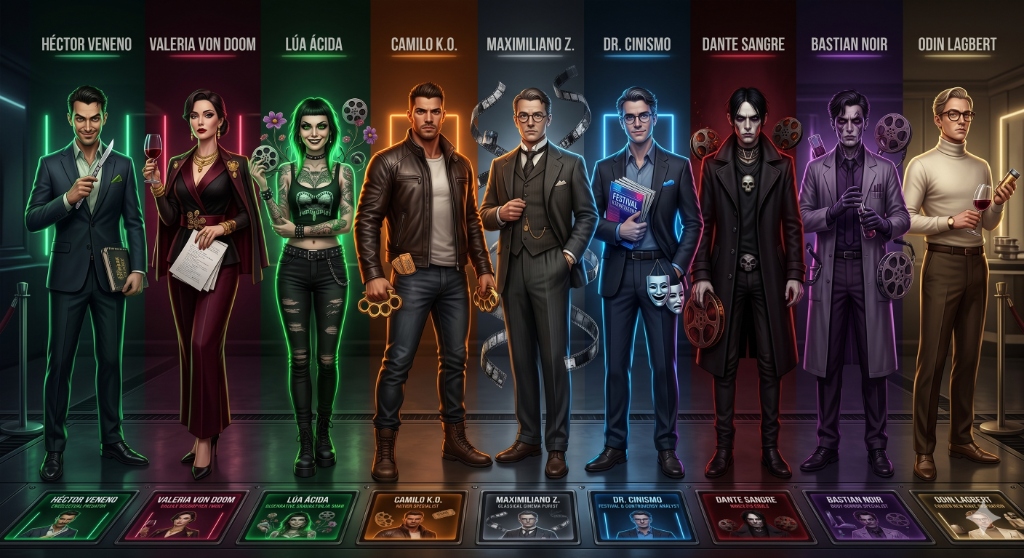
Certificado de impacto psicofísico emitido por Bastian Noir
3 amagos en el tramo intermedio; pestañeo pesado en las transiciones más innecesarias.
Minuto 40 y minuto 82 (comprobando cuánto quedaba de suplicio).
2 espresso para no dejarse vencer por la mediocridad cómoda.
"A mitad del segundo acto cuando la subtrama secundaria empezó a pesar más de lo que aportaba."
💬 El Veredicto de la Comunidad
¿Qué te ha parecido la película? Deja tu nota de 0 a 10 para contrastarla con el análisis de la redacción.
Aún no has votado
📢 ¿Te ha gustado el ácido?
Comparte esta crítica con tus amigos cinéfilos o desata la polémica en redes.
⚡ THE CINEMATIC VENOM YOUR INBOX CRAVES
No sugarcoated ratings, no corporate fluff. Subscribe for our uncensored weekly analysis or join the private Telegram for press previews, poll clashes, and instant alerts.
Alertas de estrenos en 1 segundo, encuestas en caliente y audios al salir de pases de prensa.
Recibe la dosis semanal en tu mail + regalo inmediato del PDF con 50 joyas ocultas de culto.
Related Reviews
Recommended autopsies for demanding film buffs.
 ⚡ Ácido Cítrico7.0
*The Last of Us: A Tissue-Strewn Odyssey of Fungi and Sentimental Drivel*
⚡Hermana de saga: otro capítulo diseccionado con rigor forense.
Claqueta Ácida’s scathing review of HBO’s post-apocalyptic series, where cordyceps and maudlin drama run rampant—because nothing says "prestige TV" like a fungal pandemic and a surplus of tearful monologues.
 ⚡ Ácido Cítrico6.2
The Last Supper: A Feast That Left Us Hungry for Anything But Meat
⚡Hermana de saga: otro capítulo diseccionado con rigor forense.
Aleksandr Boikov serves up a gourmet horror menu in 'The Last Supper,' but the main course tastes like thin gruel. Art or self-indulgence? Valeria Von Doom carves it open with a scalpel.
 ⚡ Ácido Cítrico5.5
Avatar: The Flood of Controversies Drowning Creativity
⚡Afinidad temática directa en atmósfera, estilo y fijaciones visuales.
An acidic review of the environmental and commercial controversy surrounding James Cameron's ode to Pandora.
Editorial Ecosystem
Cinephile connections, archive interviews and related analyses.
💬 Debate Cinéfilo & Autopsia de Lectores
0 veredictos¿Discrepas con nuestra nota? ¿Es una obra maestra o veneno puro? Deja tu veredicto abajo sin necesidad de registro.

Aún nadie ha dejado su veredicto para esta película.
Sé el primero en clavarle el colmillo rellenando el formulario de arriba.