The Yellow Sea — The Filthy Odyssey of the Siberian Wolf, Hatchet Blows, and Borderline Desperation
Na Hong-jin doubles down on physical violence, human despair, and breakneck pacing in a tragic criminal epic with no redemption in sight.

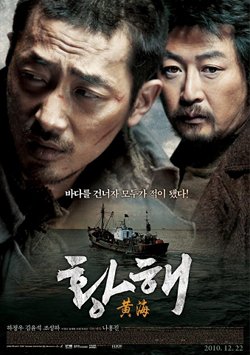
The Yellow Sea isn’t a movie—it’s a real-time autopsy of human desperation, a third-class ticket through the guts of globalized capitalism where cash doesn’t buy dreams, just severed thumbs and one-way trips to the slaughterhouse. Na Hong-jin, that sadist with a camera who already left us gasping with The Chaser (2008), returns with a film that makes Oldboy (2003) look like an episode of Dora the Explorer. There’s no poetic vengeance or clever plot twists here—just mud, blood, and the certainty that, in this world, even the last act of kindness is tainted by rot.
finalExplicado_en: "In the climax, Gu-nam, the desperate Korean cab driver turned assassin, finally confronts the gangster boss across the frozen Yellow Sea border in a blizzard of betrayal and violence. After endless hatchet murders and double-crosses, he hacks his way through the last remnants of his pursuers only to be gunned down in the snow like a rabid dog, dying without revenge, money, or return home. The ending symbolizes the complete annihilation of identity and futile resistance under crushing transnational capitalism and criminal syndicates. Gu-nam is the Siberian wolf who never escapes the filthy odyssey; his death is not tragic catharsis but a cold, meaningless erasure, underscoring how desperation devours the desperate until nothing human remains."
Border Hell: Yanji, the Purgatory of the Joseonjok
The film opens with a single take that’s a slap in the face: Gu-nam (Ha Jung-woo, in a performance that should’ve won him a posthumous Oscar for "Best Expression of a Man on the Brink of Existential Collapse") trudges through the frozen streets of Yanji, a Chinese city with a Korean ethnic majority that reeks of burnt coal and shattered dreams. Yanji isn’t just a setting—it’s a character, a gray limbo where the joseonjok—ethnic Koreans born in China—live in legal and emotional purgatory, despised by the Chinese for being Korean and by South Koreans for being too Chinese. Na Hong-jin doesn’t bother explaining this context with expository dialogue; he shows it. The streets are plastered with Korean signs, but the cops speak Mandarin; the bars serve soju, but the prices are in yuan. It’s a place where no one belongs, and the only way out is to flee... or die.
Gu-nam is the archetype of the loser with zero agency: a cab driver who doesn’t even own his car, a husband who doesn’t know if his wife left him or is dead, a gambler betting his last pennies on rigged card games. His only valuable possession is his body, and even that’s up for sale. When Myun-ga (Kim Yoon-seok, a villain so charismatic you almost forget he’s a psychopath in a dog-fur coat) offers him the deal—travel illegally to South Korea, kill a man, and return with his finger as proof—Gu-nam accepts not out of ambition, but survival instinct. It’s the cinematic equivalent of signing a contract with the devil using your own blood as ink.
The Bloody Odyssey: From Yanji to Seoul, Via Hell
What follows is a descent into Dante’s circles of hell, but instead of Florentine poets, the guides are axe-wielding mobsters and corrupt cops. Na Hong-jin divides the film into four acts, each more claustrophobic than the last, as if Gu-nam is being buried alive under layers of snow, debt, and betrayal.
#### 1. Yanji: Cold as a Character
The first act is a masterclass in oppressive atmosphere. Cinematographer Hwang Ki-seok—who also worked with Na on The Chaser—turns Yanji’s winter into a tangible enemy. Wide shots reveal a city buried under dirty snow, where buildings look like gray tumors and cars are coffins on wheels. Interiors, lit by flickering fluorescent lights, have the texture of a fever dream. Na Hong-jin uses sound brilliantly: the crunch of snow underfoot, the hum of dying neon, the echo of card players’ laughter in underground bars. Everything sounds like defeat.
Here, Gu-nam still clings to hope. He thinks killing a man in Seoul will be like carving a steak: messy, but quick. He doesn’t know he’s about to enter a labyrinth where every door he opens leads only to more violence.
#### 2. The Journey: The Border as a Metaphor for Despair
The second act is a logistical nightmare. Gu-nam must cross into South Korea illegally, but the trip is a gauntlet of humiliation and danger: hidden in a shipping container, betrayed by smugglers, hunted by Chinese police. Na Hong-jin films these scenes with a realism that borders on documentary, as if he’s shooting a report on human trafficking instead of a fictional film.
The genius of this segment lies in how the director uses space to reflect Gu-nam’s mental state. In Yanji, the shots were open, almost epic, as if the character still had options. But as he delves deeper into the journey, the frames tighten: narrow hallways, cramped rooms, car trunks. Gu-nam isn’t a man with a plan anymore; he’s a cornered animal.
#### 3. Seoul: The City as a Trap
When Gu-nam arrives in Seoul, the film takes an unexpected turn. The South Korean capital, with its gleaming skyscrapers and clean streets, should contrast with Yanji’s gray hell. But Na Hong-jin turns it into another prison. Seoul’s shots are full of reflections: glass, puddles, TV screens. It’s a city that lies, hiding its rot beneath a veneer of modernity.
Here, the plot thickens with rival gangs, corrupt cops, and a web of betrayals that makes The Godfather look like a bedtime story. The fascinating part is that, despite the saturation of characters and subplots, Na Hong-jin never loses sight of Gu-nam. The protagonist remains the emotional core of the film, even as the plot threatens to devour him.
#### 4. The Escape: Man as Prey
The final act is an endless chase, a barrage of action scenes so brutal they make John Wick look like a ballet. Na Hong-jin strips violence of any romance: there are no heroes here, just survivors. The fights are filmed with a rawness that borders on unbearable. No elegant choreography or clean punches—just broken bones, blood spraying the lens, and bodies dropping like sacks of potatoes.
The most iconic sequence—and one that’s already part of the action-cinema canon—is the showdown at the port, where Myun-ga, armed with a half-gnawed ox bone, becomes a force of nature. It’s a scene that blends the grotesque with the epic: the bone, covered in meat and blood, is both a primitive weapon and a symbol of the animalism to which the characters have been reduced. Myun-ga doesn’t fight like a movie villain; he fights like a predator, and the camera follows him with almost perverse admiration.
Na Hong-jin’s Style: Dirty Realism and Brutal Symbolism
Na Hong-jin is obsessed with physicality. In The Yellow Sea, every visual and sonic element is designed to make you feel the pain, the cold, and the exhaustion of the characters. It’s no accident that the film is packed with references to flesh: ox bones, knife cuts, blood staining the snow. It’s as if the director is saying, "This isn’t a movie—it’s life in its rawest form."
#### Cinematography: Gray as the Dominant Color
Hwang Ki-seok uses a color palette that ranges from gray to brown, as if the film is covered in a layer of grime. Interiors are lit with harsh, cold lights that highlight every wrinkle and the texture of skin. Exteriors, especially in Yanji, are dominated by muted tones: dirty white snow, gray concrete, black coats. It’s a photography that hurts, reminding you that you’re watching something real.
#### Editing: Controlled Chaos
Kim Sun-min’s editing is one of the film’s few weaknesses. In the action scenes, the shaky cam and quick cuts can be disorienting, as if the editor were as desperate as the characters. But this also serves a purpose: it mirrors Gu-nam’s mental chaos. In calmer moments, the editing slows down, almost contemplative, as if the film is catching its breath before diving back into madness.
#### Soundtrack: Silence as a Weapon
Jang Young-gyu’s score is minimalist, almost nonexistent. Instead, Na Hong-jin uses ambient sound to build tension: the crunch of snow, the hum of neon, the thud of blows. When music does appear, it’s to underscore key moments, like the dark, repetitive theme accompanying the chases. It’s a soundtrack that doesn’t distract—it drags you deeper into the nightmare.
#### Performances: Two Titans in a Blood-Soaked Ring
Ha Jung-woo and Kim Yoon-seok are two of South Korea’s finest actors, and in The Yellow Sea, they prove why. Ha Jung-woo, with his angular face and the gaze of a cornered animal, turns Gu-nam into a tragic, real character. He’s not a hero, not even an antihero; he’s an ordinary man pushed into extraordinary situations, and his performance reflects that fragile humanity.
Kim Yoon-seok, on the other hand, is pure charismatic evil. Myun-ga is a villain who doesn’t need grand speeches to be terrifying. His presence is enough: that dog-fur coat, that yellow-toothed grin, that way of moving as if the world owes him something. He could’ve been ridiculous in lesser hands, but Yoon-seok turns him into a force of nature.
Social Critique: The Joseonjok as Scapegoats
The Yellow Sea isn’t just an action film—it’s a raw portrait of the marginalization of the joseonjok in South Korea. The joseonjok are ethnic Koreans born in China, and in South Korea, they’re viewed with suspicion, as if they’re foreigners despite sharing language and culture. Na Hong-jin shows this discrimination without preaching: through glances, cutting dialogue, the way South Koreans treat Gu-nam like an insect.
The film also critiques globalized capitalism, where the poor are exploited by mafias operating on both sides of the border. Gu-nam isn’t a criminal by choice; he’s a man trapped in a system that offers no options. His journey isn’t a quest for redemption—it’s a fight to survive in a world that’s condemned him from the start.
Cinematic Comparisons: From Oldboy to The Good, the Bad and the Ugly
The Yellow Sea has been compared to Oldboy for its extreme violence and oppressive atmosphere, but Na Hong-jin’s film is far rawer and less stylized. If Oldboy is a Greek tragedy with exploitation-cinema flourishes, The Yellow Sea is a documentary about human survival in its most primitive state.
It also evokes The Good, the Bad and the Ugly (1966), but instead of dusty deserts, the setting is a frozen, filthy urban landscape. Like in the Spaghetti Western, the characters are antiheroes driven by greed and desperation, and the violence is dirty and realistic.
But the most apt comparison is to Bong Joon-ho’s Memories of Murder (2003). Both films use the thriller genre to explore social themes, and both have an oppressive atmosphere reflecting the corruption and hopelessness of their characters. However, while Memories of Murder has a more melancholic tone, The Yellow Sea is pure adrenaline and brutality.
The Best
- The physicality of the action: Na Hong-jin turns every fight into a cinematic sadism exercise. Forget Marvel superheroes—here, heroes bleed, sweat, and scream like wounded animals.
The Worst
The chaotic editing: Some action scenes are shot with such a shaky cam it looks like the operator was having an epileptic fit. This isn’t Bourne*—it’s motion sickness. The runtime: 140 minutes of despair can be exhausting. There’s a moment in the second act where you feel like the film is laughing at you: "You think this is long? Just wait."*The Verdict of Claqueta Ácida (8.8/10)
The Yellow Sea is a gut punch disguised as an action movie. Na Hong-jin doesn’t invite you to watch his film—he drags you into it and leaves you in a dark alley, covered in blood, wondering how the hell you got there. It’s a film about survival in a world that doesn’t forgive, where heroes die alone and villains win. If you’re looking for escapism, go watch Fast & Furious. If you’re looking for a cinematic experience that leaves you breathless—and with no desire to cross a border again—The Yellow Sea is your film. Just don’t say we didn’t warn you: after watching it, even the gnawiest ox bone will seem like a luxury. 🔪❄️🎬 Tráiler Oficial
Abrir en YouTube
Ending Explained: The Yellow Sea
Ficha de Daños Colaterales en Sala
Certificado de impacto psicofísico emitido por Héctor Veneno
Cero. La pantalla absorbió cada segundo de atención disponible.
El móvil permaneció en el bolsillo donde debía estar.
Ninguna. Esta obra no necesita muletas estimulantes.
"No aplica. La obra se sostiene sola."
💬 El Veredicto de la Comunidad
¿Qué te ha parecido la película? Deja tu nota de 0 a 10 para contrastarla con el análisis de la redacción.
Aún no has votado
📢 ¿Te ha gustado el ácido?
Comparte esta crítica con tus amigos cinéfilos o desata la polémica en redes.
⚡ THE CINEMATIC VENOM YOUR INBOX CRAVES
No sugarcoated ratings, no corporate fluff. Subscribe for our uncensored weekly analysis or join the private Telegram for press previews, poll clashes, and instant alerts.
Alertas de estrenos en 1 segundo, encuestas en caliente y audios al salir de pases de prensa.
Recibe la dosis semanal en tu mail + regalo inmediato del PDF con 50 joyas ocultas de culto.
Related Reviews
Recommended autopsies for demanding film buffs.
 🔥 Fusión Nuclear9.2
*The Chaser: Hunting the Devil Through Mud, Sweat, and Bureaucratic Incompetence*
⚡Del mismo director (Na Hong-jin): analiza la evolución o degradación de su estilo.
Na Hong-jin bursts onto the international scene with a brutal, suffocating, and hyper-realistic crime thriller that redefines Korean noir.
 🔥 Fusión Nuclear9.6
*The Wailing (The Stranger): Shamanism, Demon Plague, and the Existential Collapse of Rural Faith*
⚡Del mismo director (Na Hong-jin): analiza la evolución o degradación de su estilo.
Na Hong-jin delivers one of the 21st century’s greatest horror masterpieces—a tale of shamans, demons, and rural conspiracy that dismantles reason itself.
 🔥 Fusión Nuclear8.5
*Alleluia: Love as a Terminal Illness (or How to Turn Crimes of Passion into a Sweaty, Fleshy Spectacle)*
⚡Afinidad temática directa en atmósfera, estilo y fijaciones visuales.
Fabrice Du Welz reimagines the myth of the lonely hearts killers in a feverish whirlwind of jealousy, submission, and blood, led by Lola Dueñas in a performance that’s equal parts hypnotic and harrowing.
Editorial Ecosystem
Cinephile connections, archive interviews and related analyses.
🎞️ In Claqueta Cinematheque2
💬 Debate Cinéfilo & Autopsia de Lectores
0 veredictos¿Discrepas con nuestra nota? ¿Es una obra maestra o veneno puro? Deja tu veredicto abajo sin necesidad de registro.


Aún nadie ha dejado su veredicto para esta película.
Sé el primero en clavarle el colmillo rellenando el formulario de arriba.