The Chaser — Hunting the Devil Through Mud, Sweat, and Bureaucratic Incompetence
Na Hong-jin bursts onto the international scene with a brutal, suffocating, and hyper-realistic crime thriller that redefines Korean noir.

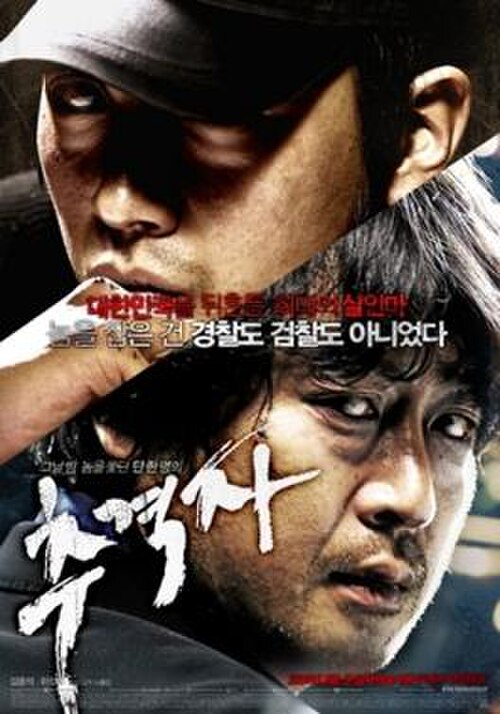
The Chaser (2008) isn’t a movie—it’s an exorcism. An exorcism of the ghosts of the sanitized thriller, of those designer psychopaths who speak in riddles while petting Persian cats in minimalist apartments with Central Park views. In his directorial debut, Na Hong-jin doesn’t just refuse to play by the rules of corporate suspense—he spits on them, stomps them into the ground, and buries them under a mountain of mud, sweat, and cynicism so thick you can almost smell it through the screen. There are no heroes in pristine suits here, no villains monologuing about chaos while sipping 50-year-old whiskey. What you get is a debt-ridden pimp, a killer who looks like a bored accountant, and a police force so incompetent it makes the Keystone Cops look like the SWAT team.
The Vertical Labyrinth: When Hell Has Hills
On the surface, The Chaser’s plot is simple: Eom Joong-ho (Kim Yoon-seok), a washed-up ex-cop turned two-bit pimp in Seoul, watches as his girls start disappearing without a trace. At first, he suspects they’re being sold to other brothels, but when he sends Mi-jin (Seo Young-hee), one of his sick employees, on one last job, he discovers the client’s phone number matches those of the missing women. What follows is a desperate chase through Seoul’s outskirts—a labyrinth of steep streets, dark alleys, and decaying buildings where evil doesn’t lurk in the shadows but walks in broad daylight with the shy smile of an office worker who just missed his bus.
What makes The Chaser brilliant is that Na Hong-jin doesn’t bother hiding the killer. Je Yeong-min (Ha Jung-woo) appears on screen before the first act even ends, and not as a criminal mastermind, but as a nondescript guy in a cheap leather jacket with a smile straight out of an HR manual. The film isn’t about who the culprit is, but whether anyone will stop him before it’s too late. And this is where Na Hong-jin unleashes his genius: instead of building suspense around mystery, he constructs it around helplessness. The police, obsessed with protocols, paperwork, and public image, are utterly ineffective. They spend more time arguing over who should sign which form than actually searching for the victims, and when they finally decide to raid the suspect’s house, they do it with a clumsiness that borders on comedy—if it weren’t for the fact that, well, lives are on the line.
The Physicality of Horror: When Cinema Hurts
Na Hong-jin doesn’t film The Chaser like he’s directing a thriller—he films it like he’s documenting a nightmare. The camera shakes, runs, slips, and crawls alongside the characters, conveying not just the action, but the exhaustion, the fear, and the physical pain. The chases aren’t elegant choreographies à la The Bourne Ultimatum, but clumsy sprints down cobblestone streets, slips in dirty puddles, and blows that sound like bones breaking. The fights aren’t martial arts spectacles, but brutal, animalistic brawls where characters bite, scratch, and punch with a desperation that reeks of sweat and blood.
Lee Sung-jae’s cinematography is another of the film’s triumphs. There’s none of the polished aesthetic of Se7en or the expressionist lighting of Blade Runner here. In The Chaser, the light is dirty, ochre, as if filtered through a layer of grime and humidity. Interiors are bathed in sickly yellow tones reminiscent of a public hospital’s fluorescent lights, while exteriors—especially the night scenes—are submerged in a bluish darkness that seems to swallow what little hope remains. It’s a cinematography that doesn’t just show—it smells: of rot, acid rain, and stale sweat.
The Killer Who Wasn’t a Genius (And That’s Why He Was Scarier)
One of The Chaser’s greatest achievements is its portrayal of the killer. Je Yeong-min isn’t Hannibal Lecter, nor is he a Jigsaw wannabe with philosophical pretensions. He’s just a normal guy—or at least he seems to be. A man with a timid smile, a worn-out leather jacket, and an obsession with order that borders on the pathological. Ha Jung-woo, in one of those roles that prove why he’s one of South Korea’s best actors, delivers a chilling coldness without resorting to the usual villain tropes. His Yeong-min doesn’t monologue, doesn’t revel in his evil, doesn’t even seem to enjoy it. He kills because he can, because no one stops him, because society has given him a free pass to do so. And that, in the end, is the most terrifying thing of all.
Opposite him, Kim Yoon-seok crafts Eom Joong-ho, a character who evolves in an organic and painful way. At first, Joong-ho is a selfish pimp, a guy who only thinks about money and how to get out of debt. But when he realizes one of his girls is in danger, his ex-cop instincts kick in, and what follows is a brutal transformation. Kim Yoon-seok doesn’t play a hero, but an ordinary man dragged by circumstances, a guy forced to do the right thing not out of nobility, but out of desperation. His performance is physical, visceral, full of small details that convey his exhaustion, his rage, and his fear.
The Soundtrack: The Silence That Screams
The Chaser’s music is another of its strengths, precisely because there isn’t much of it. Na Hong-jin opts for a minimalist approach, where ambient sounds—the patter of rain, the screech of tires, muffled screams—are the real stars. When music does appear, it’s sporadic and always purposeful: a tense string theme underscoring Joong-ho’s desperation, or a children’s choir playing in the background during a particularly macabre scene, a reminder that evil has no age. It’s a soundtrack that doesn’t distract you but drags you deeper into the abyss.
A Portrait of a Rotten Society
The Chaser isn’t just a thriller—it’s a funhouse mirror held up to South Korean society (and, by extension, any society). Na Hong-jin depicts a world where institutions are useless, where the police are more concerned with bureaucracy than justice, and where ordinary citizens like Joong-ho have to take the law into their own hands because no one else will. It’s a fierce critique of indifference, corruption, and hypocrisy, but also a reflection on redemption. Joong-ho isn’t a hero, but in his desperation to save Mi-jin, he rediscovers a humanity he thought he’d lost.
Cinematic Comparisons: When Asian Cinema Handed Hollywood Its Ass
If The Chaser has any close relative in Western cinema, it’s David Fincher’s Zodiac (2007), but with one crucial difference: while Fincher obsesses over the detective process and the compulsion to solve the mystery, Na Hong-jin focuses on helplessness and despair. There are also echoes of Bong Joon-ho’s Memories of Murder (2003), another Korean masterpiece that portrays police incompetence in the face of a serial killer. But where Bong Joon-ho opts for a more lyrical, almost poetic tone, Na Hong-jin chooses raw immediacy and zero concessions.
At its core, The Chaser is what would happen if Taxi Driver (1976) and The French Connection (1971) had a bastard child in Seoul’s slums, a child raised on mud, cheap coffee, and repressed rage.
The Best
- Demystifying the thriller: The killer isn’t a mental chess master but a pathetic sadist enabled by others’ incompetence and societal indifference. Na Hong-jin turns suspense into a contact sport where the only prize is survival.
- Kim Yoon-seok’s performance: His evolution from sleazy pimp to desperate savior is so organic it hurts. There’s no epic redemption, just a regular guy crawling through the moral muck of a society that prefers to look away.
The Worst
- Brutality toward the audience: Some narrative twists in the final act are so morally ruthless they’ll make you wonder if horror movies aren’t, by comparison, a walk in the park.
- Extreme police portrayal: The institutional critique is brilliant, but some officers border on slapstick comedy caricatures. You almost expect one to slip on a banana peel at any moment.
The Verdict of Claqueta Ácida (9.2/10)
The Chaser is a kick in the teeth to conventional thrillers, a masterpiece that doesn’t settle for entertaining but grabs you by the throat and drags you through Seoul’s sewers until you’re left gasping for air. Na Hong-jin delivers a debut so furious, physical, and despairing that it makes 99% of Western suspense cinema look like it was directed by a committee of executives in an air-conditioned boardroom. There are no heroes here, no glamorous villains, no happy endings. Just mud, blood, and the certainty that in a world like this, justice always arrives late—if it arrives at all. An essential gem that will leave you trembling, jaw dropped, and feeling like you’ve just survived a car crash. And the best (or worst) part? You’ll want to watch it again. 💀🎬 Tráiler Oficial
Abrir en YouTube
Ending Explained: The Chaser
Ficha de Daños Colaterales en Sala
Certificado de impacto psicofísico emitido por Héctor Veneno
Ni un solo parpadeo voluntario. El asiento, inusualmente cómodo.
El móvil permaneció en el bolsillo donde debía estar.
Ninguna. Guarda el café para la sesión siguiente.
"No aplica. La obra se sostiene sola."
💬 El Veredicto de la Comunidad
¿Qué te ha parecido la película? Deja tu nota de 0 a 10 para contrastarla con el análisis de la redacción.
Aún no has votado
📢 ¿Te ha gustado el ácido?
Comparte esta crítica con tus amigos cinéfilos o desata la polémica en redes.
⚡ THE CINEMATIC VENOM YOUR INBOX CRAVES
No sugarcoated ratings, no corporate fluff. Subscribe for our uncensored weekly analysis or join the private Telegram for press previews, poll clashes, and instant alerts.
Alertas de estrenos en 1 segundo, encuestas en caliente y audios al salir de pases de prensa.
Recibe la dosis semanal en tu mail + regalo inmediato del PDF con 50 joyas ocultas de culto.
Related Reviews
Recommended autopsies for demanding film buffs.
 🔥 Fusión Nuclear9.6
*The Wailing (The Stranger): Shamanism, Demon Plague, and the Existential Collapse of Rural Faith*
⚡Del mismo director (Na Hong-jin): analiza la evolución o degradación de su estilo.
Na Hong-jin delivers one of the 21st century’s greatest horror masterpieces—a tale of shamans, demons, and rural conspiracy that dismantles reason itself.
 🔥 Fusión Nuclear8.8
*The Yellow Sea: The Filthy Odyssey of the Siberian Wolf, Hatchet Blows, and Borderline Desperation*
⚡Del mismo director (Na Hong-jin): analiza la evolución o degradación de su estilo.
Na Hong-jin doubles down on physical violence, human despair, and breakneck pacing in a tragic criminal epic with no redemption in sight.
 🔥 Fusión Nuclear8.5
*Alleluia: Love as a Terminal Illness (or How to Turn Crimes of Passion into a Sweaty, Fleshy Spectacle)*
⚡Afinidad temática directa en atmósfera, estilo y fijaciones visuales.
Fabrice Du Welz reimagines the myth of the lonely hearts killers in a feverish whirlwind of jealousy, submission, and blood, led by Lola Dueñas in a performance that’s equal parts hypnotic and harrowing.
Editorial Ecosystem
Cinephile connections, archive interviews and related analyses.
🎞️ In Claqueta Cinematheque1
💬 Debate Cinéfilo & Autopsia de Lectores
0 veredictos¿Discrepas con nuestra nota? ¿Es una obra maestra o veneno puro? Deja tu veredicto abajo sin necesidad de registro.

Aún nadie ha dejado su veredicto para esta película.
Sé el primero en clavarle el colmillo rellenando el formulario de arriba.