The Day of the Beast — When Hell Moved to Madrid (and Brought the Party)
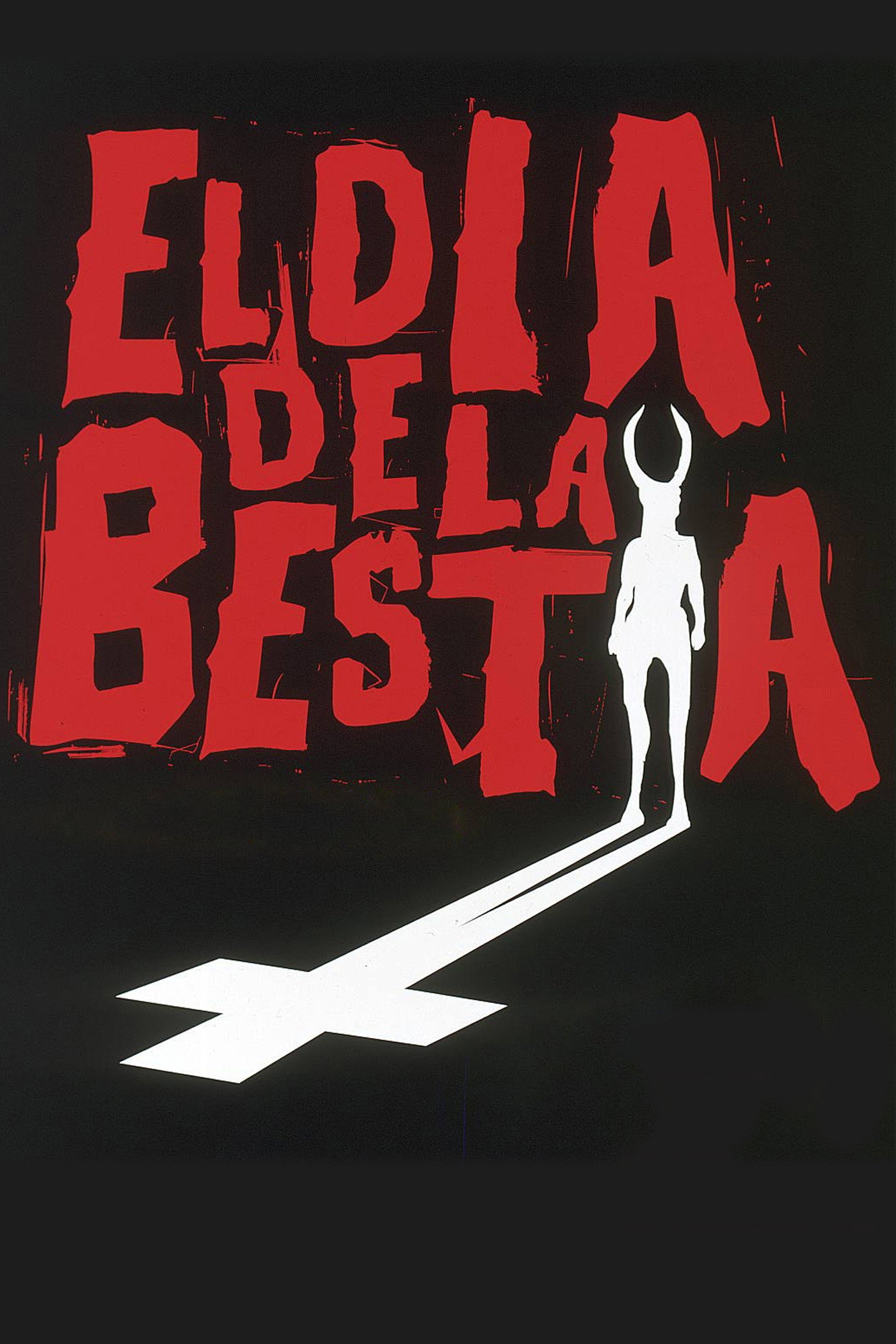
Álex de la Iglesia turns the Apocalypse into an orgy of gore, black humor, and punk metal. Art or sacrilege? Acid Claquette decides.



'''''''''''''''''''''''''''''''tweets_alternativos:'''''''''''''''''''''''''''''''
Celluloid groans under the weight of a revelation: «Madrid, 1995» wasn’t just the capital of Spain; it was the stage for an infernal birth. While the country choked on the death throes of La Movida—that cultural corpse refusing to rot—Álex de la Iglesia burst onto screens like a drunken exorcist, ready to summon the devil with a beer in one hand and a script full of blasphemies in the other. «The Day of the Beast» isn’t just a movie; it’s a satanic ritual shot on 35mm, a black mass where punk, gore, and the blackest humor shake hands with the Apocalypse. And the most terrifying part? It works like a Swiss watch dipped in sulfuric acid.
To grasp the miracle (or heresy) of this film, you have to rewind to an era when Spanish cinema was trapped between textbook social realism and comedies greasier than a fairground churro. De la Iglesia, a guy who’d grown up devouring «The Evil Dead» and «The Texas Chain Saw Massacre» while his compatriots settled for «Amanece, que no es poco», decided it was time to inject a lethal dose of genre cinema into the veins of an anemic industry. His debut, «Acción mutante», had already been a middle finger on the table: «a punk dystopia with disabled terrorists and humor so black it’d make Bukowski blush. But with «The Day of the Beast», the Bilbao native went further: he turned central Madrid into a nightmare set, where the devil wasn’t a horned freak but a virus spreading through the crowd like a bad joke at a wedding.
The project was born from an almost adolescent obsession: «the idea that the Antichrist wouldn’t be born in New York or Rome, but on the Gran Vía, between brothels, record stores, and tapas bars. De la Iglesia, who co-wrote the script with Jorge Guerricaechevarría (his usual partner in crime), didn’t want to make a typical horror movie. He wanted something dirtier, more visceral, more Spanish in the worst (or best) sense of the word. And damn if he didn’t pull it off. The production, a Frankenstein’s monster of a Spanish-Italian co-production, was shot under conditions that’d be unthinkable today: on a shoestring budget, a crew running on coffee and tranquilizers, and a cast that looked plucked from a casting call for weirdos with Social Security cards. Álex Angulo, that priest with the face of a man who’s seen too much, played Father Ángel, a theologian who discovers the end of the world is just around the corner and decides—with the logic of a drunk at a village fiesta—that the only way to stop it is to summon the devil and kill him before he’s born. Yes, you read that right. The solution to the Apocalypse is a reverse exorcism.
Direction: «Hell According to Álex de la Iglesia»
If 90s Spanish horror was a desert of mediocrity, Álex de la Iglesia arrived like a mirage of controlled madness. «The Day of the Beast» is a masterclass in turning budgetary limitations into artistic virtues. The director isn’t afraid of the grotesque, the exaggerated, the downright ridiculous. And in an industry used to timidity, that’s revolutionary. Every sequence is a stylistic exercise: «from the demonic invocation in a Lavapiés apartment—with more smoke than an AC/DC concert—to the final chase in a burning building, where the visual chaos is so intense it feels like the film might burst out of the screen. De la Iglesia doesn’t direct; he choreographs the Apocalypse like a Busby Berkeley musical, but with more blood and fewer feathers.
Actors: «A Cast of the Possessed (in the Best Way)»
If there’s a cardinal sin in 90s Spanish cinema, it’s the tendency toward over-the-top histrionics, as if every actor had studied at the same drama school as José Luis López Vázquez at his worst. But in «The Day of the Beast», that exaggeration isn’t a flaw: it’s a supernatural virtue. Álex Angulo is the film’s heart: «his Father Ángel is a broken man, a priest who’s lost his faith but not his ability to make a fool of himself with touching dignity. Angulo doesn’t play a priest; he plays a guy who’s realized God is a bad joke and the devil is his only ally. His chemistry with Santiago Segura—who debuts here as the unforgettable José María, a metalhead with more testosterone than brain cells—is explosive. Segura doesn’t act; he exists on screen like a hurricane of sweat, beer, and bad attitude, and his character is so iconic you wonder how Spanish cinema survived so long without him.
But the cast doesn’t stop there. Armando De Razza as Professor Cavan—a TV occultist with more charisma than common sense—is pure comedic dynamite. His show, «The Dark Zone», is such a razor-sharp parody of late-night mystery programs it hurts, and his performance borders on genius. Then there’s Terele Pávez, the satanic grandmother who looks like she stepped out of an Almodóvar nightmare, with a gaze that could freeze hell itself. Nathalie Seseña, as José María’s girlfriend, brings a touch of normality that makes the chaos even more delirious. And Maria Grazia Cucinotta, as the mysterious Russian who crosses the trio’s path, is pure canned temptation: «a character who seems ripped from an Italian giallo but with the accent of a James Bond villain.
Technical Analysis: «When the Devil’s in the Details»
What sets «The Day of the Beast» apart from other horror films (or any other Spanish film, period) is its obsession with technical detail. There isn’t a single element in this movie that isn’t designed to immerse the viewer in a world where the supernatural and the mundane mix like vodka and orange soda. The cinematography by Flavio Martínez Labiano is a marvel of chiaroscuro and saturated colors, where every frame looks painted with blood and neon. The night scenes—the bulk of the film—have a tactile texture, as if you could smell the bar smoke and the characters’ sweat. And then there’s the production design, which turns Madrid into a nightmare set: «from the graffiti on the walls to the most mundane objects (a beer can, a Metallica record, a cheap crucifix), everything is laden with meaning.
The costumes and makeup deserve special mention. The characters in «The Day of the Beast» don’t wear clothes; they wear armor, outfits that define and protect them from the world. Father Ángel in his tattered cassock, José María in his thrash metal T-shirts, Professor Cavan in his garish suits... Every detail is designed to reinforce the characters’ personalities while mocking them. The makeup for the demons and creatures is another triumph: «they’re not stylized monsters but dirty, deformed beings, as if created by someone who’s seen too many B-movies and decided to improve them with a touch of grimy realism.
The Best
- Álex de la Iglesia’s Direction: «A masterclass in controlled madness. The chaos is calculated down to the millimeter. Every frame is a visual nightmare, every sequence a creative explosion.»
- Chemistry Between Álex Angulo and Santiago Segura: «Two actors who seem born to share the screen. Their dynamic is so natural you forget they’re acting.»
- Script: «A perfect blend of black humor, terror, and absurdity. The dialogue is razor-sharp, the situations are delirious, and everything flows with impeccable internal logic.»
- Flavio Martínez Labiano’s Cinematography: «Madrid has never looked so dirty, so alive, so real and so unreal at the same time. Every frame is a work of art.»
- Pacing: «The film doesn’t let up. From the first minute to the last, the viewer is trapped in a whirlwind of action, comedy, and terror.»
- Supporting Cast: «From Terele Pávez to Armando De Razza, every actor brings something unique. There isn’t a single disposable character.»
The Worst
- Special Effects: «While the creature designs are imaginative, some digital (or practical) effects have aged worse than a vampire on a Benidorm beach.»
- Uneven Tone: «There are scenes where the humor and terror clash awkwardly, as if the film doesn’t know whether to laugh at the devil or take him seriously.»
- Maria Grazia Cucinotta’s Character: «Though her presence is striking, her narrative arc is so brief it feels like a wasted cameo.»
- Resolution of the Final Conflict: «Without spoilers, let’s just say the climax is so chaotic it seems improvised, as if De la Iglesia decided to end the film with a sledgehammer blow.»
- Forced Dialogue: «There are moments when the script tries too hard to be witty, and the result is a joke that falls flat.»
The Verdict of Acid Claquette
«The Day of the Beast» isn’t just a film; it’s an act of cinematic rebellion, a middle finger to everything 90s Spanish cinema represented. Álex de la Iglesia didn’t just achieve the impossible—turning the Apocalypse into a black comedy—but he did it with a style so personal, so risky, and so brutally entertaining that it’s hard to believe this film is nearly thirty years old. It’s not perfect (what work of art is?), but its imperfections are part of its charm: «it’s dirty, chaotic, exaggerated, and, above all, alive. Like the devil its characters summon, this film doesn’t settle for existing; it wants to possess you, corrupt you, and leave you wanting more. And damn if it doesn’t succeed. If cinema is an exorcism, «The Day of the Beast» is the consecrated host that saves us from boredom. Amen, you bastards. 💀🎬 Tráiler Oficial
Abrir en YouTube
Ending Explained: The Day of the Beast
Ficha de Daños Colaterales en Sala
Certificado de impacto psicofísico emitido por Héctor Veneno
Ni un solo parpadeo voluntario. El asiento, inusualmente cómodo.
El móvil permaneció en el bolsillo donde debía estar.
Ninguna. Guarda el café para la sesión siguiente.
"Inexistente: pulso de hierro hasta los créditos finales."
💬 El Veredicto de la Comunidad
¿Qué te ha parecido la película? Deja tu nota de 0 a 10 para contrastarla con el análisis de la redacción.
Aún no has votado
📢 ¿Te ha gustado el ácido?
Comparte esta crítica con tus amigos cinéfilos o desata la polémica en redes.
⚡ THE CINEMATIC VENOM YOUR INBOX CRAVES
No sugarcoated ratings, no corporate fluff. Subscribe for our uncensored weekly analysis or join the private Telegram for press previews, poll clashes, and instant alerts.
Alertas de estrenos en 1 segundo, encuestas en caliente y audios al salir de pases de prensa.
Recibe la dosis semanal en tu mail + regalo inmediato del PDF con 50 joyas ocultas de culto.
Related Reviews
Recommended autopsies for demanding film buffs.
 🔥 Fusión Nuclear9.5
*2001: A Space Odyssey – A Monkey, a Monolith, and Two Hours of Cosmic Pretentiousness*
⚡Afinidad temática directa en atmósfera, estilo y fijaciones visuales.
We dissect Stanley Kubrick’s magnum opus. A visual feast of minimalism and space hypnosis that cemented "serious" sci-fi—and bored half of humanity to tears.
 🔥 Fusión Nuclear9.3
2001: A Space Odyssey — The Day Kubrick Left Us Speechless (and Oxygenless)
⚡Afinidad temática directa en atmósfera, estilo y fijaciones visuales.
Kubrick turned science fiction into pure art: 149 minutes of eloquent silence, bone-wielding apes, and a psychopathic computer. Masterpiece or pretentious fraud? Here’s the verdict.
 🔥 Fusión Nuclear8.5
*A Clockwork Orange: The Sweet, Rusty Aftertaste of Violent Haute Couture*
⚡Afinidad temática directa en atmósfera, estilo y fijaciones visuales.
A scathing review of Kubrick’s masterpiece, where ultraviolence meets 60s fashion in a twisted pas de deux.
Editorial Ecosystem
Cinephile connections, archive interviews and related analyses.
💬 Debate Cinéfilo & Autopsia de Lectores
0 veredictos¿Discrepas con nuestra nota? ¿Es una obra maestra o veneno puro? Deja tu veredicto abajo sin necesidad de registro.

Aún nadie ha dejado su veredicto para esta película.
Sé el primero en clavarle el colmillo rellenando el formulario de arriba.