Vinyan — Grief as a Virus and the Jungle as a Coffin
Fabrice Du Welz films a feverish, sensory descent into the hell of mourning and loss, set in the bowels of a jungle that devours reason.

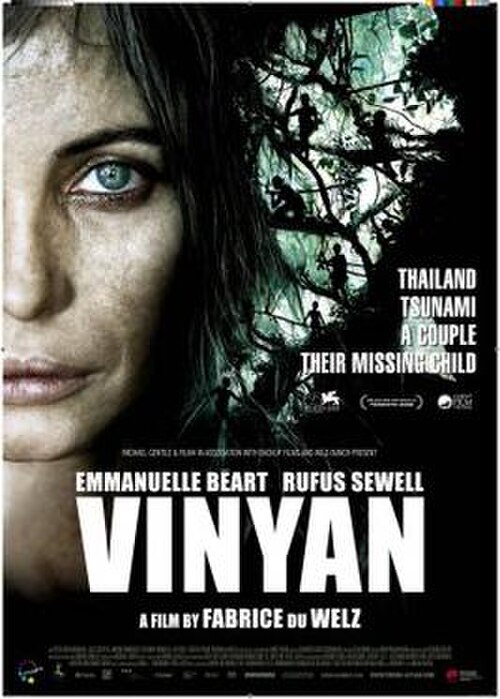
Vinyan: Grief as a Virus and the Jungle as a Coffin
Fabrice Du Welz isn’t a filmmaker—he’s a surgeon who operates with an open heart and no anesthesia. After bursting the seams of European rural horror with Calvaire (2004), where mud, rotting flesh, and madness mixed into a cocktail as repulsive as it was fascinating, the Belgian director decided his next victim would be the Thai jungle. And boy, did he succeed. Vinyan (2008) isn’t a movie—it’s an exorcism shot on 35mm, a hallucinogenic trip where grief isn’t overcome but chewed until no teeth remain. Inspired by the vinyan—those Thai spirits doomed to wander in a limbo of eternal pain—Du Welz crafts a psychological thriller that reeks of rot, sweat, and despair. But beware: this isn’t The Impossible (2012) by Juan Antonio Bayona, where the tsunami was just a backdrop for a sugar-coated family drama. Here, pain has no emotive score or heroic shots; it’s a black hole that swallows its protagonists—and the audience with them.
finalExplicado_en: "In the climax, the bereaved mother Jeanne, now fully unhinged, is ritually murdered and cannibalized by the feral, spirit-possessed children she desperately believed were her lost son. Her husband Paul is forced to watch before being killed himself, their Western quest for redemption devoured by the jungle and its primal ghosts. The ending reveals grief as an infectious virus that corrupts and consumes everything it touches, while the Burmese jungle acts as a living coffin, swallowing Western delusion and turning personal tragedy into just another layer of mythic, indifferent rot. No catharsis, only obliteration."
The Jungle as a Mirror of Marital Hell
Jeanne (Emmanuelle Béart) and Paul Bellmer (Rufus Sewell) are the perfect portrait of Western bourgeoisie in existential crisis. He’s a successful architect with the sensitivity of a brick; she’s a shattered woman clinging to a burning nail: the possibility that her son, lost in the 2004 tsunami, might still be alive. When Jeanne thinks she recognizes him in an amateur video filmed deep in Myanmar, reason goes down the drain. What follows isn’t a rescue mission but a spiral of self-destruction worthy of Apocalypse Now (1979), minus the war’s glamour or Brando’s charisma muttering, "The horror… the horror."
Du Welz doesn’t beat around the bush: from the first frame, it’s clear this isn’t a commercial thriller. There are no neatly planted clues, no clean narrative twists, no villain with clear motives. The jungle isn’t a setting—it’s a character, a living organism that breathes, sweats, and devours. The cinematography by Benoît Debie—a frequent collaborator of Gaspar Noé—is a masterclass in visual discomfort. Forget those postcard-perfect exotic landscapes: here, the jungle is a labyrinth of greasy shadows, where light filters through like a dirty rag. The frames are drenched in sickly greens, rotting browns, and deep blacks, as if the film were shot inside an infected lung. The camera moves with the clumsiness of a drunk, staggering between trees, plunging into murky rivers, as if it, too, were infected by the madness gnawing at the Bellmers.
And then there’s the sound. My God, the sound. Du Welz and his sound design team turn the jungle into an ominous character, a constant whisper slithering between the dialogue (or the lack thereof). The buzz of insects, the crack of branches, the splash of water—everything is amplified to unbearable levels, as if the viewer’s eardrums were pressed against Jeanne’s ear. In a key scene, the sudden silence is more terrifying than any scream. It’s the sound of sanity snapping.
The Spectral Children: When Horror Has No Face
The final stretch of Vinyan is where the film becomes truly unbearable—in the best possible way. After days of wandering through the jungle, the Bellmers reach a lost village where only children remain. But these aren’t the blonde cherubs of Village of the Damned (1960). They’re wild, malnourished creatures with hollow stares and smiles that freeze the blood. Du Welz doesn’t explain who they are, where they come from, or what they want. Are they tsunami survivors? Abandoned orphans? Or something far worse?
This is where Vinyan edges dangerously close to Asian horror cinema, but with a nihilistic twist that distances it from any convention. These children aren’t victims—they’re predators. They don’t seek help; they seek fresh meat. The scene where they chase the Bellmers through the jungle, their laughter distorted and movements spasmodic, is pure Lovecraftian nightmare. No jump scares, no cheap thrills: the terror is atmospheric, like poison gas seeping into the theater.
And then comes the climax. Or what passes for a climax, because Du Welz shows no mercy. The film unravels into a succession of dreamlike, almost abstract images: Jeanne running through the mist, Paul drowning in a river of mud, the children closing in like a pack of rabid animals. There’s no resolution, no catharsis. Just emptiness. As if Du Welz himself had decided that, after so much suffering, the only thing his characters—and the audience—deserved was an ending as ambiguous as it is devastating.
Performances: Béart in Emotional Kamikaze Mode
Emmanuelle Béart doesn’t play Jeanne—she becomes her. Her performance is a descent into method-acting hell, a physical and emotional tour de force that borders on the unbearable. Béart, who had already proven her worth in films like Mission: Impossible (1996) and 8 Women (2002), sheds any trace of glamour here. Her Jeanne is a woman on the brink of collapse, eyes bloodshot, hair tangled, clothes clinging to her body from sweat and humidity. There’s not a single moment where she doesn’t seem on the verge of fainting, screaming, or tearing her skin off in strips.
Rufus Sewell, meanwhile, plays Paul, the husband trying to keep his composure while his wife unravels. His performance is more restrained, but no less effective. Paul is the rational counterpoint to Jeanne’s madness, but he’s also a coward. He doesn’t stop her because he can’t, but he doesn’t truly accompany her either. He’s the passive spectator of his own shipwreck, and Sewell plays him with a coldness that’s almost as unsettling as Béart’s hysteria.
The rest of the cast is functional, but Petch Osathanugrah stands out as the Thai gangster who helps them venture into the jungle. His character is a mix of sinister tour guide and trafficker of broken dreams, and his presence adds a gritty realism to the nightmare.
Cinematic Comparisons: From Herzog to Lynch, with a Dash of J-Horror
Vinyan doesn’t resemble anything you’ve seen before, but it draws from very specific sources. The most obvious influence is Apocalypse Now, not just for the upriver journey into madness but for that sense that nature is an implacable enemy. Like Coppola, Du Welz understands the jungle isn’t a pretty backdrop—it’s a monster that devours intruders.
But there are also echoes of Werner Herzog, particularly in how the film portrays man’s struggle against a hostile environment. As in Aguirre, the Wrath of God (1972), the characters in Vinyan are doomed from the start. There’s no redemption, only the slow slide into madness.
And then there’s the Asian horror influence. Du Welz borrows elements from J-horror and K-horror—ghosts, supernatural children, oppressive atmosphere—but filters them through his own European sensibility, grittier and less stylized. There are no elegant shots or flawless makeup: the horror here is organic, as if the film itself were rotting in real time.
Finally, there’s a touch of David Lynch in how Vinyan plays with narrative ambiguity. As in Mulholland Drive (2001-una-odisea-del-espacio-kubrick-y-el-monolito-que-nos-dejo-mudos" class="text-amber-400 font-black hover:text-amber-300 transition underline decoration-amber-500/40 hover:decoration-amber-300" title="[9.3/10 🔥 Fusión Nuclear] Lee nuestra autopsia de «2001»" data-acid-interlink="2001-una-odisea-del-espacio-kubrick-y-el-monolito-que-nos-dejo-mudos">2001), it’s never clear what’s real and what’s hallucination. Does Jeanne really see her son, or is her fractured mind projecting her desires? Are the children ghosts, or just victims of war and abandonment? Du Welz doesn’t provide answers, and that’s what makes the film so disturbing.
The best
- Benoît Debie’s cinematography, which turns the jungle into a living, viscous organism. Every frame seems drenched in sweat, blood, and rotting chlorophyll.
- Emmanuelle Béart in emotional kamikaze mode. If the Oscar were given for diving into the abyss of a character, she’d be a shoo-in.
The worst
- The sluggish pace of the second act, where the film seems stuck in its own fog. Without the atmospheric tension, it’d be unbearable.
- The extreme ambiguity that might leave some feeling like they’ve watched a puzzle missing half its pieces. Not for those seeking clear answers.
The Verdict of Claqueta Ácida (7.8/10)
Vinyan is a film that lodges in your throat like a poisoned splinter. Fabrice Du Welz makes no concessions: not to the audience, not to narrative logic, not to visual comfort. It’s a journey into the heart of grief’s darkness, where the jungle isn’t a setting but a mirror reflecting our own rot. This isn’t a film you "enjoy"—it’s one you suffer, like a bad trip you can’t wake up from. Yet that’s where its greatness lies: in its ability to infect you, to linger long after the credits roll. If you’re looking for a conventional thriller, run the other way. But if you want a cinematic experience that leaves a mark, Vinyan is your poison. 🌿🔪💀🎬 Tráiler Oficial
Abrir en YouTube
Ending Explained: Vinyan
Ficha de Daños Colaterales en Sala
Certificado de impacto psicofísico emitido por Héctor Veneno
3 amagos en el tramo intermedio; pestañeo pesado en las transiciones más innecesarias.
Minuto 42 y minuto 66 (comprobando cuánto quedaba de suplicio).
2 espresso para no dejarse vencer por la mediocridad cómoda.
"A mitad del segundo acto cuando la subtrama secundaria empezó a pesar más de lo que aportaba."
💬 El Veredicto de la Comunidad
¿Qué te ha parecido la película? Deja tu nota de 0 a 10 para contrastarla con el análisis de la redacción.
Aún no has votado
📢 ¿Te ha gustado el ácido?
Comparte esta crítica con tus amigos cinéfilos o desata la polémica en redes.
⚡ THE CINEMATIC VENOM YOUR INBOX CRAVES
No sugarcoated ratings, no corporate fluff. Subscribe for our uncensored weekly analysis or join the private Telegram for press previews, poll clashes, and instant alerts.
Alertas de estrenos en 1 segundo, encuestas en caliente y audios al salir de pases de prensa.
Recibe la dosis semanal en tu mail + regalo inmediato del PDF con 50 joyas ocultas de culto.
Related Reviews
Recommended autopsies for demanding film buffs.
 🔥 Fusión Nuclear8.5
*Alleluia: Love as a Terminal Illness (or How to Turn Crimes of Passion into a Sweaty, Fleshy Spectacle)*
⚡Del mismo director (Fabrice Du Welz): analiza la evolución o degradación de su estilo.
Fabrice Du Welz reimagines the myth of the lonely hearts killers in a feverish whirlwind of jealousy, submission, and blood, led by Lola Dueñas in a performance that’s equal parts hypnotic and harrowing.
 🔥 Fusión Nuclear9.0
*Calvaire: The Belgian Nightmare Hollywood Will Never Understand (And That’s Why It’s Perfect)*
⚡Del mismo director (Fabrice Du Welz): analiza la evolución o degradación de su estilo.
Fabrice Du Welz makes his debut with a masterpiece of European transgressive cinema—a fog-drenched, deeply unsettling ordeal that dissects loneliness and rural madness.
 ⚡ Ácido Cítrico7.5
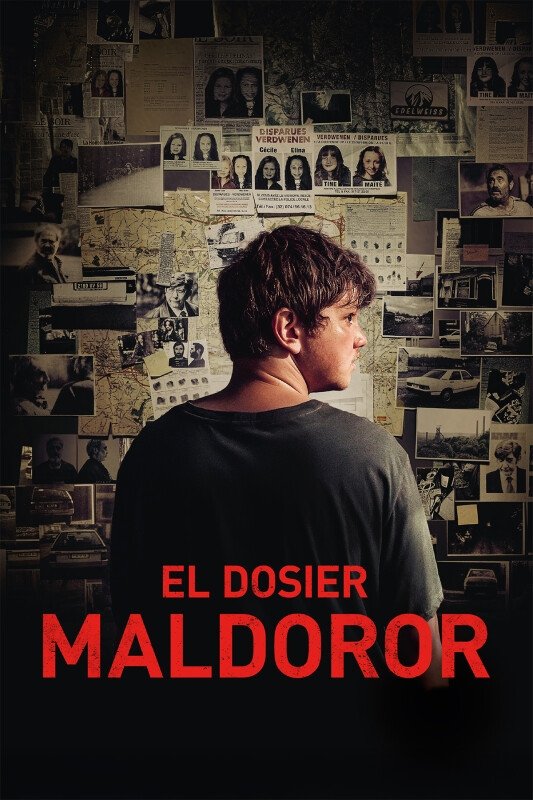
*The Maldoror Dossier: Claqueta Ácida’s Verdict*
⚡Del mismo director (Fabrice Du Welz): analiza la evolución o degradación de su estilo.
Fabrice Du Welz and his shadow ballet in the Belgian underworld. Du Welz delivers a gothic thriller teetering between visual virtuosity and baroque excess—155 minutes of nightmare and obsession.
Editorial Ecosystem
Cinephile connections, archive interviews and related analyses.
🎞️ In Claqueta Cinematheque3
💬 Debate Cinéfilo & Autopsia de Lectores
0 veredictos¿Discrepas con nuestra nota? ¿Es una obra maestra o veneno puro? Deja tu veredicto abajo sin necesidad de registro.


Aún nadie ha dejado su veredicto para esta película.
Sé el primero en clavarle el colmillo rellenando el formulario de arriba.