Barbarian — The Airbnb from Hell and Basements That Never End
Zach Cregger makes his horror debut in spectacular, suicidal fashion, splitting his film in half to deliver the world’s most dangerous Airbnb.

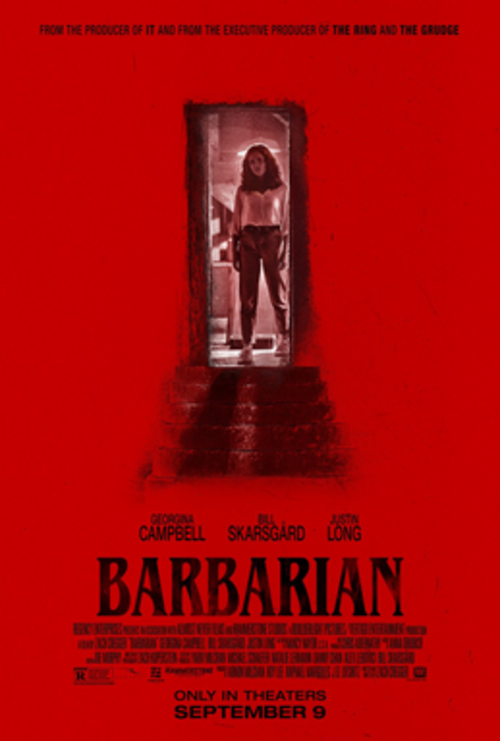
Zach Cregger, that TV sketch comedian who, until two years ago, only knew how to make people laugh with the most inane absurdity—as if The Whitest Kids U’ Know had been written by an algorithm trained on 2008 memes—suddenly decided, in a fit of madness or genius (only time will tell which), that horror needed a swift kick in the ass. And boy, did he deliver. Barbarian isn’t just a horror movie; it’s a lab experiment where Cregger mixes LSD with the Airbnb instruction manual, a narrative Molotov cocktail that explodes in the viewer’s face just when they think they’ve figured out the rules. With a budget that probably equaled the craft services for one episode of Stranger Things, the director achieves something even Jordan Peele, with his millions and polished social commentary, hasn’t managed: a film bold enough to slit its own wrists midway and resurrect as a Frankenstein of tones and genres.
finalExplicado: "Tess descubre que el sótano interminable es un laberinto de horror construido por Frank, un violador en serie que durante décadas secuestró, violó y engendró a sus propias hijas, creando una estirpe de mujeres deformes y salvajes. En el clímax, la “madre” monstruosa protege a Tess matando a Frank y al depredador inmobiliario, pero muere a manos de Tess, que escapa mientras la casa se derrumba. Simbólicamente, el final revela que el verdadero monstruo no es la criatura deformada, sino el hombre patriarcal que la engendró: el sótano es el útero violado de América, un legado de abuso que se hereda. La “madre” representa la violencia femenina nacida del trauma masculino, y su destrucción final significa que la liberación siempre exige matar a la víctima que fuiste obligada a ser."
The First Act: Horror as a Mirror of Our Prejudices
The premise of Barbarian is so simple it hurts: Tess (Georgina Campbell, a British actress who proves here why she should be in every horror movie from now on) arrives at an Airbnb in Detroit under rain straight out of Se7en, only to discover the house is already occupied by Keith (Bill Skarsgård), a tall, pale guy with an unsettlingly friendly smile. If Skarsgård’s name doesn’t automatically set off alarm bells, it’s because you haven’t seen It or haven’t noticed how the actor turns every gesture into a latent threat. Cregger plays this masterfully: every smile from Keith is a reminder that horror doesn’t always come with hockey masks or kitchen knives—sometimes, all it takes is a guy offering you tea while whispering, “Don’t worry, I’m a guest here too.”
The apartment itself is a character: dirty, labyrinthine, with a basement that looks like it was designed by H.R. Giger on a bad day. Zach Kuperstein’s cinematography (who also worked on The Autopsy of Jane Doe, another claustrophobic horror gem) luxuriates in cold, bluish tones, as if the house were permanently lit by a broken fridge light. The editing, meanwhile, is an exercise in sadistic patience: long takes that drag like fingernails on a chalkboard, abrupt cuts that leave you feeling like you’ve missed something. It’s the kind of tension that forces you to wonder if the real monster isn’t Tess’s anxiety—and, by extension, yours.
And then, the basement. That hidden door Tess finds isn’t just a horror trope; it’s a metaphor for everything we’d rather ignore: the secrets lurking in the homes we rent, the neighborhoods we gentrify, the men who smile too much. Cregger doesn’t bother explaining what’s behind that door at first; he just lets the audience’s imagination do the dirty work. And boy, does it ever. Because let’s be honest—we’ve all imagined the worst: rape, murder, satanic rituals. Barbarian feeds on those fears, chews them up, and spits them back in your face with a smirk.
The Twist: When Horror Becomes Satire (and Vice Versa)
Up to this point, Barbarian could’ve been just another “woman alone in a house with a stranger” movie. But then, at the 40-minute mark, Cregger does something that should be banned by the Geneva Convention of horror cinema: he cuts to black, as if the film had suffered a stroke, and transports us to sunny California, where Justin Long—playing a role that seems written for him by a demon with a sense of humor—portrays AJ, a Hollywood actor accused of sexual assault, traveling to Detroit to sell an inherited property. The contrast is so violent it feels like a joke: we go from a claustrophobic basement lit by a flickering bulb to a scene where Long, wearing a “I Survived Another Meeting That Should Have Been an Email” T-shirt, argues with his agent on the phone while driving a convertible.
This twist isn’t just bold; it’s a velvet-gloved slap to the film industry and societal hypocrisy. AJ is the archetype of the privileged white man who only thinks of himself, even when surrounded by corpses. His scene in the basement, where he measures the square footage of a torture dungeon like a real estate agent evaluating a renovated kitchen, is as hilarious as it is disturbing. Long, who until now had been Hollywood’s “nice guy” (see Jeepers Creepers or Dodgeball), sheds any trace of likability to embody a self-centered coward who doesn’t hesitate to use Tess as a human shield. He’s the kind of character you hate passionately but can’t look away from—like a car crash.
And then, the monster. “The Mother” (Richard Brake, an actor who looks like he stepped out of a Clive Barker nightmare) is a grotesque creature, an amalgam of flesh and suffering that seems designed by someone who watched The Descent and Eraserhead back-to-back. Her origin—born from decades of abuse and captivity—is so twisted it borders on ridiculous, but Cregger sells it with such conviction that you eventually accept it as part of the chaos. The creature isn’t just a monster; she’s a critique of distorted motherhood, of gentrification that buries horrors under fresh coats of paint, and of human cowardice that prefers to look the other way.
The Third Act: When the Slasher Eats the Psychological Horror
This is where Barbarian loses a bit of steam. Up until now, the film had been a masterclass in psychological tension and social satire, but in the third act, Cregger seems to remember he’s making a horror movie, not an essay on urban decay, so he decides it’s time to unleash “The Mother” in a blood-soaked, screaming, tunnel-chase extravaganza. It’s not that these scenes are bad—in fact, some are visually striking, like the sequence where the creature chases Tess and AJ through a concrete maze lit by emergency lights—but they lose some of the mystery and unease that made the film great.
Plus, there are a few moments where the film’s internal logic falters. How does Tess survive a several-story fall without breaking a single bone? Why does AJ, who’s been a total coward up to this point, suddenly turn into an MMA fighter? These are narrative liberties that might go unnoticed in a more conventional film, but in Barbarian—where every detail seems carefully calculated—they stick out like nails on a chalkboard.
That said, the ending is as unexpected as it is satisfying. Without spoilers, let’s just say Cregger closes the loop in a way that blends black comedy with cosmic horror, as if H.P. Lovecraft and the Farrelly brothers had collaborated on a script. It’s the kind of ending that leaves you feeling like you’ve just seen something unique, something that doesn’t fit into any category but somehow contains them all.
Technical Breakdown: When Low Budget Becomes a Virtue
One of Barbarian’s greatest strengths is how Cregger and his team turn budget limitations into an advantage. The house where most of the film takes place is a real location in Detroit, and its decrepitude isn’t a set—it’s palpable reality. Kuperstein’s cinematography makes the most of the tight spaces, using darkness and dim lighting to create an oppressive atmosphere. There are no flashy CGI effects or ILM-designed creatures; everything is practical, tangible, grimy. Even “The Mother” is a practical design that, while sometimes reminiscent of a Tales from the Crypt episode, works because her physical presence is as uncomfortable as her symbolism.
The sound design, meanwhile, is a masterclass in suspense. From the constant dripping of water in the basement to the creaking of the house, every noise is calculated to set your nerves on edge. The score, composed by Anna Drubich, is minimalist but effective: a few dissonant chords repeated like a disturbing mantra. It’s the kind of music you don’t notice until it’s gone, and then you realize how much you miss it.
As for the performances, Georgina Campbell is the film’s MVP. Her portrayal of Tess is a study in vulnerability and resilience: a woman who, despite her fears, refuses to be a victim. Skarsgård, for his part, proves once again why he’s one of modern cinema’s best villains: his Keith is both charming and terrifying, like if Norman Bates and the friendly next-door neighbor had a kid. But make no mistake—this is Justin Long’s show. His AJ is a mix of charisma and repulsion, a character who embodies everything you hate about Hollywood but can’t help finding fascinating. It’s the kind of performance that makes you wonder why Long hasn’t had more roles like this in his career.
Cinematic Comparisons: Where Does Barbarian Fit In?
Barbarian isn’t an easy film to classify, but if we had to find its relatives in the horror family tree, we’d mention:
- The psychological suspense of The Invitation (2015): Both films play with the tension of a dinner (or, in this case, a night in an Airbnb) that turns into a nightmare.
- The social satire of Get Out (2017): Like Peele’s film, Barbarian uses horror to talk about racism, gentrification, and societal hypocrisy. The difference is that Cregger does it with blacker humor and fewer pretensions.
- The narrative chaos of The Cabin in the Woods (2012): Both films deconstruct horror tropes, but while The Cabin in the Woods does it with a wink to the audience, Barbarian does it with a psychopath’s grin.
- The body horror of The Fly (1986): “The Mother” isn’t as grotesque as the Brundlefly, but she shares that sense of the human body becoming something alien and monstrous.
- The surrealism of Possession (1981): There’s something in the mix of psychological horror, social satire, and body horror that recalls Żuławski’s masterpiece, though Barbarian is, thankfully, more accessible.
The best
- Structural audacity: Few films have the balls to split themselves in half like a lab worm and then stitch themselves back together with threads of black comedy and visceral horror. Cregger proves horror cinema doesn’t need rules—just break them and see what happens.
- Justin Long: His portrayal of AJ is so insufferably self-centered you’ll want to slap him, but he’s also so hilarious you can’t help but laugh. He’s the kind of villain Hollywood should clone.
The worst
- Loss of mystery in the third act: When “The Mother” comes out to play, the film turns into a more or less conventional slasher. It’s as if Cregger remembered he had to deliver a commercial product and thought, “Well, let’s throw in some blood and screams, just in case.”
- Certain over-the-top script conveniences: Tess survives falls that would kill an elephant, and AJ develops Bear Grylls-level survival skills. Sometimes, the film seems to think its characters are made of rubber.
The Verdict of Claqueta Ácida (8.6/10)
Barbarian is that rare film that arrives without fanfare, grabs you by the throat, and drags you through a basement of shifting tones, razor-sharp satire, and monsters more human than many of the characters populating today’s cinema. Zach Cregger debuts as a director to watch, if only to see what madness he comes up with next. If modern horror has become a predictable, boring genre, Barbarian is the kick in the teeth it needed. That said, after watching it, double-check your Airbnb’s basement… and then burn the house down.🎬 Tráiler Oficial
Abrir en YouTube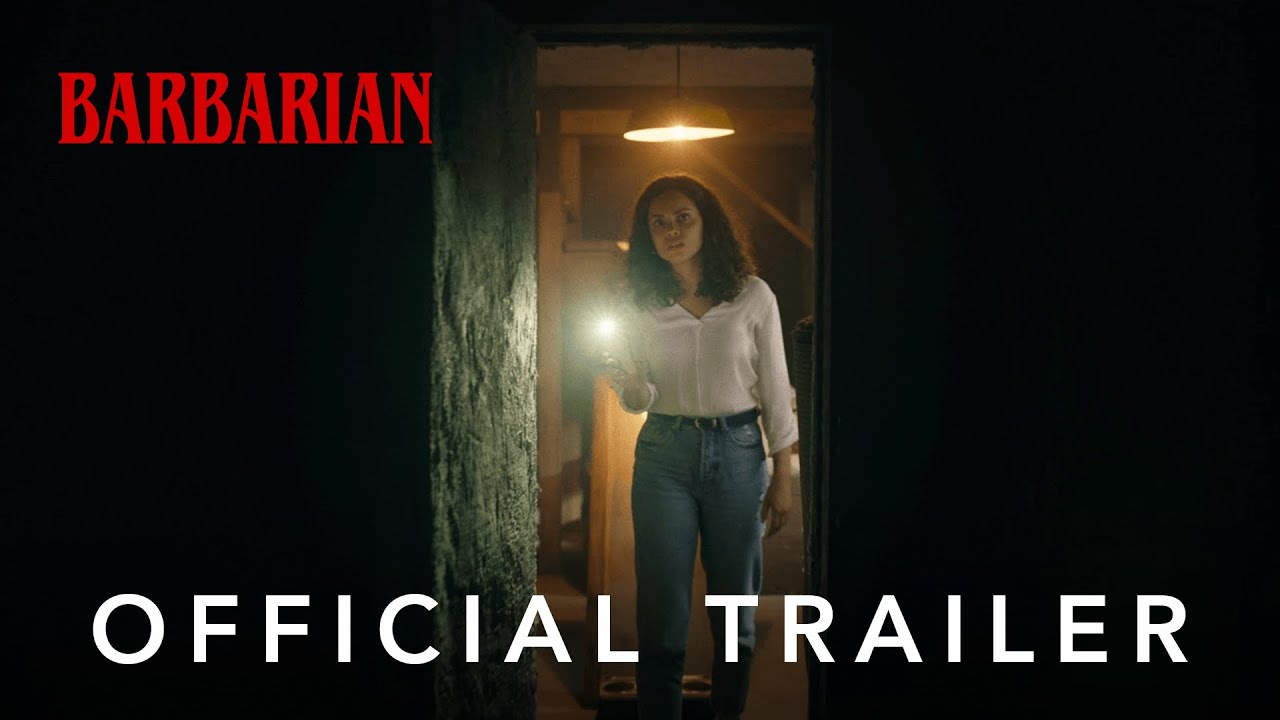
Ending Explained: Barbarian
Ficha de Daños Colaterales en Sala
Certificado de impacto psicofísico emitido por Valeria Von Doom
Cero bostezos. Pupilas dilatadas y tensión mandibular constante.
Ninguna comprobación del tiempo. Se agradece la rareza.
Ninguna: la adrenalina cinematográfica es suficiente.
"Inexistente: pulso de hierro hasta los créditos finales."
💬 El Veredicto de la Comunidad
¿Qué te ha parecido la película? Deja tu nota de 0 a 10 para contrastarla con el análisis de la redacción.
Aún no has votado
📢 ¿Te ha gustado el ácido?
Comparte esta crítica con tus amigos cinéfilos o desata la polémica en redes.
⚡ THE CINEMATIC VENOM YOUR INBOX CRAVES
No sugarcoated ratings, no corporate fluff. Subscribe for our uncensored weekly analysis or join the private Telegram for press previews, poll clashes, and instant alerts.
Alertas de estrenos en 1 segundo, encuestas en caliente y audios al salir de pases de prensa.
Recibe la dosis semanal en tu mail + regalo inmediato del PDF con 50 joyas ocultas de culto.
Related Reviews
Recommended autopsies for demanding film buffs.
 🔥 Fusión Nuclear8.5
*Alleluia: Love as a Terminal Illness (or How to Turn Crimes of Passion into a Sweaty, Fleshy Spectacle)*
⚡Afinidad temática directa en atmósfera, estilo y fijaciones visuales.
Fabrice Du Welz reimagines the myth of the lonely hearts killers in a feverish whirlwind of jealousy, submission, and blood, led by Lola Dueñas in a performance that’s equal parts hypnotic and harrowing.
 🔥 Fusión Nuclear8.5
*High Tension (Haute Tension): The Brutal Birth of the New French Extremism – Or How to Turn Flesh into Poetry with a Machete*
⚡Afinidad temática directa en atmósfera, estilo y fijaciones visuales.
Alexandre Aja shocked global screens with a relentless rural bloodbath, redefined by breakneck pacing and a divisive twist that splits serious cinephiles right down the middle.
 🔥 Fusión Nuclear8.5
*Aterrados: The Rebirth of Ghost Stories in the Raw Grit of Buenos Aires*
⚡Afinidad temática directa en atmósfera, estilo y fijaciones visuales.
Demian Rugna revolutionizes paranormal horror—possessions, poltergeists, and all—by transplanting it to a residential neighborhood in Buenos Aires, armed with a devastating sound design that rattles your bones.
Editorial Ecosystem
Cinephile connections, archive interviews and related analyses.
🎞️ In Claqueta Cinematheque2
💬 Debate Cinéfilo & Autopsia de Lectores
0 veredictos¿Discrepas con nuestra nota? ¿Es una obra maestra o veneno puro? Deja tu veredicto abajo sin necesidad de registro.

Aún nadie ha dejado su veredicto para esta película.
Sé el primero en clavarle el colmillo rellenando el formulario de arriba.