Bone Tomahawk — A Classic Western with a Side of Brutal Cannibalism
S. Craig Zahler made a colossal directorial debut, patiently blending twilight western aesthetics with auteurist dialogue and the most unflinching cannibalistic body horror imaginable.

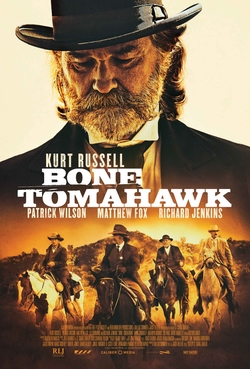
Bone Tomahawk: When the Western Becomes a Butcher’s Shop (Literary and Literal)
In the vast desert of contemporary cinema—where franchises churn out sequels like popcorn in a suburban multiplex—every so often, an oasis of authenticity emerges, reeking of gunpowder, sweat, and dried blood. Bone Tomahawk (2015), the directorial debut of S. Craig Zahler—a guy who, until then, had been writing crime novels and playing in death metal bands—is one of those rare specimens that manages to be both a reverential homage to the classic western and a sucker punch to the unsuspecting viewer. With a budget that likely wouldn’t cover the craft services for a single episode of Yellowstone, Zahler pulled off something few filmmakers achieve today: a movie that breathes authenticity in every frame, from its 19th-century saloon dialogue to its cannibalistic body-horror climax so explicit it looks lifted from a forensic pathology manual.
A Western That Takes Its Time (and Your Patience) Like a Fine Whiskey
The premise of Bone Tomahawk is so simple it borders on archetypal: in the town of Bright Hope, a band of troglodyte cannibals kidnaps the local doctor (Lili Simmons, whose screen time is as brief as it is impactful) and a prisoner. Sheriff Franklin Hunt (Kurt Russell, in one of those performances that proves a mustache can have more personality than most modern actors) assembles a ragtag rescue party: his elderly, philosophical deputy Chicory (Richard Jenkins, in a role that fits him like a tailored suit), the arrogant and racist Brooder (Matthew Fox, proving he can act without smirking like a cologne ad), and the doctor’s husband, Arthur O’Dwyer (Patrick Wilson, dragging a broken leg with more dignity than most Marvel heroes in peak condition). What follows is, in essence, a desert journey straight out of a Cormac McCarthy novel directed by John Ford, but with a finale that would make Sam Peckinpah puke.
Zahler isn’t in a rush. For the first two acts, Bone Tomahawk wallows in the twilight western, with wide shots of arid landscapes reminiscent of The Searchers (1956) and dialogue that sounds like it was written by a drunk poet in a 19th-century saloon. The pacing is slow, almost contemplative, as if the film is waiting for the audience to get comfortable before swinging an axe into their temple. Entire scenes are devoted to conversations about tea preparation, bathtub reading habits, or the ethics of shooting a man in the back. This is cinema that breathes, unashamed of its sluggishness, and—whether you love it or hate it—demands patience from viewers accustomed to the instant gratification of blockbusters.
But oh, the payoff. Those who endure until the third act will be rewarded with one of the most brutal and disturbing sequences in modern cinema. Zahler makes no concessions: when the group reaches the troglodytes’ canyon, the film transforms into a spectacle of anatomical horror so realistic it might as well have been shot in a slaughterhouse. The upside-down dismemberment scene—filmed in a static shot, without music, with organic sounds that crack like breaking bones—is so graphic it makes Hostel (2005) look like an episode of Sesame Street. There’s no glorification of violence, no stylized slow-motion, no epic score to soften the blow. It’s pure, dry, clinical violence, as if Zahler decided the audience deserved a reality slap after two hours of poetic western.
Direction: Zahler, the Surgeon of the Bloody Western
S. Craig Zahler isn’t your typical director. He’s a novelist, musician, and screenwriter who decided cinema needed a dose of authenticity that only someone uncorrupted by Hollywood conventions could deliver. His visual style is functional, almost Spartan, as if he’d concluded that the story and actors were strong enough to stand on their own without flourishes. The shots are wide, the framing static, and the cinematography (by Benji Bakshi) has a gritty, dusty quality that evokes 1950s westerns, though with a modern touch in the nighttime lighting that occasionally betrays the low budget.
But where Zahler truly shines is in his handling of tone. Bone Tomahawk is a film that changes skin with eerie naturalness: it shifts from a literary western to a psychological drama, then to a cannibal slasher before the audience can blink. It’s as if The Good, the Bad and the Ugly (1966) and The Texas Chain Saw Massacre (1974) had a bastard child in a dark alley, and that child grew up reading Faulkner while practicing surgery with a hunting knife. Zahler isn’t afraid to mix genres, and the result is a film that feels unique, as if unearthed from a lost film archive.
Performances: A Cast Straight Out of an Old West Saloon
If there’s one thing that elevates Bone Tomahawk beyond mere cult curiosity, it’s the cast. Kurt Russell, with that mustache carved from granite, is imperial as Sheriff Hunt, a man of few words but magnetic presence. Russell doesn’t need to do much to dominate the screen: just step into a frame with that look of someone who’s seen too much and decided he doesn’t give a damn anymore. Patrick Wilson, meanwhile, steals scenes as Arthur O’Dwyer, the crippled husband trudging forward with a determination that borders on the superhuman. His performance is physical, painful, and brimming with a dignity that contrasts sharply with the brutality around him.
But if one actor carries the film on his shoulders, it’s Richard Jenkins as Chicory, the sheriff’s elderly, philosophical deputy. Jenkins is pure magic: with just a glance or a sigh, he conveys more humanity than most actors do in entire films. His exchanges with Russell are little treasures of writing, packed with dry humor and earthy wisdom that make the audience fall in love with the character in minutes. Even Matthew Fox, in a role that could’ve been a one-note villain, manages to add depth to Brooder, the racist Southern gentleman, turning him into a complex and, in a way, tragic figure.
Soundtrack: Silence as a Lethal Weapon
The music in Bone Tomahawk is so minimalist it’s almost invisible, and that’s precisely what makes it brilliant. Jeff Herriott’s score sounds like wind whistling through desert rocks: sporadic, almost ethereal, but present in key moments. Yet where the film truly showcases its sonic mastery is in its use of silence. The violent scenes have no music, just organic sounds: bones snapping, flesh tearing, muffled screams. It’s such a realistic approach that it’s almost unbearable, as if Zahler decided the audience deserved to hear every detail of the butchery.
Cinematic Comparisons: Where Does Bone Tomahawk Fit?
Bone Tomahawk is a film that defies easy classification. It’s a western, but also a horror film. It’s a road movie, but also a character study. It’s a cult film, but also a modern masterpiece. If we had to find its relatives in cinema’s family tree, we might mention:
- The twilight westerns of John Ford and Howard Hawks, but with a Lovecraftian horror twist.
- The grimy realism of The Texas Chain Saw Massacre (1974), but with dialogue straight out of a Mark Twain novel.
- The body horror of The Void (2016) or Martyrs (2008), but with the soul of a classic western.
- Quentin Tarantino’s cinema, but without the self-indulgence or pop-culture winks.
In short, Bone Tomahawk is a film unlike anything you’ve seen before, and that, in the age of algorithms and endlessly recycled formulas, is nothing short of a miracle.
The best
- Zahler’s script: Dialogue that sounds like it was written by a drunk poet in a 19th-century saloon, but with the precision of a surgeon.
- The dismemberment scene: A static shot, no music, no concessions. Horror cinema has never been this realistic (or this unbearable).
The worst
- Its contemplative western pacing: If you’re looking for nonstop action or jump scares, prepare to be bored stiffer than an oyster in the desert.
The Verdict of Claqueta Ácida (8.8/10)
Bone Tomahawk is that rare bird that proves cinema can still be art, provocation, and entertainment all at once—without needing CGI or endless franchises. S. Craig Zahler’s directorial debut is a film that smells of gunpowder, sweat, and classic literature, but ends with a bloodbath so realistic it’ll leave you nauseated and slack-jawed. It’s not a movie for everyone, nor does it need to be. It’s a masterpiece for those who still believe cinema can be more than popcorn and explosions. If you’ve got the stomach (and the patience), Bone Tomahawk will reward you with an experience as unique as it is unforgettable. If not, there’s always Fast & Furious 27: More Cars, More Explosions, Less Brain.🎬 Tráiler Oficial
Abrir en YouTube
Ending Explained: Bone Tomahawk
Ficha de Daños Colaterales en Sala
Certificado de impacto psicofísico emitido por Valeria Von Doom
Ni un solo parpadeo voluntario. El asiento, inusualmente cómodo.
Ni una sola mirada al móvil.
Ninguna: la adrenalina cinematográfica es suficiente.
"No hubo. La coherencia se mantuvo hasta el último fotograma."
💬 El Veredicto de la Comunidad
¿Qué te ha parecido la película? Deja tu nota de 0 a 10 para contrastarla con el análisis de la redacción.
Aún no has votado
📢 ¿Te ha gustado el ácido?
Comparte esta crítica con tus amigos cinéfilos o desata la polémica en redes.
⚡ THE CINEMATIC VENOM YOUR INBOX CRAVES
No sugarcoated ratings, no corporate fluff. Subscribe for our uncensored weekly analysis or join the private Telegram for press previews, poll clashes, and instant alerts.
Alertas de estrenos en 1 segundo, encuestas en caliente y audios al salir de pases de prensa.
Recibe la dosis semanal en tu mail + regalo inmediato del PDF con 50 joyas ocultas de culto.
Related Reviews
Recommended autopsies for demanding film buffs.
 🔥 Fusión Nuclear9.2
*Brawl in Cell Block 99: Shattered Bones, Vince Vaughn as a Steamroller, and the Most Savage Prison Ordeal of the Century*
⚡Del mismo director (S. Craig Zahler): analiza la evolución o degradación de su estilo.
S. Craig Zahler delivers a staggeringly dry, deliberate, and brutal crime-and-prison thriller, featuring a colossal and relentless Vince Vaughn.
 🔥 Fusión Nuclear8.9
*Dragged Across Concrete*: Molten Lead, Twilight Cynicism, and the Moral Suffocation of America’s Asphalt
⚡Del mismo director (S. Craig Zahler): analiza la evolución o degradación de su estilo.
S. Craig Zahler delivers a monumental, nihilistic neo-noir heist thriller—corrupt cops, bone-dry violence, and nearly three hours of unrelenting suspense.
 🔥 Fusión Nuclear8.5
*Alleluia: Love as a Terminal Illness (or How to Turn Crimes of Passion into a Sweaty, Fleshy Spectacle)*
⚡Afinidad temática directa en atmósfera, estilo y fijaciones visuales.
Fabrice Du Welz reimagines the myth of the lonely hearts killers in a feverish whirlwind of jealousy, submission, and blood, led by Lola Dueñas in a performance that’s equal parts hypnotic and harrowing.
Editorial Ecosystem
Cinephile connections, archive interviews and related analyses.
💬 Debate Cinéfilo & Autopsia de Lectores
0 veredictos¿Discrepas con nuestra nota? ¿Es una obra maestra o veneno puro? Deja tu veredicto abajo sin necesidad de registro.

Aún nadie ha dejado su veredicto para esta película.
Sé el primero en clavarle el colmillo rellenando el formulario de arriba.