Irreversible — Hell in Reverse (Or How Gaspar Noé Forced Us to Choke on Our Own Cinephile Vomit)
Gaspar Noé gifts us 93 minutes of visual torture in Irreversible: dizzying long takes, violence that hurts, and an ending that redeems nothing. Art or sadism? You decide (but we already know the answer).

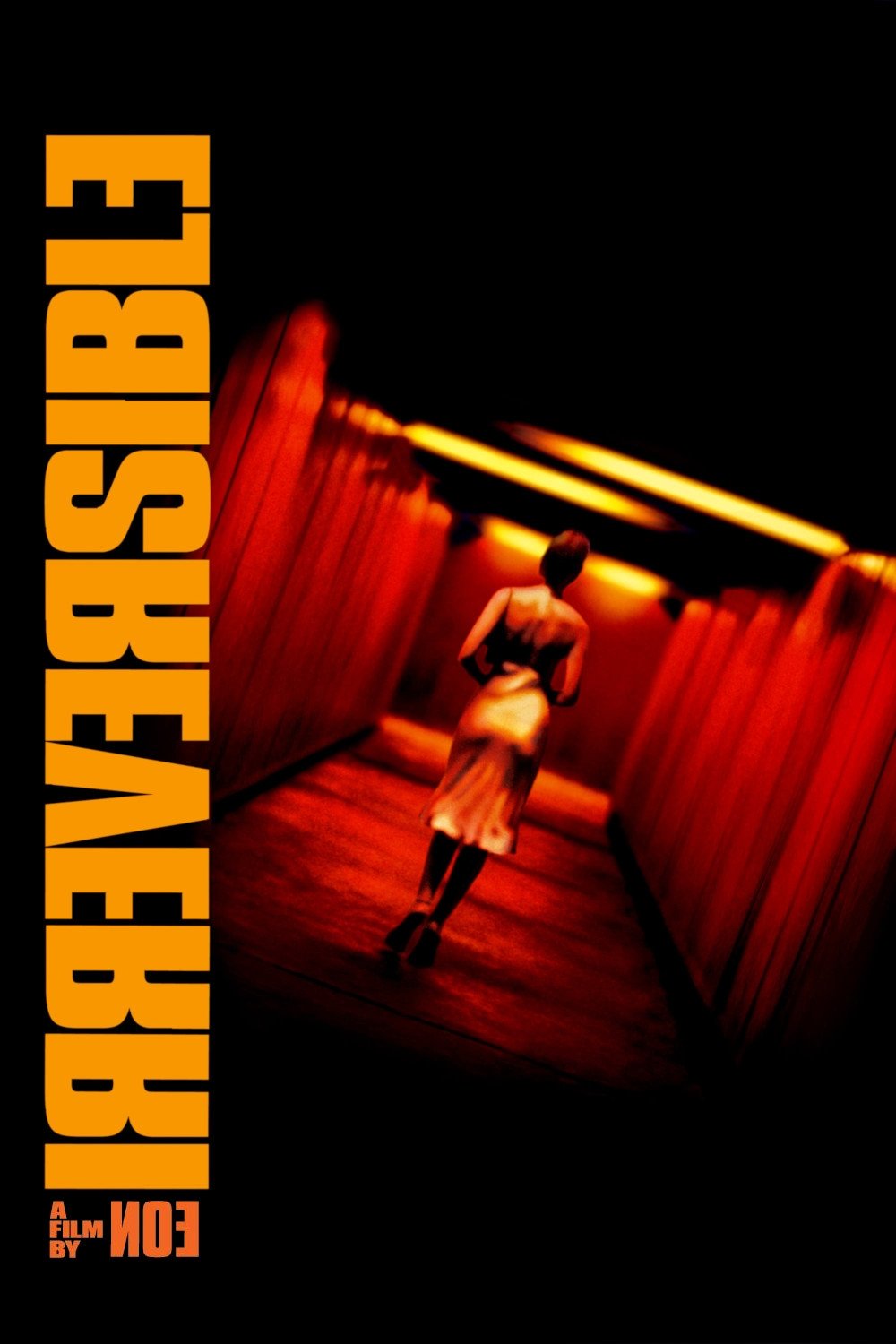
Gaspar Noé’s cinema has always been a one-way ticket, a sensory assault that lodges in the retina like a rusty blade. With Irreversible, the Argentine-turned-French provocateur didn’t just cement his reputation as the enfant terrible of European cinema—he raised the bar for the unbearable to nearly insurmountable heights. Released in 2002, this film didn’t arrive to entertain; it came to torment, to dare the audience to endure 93 minutes of a story told in reverse, where every long take seems designed to remind us that time, like love, is a cruel illusion. Noé isn’t a director: he’s a surgeon operating without anesthesia, and Irreversible is his most sadistic and brilliant work in equal measure.
The context of its creation is almost as twisted as the film itself. After the cult success of Seul contre tous (1998), Noé had already proven that cinema could be a projectile hurled at bourgeois morality. But with Irreversible, he went a step further: he decided the narrative structure shouldn’t just be nonlinear—it should be outright hostile. Inspired by Baroque memento mori and the cinema of Stanley Kubrick (anyone mention 2001-una-odisea-del-espacio-kubrick-y-el-monolito-que-nos-dejo-mudos" class="text-amber-400 font-black hover:text-amber-300 transition underline decoration-amber-500/40 hover:decoration-amber-300" title="[9.3/10 🔥 Fusión Nuclear] Lee nuestra autopsia de «2001»" data-acid-interlink="2001-una-odisea-del-espacio-kubrick-y-el-monolito-que-nos-dejo-mudos">2001?), Noé crafted a film that begins with the climax and ends with the origin, as if life were a macabre joke told by a drunken god. The result is a work that divides audiences like few others: some consider it a masterpiece of transgressive cinema, while others leave the theater wanting to sue the director for psychological damages. At Acid Clapperboard, we side with the latter—but with a grin from ear to ear.
The shoot of Irreversible was as chaotic as its final edit. Filmed in Paris on a shoestring budget with a skeleton crew, the film thrived on the complicity of a cast fully committed to the project, even if they didn’t always understand what was happening. Monica Bellucci, in a role that redefines “physical acting,” agreed to shoot one of cinema’s most brutal scenes without stunt doubles, with a level of commitment bordering on masochism. Noé, meanwhile, ensured every shot conveyed claustrophobia and disorientation, using handheld cameras that moved as if possessed by a drunkard’s spirit. The result isn’t a film you watch—it’s one you endure, like a bad LSD trip you can’t wake up from.
But beyond its gratuitous provocation (which it isn’t), Irreversible is a meditation on the irreversibility of time, violence as a vicious cycle, and the fragility of happiness. Noé doesn’t judge his characters; he exposes them in all their rawness, like insects trapped in a glass jar. The tunnel scene, shot in a single nearly ten-minute take, is an exercise in pure terror that makes any commercial slasher pale in comparison. And then there’s the ending—that moment of light and color that seems lifted from a yogurt commercial but, in the film’s context, takes on an almost religious significance. Is Irreversible a masterpiece or a pretentious stylistic exercise? The answer, like everything in this film, depends on when you watch it.
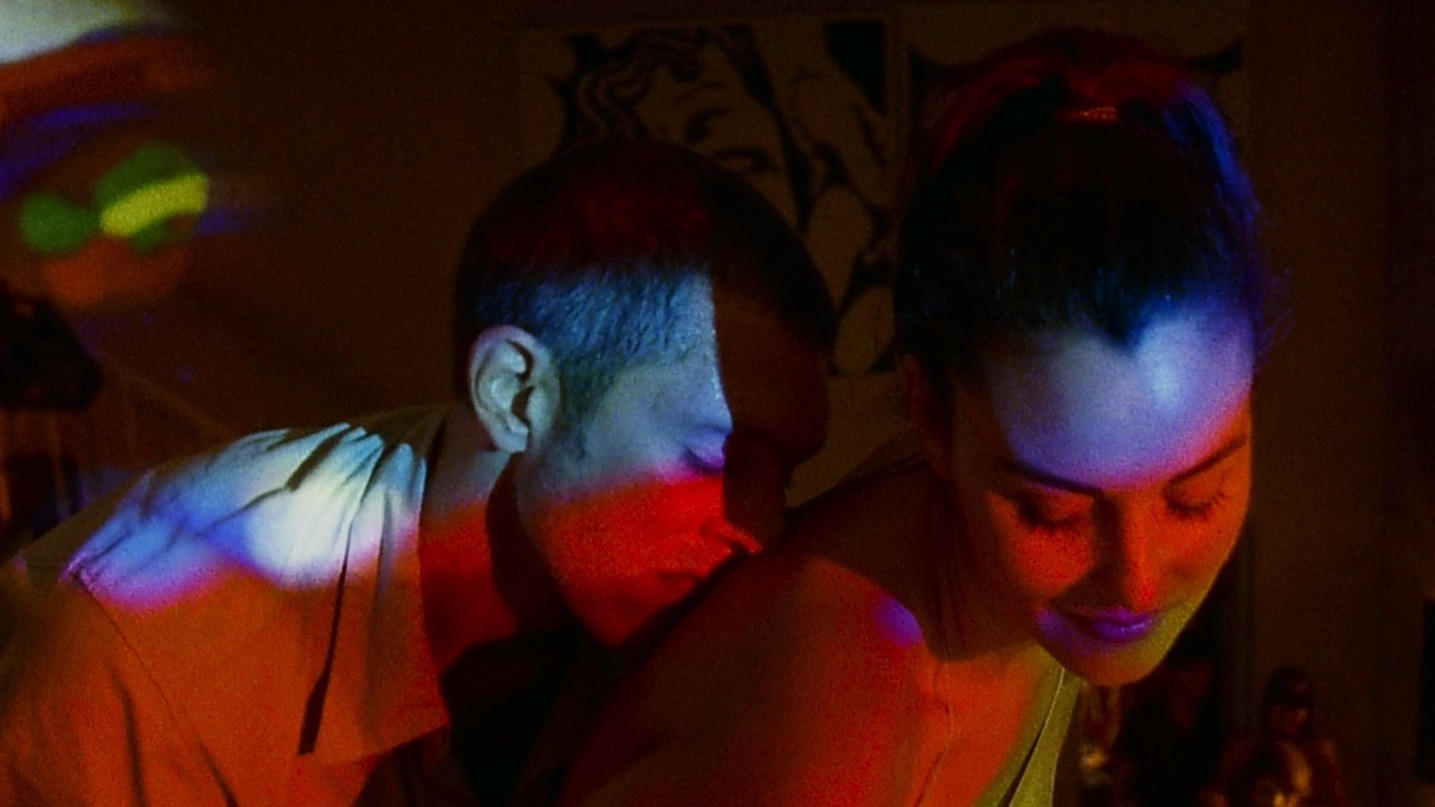
Direction: Vertigo as a Way of Life
Gaspar Noé doesn’t direct films—he choreographs them like a macabre dance between the camera and the audience. In Irreversible, every long take is a statement of intent, a challenge to narrative cinema’s conventions. The camera moves as if it has a life of its own, spinning, staggering, and closing in on faces with an intimacy that borders on the obscene. The use of steadycam and circular movements aren’t mere technical flourishes; they’re tools to disorient the audience, to plunge them into a state of perpetual anxiety. Noé doesn’t want you to watch his film—he wants you to feel it, to suffer it, to remember it like a nightmare you can’t wake up from.
The Argentine-French director demonstrates absolute mastery of cinematic language, but also an absolute lack of mercy toward his audience. The tunnel scene, for example, isn’t just a technical showcase—it’s a test of endurance. Ten minutes of graphic violence, sweat, screams, and blood, all in a single shot that feels eternal. Noé doesn’t cut because he doesn’t want to give you a break; he knows cinema, in its purest form, is a physical experience. And if you leave the theater nauseous, congratulations: you’ve understood the film.
But the most brilliant aspect of Noé’s direction is how he uses time to manipulate emotions. By telling the story in reverse, he plays with our expectations, turning every revelation into a gut punch. We know from the start that something terrible will happen, but not what, how, or why. And when we finally reach the origin of the tragedy—that stolen moment of happiness in a sunlit park—the contrast is so brutal it hurts. Noé doesn’t give us catharsis; he gives us a mirror reflecting our deepest fears.
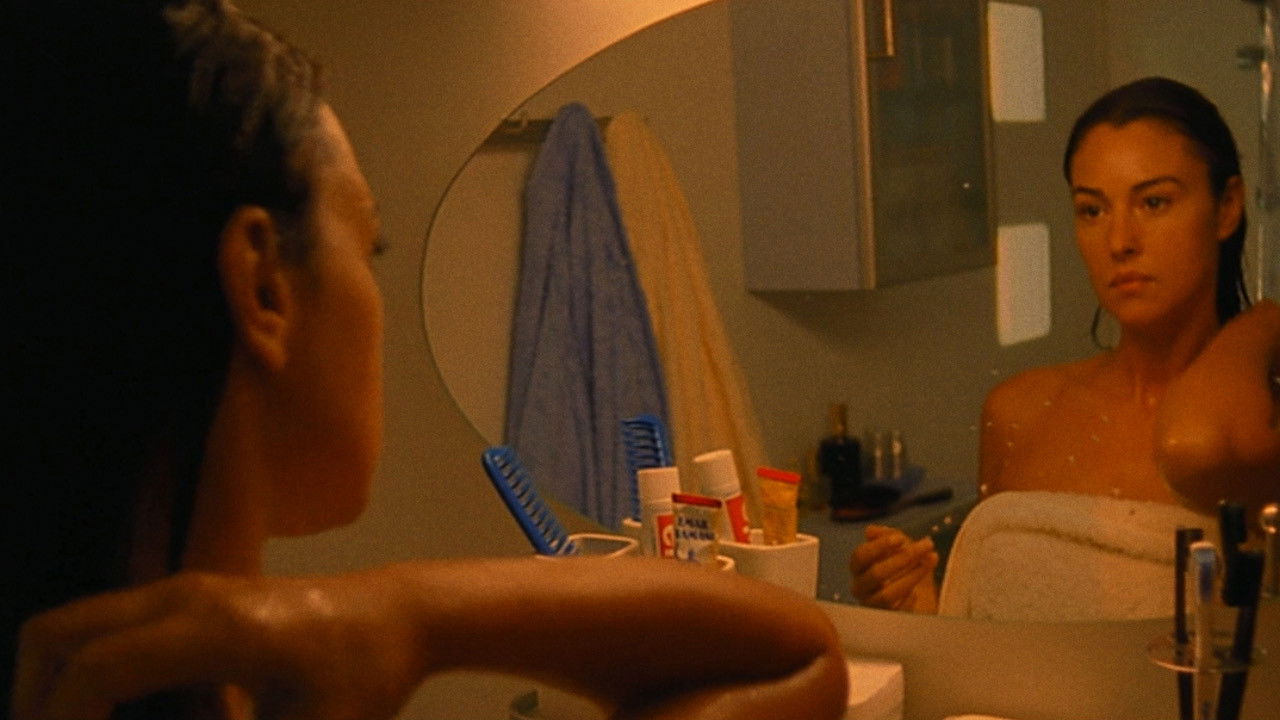
Performances: When Pain is Real
The cast of Irreversible doesn’t act—they survive. Monica Bellucci, in a role that redefines what it means to be a committed actress, delivers a performance that oscillates between the sublime and the unbearable. Her tunnel scene isn’t just acting—it’s an act of physical and emotional bravery that leaves the audience breathless. Bellucci doesn’t play a victim; she embodies terror in its purest form, with a naturalism that makes every scream, every tear, every gesture of despair feel real. It’s no surprise that many viewers left the theater wondering if what they’d just seen was fiction or a documentary about hell.
Vincent Cassel, meanwhile, nails the role of Marcus, a man consumed by rage and a thirst for vengeance. His performance is so intense it borders on caricature at times, but within the film’s context, it works as the perfect counterpoint to Bellucci’s fragility. Cassel isn’t afraid to look ridiculous—to scream, to sweat, to lose control. And that’s precisely what makes his character so memorable: he’s not a hero or a villain, but a human being trapped in a spiral of violence he can’t escape.
The rest of the cast delivers, but it’s Jo Prestia who steals the show as the rapist. His performance is so disturbing it’s hard not to hate him—not just for what he does, but for how he does it. Prestia doesn’t play a monster; he plays a man, and that’s the most terrifying thing of all. Because in the end, Irreversible isn’t about monsters—it’s about people, their fears, their desires, and how easily they can become unrecognizable.
Technical: Sound as a Weapon of Mass Destruction
If anything defines Irreversible beyond its reverse narrative, it’s its technical prowess. Benoît Debie, the cinematographer, turns Paris into a claustrophobic labyrinth, a place where light and shadow blend to create an oppressive atmosphere. The long takes, shot with a camera that seems alive, convey a constant sense of vertigo, as if the world might collapse at any moment. And then there’s the use of color: the reddish tones flooding the screen during violent scenes aren’t accidental—they’re a visual reminder that hell isn’t a place, but a state of mind.
But if one technical element stands above the rest, it’s the sound. Thomas Bangalter (yes, of Daft Punk) and Gaspar Noé crafted a score that’s a physical experience in itself. The use of low, almost subliminal frequencies generates a constant sense of unease, as if something terrible is about to happen at any moment. And when the music stops, the silence is even more terrifying. The sound in Irreversible doesn’t accompany the image—it devours it, distorts it, turns it into something alive and dangerous.
The editing, meanwhile, is a masterclass in temporal manipulation. By telling the story in reverse, Noé and his editor, Luciano Montes, toy with the audience’s perception, making each scene take on a different meaning depending on when it’s viewed. What initially seems like gratuitous violence is later revealed as the logical consequence of a series of wrong decisions. The editing doesn’t just tell a story—it deconstructs it, analyzes it, and reassembles it like a macabre puzzle.
The best
- The tunnel scene: A nearly ten-minute long take that redefines terror in cinema. It’s not just a technical feat—it’s a physical experience that leaves you breathless.
- Monica Bellucci’s performance: An acting masterclass so brutal and realistic it makes the rest of cinema look like child’s play. Bellucci doesn’t act—she suffers, and she makes us suffer with her.
- Benoît Debie’s cinematography: Every shot is a moving painting, a perfect blend of beauty and horror that turns Paris into a personal hellscape.
- The score: Thomas Bangalter and Gaspar Noé created a soundtrack you don’t just hear—you feel it, like a punch to the gut.
- The reverse narrative structure: Noé doesn’t just play with time—he tortures it, stretches it, and turns it into another character in the film.
The worst
The excess of pretension: Sometimes, Irreversible* seems more interested in impressing than moving. Noé isn’t afraid to look ridiculous if it means being transgressive.- The gratuitous violence: There are moments when the film crosses the line between disturbing and pornographic. Not everyone is prepared to see what happens in that tunnel.
- Lack of nuance in some characters: Marcus, played by Vincent Cassel, sometimes feels more like an archetype of male rage than a complex human being.
- The uneven pacing: The first half is so intense that the second, more contemplative half can feel boring by comparison.
- The saccharine ending: After so much darkness, that moment of light and color feels lifted from a completely different film. Ironic wink or miscalculation?
The Verdict of Claqueta Ácida
Irreversible isn’t a film—it’s a social experiment, a challenge to the audience, a gut punch disguised as art. Gaspar Noé doesn’t make cinema to entertain; he makes it to unsettle, to provoke, to leave an indelible mark on the retinas of those brave enough to watch. And damn, does he succeed. With flawless direction, brutal performances, and technical prowess bordering on perfection, Irreversible is a masterpiece of transgressive cinema—but also a reminder that art doesn’t always have to be pretty to be necessary.
Recommended? Only if you’ve got the stomach for it and an open mind. Because Irreversible isn’t forgotten—it’s endured, remembered, and, above all, debated. And that, dear readers, is what makes cinema great. Or at least, that’s what we like to tell ourselves as we stumble out of the theater wanting to puke and applaud at the same time. 💀
🎬 Tráiler Oficial
Abrir en YouTube
Ending Explained: Irreversible
Ficha de Daños Colaterales en Sala
Certificado de impacto psicofísico emitido por Silvia Mordaz
Ni un solo parpadeo voluntario. El asiento, inusualmente cómodo.
Ninguna comprobación del tiempo. Se agradece la rareza.
Ninguna: la adrenalina cinematográfica es suficiente.
"Inexistente: pulso de hierro hasta los créditos finales."
💬 El Veredicto de la Comunidad
¿Qué te ha parecido la película? Deja tu nota de 0 a 10 para contrastarla con el análisis de la redacción.
Aún no has votado
📢 ¿Te ha gustado el ácido?
Comparte esta crítica con tus amigos cinéfilos o desata la polémica en redes.
⚡ THE CINEMATIC VENOM YOUR INBOX CRAVES
No sugarcoated ratings, no corporate fluff. Subscribe for our uncensored weekly analysis or join the private Telegram for press previews, poll clashes, and instant alerts.
Alertas de estrenos en 1 segundo, encuestas en caliente y audios al salir de pases de prensa.
Recibe la dosis semanal en tu mail + regalo inmediato del PDF con 50 joyas ocultas de culto.
Related Reviews
Recommended autopsies for demanding film buffs.
 🔥 Fusión Nuclear8.0
Climax: The Satanic Boogie That Gaspar Noé Slipped Us in the Sangria
⚡Del mismo director (Gaspar Noé): analiza la evolución o degradación de su estilo.
Gaspar Noé turns a dancer’s rave into a 95-minute lysergic hellscape. Sweat, blood, and a single take so dizzying it’ll make your skull spin. Masterpiece or carnival sideshow?
 🔥 Fusión Nuclear9.5
*2001: A Space Odyssey – A Monkey, a Monolith, and Two Hours of Cosmic Pretentiousness*
⚡Afinidad temática directa en atmósfera, estilo y fijaciones visuales.
We dissect Stanley Kubrick’s magnum opus. A visual feast of minimalism and space hypnosis that cemented "serious" sci-fi—and bored half of humanity to tears.
 🔥 Fusión Nuclear9.3
2001: A Space Odyssey — The Day Kubrick Left Us Speechless (and Oxygenless)
⚡Afinidad temática directa en atmósfera, estilo y fijaciones visuales.
Kubrick turned science fiction into pure art: 149 minutes of eloquent silence, bone-wielding apes, and a psychopathic computer. Masterpiece or pretentious fraud? Here’s the verdict.
Editorial Ecosystem
Cinephile connections, archive interviews and related analyses.
🎞️ In Claqueta Cinematheque1
💬 Debate Cinéfilo & Autopsia de Lectores
0 veredictos¿Discrepas con nuestra nota? ¿Es una obra maestra o veneno puro? Deja tu veredicto abajo sin necesidad de registro.

Aún nadie ha dejado su veredicto para esta película.
Sé el primero en clavarle el colmillo rellenando el formulario de arriba.