Brawl in Cell Block 99 — Shattered Bones, Vince Vaughn as a Steamroller, and the Most Savage Prison Ordeal of the Century
S. Craig Zahler delivers a staggeringly dry, deliberate, and brutal crime-and-prison thriller, featuring a colossal and relentless Vince Vaughn.

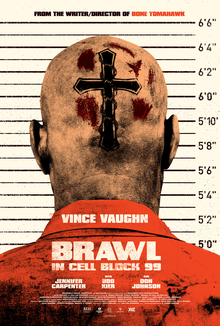
Brawl in Cell Block 99: The Gospel According to S. Craig Zahler, or How to Turn Suffering into Art with a Hammer and a Rusty Nail
In a cinematic landscape where action films have been reduced to a flurry of quick cuts, bullet time, and invincible heroes dodging bullets like flies on a summer day, Brawl in Cell Block 99 emerges as a heretical miracle. This isn’t just a movie—it’s an exorcism. A pagan ritual where S. Craig Zahler, high priest of analog violence, sacrifices any glimmer of hope, courtesy, or digital anesthesia on the altar of celluloid. There are no heroes here, only survivors with shattered knuckles and souls darker than the coffee at a third-rate police station. And yet—or perhaps because of this—this film is one of the purest, most brutal, and necessary experiences that genre cinema has produced in the 21st century.
finalExplicado: "Bradley Thomas llega al nivel más profundo de la prisión, donde el sádico alcaide y el narco le exigen que mate a un preso inocente a cambio de salvar a su mujer embarazada. En un clímax prolongado, brutal y sin música, Bradley se niega a romper su código moral: destroza sistemáticamente a los guardias y sicarios con sus propias manos, rompiéndose los huesos en el proceso, hasta que lo ejecutan a tiros. Simbólicamente, su final significa la victoria absoluta de los principios sobre la supervivencia. Bradley no salva a su familia ni sale vivo; elige convertirse en un cadáver irreductible antes que transformarse en monstruo. Es un mártir pagano que prefiere la aniquilación física a la corrupción espiritual. Zahler filma su derrota como una victoria moral absoluta."
The Boxer, the Philosopher, and the Monster: Vince Vaughn as Prophet of Pain
Bradley Thomas, played by a Vince Vaughn who looks like he escaped from a documentary about modern gladiators, is the perfect antihero for this nightmare. He’s not particularly smart, nor traditionally charismatic, nor even a born criminal. Above all, he’s a man of principle in a world that has decided principles are obsolete. A retired boxer who believes in honor the way others believe in God: with blind, dangerous faith. Vaughn, far from the breezy comedy that made him famous, transforms here into a force of nature. His physique, imposing and chiseled, is merely the packaging for a performance that oscillates between cold calculation and animal fury. When he strikes, he doesn’t do it like an actor—he does it like a man who knows exactly what hurts and how much the human body can endure before it breaks.
Zahler, who also wrote the script, crafts Bradley as a tragic figure in the classical sense: a good man in a bad world, whose downfall isn’t the result of his mistakes but his inability to adapt to the rot around him. His relationship with Lauren (Jennifer Carpenter, in a role that balances vulnerability and determination) is the last vestige of humanity in a universe that rewards betrayal and cruelty. Carpenter avoids the damsel-in-distress cliché, giving her character an unexpected agency, especially in the final act, where her performance becomes as physical as Vaughn’s. It’s a shame the script doesn’t give her more room, because her chemistry with Vaughn is one of the few rays of light in this eternal night.
Pacing as a Weapon: When Patience Becomes Sadism
Zahler is in no rush. He never is. His cinema is an endurance test for the viewer, a trial by fire where tension isn’t built with jump scares or blaring music but with uncomfortable silences, dry dialogue, and an oppressive atmosphere that clings to the skin like sweat in a solitary cell. The first hour of Brawl in Cell Block 99 is a sober, almost minimalist crime drama where every scene seems designed to test the audience’s patience. There are long shots of Bradley driving, working in the garage, talking to his wife. Nothing happens. And yet, everything happens.
This narrative choice, which could have been suicide in less capable hands, is actually one of the film’s greatest virtues. Zahler doesn’t deceive us: he prepares us. He makes us believe we’re watching a story about a man trying to redeem himself, fighting for his family, clinging to a moral code in a world that has abandoned him. And then, when the plot pivots toward prison hell, the impact is devastating. It’s not just that the violence erupts suddenly—it’s that the viewer is already so emotionally drained that every blow hurts twice as much.
The contrast between the outside world—gray, provincial, almost boring—and the inside of the prison—a labyrinth of concrete, blood, and institutionalized sadism—is one of the film’s most brilliant achievements. Zahler doesn’t idealize or demonize prison: he shows it for what it is—a system designed to break the human spirit, where violence isn’t the exception but the rule. And at the center of this hell, Bradley Thomas becomes more than an inmate: he becomes a symbol. A man who refuses to be broken, even if it means becoming the monster the system wants him to be.
Hell on Earth: Don Johnson and the Warden as a Minor Deity
If there’s a villain in this story who deserves a place in the pantheon of great cinematic antagonists, it’s Warden Tuggs, played by a Don Johnson who seems to have sold his soul to the devil in exchange for a cigar and a smirk. Tuggs isn’t a run-of-the-mill sadist—he doesn’t yell, lose his temper, or revel in violence. He’s worse: he’s a bureaucrat of pain. A man who manages torture with the same cold efficiency others use to sign contracts. His office, with its dark wood walls and air of a private club, is the perfect counterpoint to the chaos of the cells. Here, violence isn’t chaotic: it’s methodical, organized, almost elegant.
Johnson, in one of the best performances of his career, makes Tuggs both repulsive and fascinating. There’s a scene near the end where the warden and Bradley have a verbal showdown that’s pure Shakespearean theater in the middle of a slaughterhouse. Tuggs doesn’t need to raise his voice to be terrifying. His power lies in his indifference. To him, Bradley isn’t a man—he’s a pawn in a bigger game, and his suffering is as relevant as a cockroach under his shoe.
Alongside him, Udo Kier (because of course Udo Kier had to be here) plays The Placid Man, a mysterious drug lord pulling strings from the shadows. Kier, with his whispery voice and ethereal presence, is a reminder that the real power isn’t in the prison but outside it. His character is an almost supernatural figure, a ghost who observes and manipulates without getting his hands dirty. He’s the devil in this story, and his smile is the promise that hell has no end.
Violence as Poetry: When Pain is Shot on 35mm
Zahler doesn’t film violence as spectacle but as an act of faith. Every fight, every broken bone, every head crushed against the floor is shot with a rawness that borders on documentary. There are no quick cuts to hide the brutality, no elegant choreography to soften the impact. What you see is what you get: pain, blood, and the wet sound of flesh tearing. Benji Bakshi’s cinematography, with its palette of grays, cold blues, and dark reds, reinforces this sense of dirty realism. The cells look damp, the hallways reek of urine and sweat, and the blood isn’t Hollywood’s bright red but something thick, almost black, clinging to the skin like tar.
The action sequences are a masterclass in how to film hand-to-hand combat without resorting to empty pyrotechnics. Zahler uses static wide shots, letting the camera capture every movement, every impact, every cry of pain. There are no invincible heroes here, only men who bleed, who tire, who die. When Bradley snaps an opponent’s arm with a sharp motion, it’s not a moment of triumph but of horror. The audience doesn’t cheer: it winces.
And then there’s the sound. Oh God, the sound. Jeff Herriott and Zahler’s (yes, the director also composes) score is a mix of dark synthesizers and ethereal choirs that sound like they’re coming from an abandoned church. But the real terror isn’t the music—it’s the silence. The blows sound real because they are. The screams of pain aren’t dubbed. This movie hurts, literally.
Zahler’s Legacy: Between Grindhouse and Art-House
S. Craig Zahler isn’t a conventional director. His cinema draws from sources as diverse as crepuscular Westerns, the darkest noir, 70s grindhouse, and classic prison films, but he filters it all through a unique, almost sickly sensibility. Brawl in Cell Block 99 isn’t just an action movie or a prison thriller: it’s a meditation on violence, honor, and the impossibility of redemption.
Comparing it to other films in the genre would be unfair because Zahler doesn’t play by the same rules. There are no heroes, no happy endings, no moralizing. What there is, is an uncomfortable truth: in a world where cruelty is the currency, the only way to survive is to become something worse than your enemies. Bradley Thomas understands this too late, and that’s his punishment.
The Best
- Vince Vaughn, the sleeping giant: A physical and emotional recital that proves, when he sets his mind to it, he can shatter jaws and hearts with equal ease.
- Warden Tuggs, or how Don Johnson makes you hate a man in a suit and cigar: His villain is as elegant as he is repulsive—a bureaucrat of pain who runs hell with a smile.
- Violence as art: Zahler films fights as if every blow were a Caravaggio painting: bloody, beautiful, and deeply disturbing.
The Worst
The first hour, or the art of lulling the audience before punching them: If you’re not a fan of slow pacing, get ready to check your watch every five minutes. This isn’t Fast & Furious*, sweetheart. Practical effects that border on fairground gore: Some crushed heads and broken limbs have a Evil Dead* low-budget vibe that clashes with the intended realism. Cheap latex is nobody’s friend.- Jennifer Carpenter, underused: Her character has the potential to be as memorable as Bradley, but the script sidelines her for too long. A shame, because when she shines, she burns bright.
The Verdict of Claqueta Ácida (9.2/10)
Brawl in Cell Block 99 isn’t just a movie—it’s a physical and emotional experience that will leave you bruised, exhausted, and, paradoxically, craving more. S. Craig Zahler has crafted a genre masterpiece that rejects complacency and embraces brutality with near-religious devotion. Yes, it’s violent, but its violence isn’t gratuitous: it’s the language Zahler uses to remind us that hell isn’t in another world—it’s right here, behind steel bars and bloodstained walls. If your stomach can handle it and your patience isn’t the size of a pea, prepare for one of the most brutal, honest, and necessary films in recent years. And remember: if you ever cross paths with Bradley Thomas in a dark hallway, pray he doesn’t recognize you. Because if he does, your skull will end up decorating the floor like a broken vase. 🩸🔨🎬 Tráiler Oficial
Abrir en YouTube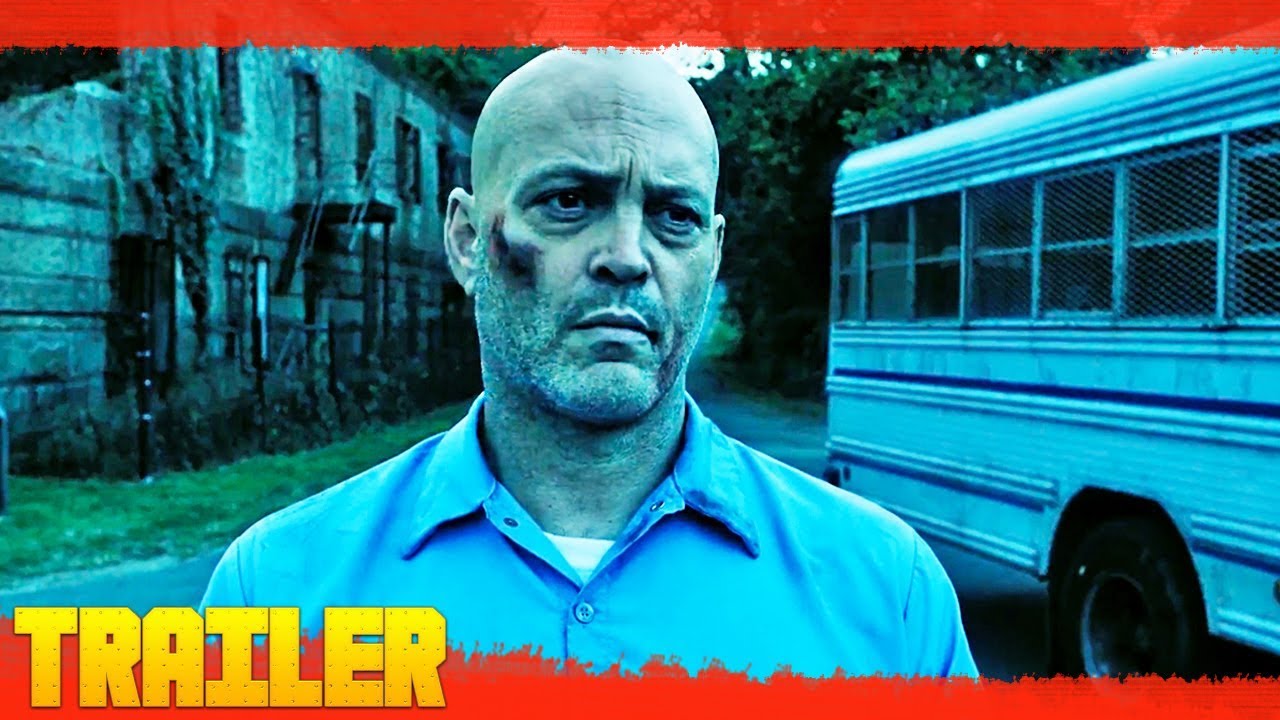
Ending Explained: Brawl in Cell Block 99
Ficha de Daños Colaterales en Sala
Certificado de impacto psicofísico emitido por Héctor Veneno
Ni un solo parpadeo voluntario. El asiento, inusualmente cómodo.
El móvil permaneció en el bolsillo donde debía estar.
Ninguna: la adrenalina cinematográfica es suficiente.
"Inexistente: pulso de hierro hasta los créditos finales."
💬 El Veredicto de la Comunidad
¿Qué te ha parecido la película? Deja tu nota de 0 a 10 para contrastarla con el análisis de la redacción.
Aún no has votado
📢 ¿Te ha gustado el ácido?
Comparte esta crítica con tus amigos cinéfilos o desata la polémica en redes.
⚡ THE CINEMATIC VENOM YOUR INBOX CRAVES
No sugarcoated ratings, no corporate fluff. Subscribe for our uncensored weekly analysis or join the private Telegram for press previews, poll clashes, and instant alerts.
Alertas de estrenos en 1 segundo, encuestas en caliente y audios al salir de pases de prensa.
Recibe la dosis semanal en tu mail + regalo inmediato del PDF con 50 joyas ocultas de culto.
Related Reviews
Recommended autopsies for demanding film buffs.
 🔥 Fusión Nuclear8.8
*Bone Tomahawk: A Classic Western with a Side of Brutal Cannibalism*
⚡Del mismo director (S. Craig Zahler): analiza la evolución o degradación de su estilo.
S. Craig Zahler made a colossal directorial debut, patiently blending twilight western aesthetics with auteurist dialogue and the most unflinching cannibalistic body horror imaginable.
 🔥 Fusión Nuclear8.9
*Dragged Across Concrete*: Molten Lead, Twilight Cynicism, and the Moral Suffocation of America’s Asphalt
⚡Del mismo director (S. Craig Zahler): analiza la evolución o degradación de su estilo.
S. Craig Zahler delivers a monumental, nihilistic neo-noir heist thriller—corrupt cops, bone-dry violence, and nearly three hours of unrelenting suspense.
 🔥 Fusión Nuclear8.0
Abigail: Ballet, Rivers of Hemoglobin, and the Worst Nightmare of a Discount Kidnapping Gang
⚡Consagradas en el olimpo transgresor con 🔥 Fusión Nuclear.
Radio Silence signs a delightfully entertaining, bloody, and hyperbolic vampire slasher within a mansion where a twelve-year-old ballerina is the monster.
Editorial Ecosystem
Cinephile connections, archive interviews and related analyses.
🎞️ In Claqueta Cinematheque2
💬 Debate Cinéfilo & Autopsia de Lectores
0 veredictos¿Discrepas con nuestra nota? ¿Es una obra maestra o veneno puro? Deja tu veredicto abajo sin necesidad de registro.


Aún nadie ha dejado su veredicto para esta película.
Sé el primero en clavarle el colmillo rellenando el formulario de arriba.