Challengers — Guadagnino’s Sweaty, Sexy, Synth-Soaked Tennis Threesome
Luca Guadagnino turns tennis into a high-stakes game of erotic and psychological tension in this vibrant three-way duel.

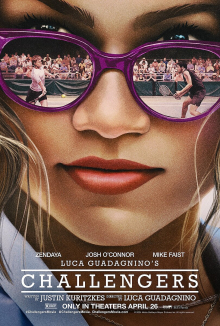
Challengers: When Tennis Becomes a Celluloid Threesome Dripping with Testosterone
Luca Guadagnino has pulled off the impossible: he’s turned tennis— that sport of knee-high-socked aristocrats and tomb-like silence—into a spectacle of sweat, screams, and sexual tension so explicit even the umpire would need a new code of conduct. Challengers isn’t a movie about rackets and balls; it’s a cinematic ménage à trois where the net becomes the border between desire and destruction, and every swing is a muffled groan in the locker room. Guadagnino, that Italian obsessed with stripping bodies and souls bare (see Call Me by Your Name or Suspiria), delivers his campiest—and, paradoxically, most accessible—work yet: a sports thriller that reeks of cheap sunscreen, youthful betrayals, and the desperation of those who know their best days are behind them.
finalExplicado: "Tashi, Patrick y Art culminan su triángulo en la final del Challenger: tras una intensa partida que se convierte en un baile erótico y violento, Art y Patrick se besan salvajemente sobre la red mientras Tashi, desde la grada, grita de placer y aprobación. El partido termina sin que sepamos quién ganó; la victoria ya no importa. Simbólicamente, el clímax revela que los tres solo pueden alcanzar el éxtasis cuando abandonan el ego, la rivalidad y la posesión. El tenis era solo el pretexto: el verdadero juego siempre fue un ménage à trois eterno, sadomasoquista y codependiente. El beso final disuelve las identidades y sella su condena gloriosa: seguirán destrozándose y amándose para siempre en un bucle de sudor, traición y deseo."
The Most Toxic Love (and Sports) Triangle Since Jules et Jim
At its core, Challengers is a relentless flashback to the lost adolescence of three characters trapped in a loop of love, hatred, and killer forehands. Tashi Duncan (Zendaya), the former tennis prodigy whose career was cut short by a knee injury, is now the Svengali behind her husband, Art Donaldson (Mike Faist), a fading player she enters into a Challenger tournament (tennis’ minor leagues, where dreams go to die) to "restore his confidence." The problem—or the fun, depending on how you look at it—is that Art’s final opponent isn’t just anyone: it’s Patrick Zweig (Josh O’Connor), his childhood best friend and Tashi’s ex. What unfolds is a cross between Black Swan, The Social Network, and a particularly dramatic episode of Gossip Girl, where every serve is a backstab and every drop shot a reminder of what could’ve been but never was.
Justin Kuritzkes’ script doles out information with the precision of a player placing a ball on the baseline: we know something dark happened between them, but not what, when, or why. The time jumps—from the tournament present to the characters’ high school years—work like an endless rally: the audience never knows when the winner will land, but they know it’ll hurt when it does. The narrative structure is as addictive as it is frustrating, because Guadagnino plays with ambiguity like a sudden-death tiebreak: Does Tashi love Art, or is she just using him to live vicariously through him? Is Patrick a romantic or a manipulator? Is Art a champion or a fraud? The answers matter less than the tension they create, and that’s where the film’s genius—and cynicism—lies.
Expressionist Tennis: When the Ball’s a Bullet and the Camera’s a Sweaty Voyeur
Guadagnino doesn’t film tennis; he perverts it. There are no pristine court-wide shots or reverent silences here. In Challengers, tennis is a dirty, physical, almost pornographic sport. The camera slithers across the ground like a wounded animal, capturing sweat dripping down temples, muscles tensing, and lips bitten in frustration. It’s as if Leni Riefenstahl had directed an episode of euphoria-echando-la-vista-atras" class="text-amber-400 font-black hover:text-amber-300 transition underline decoration-amber-500/40 hover:decoration-amber-300" title="[3.6/10 ⚠️ Ácido Sulfúrico] Lee nuestra autopsia de «Euphoria»" data-acid-interlink="euphoria-echando-la-vista-atras">Euphoria: every close-up is a study in obsession, every slow-motion shot a visual orgasm.
Guadagnino showed his love for excess in Suspiria (2018), but here his style is more restrained—though no less effective. Cinematographer Sayombhu Mukdeeprom (a frequent collaborator of Apichatpong Weerasethakul) turns every match into a neon-lit ballet of shadows, with a color palette that oscillates between the sickly green of locker rooms and the electric blue of nighttime courts. The matches aren’t played; they’re performed, as if every swing were a Shakespearean soliloquy and every point a duel to the death. Editor Marco Costa’s frenetic cuts mirror the speed of a line-drive ace, and the transitions—sometimes subtle, sometimes brutal—keep the audience in a state of permanent tachycardia.
But what truly elevates Challengers to the level of a sports-camp masterpiece is Trent Reznor and Atticus Ross’ score. The duo behind some of modern cinema’s most claustrophobic soundtracks (The Social Network, Gone Girl) delivers an electronic score that sounds like Daft Punk remixed the heartbeat of someone on the verge of a heart attack. Industrial beats blend with the sound of rackets hitting balls, muffled shouts, and ragged breaths, creating an atmosphere that swings between ecstasy and agony. It’s the perfect soundtrack for a sport that, in Guadagnino’s hands, becomes a metaphor for sex, ambition, and self-destruction.
Performances: Zendaya as an Ice Goddess, O’Connor and Faist as Toxic Lovers
The cast of Challengers is as balanced as a five-set match. Zendaya, in her most adult role to date, plays Tashi with the cold precision of a robot and the ambition of a shark. Her character is a mix of Miranda Priestly and Amy Dunne: a woman who’s turned tennis into her religion and men into her pawns. Zendaya nails that blend of vulnerability and cruelty with minimalist gestures, though her performance sometimes veers into too controlled territory: there are moments when she seems to be reciting her lines rather than living them, as if the script demanded she be a sphinx when the audience craves seeing her shatter.
Thankfully, Josh O’Connor and Mike Faist make up for that chill with explosive chemistry. O’Connor, who’s proven his talent for playing broken men in God’s Own Country and The Crown, brings Patrick to life with a mix of charm and desperation that makes him the film’s most fascinating character. He’s the kind of guy who smiles while stabbing you in the back, and his performance is so magnetic it’s hard to look away. Faist, meanwhile, ensures Art—who could’ve been a clichéd "fading athlete"—has depth: he’s a man trapped between love and resentment, between admiration and hatred for his best friend. The unresolved sexual tension between the two actors is so palpable that even the final match feels like a racket-wielding threesome.
Cinematic Comparisons: Black Swan with Rackets or The Social Network on a Court?
Challengers draws from many sources, but its DNA is a mix of three key films:
1. Black Swan (2010, Darren Aronofsky): Like Aronofsky’s masterpiece, Challengers is a study in obsession and self-destruction—but with tennis instead of ballet. Both films use sport as a metaphor for perfectionism and madness, and both share that aesthetic of sweat, blood, and tears. The difference? Guadagnino doesn’t need monsters or hallucinations to create tension; he just needs a rival’s stare.
2. The Social Network (2010, David Fincher): Aaron Sorkin’s script about Facebook’s creation is Challengers’ mirror. Both films explore betrayal, ambition, and broken friendships, and both use razor-sharp dialogue. The big difference is that in Challengers, the characters don’t argue in boardrooms—they do it in locker rooms and on courts, and instead of lawsuits, there are match points.
3. Match Point (2005, Woody Allen): Yes, Allen’s film about tennis, chance, and crime is in here too, though Guadagnino flips the script. In Match Point, tennis is a metaphor for luck and fate; in Challengers, it’s a metaphor for desire and possession. Plus, while Allen films the sport with the detachment of a documentary, Guadagnino turns it into a near-giallo spectacle.
The Best
- Reznor & Ross’ score: A soundtrack that turns a tennis match into an underground rave where every beat is a jolt of adrenaline.
- Josh O’Connor and Mike Faist: Two actors who make the homoerotic tension between their characters more compelling than any heterosexual relationship in the film.
The Worst
- The overuse of slow motion: There are moments when the slow-dripping sweat looks like it’s straight out of a luxury perfume ad, not a Guadagnino film.
- Zendaya’s coldness: Her character demands icy calculation, but sometimes she feels like she’s playing an android rather than a wounded woman.
The Verdict of Claqueta Ácida (8.2/10)
Challengers is the cinematic equivalent of a sudden-death tiebreak in the fifth set: exhausting, sweaty, and so addictive you can’t look away. Guadagnino delivers a sports thriller that’s equal parts sexual comedy of errors, obsession study, and two-and-a-half-hour music video. It’s not a movie about tennis; it’s a movie about desire, and tennis is just the excuse for these characters to tear each other apart. If you leave the theater without feeling like you’ve run an emotional marathon, you weren’t paying attention. 8.2/10, and an ace down the line for Guadagnino.🎬 Tráiler Oficial
Abrir en YouTube
Ending Explained: Challengers
Ficha de Daños Colaterales en Sala
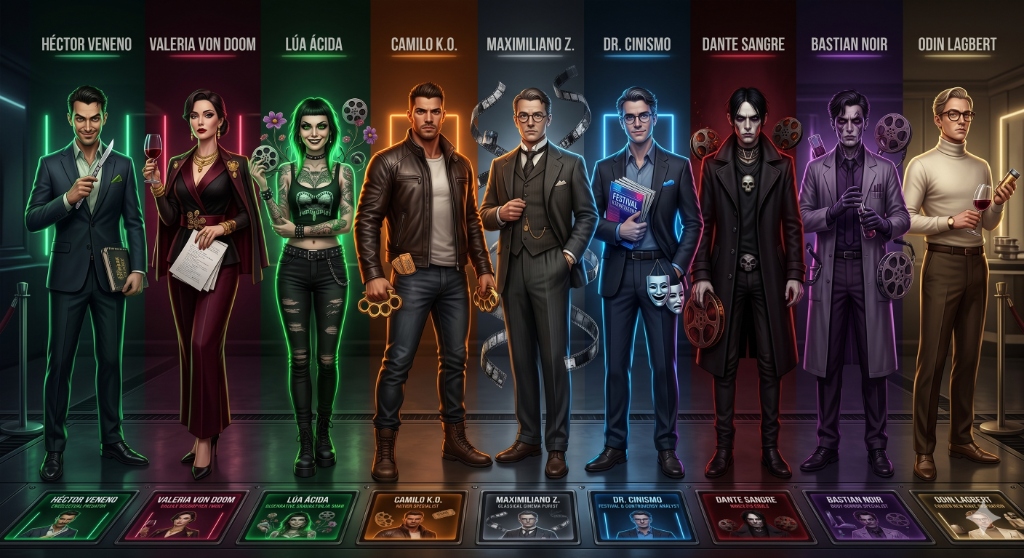
Certificado de impacto psicofísico emitido por Odin Lagbert
Cero. La pantalla absorbió cada segundo de atención disponible.
El móvil permaneció en el bolsillo donde debía estar.
Ninguna. Guarda el café para la sesión siguiente.
"Inexistente: pulso de hierro hasta los créditos finales."
💬 El Veredicto de la Comunidad
¿Qué te ha parecido la película? Deja tu nota de 0 a 10 para contrastarla con el análisis de la redacción.
Aún no has votado
📢 ¿Te ha gustado el ácido?
Comparte esta crítica con tus amigos cinéfilos o desata la polémica en redes.
⚡ THE CINEMATIC VENOM YOUR INBOX CRAVES
No sugarcoated ratings, no corporate fluff. Subscribe for our uncensored weekly analysis or join the private Telegram for press previews, poll clashes, and instant alerts.
Alertas de estrenos en 1 segundo, encuestas en caliente y audios al salir de pases de prensa.
Recibe la dosis semanal en tu mail + regalo inmediato del PDF con 50 joyas ocultas de culto.
Related Reviews
Recommended autopsies for demanding film buffs.
 ⚡ Ácido Cítrico7.5
A Ghost Story: A Journey Through Time and Memory
⚡Consagradas en el olimpo transgresor con 🔥 Fusión Nuclear.
The Claqueta Ácida review of A Ghost Story, a film that explores existence and human connection.
 🔥 Fusión Nuclear8.0
*Backrooms: The Maze of Madness – A Descent into Overhyped Nothingness*
⚡Consagradas en el olimpo transgresor con 🔥 Fusión Nuclear.
*A scathing takedown of the horror series everyone’s raving about—spoiler: it’s not that deep.*
 🔥 Fusión Nuclear8.0
Backrooms: A Descent into the Void
⚡Consagradas en el olimpo transgresor con 🔥 Fusión Nuclear.
A film that flings wide the door to mystery and terror—if you dare to step through
Editorial Ecosystem
Cinephile connections, archive interviews and related analyses.
💬 Debate Cinéfilo & Autopsia de Lectores
0 veredictos¿Discrepas con nuestra nota? ¿Es una obra maestra o veneno puro? Deja tu veredicto abajo sin necesidad de registro.

Aún nadie ha dejado su veredicto para esta película.
Sé el primero en clavarle el colmillo rellenando el formulario de arriba.