Triangle — A Descent into the Abyss of Madness
A storm, a ship, and a mystery walk into a bar. Spoiler: they don’t leave.

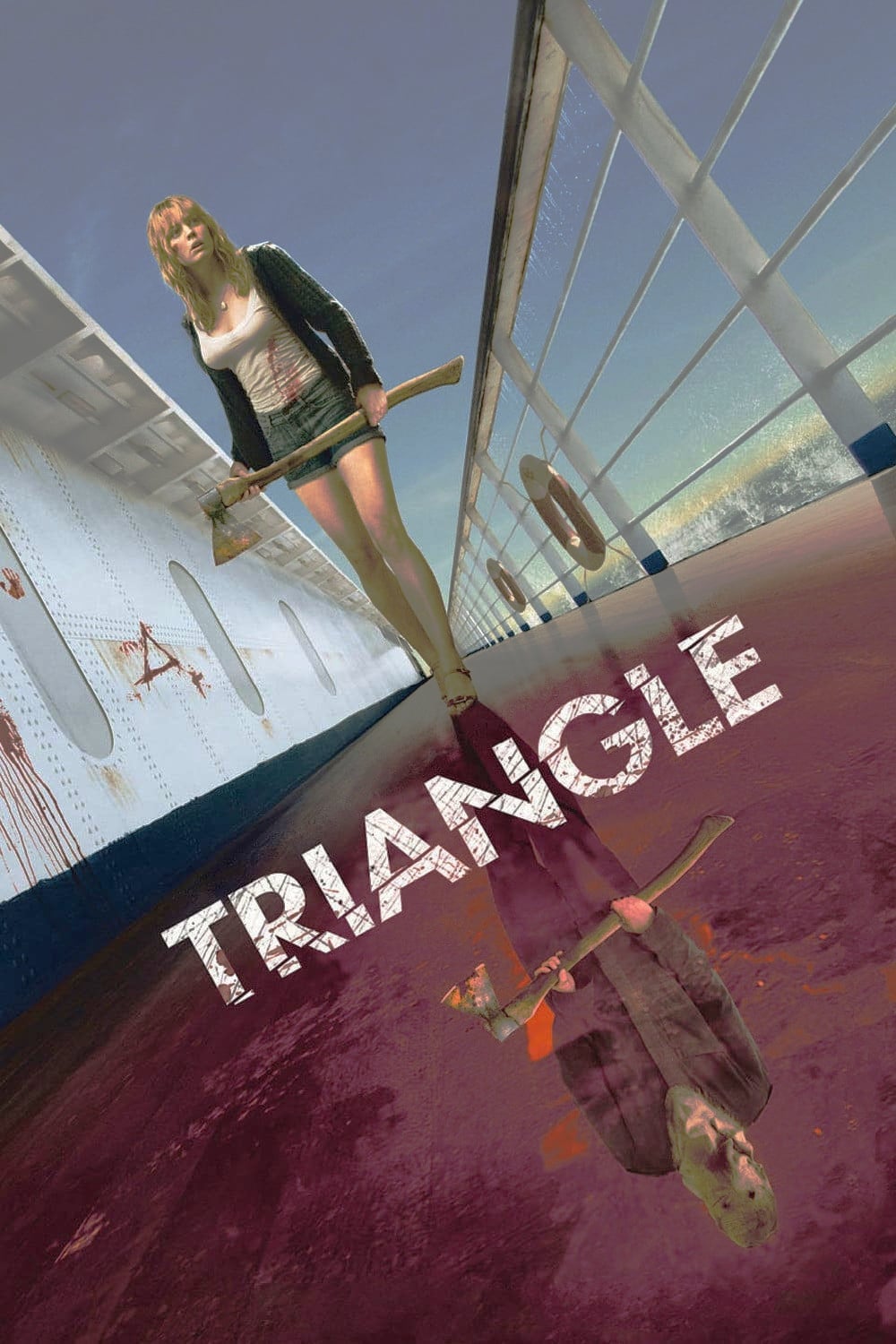
When Jess runs over a seagull on her way to the dock, she has no idea that this minor mishap is the first link in a chain of horror that will drag her into a temporal labyrinth from which there’s no escape. Triangle, directed by Christopher Smith in 2009, isn’t just a psychological horror film—it’s a survival experiment on the high seas where time folds like a bloody origami, and the characters repeat their mistakes like a scratched record. The opening sequence, with that unbroken shot following Jess as she drives under a leaden sky, already warns us: this isn’t going to end well. And no, it doesn’t end well. But damn, does it entertain while everything crumbles around her.
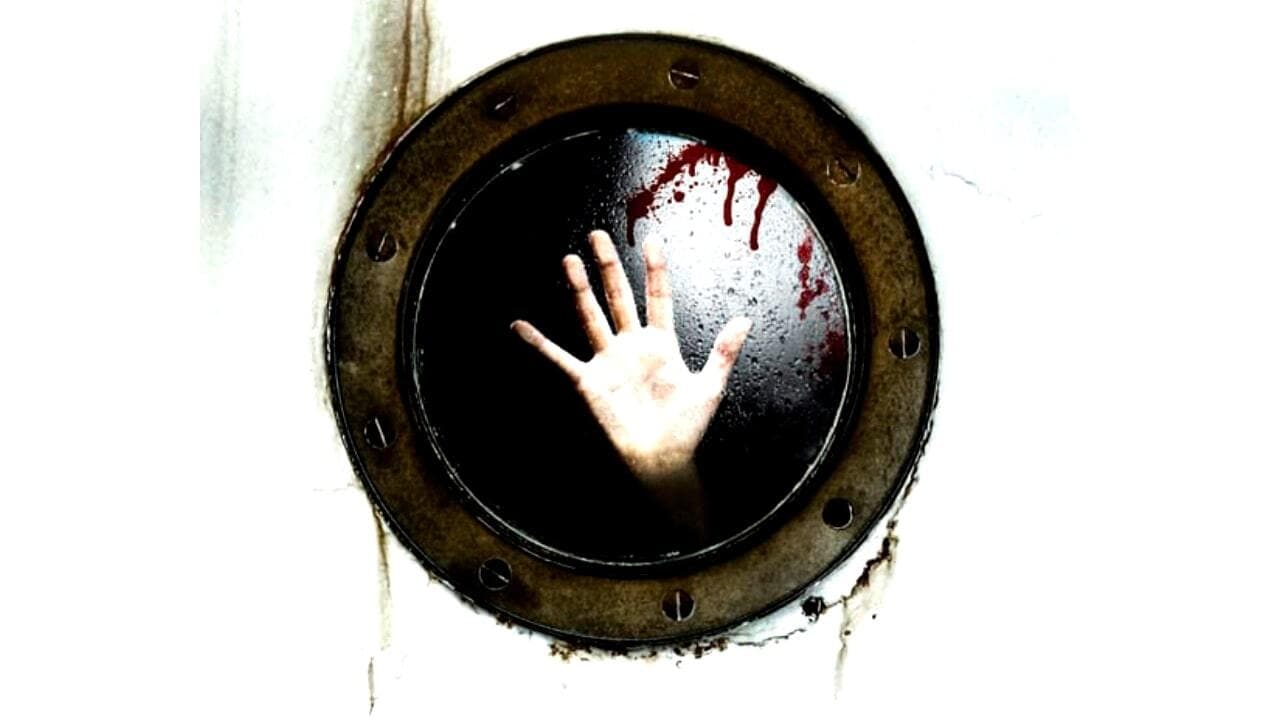
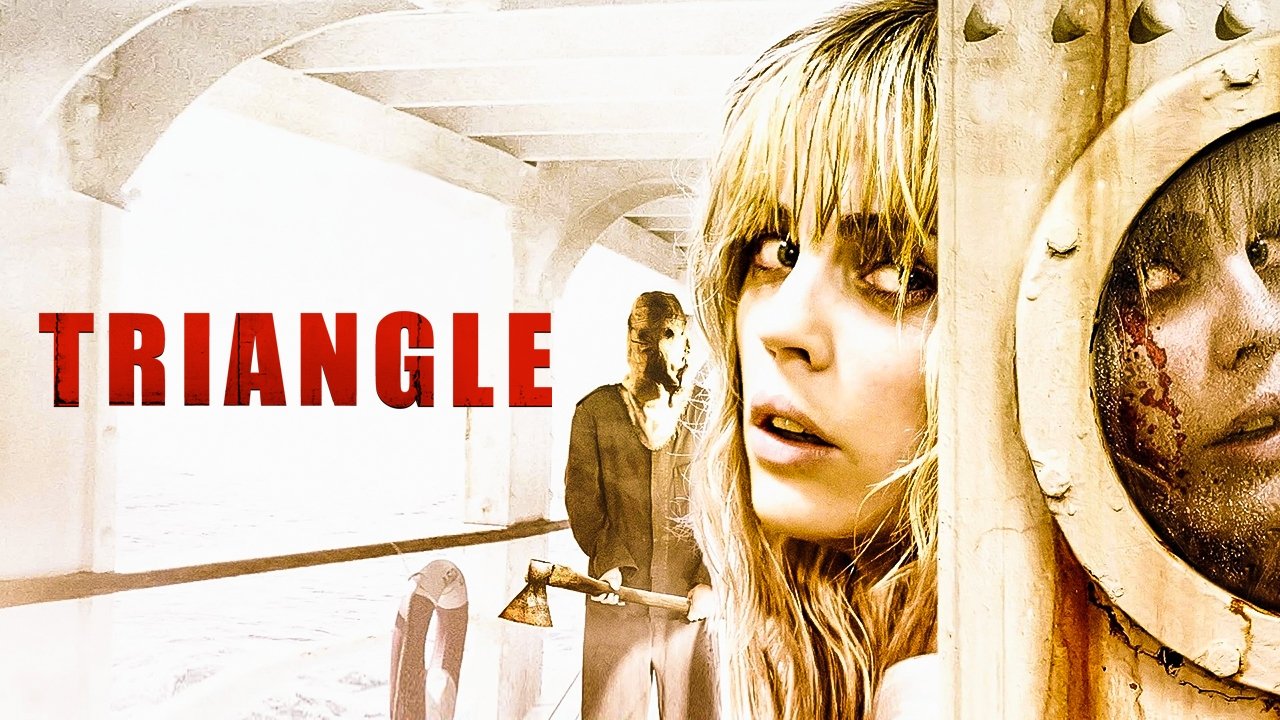
The abandoned ship Aeolus isn’t just a setting—it’s a character, a living entity that breathes salt and despair. When the group of friends—Jess, Greg, Sally, Downey, Heather, and little Tommy—board the vessel, Robert Humphreys’ camera becomes a predator. The framing is claustrophobic, with low angles turning hallways into gaping maws and mirrors into portals to another dimension. There’s one shot in particular, when Jess discovers the message scrawled in blood on the bathroom mirror—"Kill someone or die"—that’s pure horror cinema: the camera creeps forward slowly, as if the ship itself is dragging her toward the reflection, and suddenly the mirror no longer shows what it should. That moment, cold and calculated, sums up what this film does right: it toys with genre expectations without falling into tired clichés.
But not everything is a technical triumph. Triangle drinks from sources that are far too obvious: the abandoned ship inevitably recalls Event Horizon, the time loop evokes Groundhog Day on steroids, and the human-hunting premise reeks of The Most Dangerous Game. What saves the film from being a mere retread is its obsession with repetition. Smith doesn’t settle for a single plot twist—he beats us over the head with it again and again, as if he wants us to feel the same exhaustion as Jess. And damn, does he succeed. Every time the plot takes a sharp turn—and it does every twenty minutes—the viewer feels like they’ve been punched in the gut. The problem is, after the third punch, you start wondering if watching isn’t just masochism at this point.
Analytical Breakdown
#### Direction and Mise-en-Scène: Smith’s Labyrinth
Christopher Smith isn’t a subtle director, but that’s not necessarily a flaw. In Triangle, his style is like a jackhammer: loud, relentless, and effective. Smith understands that psychological horror isn’t about what you see—it’s about what you sense. That’s why he fills the screen with unsettling details: the ticking of a clock that shouldn’t exist, the sound of footsteps on deck when no one’s there, the stench of rot that seems to seep into every frame. There’s a sequence where Jess chases her own doppelgänger through the ship’s hallways that’s pure Hitchcock: the tension builds drop by drop until the climax erupts in a bloodbath that, ironically, isn’t as shocking as the wait.
Smith’s greatest achievement is his handling of time. The film doesn’t just repeat scenes—it deconstructs them, distorts them, turns them into something new. Each iteration of the time loop reveals a hidden detail, a gesture we overlooked, a line of dialogue that now takes on a different meaning. It’s as if Smith is forcing us to watch the film over and over, but without the comfort of a rewind button. The problem is, after the third repetition, the trick loses steam. The viewer starts feeling trapped in their own time loop, watching Jess make the same mistakes again and again, wondering when the hell this will end.
The use of sound is another of the film’s strengths. Christian Henson’s score is minimalist but effective: long, dissonant notes that burrow into the brain like needles. But where the sound design truly shines is in the silences. There are moments when the only sounds are the creaking of the ship’s wood or Jess’s ragged breathing, and those instances are more terrifying than any jump scare. Smith proves that horror doesn’t need screams or loud effects—sometimes, all it takes is the sound of a shaky breath to make the audience grip their seats.
#### Performances: Melissa George and the Weight of Madness
The cast of Triangle is a double-edged sword. On one hand, we have Melissa George, whose portrayal of Jess is the film’s beating heart. George doesn’t just scream and cry—she builds a character who oscillates between determination and despair with a naturalism that’s downright chilling. There’s a scene where Jess, after discovering she’s killed her own son, collapses on deck. There’s no histrionics, no overacting—just a broken woman, hollow-eyed and trembling, trying to process the impossible. That moment is pure method acting, and George nails it.
The rest of the cast, however, is functional at best and flat at worst. Michael Dorman, who plays Greg, has charisma, but his character is little more than a cliché of the “action man” trope, there to move the plot along. The others—Sally, Downey, Heather—are mere archetypes: the hysterical girl, the rational guy, the overprotective mother. There’s no nuance, no development, just cogs in a machine that Smith needs to keep his horror engine running. It’s a shame, because with a little more depth, Triangle could’ve been a flawless film. As it stands, the supporting characters are like the ship’s sets: impressive at first glance, but hollow beneath the surface.
#### Technical Aspects: When Form Becomes Substance
Robert Humphreys’ cinematography is, without a doubt, Triangle’s crowning achievement. Humphreys doesn’t just light the scene—he paints with light and shadow, creating a world where the real and the surreal blur together-la-cueva-de-los-espejos-rotos" class="text-amber-400 font-black hover:text-amber-300 transition underline decoration-amber-500/40 hover:decoration-amber-300" title="[6.5/10 ⚡ Ácido Cítrico] Lee nuestra autopsia de «Together»" data-acid-interlink="together-la-cueva-de-los-espejos-rotos">together. The nighttime shots on deck, with the moon reflecting off the water and shadows stretching like skeletal fingers, are disturbingly beautiful. But where his work truly shines is in the ship’s interiors. The narrow hallways, bathed in a dim, greenish light, look like they’ve been plucked straight from a nightmare. There’s one shot in particular, when Jess descends the stairs to the hold, that’s pure gothic horror: the camera follows her from above, as if something—or someone—is watching her from the shadows. It’s the kind of image that etches itself into your retina, like a tattoo you never asked for but can’t erase.
Stuart Gazzard’s editing is another of the film’s strengths. Gazzard plays with time like it’s putty, stretching and compressing it at will. The transitions between scenes are fluid, almost hypnotic, and the flashbacks—or what seem like flashbacks—are integrated so seamlessly that the viewer is never sure what’s real and what isn’t. The problem is, after a while, the trick becomes predictable. Once you grasp the pattern—Scene A leads to Scene B, which leads to Scene C, which loops back to Scene A—the impact fades. It’s like watching a magic trick for the second time: you know how it’s done, and while you admire the magician’s skill, it no longer surprises you.
Andrew McAlpine’s production design deserves special mention. The Aeolus isn’t just any ship—it’s a character in its own right, with its own personality and secrets. McAlpine fills every nook and cranny with unsettling details: stopped clocks, broken mirrors, messages written in blood. There’s a scene where Jess finds a table set for a dinner that will never happen, and the sight of the covered plates is more terrifying than any monster. It’s the kind of design that makes you want to scrutinize every inch of the frame, as if the key to the mystery is hiding in some overlooked corner.
Christian Henson’s score is the glue that holds all these elements together. It’s not an epic or grandiose soundtrack—it’s subtle, almost subliminal, but effective. Henson uses string instruments to create a constant atmosphere of tension, with high-pitched notes that burrow into the brain like needles. There’s one theme in particular, which plays when Jess discovers the message on the mirror, that’s pure musical anguish. It’s the kind of music that makes you want to cover your ears, but you can’t, because you need to know what happens next.
The best
Robert Humphreys’ cinematography: It’s not just beautiful—it’s narrative. Humphreys turns every shot into a visual nightmare, with a color palette that oscillates between the sickly blue of the sea and the rotting green of the ship. The framing is claustrophobic, almost suffocating, and the play of light and shadow creates a gothic horror atmosphere that recalls The Shining*, but with a salty twist.- Melissa George’s performance: Jess is a complex character, and George plays her with an intensity that borders on uncomfortable. There’s not a single moment where you don’t believe in her desperation, her madness, her determination. It’s the kind of performance that makes you forget you’re watching a movie.
The sound design: From the creaking of the wood to the oppressive silence, Triangle*’s sound department is a masterclass in auditory terror. The moments of silence are as terrifying as the screams, and Henson’s score burrows into your brain like a rusty nail.
The narrative structure: Even if it becomes predictable by the end, the way Smith plays with time and repetition is fascinating. It’s as if Groundhog Day and The Shining* had an illegitimate child, and that child was raised on an abandoned ship.
The worst
- The supporting characters: Sally, Downey, Heather, and the rest of the group are little more than archetypes. There’s no development, no nuance—just cogs in a machine that Smith needs to keep his horror engine running. It’s as if the screenwriter said, “I need a hysterical girl, a rational guy, and a kid who cries. Done!”
The lack of originality: Triangle borrows from sources that are far too obvious. The abandoned ship recalls Event Horizon, the time loop Groundhog Day, and the human hunt The Most Dangerous Game*. It’s not that there’s anything wrong with drawing from the classics, but at least try to hide it.
- The pacing in the second half: The film starts strong, but after the third plot twist, the viewer starts feeling trapped in their own time loop. It’s as if Smith fell so in love with his trick that he didn’t know when to stop.
- The ending: No spoilers, but let’s just say it’s the kind of ending that leaves you with more questions than answers. It’s not necessarily bad—the mystery is part of the charm—but after two hours of tension, you expect something more than a metanarrative wink.
The Verdict of Claqueta Ácida
Triangle is one of those films that works better in the moment than in hindsight. It has moments of pure terror, breathtaking cinematography, and a Melissa George who gives it her all in every frame. But it also has flat characters, uneven pacing, and an ending that, while coherent with its premise, leaves a bitter aftertaste. It’s like an abandoned ship: impressive at first glance, but hollow beneath the surface. It’s not a masterpiece, but it’s not disposable either. If you like narrative puzzles and psychological horror with slasher touches, here’s a film that will keep you awake—and confused—until the wee hours. But don’t expect answers. In Triangle, the questions are more important than the solutions. 💀 tweets_alternativos:- "¿Quién es el verdadero enemigo en #Triangle? ¿Es el barco, la tormenta o algo más siniestro? @christophersmith"
- "La actuación de @melissageorge en #Triangle es impresionante. ¿Puedes sobrevivir en un barco abandonado?"
- "La fotografía de #Triangle es impresionante. ¿Puedes imaginar estar en un barco en medio de la tormenta? @roberthumphreys"
🎬 Tráiler Oficial
Abrir en YouTube
Ficha de Daños Colaterales en Sala
Certificado de impacto psicofísico emitido por Silvia Mordaz
3 amagos en el tramo intermedio; pestañeo pesado en las transiciones más innecesarias.
Minuto 54 y minuto 67 (comprobando cuánto quedaba de suplicio).
2 espresso para no dejarse vencer por la mediocridad cómoda.
"A mitad del segundo acto cuando la subtrama secundaria empezó a pesar más de lo que aportaba."
💬 El Veredicto de la Comunidad
¿Qué te ha parecido la película? Deja tu nota de 0 a 10 para contrastarla con el análisis de la redacción.
Aún no has votado
📢 ¿Te ha gustado el ácido?
Comparte esta crítica con tus amigos cinéfilos o desata la polémica en redes.
⚡ THE CINEMATIC VENOM YOUR INBOX CRAVES
No sugarcoated ratings, no corporate fluff. Subscribe for our uncensored weekly analysis or join the private Telegram for press previews, poll clashes, and instant alerts.
Alertas de estrenos en 1 segundo, encuestas en caliente y audios al salir de pases de prensa.
Recibe la dosis semanal en tu mail + regalo inmediato del PDF con 50 joyas ocultas de culto.
Related Reviews
Recommended autopsies for demanding film buffs.
 ⚡ Ácido Cítrico7.1
28 años después
⚡Afinidad temática directa en atmósfera, estilo y fijaciones visuales.
Una secuela que huele a podrido desde el primer fotograma. Garland y DaCosta intentan revivir el género, pero el resultado es un KO técnico disfrazado de obra maestra.
 ⚡ Ácido Cítrico5.8
**A Serbian Film: The Snuff That Thought It Was Art (and Ended Up a High-School Nightmare)**
⚡Afinidad temática directa en atmósfera, estilo y fijaciones visuales.
**Srđan Spasojević serves up a depravity feast swinging between gratuitous shock and social commentary. Genius or pretentious trash? Claqueta Ácida dissects it with surgical precision.**
 ⚡ Ácido Cítrico6.0
Adolescence, Sex, and Death at Camp Miasma: The Slasher That Reeks of Teen Sweat and a Recycled Script
⚡Afinidad temática directa en atmósfera, estilo y fijaciones visuales.
Jane Schoenbrun turns a summer camp into a dumpster fire of hormones and clichés. Art or autopsy of a dying subgenre?
Editorial Ecosystem
Cinephile connections, archive interviews and related analyses.
💬 Debate Cinéfilo & Autopsia de Lectores
0 veredictos¿Discrepas con nuestra nota? ¿Es una obra maestra o veneno puro? Deja tu veredicto abajo sin necesidad de registro.

Aún nadie ha dejado su veredicto para esta película.
Sé el primero en clavarle el colmillo rellenando el formulario de arriba.