Possession — When Love Rots and Celluloid Bleeds
Żuławski turns a divorce into a flesh-and-psychosis black mass. Isabelle Adjani screams so hard the Berlin Wall shudders. Horror cinema for masochists with impeccable taste.


Possession: full review
1981 Berlin reeks of damp concrete, peeling paint, and the moral rot of a divided world. Andrzej Żuławski, a Polish exile, arrives in the city with one obsession: to film love as a terminal disease. It’s no coincidence Possession is born in this geopolitical limbo, between East and West, where paranoia isn’t a mood—it’s the air you breathe. The Wall isn’t just a backdrop; it’s a mirror for the characters, an open wound reflecting Anna and Marc’s internal fracture. Żuławski doesn’t film a story of jealousy—he stages a black mass where desire turns viscous, monstrous, almost organic. The film premieres at Cannes, Adjani wins Best Actress (the first Frenchwoman to do so), and critics split between ecstasy and horror. No surprise: Possession isn’t watched—it’s endured. It’s cinema in its purest form, unanesthetized, where every frame stings like a gut punch.
The shoot was hell. Żuławski, notorious for his near-sadistic directing methods, pushed Adjani to the brink of collapse. The actress, already intense, plunged into a state of controlled hysteria that left physical scars: she lost weight, fractured a vertebra during the infamous subway scene (yes, that one where she screams like she’s possessed by a thousand demons), and finished filming on the edge of a nervous breakdown. Sam Neill, meanwhile, confessed years later he’d never worked with a director so demanding, nor felt such genuine fear on set. The budget spiraled, Gaumont’s producers threatened to abandon the project, and the final edit became a battlefield between Żuławski and the studio. But the result... the result is one of those films that seem shot in blood, not celluloid. No special effects, no latex monsters, no cheap jump scares. The terror here is intimate, visceral, almost obscene. It’s the terror of watching love rot in real time, of bodies warping under obsession’s weight, of madness not as a mental state but a physical presence lurking in the dark corners of a Berlin apartment.
There’s a single take that encapsulates the entire film: Anna, played by Adjani, runs down a hallway in her apartment while Marc, Sam Neill, chases her. The camera, wielded by Bruno Nuytten with surgical precision, moves like a wounded animal, lurching between furniture, mirroring the characters’ internal chaos. No music, just ragged breathing, hurried footsteps, and the echo of a scream that never fully escapes. It’s a moment of cinema so raw it hurts, like peering through a keyhole at something you shouldn’t see. Żuławski gives no quarter: every frame is a slap, every line of dialogue a stab. And then there’s that thing, that shapeless creature Anna hides in the apartment, that grotesque metaphor for corrupted love slithering across the floor like an aborted fetus. It’s not a horror movie monster—it’s worse. It’s the embodiment of everything Anna can’t say, everything Marc refuses to understand. Horror in its purest form: something born from pain and feeding on it.
The script, written by Żuławski in a creative frenzy, is a nightmare of obsessive repetitions, circular dialogue, and eloquent silences. No classic structure, no clean dramatic arcs, no sympathetic characters. Anna and Marc aren’t heroes or villains; they’re two souls poisoned by the same venom, two sides of the same rotten coin. Żuławski plays with symbolism to exhaustion: the Berlin Wall as a metaphor for marital division, the apartment as a claustrophobic womb, the creature as the unwanted child of a toxic relationship. But the most terrifying thing isn’t what’s said—it’s what’s left unsaid. There’s something in the air of Possession that defies words, something felt on the skin like a shiver. It’s as if Żuławski captured the exact moment love turns to hate, and hate, in turn, into something far darker and more primal.
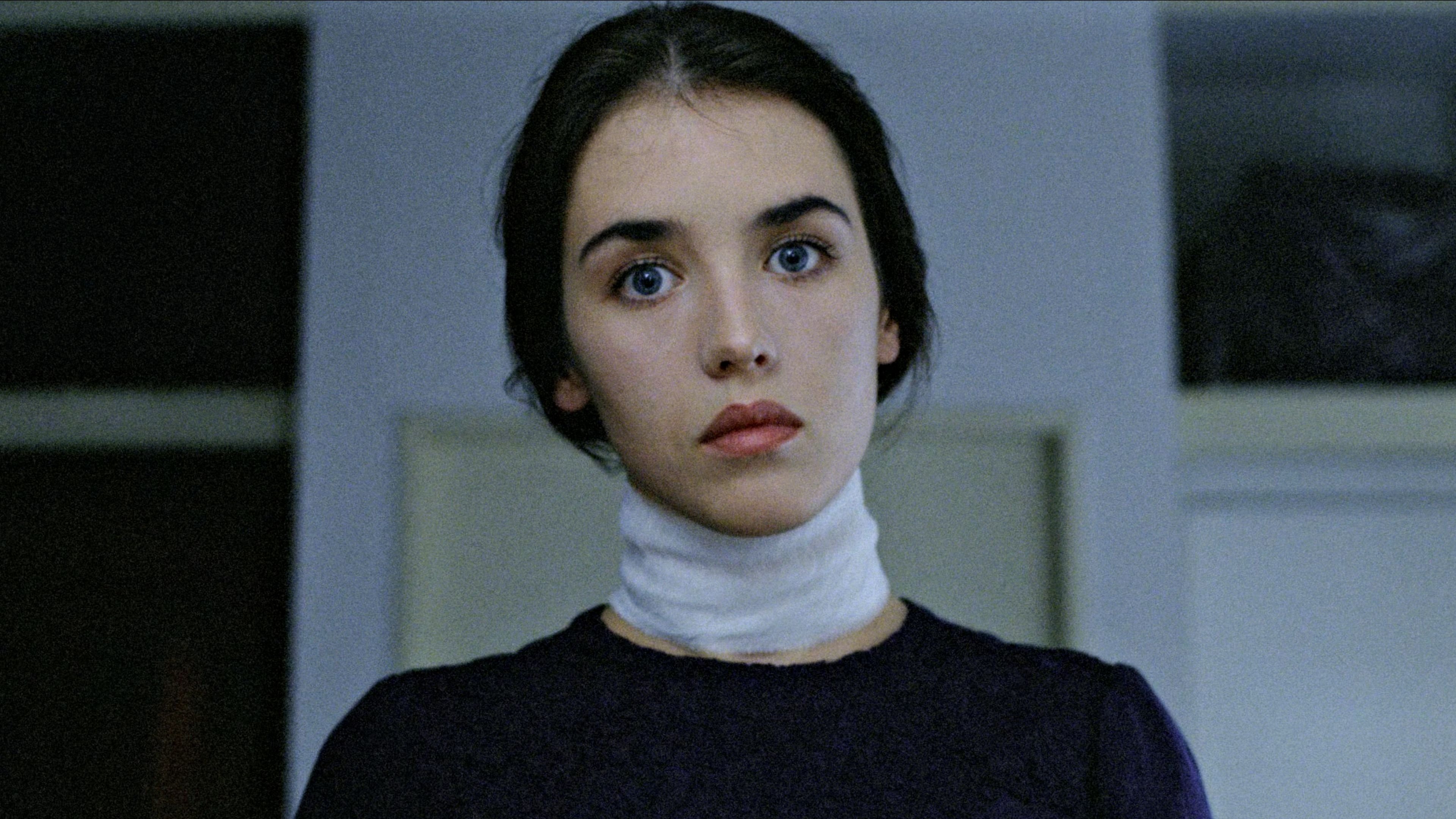
Direction and Mise-en-scène: Chaos as Language
Żuławski doesn’t direct actors—he erodes them. His method is that of a surgeon operating without anesthesia: every take is an open wound, every scene a struggle between control and chaos. The camera doesn’t just record action; it seems alive, almost sick, as if possessed by the same madness consuming the characters. Shots are long, nearly unbearable, and camera movements mimic a racing heartbeat: sometimes frantic, other times slow and ominous, as if the film stock itself is holding its breath. There’s one sequence in Anna’s apartment where the camera circles the actors as they scream, embrace, strike each other. It’s not choreography—it’s a ritual. Żuławski doesn’t seek beauty; he seeks truth, and the truth, in this case, is ugly, filthy, and painful.
The use of color is another key element. Bruno Nuytten, the cinematographer, bathes the film in cold tones: metallic blues, sickly greens, grays that seem to absorb light. The Berlin of Possession isn’t the vibrant city of the 80s—it’s a post-apocalyptic landscape where buildings resemble tombs and streets look like open veins. Even the interiors, with their peeling walls and outdated furniture, exude a gothic decay. Żuławski and Nuytten turn space into another character, a setting that reflects the protagonists’ mental state. And then there’s the red. The red of blood, of passion, of rage. It appears in key moments, like an omen, as if the color itself is warning of what’s to come.
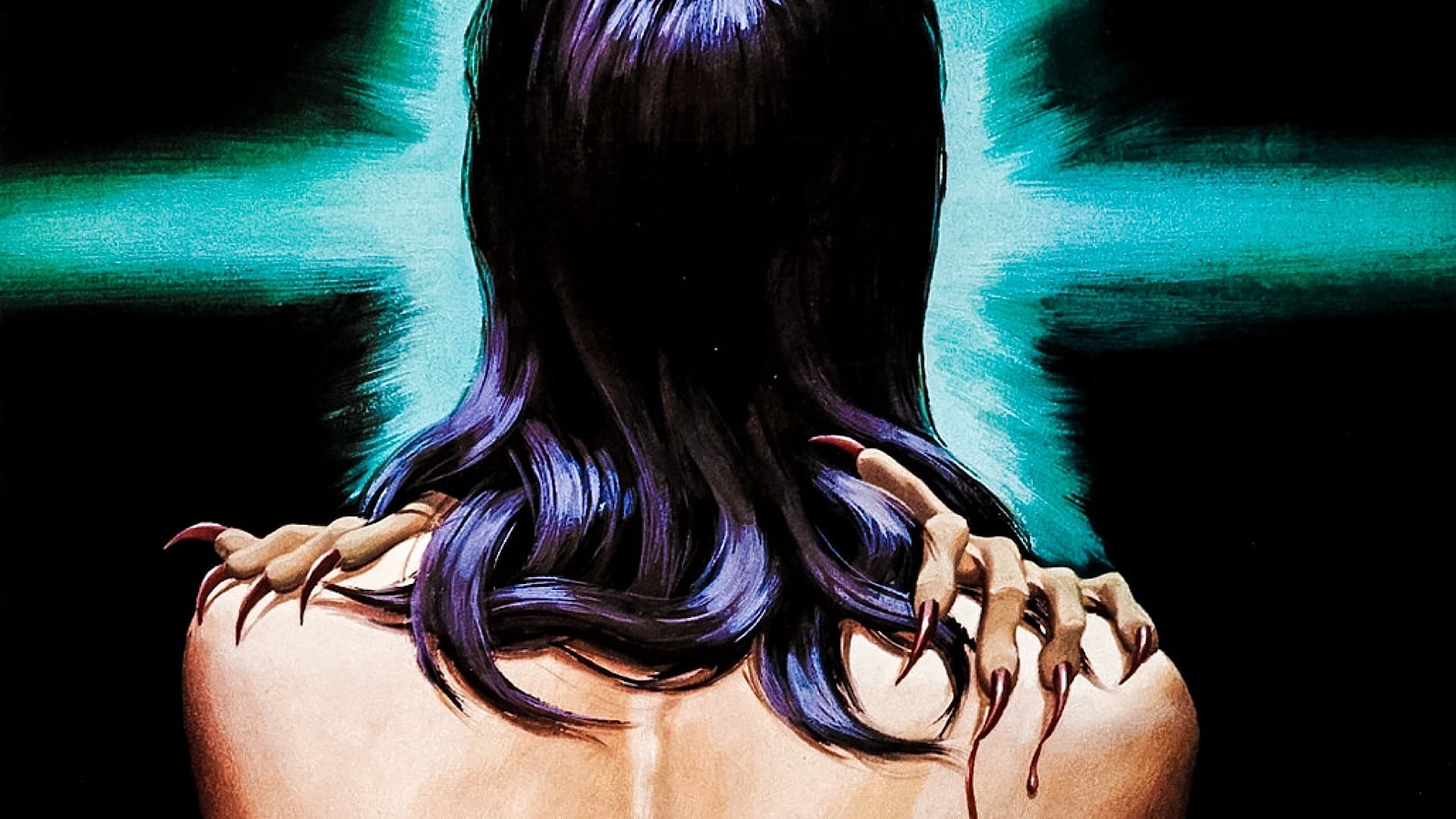
Performances: Adjani and Neill, Forces of Nature
Isabelle Adjani doesn’t play Anna—she becomes her. Her performance is so physical, so visceral, it feels less like acting and more like an exorcism. The subway scene, where Anna screams and writhes on the floor like she’s possessed, isn’t acting—it’s an act of faith. Adjani surrendered to the extreme, to the point where many on set believed she was truly losing her mind. Then there’s Sam Neill, who plays Marc with a fragility that contrasts Adjani’s intensity. Neill doesn’t compete with her; he complements her. His performance is more restrained, but no less powerful. Marc is a shattered man, a ghost drifting through his own life, and Neill portrays him with a rawness that stings. When the two share the screen, the tension is unbearable. They’re not a couple—they’re two wounded animals tearing into each other.
The rest of the cast delivers, especially Margit Carstensen, who plays Marc’s lover with calculated coldness. Carstensen, a Fassbinder muse, brings a gritty realism to the film, like the voice of reason amid the chaos. But even she pales next to Adjani, whose character eclipses everything else. It’s not just about screen time—it’s about presence. Adjani doesn’t act for the camera; she acts for the audience, as if she wants to drag us into her personal nightmare.
The best
- Isabelle Adjani’s performance: A performance that transcends cinema. Her subway scene isn’t just one of the greatest horror sequences in history—it’s a moment of pure art, where pain and beauty fuse into something almost unbearable. Adjani doesn’t play a possessed woman; she plays a woman devoured by her own demons.
- Bruno Nuytten’s cinematography: Every frame is an Expressionist painting. Nuytten turns 80s Berlin into a nightmare landscape, where cold colors and unbalanced shots reflect the characters’ internal chaos. The light doesn’t illuminate—it accuses.
- Żuławski’s script: An obsessive, circular, almost hypnotic text. Żuławski doesn’t write dialogue—he writes spells. Every line seems designed to poison the viewer, to drag them into the same spiral of madness consuming Anna and Marc.
- The creature: Not a latex monster, but something far more terrifying: a living metaphor for corrupted love. Its design is grotesque, almost abstract, and its on-screen presence so uncomfortable it feels plucked from a real nightmare.
- The editing: The film breathes, pulses, writhes. The editing isn’t linear—it’s organic, as if the film itself is alive. The cuts aren’t transitions—they’re spasms.
The worst
- The pacing in the second half: The film loses steam in the last 30 minutes. Żuławski seems so obsessed with his own vision he forgets the audience needs to breathe. Some passages feel repetitive, like the director is circling the same point without moving forward.
- Some supporting performances: While Adjani and Neill are on another level, some supporting actors seem lost, as if they don’t know what to do with their characters. Margit Carstensen holds her own, but others, like Heinz Bennent, fade into the background.
- Excessive symbolism: Żuławski leaves nothing to chance, and sometimes that works against him. There are moments when the film feels more like a psychoanalytic treatise than a horror story, and the overload of metaphors can be exhausting.
- The resolution: The ending is abrupt, almost as if Żuławski grew tired of his own film. It’s not bad, but it’s disorienting, like the director decided to end the story suddenly, without warning.
The Verdict of Claqueta Ácida
Possession isn’t a film—it’s a ritual. Żuławski doesn’t shoot a horror story—he stages an exorcism in 35mm, where celluloid bleeds and actors hemorrhage on screen. Isabelle Adjani screams so hard the Berlin Wall seems to tremble, and Sam Neill crawls like a ghost through his own life. This isn’t cinema for everyone—it’s cinema for masochists with refined taste, for those who believe art should hurt. There are moments when the film drowns in its own symbolism, and others when it feels like the director lost control. But when it works, Possession is a masterpiece of psychological horror, a nightmare so real it feels etched into the collective memory. I don’t recommend it—I prescribe it. Like a necessary poison. 💀
tweets_alternativos:
- "Andrzej Żuławski (@zuławski_film) convirtió el Berlín dividido en un manicomio gótico. La posesión es el único filme donde el Muro de Berlín parece menos loco que los personajes. #CinePolaco"
- "Isabelle Adjani (@isabelleadjani) en La posesión: 10 minutos de gritos, babas y espasmos. El Oscar se lo dieron por Camille Claudel, pero esto es ACTUAR. #ActricesDeLeyenda"
- "Gaumont (@Gaumont) produjo esta joya en 1981 y aún no se recupera del susto. La posesión es lo que pasa cuando el terror psicológico se cruza con el expresionismo alemán y un director polaco en plena crisis existencial. #CineDeAutor"
🎬 Tráiler Oficial
Abrir en YouTube
Possession: frequently asked questions
- What is the rating of "Possession" on Claqueta Ácida?
- "Possession" scored 9.2/10 on Claqueta Ácida in the review by Lúa Ácida.
- Is "Possession" worth watching?
- Yes. We gave it 9.2/10 (Nuclear Fusion), our rating for must-see films.
- Who directed "Possession"?
- "Possession" was directed by Andrzej Żuławski.
Theater Collateral Damage Report
Psychophysical impact certificate issued by Lúa Ácida
Cero bostezos. Pupilas dilatadas y tensión mandibular constante.
Ni una sola mirada al móvil.
Ninguna. Guarda el café para la sesión siguiente.
"Inexistente: pulso de hierro hasta los créditos finales."
💬 Community Verdict
What did you think of the film? Rate it from 0 to 10 to compare it with the editorial review.
You haven't voted yet
📢 ¿Te ha gustado el ácido?
Comparte esta crítica con tus amigos cinéfilos o desata la polémica en redes.
⚡ THE CINEMATIC VENOM YOUR INBOX CRAVES
No sugarcoated ratings, no corporate fluff. Subscribe for our uncensored weekly analysis or join the private Telegram for press previews, poll clashes, and instant alerts.
Alertas de estrenos en 1 segundo, encuestas en caliente y audios al salir de pases de prensa.
Recibe la dosis semanal en tu mail + regalo inmediato del PDF con 50 joyas ocultas de culto.
Related Reviews
Recommended autopsies for demanding film buffs.
 🔥 Fusión Nuclear 9.2
 The Fly: Cronenberg and the Art of Turning Love into Pus
⚡ Afinidad temática directa en atmósfera, estilo y fijaciones visuales.
David Cronenberg delivers a masterpiece of body horror that transforms Jeff Goldblum into an insect with a human soul. Revolting, poetic, and profoundly heartbreaking.
 🔥 Fusión Nuclear 9.0
 A Nightmare on Elm Street: The Night Cinema Learned to Dream in Blades
⚡ Afinidad temática directa en atmósfera, estilo y fijaciones visuales.
Wes Craven unleashes terror’s most stylish monster: Freddy Krueger, the wet dream of the American nightmare. 91 minutes of fresh meat and razor-sharp metaphors.
 🔥 Fusión Nuclear 10.0
 *The Thing (1982): John Carpenter’s Frozen Masterpiece of Paranoia and Mutant Flesh*
⚡ Afinidad temática directa en atmósfera, estilo y fijaciones visuales.
John Carpenter delivers his artistic magnum opus in Antarctica, blending Cold War nihilistic distrust with the most unhinged practical effects in cinema history.
Editorial Ecosystem
Cinephile connections, archive interviews and related analyses.
💬 Debate Cinéfilo & Autopsia de Lectores
0 veredictos¿Discrepas con nuestra nota? ¿Es una obra maestra o veneno puro? Deja tu veredicto abajo sin necesidad de registro.


Aún nadie ha dejado su veredicto para esta película.
Sé el primero en clavarle el colmillo rellenando el formulario de arriba.