The Flash — A Lightning Bolt of Incompetence and Scandal
A scathing review of The Flash's spectacular flop and the Hollywood storm it dragged in its wake.

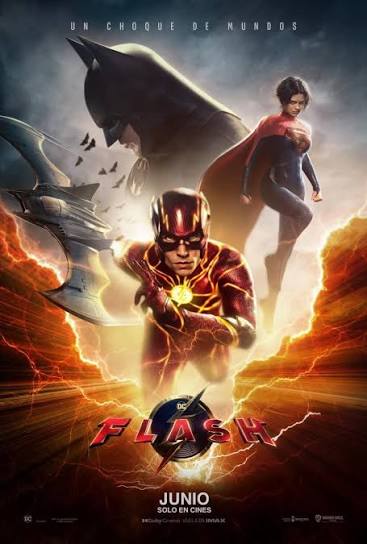


The premise of The Flash was as dazzling as a low-budget camera flash: a superhero who runs too fast and stumbles upon a script that looks like it was scribbled on recycled paper during the writers' strike. What Hollywood’s press hailed as an "epic race" turned out to be a CGI pileup so loud even the Flash himself couldn’t outrun it. As the Claqueta Ácida team sharpens its pencils—trying not to get swept up in the same chaotic adoration—we’re left with a blockbuster that feels like a high school chemistry experiment gone wrong: explosive, stinky, and utterly irresponsible.
Amid the storm of controversies—from director swaps and SAG-AFTRA fallout to Ezra Miller’s off-screen scandals—our magazine stands firm, like the last guard in a watchtower that’s long since lost its purpose. Our job isn’t to proclaim salvation for a film whose theaters were overrun by fans who, in their confusion, mistook the trailer for performance art. No, it’s our duty to expose the chasm between marketing hype and the grim reality of the final product. And while audiences bought popcorn dreaming of a superhero movie worthy of The Dark Knight, what they got was a watered-down version of what DC Comics’ brilliance once was.
A Psychedelic Trip to Absolute Boredom
The Flash’s plot unfolds like a 2,000-piece puzzle missing half its pieces: Barry Allen (Ezra Miller) accidentally time-travels, messes up the timeline, and suddenly finds himself in an alternate universe where Jared Leto’s Joker runs the city and the Justice League looks like it’s been sent to a going-away party. The dialogue, written with all the precision of a freestyle rapper who forgot the rhymes, oscillates between 80s comic-book speak and internet forum slang. Every line feels like a press interview soundbite trying way too hard to be clever.The cast’s lack of charisma is a horror show in itself. Ezra Miller, whose acting chops have been debated as much as their personal life, delivers a performance so flat the camera seems to fear for its own reputation. Michael Keaton, meanwhile, looks like he’s stuck in a 90s telenovela, his over-the-top gestures screaming "actor who’s forgotten what subtlety means." Sasha Calle, the newcomer who should’ve been the film’s ray of light, gets lost in a script that reduces her to a "Damsel in Distress 2.0"—no depth, no motivation. The chemistry between characters is so nonexistent the only spark on screen comes from the actual lightning bolts.
And as if the plot weren’t enough, the script throws the audience into a series of flashbacks that add layers of confusion instead of context—like a poorly edited Inception. Every time jump feels like a cheap excuse to shoehorn cameos from characters who don’t even belong in the same universe. It’s more confusing than a Twitter political debate, and like those debates, it ends in frustration and a nagging sense of wasted time.
B-Movie Aesthetics and Pepsi-Colored Nonsense
Visually, The Flash resembles a B-movie blasted with Instagram filters. Henry Braham’s cinematography, though occasionally evoking Blade Runner’s moody lighting, drowns under a mountain of CGI that looks like it was rendered on an eight-year-old laptop. The special effects don’t elevate the story—they drag it into oblivion. The speedster’s lightning trails flicker like a dying phone’s battery indicator.Director Andy Muschietti, known for It Chapter Two, seems to have traded horror atmosphere for a "merchandising aesthetic." Every scene is drenched in neon colors that scream energy drink ad, with a commercial tone that yells, "Buy the experience, not the plot!" The color palette—all garish reds and electric blues—is so inconsistent you’ll wonder if you’re watching a movie or an office supply catalog.
The production design, far from paying homage to the comics, falls into the trap of copy-pasting ideas from other franchises, creating set pieces that feel generic. The costumes, especially Barry’s iconic red suit, look like a cheap gym hoodie, with zero regard for the character’s legacy. The sound design, meanwhile, seems compressed to fit a streaming algorithm, leaving dialogue that sounds like it was recorded over a washing machine.
The best
- Speed sound effects: Even when the CGI fails, the roar of the Flash’s movement shakes the theater, reminding us that explosions are cinema’s universal language.
- Michael Keaton’s cameo: The ex-Batman brings a shred of dignity to the film; his presence lends scenes a gravitas that makes you think this project might’ve had some seriousness.
- Justice League cameos: Amid the chaos, the brief appearances of Wonder Woman and Aquaman are glimpses of what the movie could’ve been if anyone had listened to actual writers.
The worst
- Script and dialogue: Every line sounds like a Wikipedia summary copy-pasted together-la-cueva-de-los-espejos-rotos" class="text-amber-400 font-black hover:text-amber-300 transition underline decoration-amber-500/40 hover:decoration-amber-300" title="[6.5/10 ⚡ Ácido Cítrico] Lee nuestra autopsia de «Together»" data-acid-interlink="together-la-cueva-de-los-espejos-rotos">together—no humor, no heart, no coherence.
- CGI and visual effects: The special effects are so cheap you’ll wonder if the budget was blown on coffee for the post-production team.
- Off-screen controversies: Ezra Miller’s scandals and the SAG-AFTRA fallout steal the spotlight, leaving the film adrift in a media storm without a captain.
The Verdict of Claqueta Ácida
The Flash is, in short, a masterclass in how not to handle a film project when creative chaos meets a media firestorm. The movie doesn’t just fail at delivering a coherent story—it becomes the stage for this year’s loudest controversies: from the director shuffle to the SAG-AFTRA strike fallout and Miller’s personal scandals. Every element seems chosen not for artistic merit but for its ability to generate headlines and clicks in the age of clickbait. In the vast superhero universe, The Flash stands as a reminder that speed doesn’t equal quality, and running without a narrative compass is a recipe for disaster. If you’re looking for a film that’ll make you question your life choices, here it is—wrapped in a bolt of bad faith and botched execution. 💀Ending Explained: The Flash
Ficha de Daños Colaterales en Sala
Certificado de impacto psicofísico emitido por Lúa Ácida
5 bostezos, 3 con quejido audible distribuidos con inquietante regularidad.
Minuto 20, 32, 40, 75 y varios momentos indistinguibles entre sí.
2 espressos triples o aceptar la derrota con dignidad.
"Desde el primer acto, cuando quedó claro que nadie en la sala de montaje había visto la película completa."
💬 El Veredicto de la Comunidad
¿Qué te ha parecido la película? Deja tu nota de 0 a 10 para contrastarla con el análisis de la redacción.
Aún no has votado
📢 ¿Te ha gustado el ácido?
Comparte esta crítica con tus amigos cinéfilos o desata la polémica en redes.
⚡ THE CINEMATIC VENOM YOUR INBOX CRAVES
No sugarcoated ratings, no corporate fluff. Subscribe for our uncensored weekly analysis or join the private Telegram for press previews, poll clashes, and instant alerts.
Alertas de estrenos en 1 segundo, encuestas en caliente y audios al salir de pases de prensa.
Recibe la dosis semanal en tu mail + regalo inmediato del PDF con 50 joyas ocultas de culto.
Related Reviews
Recommended autopsies for demanding film buffs.
 ⚠️ Ácido Sulfúrico1.2
*Madame Web: The Spiderweb of Cinematic Neglect*
⚡Afinidad temática directa en atmósfera, estilo y fijaciones visuales.
S.J. Clarkson attempts to spin a superhero thriller without superheroes, action, or a script that doesn’t read like it was written by a cheap excuse generator.
 ⚠️ Ácido Sulfúrico3.2
On the Run: A Senseless Sprint
⚡Afinidad temática directa en atmósfera, estilo y fijaciones visuales.
A marathon of clichés and marketing sweat that leaves the audience feeling like they've run in circles. 💀
 ⚠️ Ácido Sulfúrico4.8
Appofeniacs: Silicon Valley’s Hangover in Low-Budget Nightmare Form
⚡Afinidad temática directa en atmósfera, estilo y fijaciones visuales.
Chris Marrs Piliero attempts to exorcise the demons of tech addiction with a script that reads like it was spat out by a TikTok algorithm. The result? A visual hangover more painful than a thousand fake likes.
Editorial Ecosystem
Cinephile connections, archive interviews and related analyses.
💬 Debate Cinéfilo & Autopsia de Lectores
0 veredictos¿Discrepas con nuestra nota? ¿Es una obra maestra o veneno puro? Deja tu veredicto abajo sin necesidad de registro.

Aún nadie ha dejado su veredicto para esta película.
Sé el primero en clavarle el colmillo rellenando el formulario de arriba.