I Spit on Your Grave — The Unfiltered Catharsis of Limitless Revenge
Steven R. Monroe helmed this controversial and savage remake of the 1978 exploitation classic—a raw tale of humiliation, survival, and unflinching vengeance that pulls no punches.

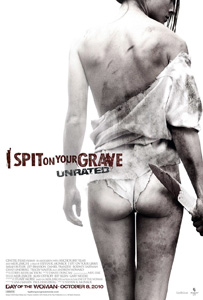

In 2010, the horror genre received a poisoned gift, the kind only grindhouse aficionados know how to savor: the remake of I Spit on Your Grave, directed by Steven R. Monroe, a B-movie craftsman who proved that sometimes, cheap doesn’t just come at an ethical cost—it also fails spectacularly in pure cinematic effectiveness. Monroe dared to resurrect the ghost of Meir Zarchi’s infamous Day of the Woman (1978), a film that, like a bad odor, refuses to fade from cinema’s collective memory. And he did it with a formal austerity bordering on clinical detachment, as if the director had decided that if he was going to wallow in exploitation’s muck, he’d at least do it with a surgeon’s precision and an executioner’s coldness.
The premise is as unyielding as a gravestone: Jennifer Hills (Sarah Butler, delivering a performance that oscillates between superhuman and inhuman), a New York writer with more guts than common sense, rents a secluded cabin in the Louisiana backwoods to pen her first novel. What begins as a spiritual retreat turns into a living hell when a group of local rednecks, led by a corrupt sheriff (Andrew Howard, who seems to have stepped straight out of a "How to Be the Most Despicable Villain in Five Easy Steps" manual), decide Jennifer is the perfect plaything for their sadistic fantasies. The first half of the film is a gauntlet of humiliation, violence, and unrelenting sadism that leaves nothing to the imagination—not even the faintest glimmer of hope. Monroe doesn’t beat around the bush: if you’re going to depict evil in its purest form, do it without anesthesia. And boy, does he ever.
The Anatomy of Revenge: When Pain Becomes (Bloody) Art
What elevates I Spit on Your Grave (2010) above the average rape & revenge flick isn’t just its brutality, but its surgical coldness. Monroe splits the film into two halves that function as the yin and yang of poetic justice: the first is a suffocating portrait of oppression and male cruelty, while the second is a symphony of vengeance so meticulously planned it borders on the artistic. If the first act is a gut punch, the second is a real-time autopsy, where every cut, every wound, every scream is calculated to maximize the viewer’s discomfort.
Jennifer, after barely escaping her tormentors, returns a month later as a vengeful specter. No grand monologues, no speeches about justice—just silence, a glacial stare, and a series of traps as ingenious as they are brutal. Monroe and his practical effects team shine here: from using acid to blind the group’s voyeur (a detail that’s not just painful but symbolically perfect) to rusted bear traps, fishhooks through eyelids, and, of course, the infamous hydraulic compressor scene—disgusting yet inevitable. The most disturbing part isn’t the violence itself, but the absence of music in these sequences. Monroe opts for raw, almost documentary-like sound design, forcing the audience to hear every bone crunch, every whimper of pain, as if they were in the same room as the victims. This is cinema in its purest form: visceral, uncomfortable, and, above all, honest.
Sarah Butler deserves a monument for her performance. It’s not just that she holds her own in physically demanding scenes, but that she conveys Jennifer’s transformation from victim to executioner with a restraint that borders on the supernatural. Her cold, calculating gaze is the perfect mirror to Monroe’s direction: no hysteria, no melodrama—just an implacable determination that makes each death feel, in some twisted way, cathartic. This isn’t blind vengeance; it’s symmetrical justice, where each perpetrator gets exactly what they deserve, multiplied by ten. The voyeur loses his eyes, the sadist is castrated, the ringleader suffers a slow, agonizing demise. It’s as if Jennifer had studied the "How to Inflict Pain with Style" handbook and followed it to the letter.
Southern Hell: Cardboard Villains and Oppressive Atmosphere
But not everything in I Spit on Your Grave is brilliant. The film stumbles—hard—in its portrayal of the antagonists. The rednecks who torment Jennifer are so one-dimensional they might as well have been plucked from a Duck Dynasty episode directed by Ed Gein. There’s no nuance, not even a hint of humanity to make them believable. They’re pure evil, as if Monroe decided that to justify Jennifer’s revenge, her attackers had to be irredeemable monsters. Andrew Howard, as the corrupt sheriff, does what he can with the material, but even he seems aware he’s playing a walking cliché. The problem isn’t that they’re detestable (they are), but that they’re too detestable—as if the screenwriter thought the only way to make the audience root for Jennifer was to turn her enemies into caricatures.
The atmosphere, however, is another story. The Louisiana backwoods become a character in their own right, an oppressive and claustrophobic setting that mirrors Jennifer’s isolation. The cinematography, though modest, effectively conveys that sense of despair, with dark tones and lighting straight out of a nightmare. It’s the kind of film that makes you grateful for the theater’s air conditioning, because the humidity and sweat of the characters seem to seep through the screen.
Odious (But Necessary) Comparisons: Zarchi’s Legacy and Modern Rape & Revenge
Comparing Monroe’s remake to Zarchi’s original is like comparing a scalpel to an axe: both can cause damage, but one does it with surgical precision, the other with primitive brutality. The 1978 I Spit on Your Grave is a rough, amateurish film in the worst sense, but its rage and raw intensity make it unique. Monroe, on the other hand, opts for a more polished, "professional" approach—yet no less effective. If Zarchi was a desperate scream, Monroe is a lethal whisper.
In the modern rape & revenge landscape, I Spit on Your Grave (2010) rubs shoulders with films like Lucky McKee’s The Woman (2011) or Coralie Fargeat’s Revenge (2017), but with a key difference: while the latter explore vengeance through a stylized or even feminist lens, Monroe sticks to showing it in its purest form, without embellishments or justifications. There are no speeches about female oppression, no metaphors about the patriarchy—just pain, revenge, and a coldness that, ironically, ends up being more eloquent than any dialogue.
Conclusion: Exploitation or Art? Spoiler: It’s Both
I Spit on Your Grave (2010) is a film that divides with the precision of a scalpel. For some, it’s gratuitous exploitation that wallows in violence against women only to justify its revenge fantasy. For others, it’s one of the most honest and brutal horror films of the decade—a work unafraid to show horror in its rawest form before delivering a catharsis as satisfying as it is disturbing. Monroe doesn’t judge, doesn’t moralize. He simply shows, and he does it with a detachment that borders on the inhuman.
Is it auteur cinema? No. Is it necessary? Depends on who you ask. But what it undeniably is, is cinema in its purest form: uncomfortable, visceral, and, above all, unforgettable. Like a bad taste you can’t wash out, I Spit on Your Grave lingers long after the credits roll. And maybe that’s its greatest achievement.
finalExplicado: "En el clímax, Jennifer Hills ejecuta una venganza metódica y simétrica: cuelga a uno como lo colgaron a ella, castra al violador principal mientras lo obliga a suplicar, ahoga a otro en un baño de ácido y deja al último empalado y agonizante. La secuencia culmina con ella abandonando a los moribundos sin una palabra, conduciendo hacia el horizonte. Simbólicamente, el desenlace representa la catarsis total y sin redención: el horror sufrido se transforma en un ritual de purificación invertido. Ya no hay justicia legal ni humanidad compartida; solo un equilibrio sangriento donde la víctima se convierte en verdugo divino, purgada de su trauma mediante la aniquilación absoluta de sus agresores. Es la venganza como renacimiento monstruoso."
The Best
- Sarah Butler’s performance: A physical and emotional tour de force so intense you’ll wonder if she actually survived the shoot (or, like Jennifer, returned from the dead to exact revenge).
The Worst
The first act’s relentless brutality: If rape & revenge* isn’t your thing, this film will make you question your love for cinema—or your ability to stomach on-screen hell. Cardboard-cutout villains: The rednecks are so one-dimensional they might as well have been plucked from a Cops* episode directed by a traumatized teenager.The Verdict of Claqueta Ácida (7.2/10)
I Spit on Your Grave is the kind of film that leaves you with a queasy stomach and a troubled conscience, like witnessing a crime and not knowing whether to call the cops or applaud. Steven R. Monroe delivers a modern exploitation piece that, against all odds, transcends its genre to become a cinematic experience as brutal as it is necessary. It’s not for everyone (in fact, it’s not for almost anyone), but if you’ve got the stomach and the mind for it, you’ll find one of the most savage and satisfying catharses in recent horror. Just don’t blame us if you feel the need to shower afterward. Or three times.🎬 Tráiler Oficial
Abrir en YouTube
Ending Explained: I Spit on Your Grave
Ficha de Daños Colaterales en Sala
Certificado de impacto psicofísico emitido por Camilo K.O.
1 amago en el tramo intermedio; pestañeo pesado en las transiciones más innecesarias.
Minuto 48 y minuto 86 (comprobando cuánto quedaba de suplicio).
1 espresso para no dejarse vencer por la mediocridad cómoda.
"A mitad del segundo acto cuando la subtrama secundaria empezó a pesar más de lo que aportaba."
💬 El Veredicto de la Comunidad
¿Qué te ha parecido la película? Deja tu nota de 0 a 10 para contrastarla con el análisis de la redacción.
Aún no has votado
📢 ¿Te ha gustado el ácido?
Comparte esta crítica con tus amigos cinéfilos o desata la polémica en redes.
⚡ THE CINEMATIC VENOM YOUR INBOX CRAVES
No sugarcoated ratings, no corporate fluff. Subscribe for our uncensored weekly analysis or join the private Telegram for press previews, poll clashes, and instant alerts.
Alertas de estrenos en 1 segundo, encuestas en caliente y audios al salir de pases de prensa.
Recibe la dosis semanal en tu mail + regalo inmediato del PDF con 50 joyas ocultas de culto.
Related Reviews
Recommended autopsies for demanding film buffs.
 ⚡ Ácido Cítrico7.1
28 años después
⚡Afinidad temática directa en atmósfera, estilo y fijaciones visuales.
Una secuela que huele a podrido desde el primer fotograma. Garland y DaCosta intentan revivir el género, pero el resultado es un KO técnico disfrazado de obra maestra.
 ⚡ Ácido Cítrico5.8
**A Serbian Film: The Snuff That Thought It Was Art (and Ended Up a High-School Nightmare)**
⚡Afinidad temática directa en atmósfera, estilo y fijaciones visuales.
**Srđan Spasojević serves up a depravity feast swinging between gratuitous shock and social commentary. Genius or pretentious trash? Claqueta Ácida dissects it with surgical precision.**
 ⚡ Ácido Cítrico6.0
Adolescence, Sex, and Death at Camp Miasma: The Slasher That Reeks of Teen Sweat and a Recycled Script
⚡Afinidad temática directa en atmósfera, estilo y fijaciones visuales.
Jane Schoenbrun turns a summer camp into a dumpster fire of hormones and clichés. Art or autopsy of a dying subgenre?
Editorial Ecosystem
Cinephile connections, archive interviews and related analyses.
💬 Debate Cinéfilo & Autopsia de Lectores
0 veredictos¿Discrepas con nuestra nota? ¿Es una obra maestra o veneno puro? Deja tu veredicto abajo sin necesidad de registro.


Aún nadie ha dejado su veredicto para esta película.
Sé el primero en clavarle el colmillo rellenando el formulario de arriba.