Killing God — The Absurd Apocalypse of Family Misery
Caye Casas made her directorial debut alongside Albert Pintó in this hilarious, cruel, and pitch-black satirical farce where God is a dwarf vagrant forcing a dysfunctional family to choose the end of the world.




Killing God: When the Apocalypse Smells Like Cheap Wine and Family Resentment
In a Spanish film landscape so fond of self-indulgent tearjerkers and postcard-perfect local color, Killing God (2017) erupts like a sulfurous belch at a black-tie dinner. In their feature debut, Caye Casas and Albert Pintó don’t just spit in the face of political correctness—they smash it with a butcher’s cleaver, douse it in rotgut orujo, and serve it on a rusted tin platter. Winner of the Audience Award at Sitges—a festival where the grotesque is applauded with the same fervor as the bathroom vomit—this black comedy is a masterclass in nihilistic humor that turns the end of the world into the worst New Year’s Eve special in history.
The premise, as absurd as it is brilliant, is the cinematic equivalent of finding a diamond in a dumpster: what would you do if God, in the form of a drunk, dwarf vagrant, announced humanity’s minutes were numbered and you, alongside your family of psychopaths, had to decide who deserved salvation? In Casas and Pintó’s universe, the answer is simple: the same thing you’d do at any family dinner, but with 20% more hysteria and 100% more betrayal. Shot with the modesty of a short film’s budget but the ambition of a Dogme 95 manifesto penned by the writers of Aquí no hay quien viva, the film proves that hell isn’t other people—it’s your own flesh and blood arguing over who gets the last prawn.
finalExplicado: "En el clímax, la familia disfuncional, acorralada y degradada hasta el límite, decide colectivamente matar a Dios (el vagabundo enano que los ha estado humillando y obligando a elegir). Lo apalean, lo apuñalan y lo rematan con saña animal en un estallido de violencia catártica y ridícula dentro de la casa. Simbólicamente, el desenlace significa que el verdadero apocalipsis no es divino ni grandioso, sino miserable y doméstico: la humanidad no necesita a Dios para destruirse, solo requiere su propia miseria, resentimiento y mediocridad familiar. Matar a Dios no libera ni redime; solo confirma que ya vivían en el infierno y que ellos mismos son los verdugos."
The Farmhouse as an Existential Boxing Ring: Direction and Atmosphere
Caye Casas, who later gifted us the claustrophobic nightmare of The Coffee Table, already made it clear in Killing God that her obsession was trapping characters in oppressive spaces and forcing them to devour each other. The Catalan farmhouse where the action unfolds isn’t just a setting—it’s a character in its own right: damp, dark, with walls that sweat resentment and a moldy stench that seems to seep through the screen. Instead of hiding budgetary limitations, the directors embrace them with shameless gusto, turning technical modesty into a punk virtue. The lighting, flat and yellowish like a roadside bar at 3 AM, reinforces the feeling that we’re watching a reality show from hell, where contestants aren’t vying for a prize but for the dubious honor of not being the first tossed into the moral bonfire.
The editing is brisk and uncompromising, reminiscent of Álex de la Iglesia at his rowdiest (The Day of the Beast, Common Wealth), with tight shots that amplify the chaos and overlapping dialogue like a cockfight. The soundtrack, sparse but effective, is limited to a few Spanish guitar chords that sound like they were played by a drunk busker, which fits the film’s tone perfectly: this isn’t cinema; it’s a bar brawl filmed on a bystander’s phone who didn’t pay for a ticket.
The Cast: God, Losers, and a Saint in Hell
If anything saves Killing God from being a mere festival footnote, it’s the cast—a troupe of actors who seem to have signed a pact with the devil to portray the most wretched, selfish, and pathetic beings in the universe. Eduardo Antuña, as Carlos, embodies the chronic loser with the same ease others breathe: his character is a compendium of professional, marital, and existential frustrations, a man who hates his family with the same intensity he hates himself. David Pareja, as the divorced and depressed brother, is the perfect foil—his character is so insufferable you start to understand why God wants to wipe humanity off the map.
But if any actor steals the film with the same effortlessness God steals souls, it’s Emilio Gavira. His portrayal of God is a masterpiece of physical and verbal comedy: an omnipotent being who behaves like a divine influencer, oscillating between ridiculous solemnity and absolute cynicism. Gavira, with his stature and booming voice, makes God feel less like an abstract concept and more like that annoying neighbor who throws a party in your house without warning. His chemistry with the rest of the cast is explosive, especially with Itziar Castro, whose character, Ana, is the only one clinging to a shred of humanity amid the chaos. Castro, in one of her final roles before her tragic death, proves why she was one of Spanish cinema’s most versatile actresses: capable of shifting from laughter to tears in a second, her Ana is the beating heart of a film otherwise written by a committee of misanthropes.
Screenplay: Dialogue That Tastes Like Vinegar and Truth
The script of Killing God is a manual on how to write black comedy without resorting to cheap gags or preachy morals. The dialogue, sharp as kitchen knives, blends Berlanga’s acidic humor with the cruelty of Fargo and the absurdity of Monty Python. Every line seems designed to unsettle, to remind us that humans are, at their core, selfish animals who only think of survival. The family arguments, far from clichés, feel real because no one in this film says what they mean; they lie, manipulate, and betray with the naturalness of breathing.
The central dilemma—choosing the four survivors of the Apocalypse—is the perfect excuse to explore the darkest corners of human psychology. Would you save your dying father or your lover? Your brother or your best friend? Or would you ensure no one else survives just to avoid sharing the new world? The film doesn’t judge its characters; it simply drops them into a scenario and lets them tear each other apart, like a Battle Royale but with more wine and less blood. The result is a ferocious satire of Spanish society, where hypocrisy, machismo, and cowardice hold hands under the guise of "family unity."
Cinematic Comparisons: From Berlanga to The Invitation
Killing God draws from sources as varied as Spanish farce, existential horror, and Anglo-Saxon black comedy, but it synthesizes them into something unique. If Buñuel’s The Exterminating Angel (1962) explored the social claustrophobia of the bourgeoisie trapped at a dinner party, Killing God does the same but with Spain’s lower-middle class—those who survive on Tupperware and resentment. If Lars von Trier’s Dogville (2003) stripped bare human cruelty in a minimalist setting, this film does likewise but with more shouting and fewer philosophical pretensions.
There are also echoes of The Invitation (2015), that indie thriller where a dinner party turns into a nightmare, though Killing God prefers to laugh with (or at) its characters rather than scare us. And, of course, there’s the unmistakable DNA of Álex de la Iglesia, especially in his rowdiest phase, where the grotesque and the poetic dance in a macabre waltz. But what’s most interesting is how the film was ahead of its time: in an era where dark humor and social satire are staples in shows like The White Lotus or Succession, Killing God feels like a lab experiment—a rarity that, instead of aging, grows more relevant with each passing year.
The best
- The bargain-basement theological premise: A dwarf, drunk, and capricious God announcing the Apocalypse while scarfing down prawns. What more could you ask for in life, except for it to end already?
- Emilio Gavira, or how to make God seem like the sanest character in the film: His performance is as hilarious as it is terrifying, like the Creator decided to spend His vacation in Benidorm.
The worst
The "homemade" production values: Some sets look like they were lifted from a small-town escape room, and the flat lighting in the second act makes the farmhouse resemble a Big Brother* set in its cheapest season.
- The unnecessary subplots: The infidelities and domestic recriminations are so predictable you’ll start praying for the Apocalypse just to avoid another monologue about "what could’ve been."
The Verdict of Claqueta Ácida (8.4/10)
Killing God is the cinematic equivalent of a bad-taste joke that, against all odds, makes you laugh until you cry: a black comedy that dismantles human hypocrisy with the grace of an elephant in a china shop and the depth of a spilled wine puddle. Caye Casas and Albert Pintó debuted with a film that reeks of sweat, resentment, and cheap genius—a work that doesn’t apologize for being uncomfortable but dares you to hold its gaze while it spits in your face. If Spanish cinema had more films like this, maybe God wouldn’t bother destroying the world—we’d have done it ourselves, between laughter and betrayals. 8.4/10, because the Apocalypse has never been this fun.
🎬 Tráiler Oficial
Abrir en YouTube
Ending Explained: Killing God
Ficha de Daños Colaterales en Sala
Certificado de impacto psicofísico emitido por Maximiliano Z.
Ni un solo parpadeo voluntario. El asiento, inusualmente cómodo.
Ninguna comprobación del tiempo. Se agradece la rareza.
Ninguna. Guarda el café para la sesión siguiente.
"No aplica. La obra se sostiene sola."
💬 El Veredicto de la Comunidad
¿Qué te ha parecido la película? Deja tu nota de 0 a 10 para contrastarla con el análisis de la redacción.
Aún no has votado
📢 ¿Te ha gustado el ácido?
Comparte esta crítica con tus amigos cinéfilos o desata la polémica en redes.
⚡ THE CINEMATIC VENOM YOUR INBOX CRAVES
No sugarcoated ratings, no corporate fluff. Subscribe for our uncensored weekly analysis or join the private Telegram for press previews, poll clashes, and instant alerts.
Alertas de estrenos en 1 segundo, encuestas en caliente y audios al salir de pases de prensa.
Recibe la dosis semanal en tu mail + regalo inmediato del PDF con 50 joyas ocultas de culto.
Related Reviews
Recommended autopsies for demanding film buffs.
 ⚡ Ácido Cítrico7.5
**"They Will Kill You": A Blood-Soaked Love Letter to Chaos (And Your Sanity)**
⚡Hermana de saga: otro capítulo diseccionado con rigor forense.
Claqueta Ácida’s scathing, sarcastic take on *They Will Kill You*—where Manhattan’s elite throw the goriest housewarming party in cinematic history.
 🔥 Fusión Nuclear9.0
**"The Coffee Table: The Ultimate Domestic Horror—Bought on Installment Plan"**
⚡Del mismo director (Caye Casas): analiza la evolución o degradación de su estilo.
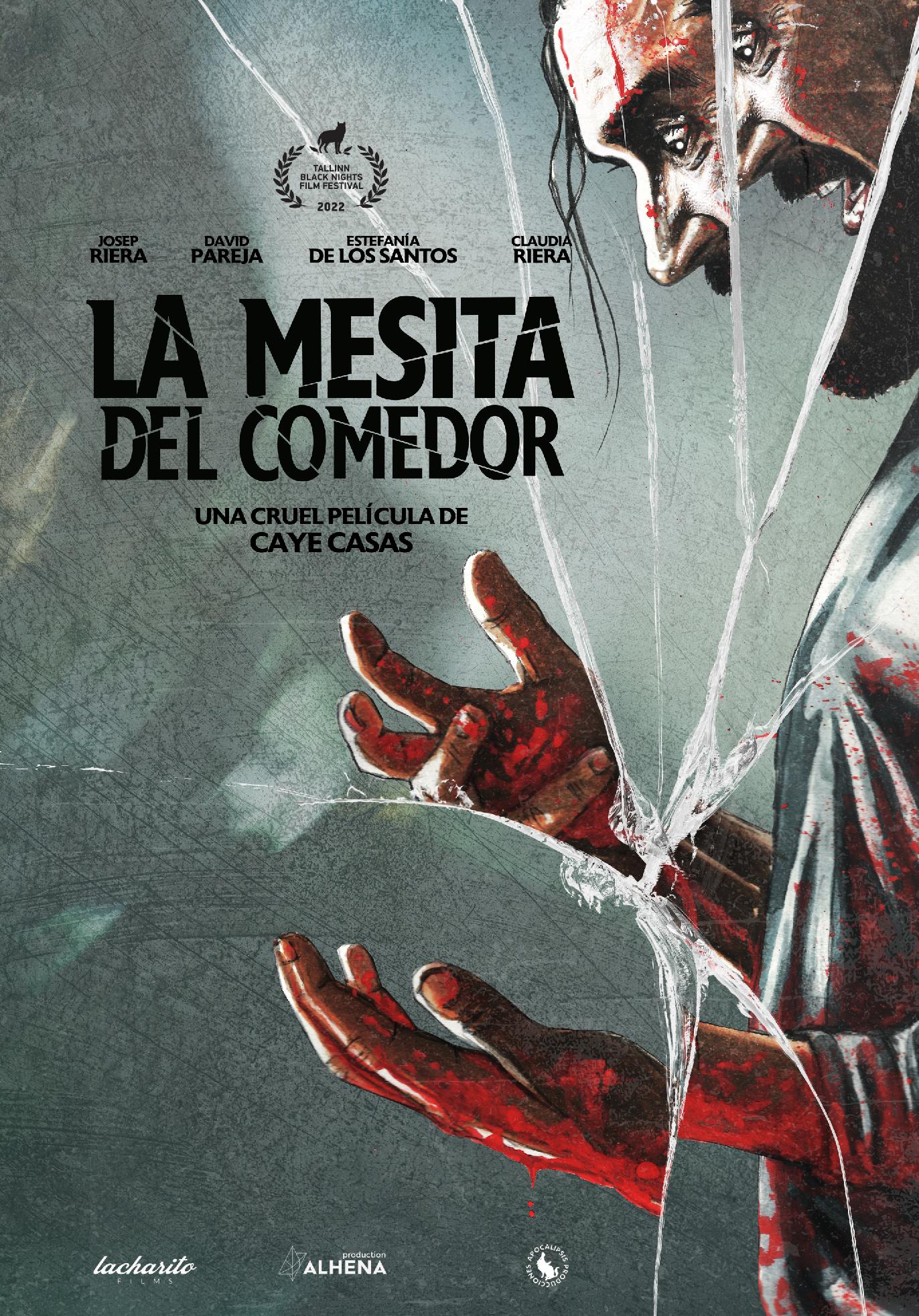
Caye Casas delivers one of the most uncomfortable, cruel, and unbearable black comedies in the history of Spanish cinema—all thanks to a bad decorating decision.
 🔥 Fusión Nuclear8.5
*Alleluia: Love as a Terminal Illness (or How to Turn Crimes of Passion into a Sweaty, Fleshy Spectacle)*
⚡Afinidad temática directa en atmósfera, estilo y fijaciones visuales.
Fabrice Du Welz reimagines the myth of the lonely hearts killers in a feverish whirlwind of jealousy, submission, and blood, led by Lola Dueñas in a performance that’s equal parts hypnotic and harrowing.
Editorial Ecosystem
Cinephile connections, archive interviews and related analyses.
🎞️ In Claqueta Cinematheque1
💬 Debate Cinéfilo & Autopsia de Lectores
0 veredictos¿Discrepas con nuestra nota? ¿Es una obra maestra o veneno puro? Deja tu veredicto abajo sin necesidad de registro.


Aún nadie ha dejado su veredicto para esta película.
Sé el primero en clavarle el colmillo rellenando el formulario de arriba.