Hereditary — The Ultimate Family Grief Marathon (Or How to Turn Your Relatives Into a Satanic Boy Band)
Ari Aster burst onto the horror scene with a devastating, gut-wrenching thesis on inherited grief, maternal madness, and the demon Paimon—because nothing says "family bonding" like ritual decapitations and ancestral curses.

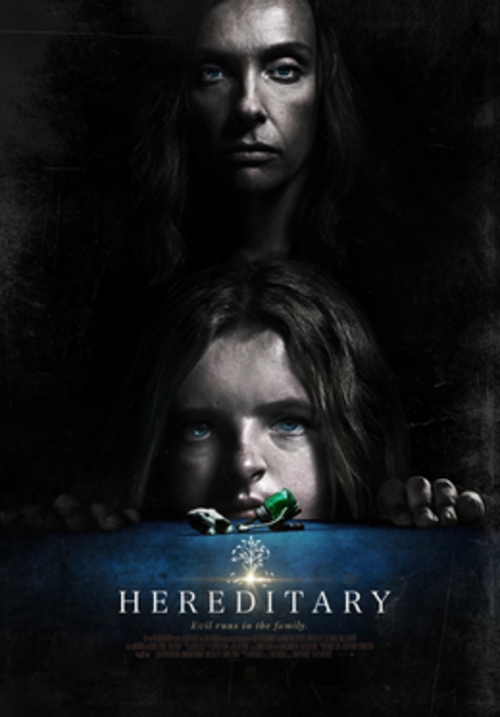

Hereditary isn’t a horror movie. It’s a collective exorcism filmed with the precision of a neurosurgeon and the subtlety of a jackhammer. Ari Aster, that child prodigy of cinematic sadism, didn’t just want to make a debut—he wanted to dynamite horror from its foundations and rebuild it as a Gothic cathedral of familial suffering, where every pillar is a stifled scream and every stained-glass window is a miniature nightmare. And boy, did he succeed. Because Hereditary doesn’t just scare you—it dismantles you, reassembles you with defective parts, and sends you back into the world with the creeping certainty that something, somewhere, has decided your life should be a meticulously choreographed hellscape.
finalExplicado: "La familia Graham es completamente aniquilada. Peter, poseído por el espíritu de Paimon, decapita a su madre Annie y a su hermana Charlie (cuyo cuerpo ya había sido mutilado), y se corona como rey en la casa del árbol junto a un aquelarre que venera el cadáver decapitado de Ellen. El clímax es literal: el demonio Paimon ha logrado su objetivo de encarnarse en un varón de la línea sanguínea. Simbólicamente, el desenlace revela que el duelo nunca fue duelo, sino un ritual milimétricamente orquestado a lo largo de generaciones. El “calvario familiar” era solo el prólogo del apocalipsis doméstico: la locura materna, la culpa y el trauma no eran patologías, sino herramientas demoníacas. La casa de muñecas era el guion; los Graham, simples figuras. El final no es triunfo del mal, sino constatación de que nunca hubo libre albedrío: solo destino genético y satánico."
Grief as the Prologue to the Apocalypse: When Family Is the Real Coven
Aster isn’t in a rush. He knows the most effective terror isn’t the kind that ambushes you—it’s the kind that moves into your couch, pours itself a cup of tea, and watches you sleep. That’s why the first forty minutes of Hereditary are a family drama so suffocating it makes Who’s Afraid of Virginia Woolf? look like an episode of Peppa Pig. The death of Ellen Leigh, the Graham family matriarch, isn’t the inciting incident—it’s the first link in a chain of misfortunes forged over generations in the anvil of guilt and resentment. Annie (Toni Collette, delivering a performance that should be studied in acting schools as the gold standard of method madness and raw, unfiltered agony) is a miniature artist who recreates her life in dollhouse scale, as if shrinking it down could give her control over the chaos. But art, as Aster knows all too well, doesn’t imitate life—life imitates art, and in this case, art is a trap.
Annie’s miniatures aren’t just a hobby—they’re oracles of the inevitable. Every dollhouse, every tiny figure, is a harbinger of what’s to come. When Peter (Alex Wolff, oscillating between teenage apathy and existential horror) accidentally destroys one of her creations, it’s not an accident—it’s the universe laughing at them. Because in Hereditary, free will is an illusion, and every decision the characters make is just another step toward the abyss Ellen Leigh left them as an inheritance.
And then there’s Charlie (Milly Shapiro, a revelation who achieves the impossible: turning innocence into something deeply unsettling). Her presence on screen is eerie from the first frame, not because of what she does, but because of what she doesn’t do. Her silence, her vacant stares, that tongue-click that functions like a metronome of madness—Aster plants these details with the patience of a gardener slowly poisoning a rosebush. When the roadside tragedy arrives—that single-take sequence that leaves you breathless and nauseated at the same time—you realize Charlie wasn’t a child. She was a sacrifice with legs.
The Sound of Hell: When Silence Is Scarier Than a Scream
The terror of Hereditary doesn’t lie in what you see—it lies in what you sense. Aster and cinematographer Pawel Pogorzelski play with darkness like a cat toying with a dying mouse: the lighting is dim, the framing is obsessively symmetrical, and the shadows stretch like fingers trying to drag you into the unknown. But where the film really sinks its claws into your neck is in its sound design.
Charlie’s tongue-click isn’t some cheap jump scare—it’s a leitmotif of horror. That sound, repeated over and over, becomes the soundtrack to your paranoia. It follows you out of the theater, creeps into your dreams, and when you think you’ve forgotten it, you hear it in the silence of your bedroom. And then there’s the silence itself—those moments when the film goes still, like a predator stalking its prey, and all you hear is your own breathing. Aster knows that the deepest fear isn’t the unknown—it’s what’s already inside you, and that’s why Hereditary’s sound isn’t just a narrative tool—it’s a virus.
Colin Stetson’s score, meanwhile, is a sax-and-strings nightmare that sounds like hell’s chamber orchestra tuning up. There are no comforting melodies, no epic themes—just a constant hum, like a swarm of deranged bees, reminding you that something is very, very wrong from the first second. When the film pivots to the occult in its second act, the music doesn’t change—it intensifies, as if the demon Paimon is fine-tuning his instruments for the grand finale.
The Ritual of Despair: When Horror Becomes Opera
This is where Hereditary stops being a movie and becomes a religious experience. The second act, with its slow descent into spiritualism and satanic rituals, has been criticized by some as "too slow." But those critics have missed the point entirely. Aster isn’t making a conventional horror movie—he’s filming an inverse exorcism, where demons aren’t cast out but summoned with surgical precision.
The sequence at Charlie’s funeral, with that god’s-eye shot of the Graham family seated at the table, bathed in otherworldly light, is one of the most terrifying scenes in modern cinema. No music, no dialogue—just the weight of guilt, resentment, and the creeping certainty that something is watching them from the shadows. And then there’s the séance, where Annie, in a desperate attempt to communicate with her dead daughter, opens a door that should have stayed shut. The shot of Peter, possessed, twisting his head 180 degrees isn’t an homage to The Exorcist—it’s a statement of intent. Aster doesn’t want you to be scared—he wants you to shatter.
And then comes the climax. The treehouse. The ritual. The decapitation. The coronation of Paimon. It’s a moment so operatic, so over-the-top yet so flawlessly executed, that all you can do is stare in stunned silence. Some will call it "too much," edging into the ridiculous. But those critics don’t understand that horror doesn’t have to be realistic—it has to be true. And Hereditary is the most uncomfortable truth horror cinema has told in years.
The Legacy of Hereditary: When Horror Becomes Art (And Art Becomes Horror)
Ari Aster didn’t reinvent horror with Hereditary. He unearthed it, dissected it, and stitched it back together-la-cueva-de-los-espejos-rotos" class="text-amber-400 font-black hover:text-amber-300 transition underline decoration-amber-500/40 hover:decoration-amber-300" title="[6.5/10 ⚡ Ácido Cítrico] Lee nuestra autopsia de «Together»" data-acid-interlink="together-la-cueva-de-los-espejos-rotos">together with threads of nightmare. This film is the definitive proof that fear isn’t in monsters, ghosts, or demons—it’s in family, in guilt, in unresolved grief, in that whisper in your ear telling you everything bad that happens is your fault.
Hereditary is the Funny Games of supernatural horror: a film that forces you to look, punishes you for looking, and leaves you permanently scarred. It’s not a movie you "like" or "dislike." It’s a movie that takes up residence in your psyche like a parasite, one that reminds you now and then that it’s still there, watching from the corner of your bedroom ceiling.
And the worst part? There’s no escape. Because in Hereditary, just like in real life, the real horror isn’t what’s chasing you—it’s what you carry inside.
The Best
- Toni Collette’s performance as madness as an extreme sport: If she didn’t win the Oscar for Best Actress, it’s because the Academy is too scared to admit horror can be art (and that Collette could win an Oscar for reading a grocery list with the same intensity).
- The decapitation long take: A scene so brutally executed it makes you question your faith in humanity (and airbags). Ari Aster doesn’t film deaths—he choreographs them like macabre ballets.
The Worst
- The slow burn of the second act (or how to make the audience suffer twice): If you thought grief was painful, wait until Aster forces you to live it in real time, complete with dramatic pauses. Some will call it "atmospheric." Others will call it justified torture.
The Verdict of Claqueta Ácida (9.3/10)
Hereditary isn’t a movie—it’s canned trauma, a celluloid exorcism, a gut-punch with glass boots. Ari Aster debuted like a man who’d spent decades perfecting his cinematic sadism, and the result is a masterpiece of psychological horror that’ll have you side-eyeing the dark corners of your home for weeks. It’s not perfect (nothing is, not even suffering), but it’s so brutally honest in its cruelty that it hurts to admit you loved it. If you leave the theater without feeling like something inside you has been broken forever, it’s because you were already broken to begin with. And that, dear readers, is the true triumph of Hereditary.🎬 Tráiler Oficial
Abrir en YouTube
Ending Explained: Hereditary
Ficha de Daños Colaterales en Sala
Certificado de impacto psicofísico emitido por Dr. Cinismo
Cero. La pantalla absorbió cada segundo de atención disponible.
Ninguna comprobación del tiempo. Se agradece la rareza.
Ninguna: la adrenalina cinematográfica es suficiente.
"Inexistente: pulso de hierro hasta los créditos finales."
💬 El Veredicto de la Comunidad
¿Qué te ha parecido la película? Deja tu nota de 0 a 10 para contrastarla con el análisis de la redacción.
Aún no has votado
📢 ¿Te ha gustado el ácido?
Comparte esta crítica con tus amigos cinéfilos o desata la polémica en redes.
⚡ THE CINEMATIC VENOM YOUR INBOX CRAVES
No sugarcoated ratings, no corporate fluff. Subscribe for our uncensored weekly analysis or join the private Telegram for press previews, poll clashes, and instant alerts.
Alertas de estrenos en 1 segundo, encuestas en caliente y audios al salir de pases de prensa.
Recibe la dosis semanal en tu mail + regalo inmediato del PDF con 50 joyas ocultas de culto.
Related Reviews
Recommended autopsies for demanding film buffs.
 🔥 Fusión Nuclear8.5
*Midsommar: Swedish Couples Therapy in Broad Daylight*
⚡Del mismo director (Ari Aster): analiza la evolución o degradación de su estilo.
Ari Aster proves there’s nothing more terrifying than a Scandinavian folk festival, emotional codependency, and giant flower costumes.
 🔥 Fusión Nuclear8.5
*Alleluia: Love as a Terminal Illness (or How to Turn Crimes of Passion into a Sweaty, Fleshy Spectacle)*
⚡Afinidad temática directa en atmósfera, estilo y fijaciones visuales.
Fabrice Du Welz reimagines the myth of the lonely hearts killers in a feverish whirlwind of jealousy, submission, and blood, led by Lola Dueñas in a performance that’s equal parts hypnotic and harrowing.
 🔥 Fusión Nuclear8.5
*High Tension (Haute Tension): The Brutal Birth of the New French Extremism – Or How to Turn Flesh into Poetry with a Machete*
⚡Afinidad temática directa en atmósfera, estilo y fijaciones visuales.
Alexandre Aja shocked global screens with a relentless rural bloodbath, redefined by breakneck pacing and a divisive twist that splits serious cinephiles right down the middle.
Editorial Ecosystem
Cinephile connections, archive interviews and related analyses.
🎞️ In Claqueta Cinematheque1
💬 Debate Cinéfilo & Autopsia de Lectores
0 veredictos¿Discrepas con nuestra nota? ¿Es una obra maestra o veneno puro? Deja tu veredicto abajo sin necesidad de registro.

Aún nadie ha dejado su veredicto para esta película.
Sé el primero en clavarle el colmillo rellenando el formulario de arriba.