House of Wax — The Horror Museum Hollywood Forgot to Torch
Jaume Collet-Serra turns a promising slasher into a melting wax theme park. Paris Hilton shines—just not with talent.

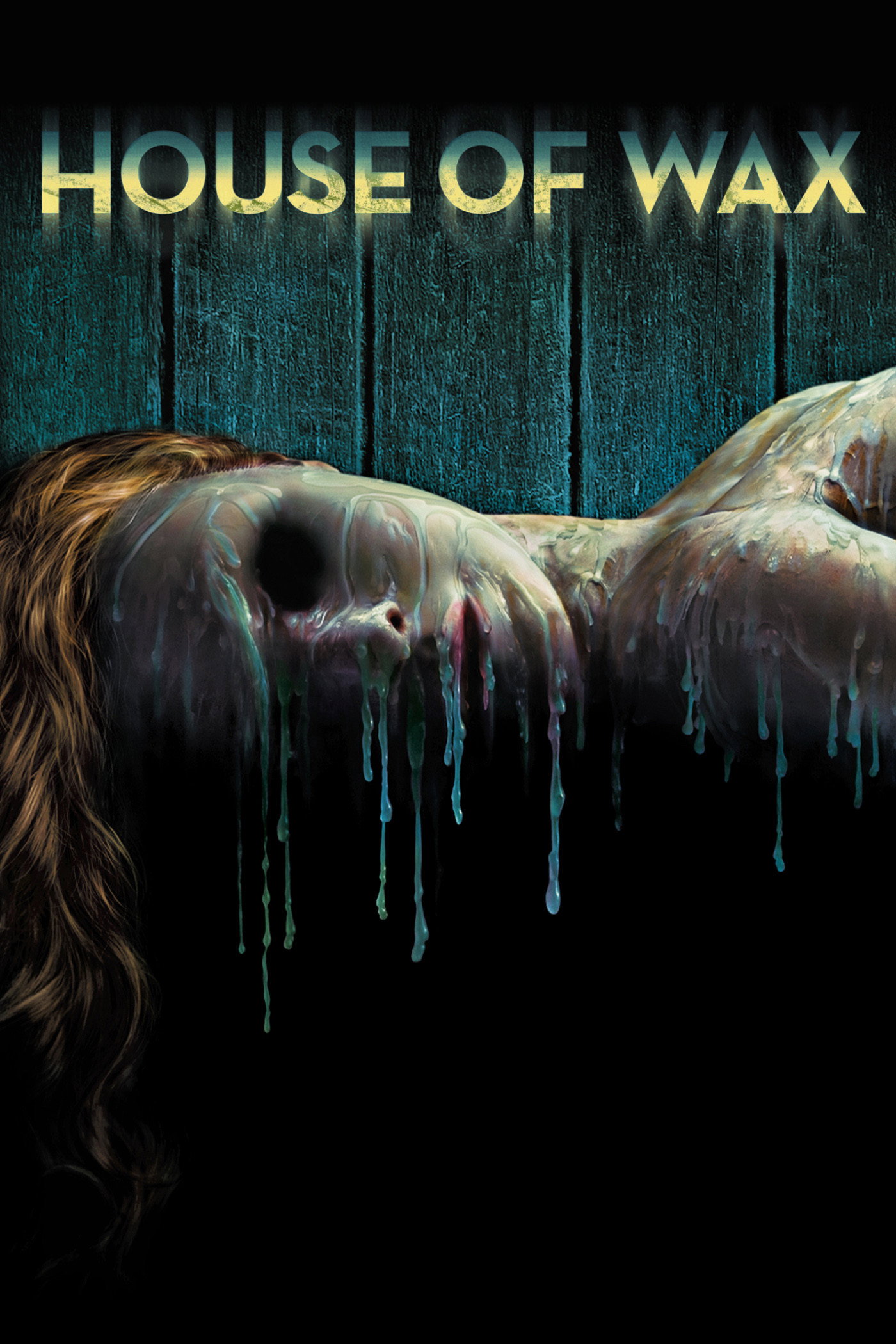

Celluloid melts like the sculptures in House of Wax, and not from the heat of cinematic passion. Back in 2005, when teen horror was still limping between the wreckage of Scream and the rise of '50s classic remakes, Dark Castle Entertainment—that Frankenstein’s lab where old movie corpses are jolted back to life with dollar-shaped defibrillators—decided to resurrect André De Toth’s House of Wax (1953). But hey, in the era of cinematic fast food, why settle for a simple remake when you can serve up a buffet of reheated clichés, cardboard CGI, and a cast that looks like it was plucked from a The O.C. casting call? Jaume Collet-Serra, a director who at the time had yet to prove he could do more than churn out ADHD-friendly teen horror flicks, hopped on board with all the grace of an elephant in a china shop. Or, more accurately, a wax museum.
The project was born under the sign of greed and a total lack of ideas. Village Roadshow Pictures, those patrons of cinema who believe horror is measured in jump scares per minute, saw House of Wax as a golden opportunity to exploit boomer nostalgia and millennial ignorance. The script, penned by Chad Hayes—a guy who probably thought Saw was a masterpiece of psychological suspense—is a compendium of tropes so predictable you could guess every plot twist blindfolded with a bucket of popcorn in hand. But here’s the real horror: at some point, someone thought casting Paris Hilton in a dramatic role was a good idea. Spoiler: it wasn’t. Not even close.
The cultural context of the time didn’t help. We were in the golden age of unnecessary remakes, where Hollywood had confused respect for classics with creative laziness. The Texas Chainsaw Massacre, The Amityville Horror, The Fog—all went under the studio scalpel like patients in an unanesthetized operating room. House of Wax wasn’t the exception, but it was one of the most painful. Because, let’s be honest, the 1953 original wasn’t Citizen Kane, but at least it had the decency to be a product of its time, with a Vincent Price in his prime and a gothic atmosphere that reeked of sweat and old celluloid. The remake, on the other hand, smells like car air freshener and desperation.
Collet-Serra, a director who at the time hadn’t yet discovered that horror could be more than a steroid-pumped slasher, tackled the project with the subtlety of a jackhammer. His visual style, if you can even call it that, is a succession of dark shots where characters move like they’re in a '90s video game, with lighting so flat it looks like it was lifted from an After Effects tutorial. But what did you expect from a guy who came from directing Goal! The Dream Begins? Yeah, that soccer movie no one remembers that, funnily enough, has more rhythm than this mess. House of Wax is the cinematic equivalent of a carnival haunted house: you take a step forward, a dummy jumps out at you, and then you realize it was all a cheap trick. But hey, you paid for the ticket anyway.
finalExplicado: "En el clímax, Vincent (el hermano gemelo de Bo) persigue a Carly hasta el museo de cera. Tras una brutal pelea, ella le clava un arpón en la cabeza y lo arroja desde lo alto. El museo, cubierto de cera derretida, se incendia por completo; las figuras de cera humanas se derriten grotescamente mientras Carly y Nick escapan justo antes de que todo explote en llamas. Simbólicamente, el desenlace representa la purificación total por fuego: el museo, metáfora de una Hollywood que fabrica ilusiones falsas y cadáveres glamorizados, es reducido a nada. La cera derretida revela la putrefacción debajo del artificio, consumiendo al monstruo y su obra. Solo queda la destrucción catártica de lo falso."
Direction: The Art of Leaving No Footprint
Jaume Collet-Serra is a director who seems to have learned his craft in a masterclass taught by Michael Bay on a bad day. His staging in House of Wax is about as subtle as an elephant in a china shop, with a camera that moves like it’s drunk and a sense of pacing that oscillates between unnecessary slow motion and accidental fast-forward. The guy’s hand is so heavy that every shot feels designed to put the audience to sleep before the next jump scare arrives. And it’s not that jump scares are inherently bad—horror thrives on them—but when they’re so predictable that even the neighbor’s cat knows when they’re coming, something’s wrong.
The problem isn’t just the lack of originality; it’s the total absence of atmosphere. House of Wax could take place in any generic ghost town from any teen horror flick, because Collet-Serra doesn’t bother giving the setting any personality. The house itself, that wax museum that should be the epicenter of terror, looks like it was plucked from a Universal Studios backlot, with sets so fake you could stab them with a fork and not draw a drop of blood. But why bother with details when you can just fill the screen with close-ups of generic terrified faces and high-pitched screams?
The director seems more interested in imitating Wes Craven than creating something original, and the result is a movie that feels like a collage of the worst moments from Scream and I Know What You Did Last Summer. There are scenes that outright feel like unintentional parodies, like that moment when the characters decide to split up—because, you know, that always ends well—or when one of them gets trapped in a dentist’s chair while the villain patiently explains his backstory like a kindergarten teacher. Collet-Serra doesn’t direct actors; he manages them, like they’re pieces of a puzzle that need to be forced together-la-cueva-de-los-espejos-rotos" class="text-amber-400 font-black hover:text-amber-300 transition underline decoration-amber-500/40 hover:decoration-amber-300" title="[6.5/10 ⚡ Ácido Cítrico] Lee nuestra autopsia de «Together»" data-acid-interlink="together-la-cueva-de-los-espejos-rotos">together. And the result is as artificial as the wax sculptures that give the movie its title.
Performances: A Cast Lost in the Horror Museum
The cast of House of Wax is a who’s who of early-2000s acting mediocrity, an ensemble that looks like it was selected by a casting algorithm that only cared about pretty faces and zero dramatic talent. Elisha Cuthbert, still trying to shake off the baggage of 24 at the time, plays Carly, the typical final girl who screams, runs, and cries with the same intensity as a vacuum cleaner sucking up crumbs. Her performance is so flat you could use it as an ironing board. Chad Michael Murray, that human Ken doll who looks like he was plucked from an Abercrombie & Fitch catalog, plays her boyfriend with the emotional depth of a puddle. And then there’s Jared Padalecki, who at least has the decency to look uncomfortable the entire time, like he knows he’s in a movie that reeks of failure.
But if there’s one name that stands out in this disaster—just not for talent—that’s Paris Hilton. The hotel heiress, already famous for being famous, plays Paige, a ditzy blonde whose only purpose is to die spectacularly and leave behind a legacy of memes. Her performance is so bad it skirts the line of so bad it’s good, but not quite enough to save her from ridicule. Hilton screams, cries, and writhes like she’s in an MTV reality show, and her death—spoiler: her face gets ripped off—is so absurd it feels like it was lifted from a Saturday Night Live sketch. But here’s the saddest part: it’s the most memorable moment in the movie.
The only one who seems to take his job seriously is Brian Van Holt, who plays the villain, Vincent. But even he falls into the trap of a script that forces him to spout dialogue so ridiculous it sounds like it was written by an AI bot. His performance is over-the-top, sure, but at least he commits to the role. The rest of the cast, meanwhile, seems to be in a different movie—one of those teen rom-coms where everyone’s happy and no one gets dismembered. House of Wax is a wax museum, but it’s also a museum of missed opportunities.
Technical Aspects: Where Horror Turns Plastic
The script for House of Wax is a manual on how not to write a horror movie. Chad Hayes, a screenwriter who seems to think suspense is built on expository dialogue and cheap jump scares, delivers a text so predictable you could write it yourself after watching the trailer. The characters are archetypes without nuance: the final girl, the useless boyfriend, the ditzy blonde, the nerdy comic relief, and the villain with a textbook backstory. There are no surprises, no clever twists, just a succession of clichés that repeat like an infinite loop. And the worst part? The script feels like it was written for an audience that’s seen three horror movies in their life and thinks Saw is high art.
The cinematography by Stephen F. Windon doesn’t help. His shots are so dark they seem designed to hide the lack of budget, and his use of lighting is so flat it could be confused with a found footage flick. There are moments when the image is so grainy it looks like it was ripped from a bootleg VHS, and others where the CGI is so obvious you’d swear the villain was made of Play-Doh. But here’s the most disappointing part: the movie could have worked with more careful cinematography, with lighting that created atmosphere instead of hiding flaws. Instead, Windon takes the easy way out: darkness, close-ups of terrified faces, and zero creativity.
The production design is another weak point. The wax house, that museum that should be the ultimate nightmare setting, looks like it was lifted from a second-rate theme park. The wax sculptures are so fake they look like they were molded from Lego, and the sets are so generic you could swap them with those from any other teen horror flick. The makeup, however, is one of the few bright spots: the wounds and mutilations look realistic, contrasting with the rest of the production, like someone decided to take at least one part of the project seriously. But sadly, it’s not enough to save the sinking ship.
The best
- The makeup and practical effects: When the movie decides to ditch the cheap CGI and bet on traditional makeup, the results are surprisingly effective. The wounds, mutilations, and wax sculptures look realistic, offering a breath of fresh air in the middle of the disaster.
- Brian Van Holt as Vincent: The villain is over-the-top, sure, but at least he commits to the role. His performance is the only thing that keeps the movie from being a complete trainwreck.
- The premise: In theory, the idea of a wax museum where the sculptures are real people is terrifying. Too bad the script doesn’t know how to exploit it.
The worst
Chad Hayes’ script: A compendium of clichés, ridiculous dialogue, and predictable jump scares*. It feels like it was written by someone who’s seen too many horror movies and learned nothing from them.- Jaume Collet-Serra’s direction: Lack of atmosphere, uneven pacing, and staging that looks like it was lifted from a '90s video game. The director doesn’t seem to understand that horror isn’t built on cheap scares alone.
- Stephen F. Windon’s cinematography: Dark shots, flat lighting, and cardboard CGI. It feels designed to hide the lack of budget, not to create atmosphere.
The Verdict of Claqueta Ácida
House of Wax is the cinematic equivalent of an abandoned amusement park: in theory, it should be scary, but in practice, it’s just sad. Jaume Collet-Serra directs like he’s on autopilot, Chad Hayes’ script is a manual on how not to write a horror movie, and the cast acts like they’re in an episode of The Simple Life instead of a slasher. There are moments when the movie seems aware of its own ridiculousness—like Paris Hilton’s death—but they’re not enough to save it from oblivion. House of Wax isn’t bad because it’s a remake; it’s bad because it’s a lazy remake, a studio product designed to exploit nostalgia without adding anything new. In the museum of modern cinematic horrors, this movie is a melted wax sculpture: it looks like something until you get close and realize it’s just cheap plastic. 💀
🎬 Tráiler Oficial
Abrir en YouTube
Ending Explained: House of Wax
Ficha de Daños Colaterales en Sala
Certificado de impacto psicofísico emitido por Silvia Mordaz
2 amagos en el tramo intermedio; pestañeo pesado en las transiciones más innecesarias.
Minuto 55 y minuto 80 (comprobando cuánto quedaba de suplicio).
1 espressos para no dejarse vencer por la mediocridad cómoda.
"A mitad del segundo acto cuando la subtrama secundaria empezó a pesar más de lo que aportaba."
💬 El Veredicto de la Comunidad
¿Qué te ha parecido la película? Deja tu nota de 0 a 10 para contrastarla con el análisis de la redacción.
Aún no has votado
📢 ¿Te ha gustado el ácido?
Comparte esta crítica con tus amigos cinéfilos o desata la polémica en redes.
⚡ THE CINEMATIC VENOM YOUR INBOX CRAVES
No sugarcoated ratings, no corporate fluff. Subscribe for our uncensored weekly analysis or join the private Telegram for press previews, poll clashes, and instant alerts.
Alertas de estrenos en 1 segundo, encuestas en caliente y audios al salir de pases de prensa.
Recibe la dosis semanal en tu mail + regalo inmediato del PDF con 50 joyas ocultas de culto.
Related Reviews
Recommended autopsies for demanding film buffs.
 🔥 Fusión Nuclear8.5
*Jack's House: A Descent into the Abyss (Or How to Turn Your Audience into an Emotional Crime Scene)*
⚡Hermana de saga: otro capítulo diseccionado con rigor forense.
Lars von Trier drags us into the heart of darkness with *The House That Jack Built*. Can we survive the bloodbath and madness—or will we beg for an intermission from hell?
 🔥 Fusión Nuclear8.0
Abigail: Ballet, Rivers of Hemoglobin, and the Worst Nightmare of a Discount Kidnapping Gang
⚡Afinidad temática directa en atmósfera, estilo y fijaciones visuales.
Radio Silence signs a delightfully entertaining, bloody, and hyperbolic vampire slasher within a mansion where a twelve-year-old ballerina is the monster.
 ⚡ Ácido Cítrico6.0
Adolescence, Sex, and Death at Camp Miasma: The Slasher That Reeks of Teen Sweat and a Recycled Script
⚡Afinidad temática directa en atmósfera, estilo y fijaciones visuales.
Jane Schoenbrun turns a summer camp into a dumpster fire of hormones and clichés. Art or autopsy of a dying subgenre?
Editorial Ecosystem
Cinephile connections, archive interviews and related analyses.
💬 Debate Cinéfilo & Autopsia de Lectores
0 veredictos¿Discrepas con nuestra nota? ¿Es una obra maestra o veneno puro? Deja tu veredicto abajo sin necesidad de registro.


Aún nadie ha dejado su veredicto para esta película.
Sé el primero en clavarle el colmillo rellenando el formulario de arriba.