The Matrix — The Revolution That Rewired Cinema’s Brain
A scathing, razor-sharp takedown of The Matrix—the sci-fi flick that didn’t just bend reality but snapped it in half like a glow stick at a cyber-rave.

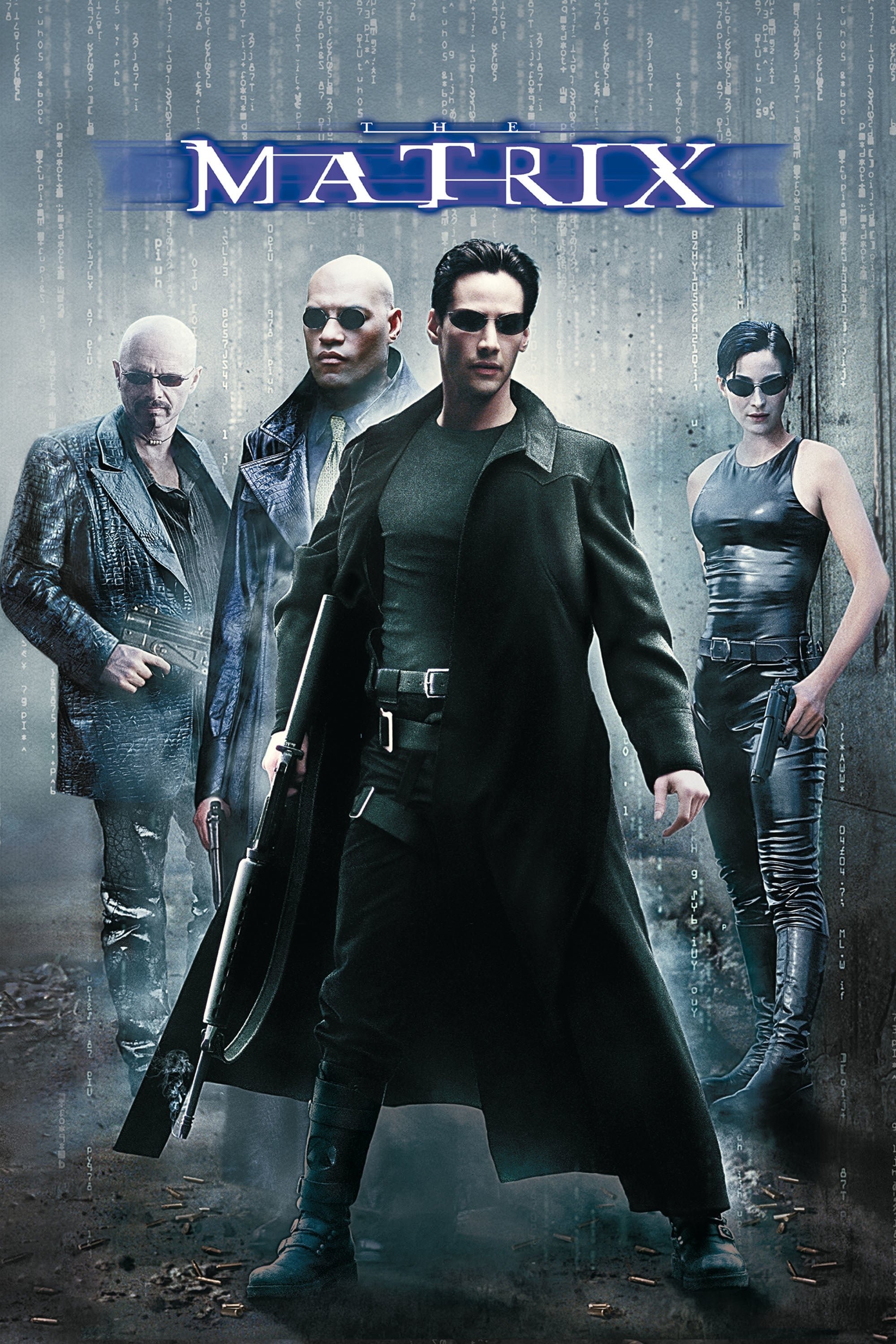


The first time I watched The Matrix in that grimy neighborhood cinema—where the seats reeked of stale popcorn and teenage existential dread—I knew movies would never be the same. It wasn’t just the effects, or that mind-bending 360-degree shot of Trinity dodging bullets like they were summer mosquitoes. It was the greasy, unsettling feeling that someone had reached into my skull, rummaged through my synapses, and left everything in disarray. And the worst part? They did it with a smug, philosophical grin and leather outfits that cost more than my rent. Lana Wachowski didn’t just hand us a movie in 1999—she hurled a manifesto wrapped in black vinyl and slow-motion gunfire, a visual sucker punch that still stings every time some hack sci-fi flick tries (and fails) to copy it.
The industrial backdrop of The Matrix is almost as fascinating as the film itself. Picture 1999: a weird limbo where the world teetered on the edge of Y2K panic while drowning in techno-optimism. Hollywood, meanwhile, was choking on Star Wars sequels and Jurassic Park leftovers, until the Wachowskis—then still brothers—rolled in with a script Warner Bros. greenlit only because Keanu Reeves signed for a paltry $10 million (peanuts next to Will Smith’s $20M for Wild Wild West that same year). The studio didn’t understand a word of the script, but they saw ‘bullet time’ and started rubbing their hands like Scrooge McDuck in a vault of future royalties. Little did they know they were about to unleash a cultural virus that would infect everything from video game design to late-night philosophy threads on dial-up forums. And the kicker? They did it on a $63 million budget—less than a single episode of Friends at the time.
The initial reception was seismic. Rotten Tomatoes gave it an 87%, IMDb an 8.7, and Filmaffinity—where Spaniards fancy themselves the smartest people in the room—an 8.2. But numbers don’t tell the whole story. The Matrix wasn’t just well-received; it was a phenomenon that split critics into warring factions. On one side, the cheerleaders praising its visual ambition and philosophical depth (Roger Ebert gave it 3.5 stars, calling it ‘an action movie with a brain’). On the other, the eye-rollers, like The New York Times critic who sneered, ‘It’s like Terminator and Plato had a bastard child at a cyberpunk rave.’ And he wasn’t wrong—but in the best way possible. The debates rage on Reddit and Letterboxd, with endless threads dissecting whether Neo is truly The One or just another cog in the system. What no one disputes is that The Matrix redefined what an action movie could be: not just spectacle, but an intellectual gut-punch that left you with more questions than answers.
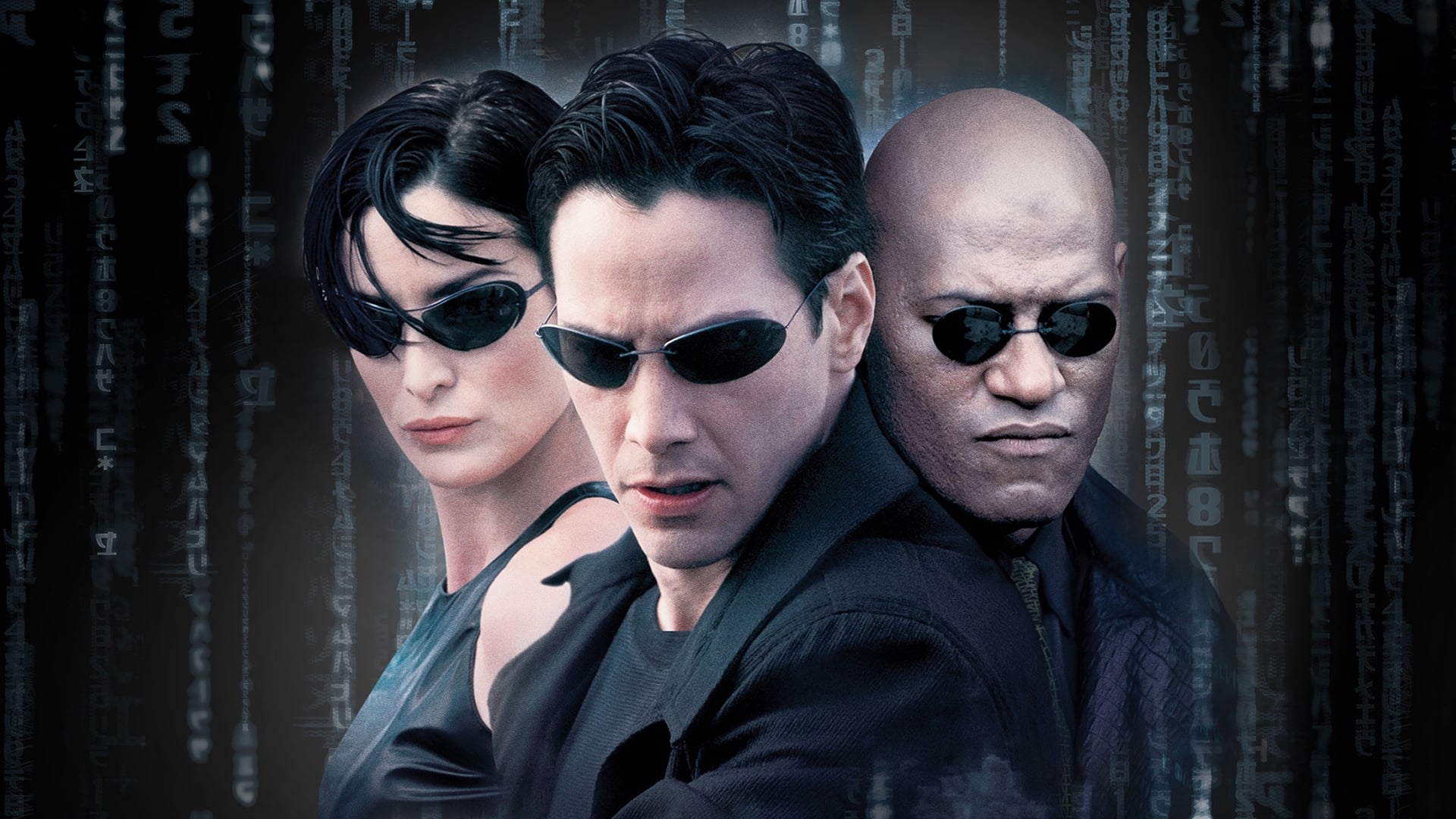
Direction and staging: The art of making the impossible feel inevitable
Lana Wachowski—because yes, though she was still Larry in 1999, today she’s Lana and deserves that recognition—didn’t just direct The Matrix; she choreographed it like a ballet of violence and existential dread. Every frame is calculated to the millimeter, yet flows with the effortless grace of a jazz improvisation. The best example? The lobby shootout, where Neo and Trinity storm in to rescue Morpheus. The camera moves with them like a third character, twisting, dodging bullets, syncing to the rhythm of gunfire like it’s a metronome. Then there’s the bullet time—that visual trick that slows time while the camera pirouettes around the action. It wasn’t the first use of the technique (shoutout to Max Payne for popularizing it later), but it was the most iconic. What most forget is that the team had to invent new tech to pull it off: a grid of 120 cameras firing in sequence, like a battalion of obsessive paparazzi. The result isn’t just a visual effect—it’s a perfect metaphor for the film itself: reality is malleable, and cinema can bend it to its will.
But where Wachowski truly shines is in her ability to blend genres without missing a beat. The Matrix is a cyberpunk thriller, a sci-fi western (Neo as the lone gunslinger riding into town), a philosophical drama, and a martial arts epic—all at once. The dojo fight between Neo and Morpheus isn’t just a brawl; it’s a kung-fu masterclass disguised as an action sequence. Every punch, every block, is choreographed like a dance, and the camera follows with surgical precision. Wachowski doesn’t just pay homage to ‘70s and ‘80s martial arts films (like The Matrix from Shaw Brothers, which inspired the title)—she elevates them to god-tier status. And then there’s the cruelest detail: the actors trained for four months with Yuen Woo-ping, the same choreographer behind Crouching Tiger, Hidden Dragon. Keanu Reeves broke his neck doing a stunt. Carrie-Anne Moss dislocated her ankle. Hugo Weaving (Agent Smith) complained his eyelashes hurt. Physical pain was the price of perfection, and damn if it wasn’t worth every bruise.
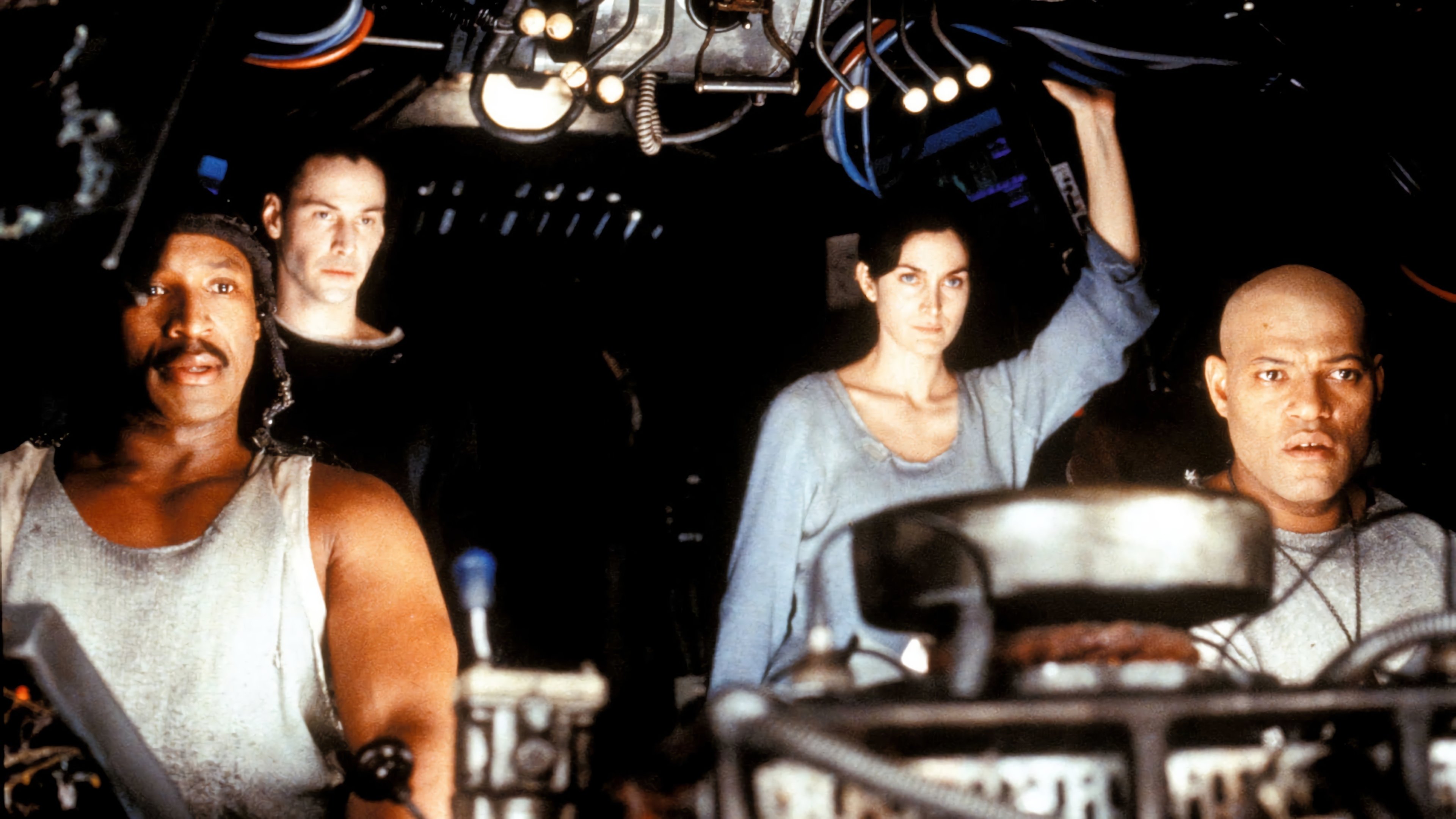
Performances: When actors become icons (or memes)
Keanu Reeves isn’t a good actor. He’s the perfect actor for The Matrix. Neo is a character who ping-pongs between the vulnerability of a day-job coder and the swagger of a nighttime messiah, and Reeves plays him with an eerie, almost supernatural ease. He doesn’t act well—he is Neo. His infamous line ‘I know kung-fu’ isn’t memorable because of the script, but because of how he delivers it—like he’s just as surprised as the audience that the words came out of his mouth. Then there’s his chemistry with Carrie-Anne Moss, who plays Trinity with a frosty exterior that barely contains a shattered heart. Moss isn’t just the badass chick who kicks ass; she’s the emotional core of the film. When she tells Neo ‘I can’t be the one to save you’ on that rooftop, it’s not filler dialogue—it’s the moment the movie admits that love, even in a world of machines, is still a revolutionary force.
But if one actor steals the show, it’s Hugo Weaving as Agent Smith. Weaving doesn’t play a villain; he plays a bureaucrat from hell. His monotone voice, his robotic yet elegant movements, his smirk of moral superiority—Smith isn’t a character, he’s a recurring nightmare. The most brilliant detail? Weaving doesn’t blink for the entire movie, like a machine that’s forgotten how. Then there are the supporting players: Laurence Fishburne as Morpheus, a man who’s seen too much and stopped caring if you’re lying; Joe Pantoliano as Cypher, the traitor who’d rather live in blissful ignorance (and who, ironically, has more memorable lines than most leads); and Gloria Foster as the Oracle, a chain-smoking grandma who acts like the world’s ending (because it is). Each of them is an archetype, but with enough depth to avoid feeling like a caricature.
Technical breakdown: When sound, music, and design become characters
Bill Pope’s cinematography is so iconic it deserves its own wing in the Louvre. Pope doesn’t just light the film; he dissects it. The green and blue hues dominating the machine world aren’t random—they’re the colors of a ‘90s computer monitor, a constant reminder that what we’re seeing is a simulation. But where Pope truly excels is in the action sequences. Bullet time wouldn’t be shit without his work: the bullets don’t just look slow—they feel slow, like time itself has turned to thick honey. Then there’s his use of light in the real world, with warm, grimy tones that clash against the Matrix’s digital sterility. It’s like Pope painted two movies in one: a sci-fi epic and a film noir.
Don Davis’s score is another unsung hero—until you realize the film wouldn’t work without it. Davis doesn’t compose music; he composes moods. The main theme, with its Gregorian choirs and tense strings, sounds like God and Satan playing chess with humanity’s fate. Then there are the moments of silence, like when Neo wakes up in the real world—no music, just the sound of his breathing and the hum of machines. A brutal reminder that sometimes, silence is scarier than any score.
Owen Paterson’s production design deserves its own dissertation. Paterson didn’t design sets; he designed a universe. From the real world, with its rusted ships and claustrophobic rooms, to the Matrix, with its endless buildings and streets plucked from a fever dream. The most brilliant detail? The Matrix isn’t just a digital world—it’s a collage of cultural references. The architecture is a mix of New York and Asian influences, the Agents’ suits are a parody of Men in Black, and even the cars (that Mercedes-Benz W140 Trinity drives) are luxury models that clash with the real world’s poverty. Paterson understood that the Matrix isn’t just a program—it’s a capitalist nightmare, a world where everything’s pretty but nothing’s real.
The best
Bill Pope’s cinematography: It’s not just pretty—every frame looks like a moving painting. The Matrix’s green tones aren’t an aesthetic choice; they’re a mission statement: This is a dream, and dreams have their own color palette.*- Hugo Weaving as Agent Smith: Weaving turns Smith into the most terrifying villain in modern cinema. Not because he’s a killing machine, but because he’s a hellish bureaucrat. He’s the kind of bad guy who makes you hate government employees.
- Lana Wachowski’s script: It’s not just complex—every line, every philosophical monologue, is written with surgical precision. Even the cheesiest lines (‘Wake up, Neo!’) sound epic because the context lifts them up.
- The fight choreography: Every punch, kick, and fall is calculated to the millimeter. This isn’t an action movie—it’s ballet with bullets.
The worst
- Trinity’s underdevelopment: Carrie-Anne Moss kills it with what she’s given, but Trinity is still the most wasted character in the film. She’s the woman who can fly and dodge bullets, but she’s still ‘Neo’s girl.’
- Some philosophical dialogue: There are moments when the film takes itself way too seriously. It’s like Plato and a computer manual got drunk together-la-cueva-de-los-espejos-rotos" class="text-amber-400 font-black hover:text-amber-300 transition underline decoration-amber-500/40 hover:decoration-amber-300" title="[6.5/10 ⚡ Ácido Cítrico] Lee nuestra autopsia de «Together»" data-acid-interlink="together-la-cueva-de-los-espejos-rotos">together.
- The third act: The final battle in the subway station is spectacular but also confusing. There are so many twists and reveals, you end up feeling like Neo: dizzy and nauseous.
- Lack of diversity in casting: All the main characters are white, and the few non-white characters (like the Oracle) are stereotypes. The sequels tried to fix this, but in 1999, no one batted an eye.
- The open ending: It’s not bad, but it leaves too many questions unanswered. It’s like the movie punched you in the face and then left you bleeding on the floor.
The Verdict of Claqueta Ácida
The Matrix isn’t just a movie—it’s a cultural juggernaut that’s still kicking 25 years later. Not because of its effects or its half-baked philosophy, but because Lana Wachowski had the guts to make an action flick that was also an essay on reality, free will, and late-stage capitalism. It’s flawed, pretentious, and sometimes ridiculous, but it’s also one of the few films that actually changed cinema. Watch it today, and some effects might feel dated, but its ambition is as fresh as the day it dropped. Wake up, Neo. The world’s still a simulation, but at least we’ve got The Matrix to remind us. 💀
tweets_alternativos:
- "La lucha contra las máquinas ha comenzado. ¿Quién está listo para unirse a la resistencia? @KeanuReeves #Matrix"
- "¿Qué es el Matrix? Descubre la verdad detrás de la película que revolucionó el cine de ciencia ficción @LanaWachowski #Matrix"
- "La fotografía de Bill Pope es sublime. ¿Quién más ha notado la influencia de la estética de Hong Kong en Matrix? @BillPope #Matrix"
🎬 Tráiler Oficial
Abrir en YouTube
Ficha de Daños Colaterales en Sala
Certificado de impacto psicofísico emitido por Bastian Noir
Cero. La pantalla absorbió cada segundo de atención disponible.
Ni una sola mirada al móvil.
Ninguna. Esta obra no necesita muletas estimulantes.
"No hubo. La coherencia se mantuvo hasta el último fotograma."
💬 El Veredicto de la Comunidad
¿Qué te ha parecido la película? Deja tu nota de 0 a 10 para contrastarla con el análisis de la redacción.
Aún no has votado
📢 ¿Te ha gustado el ácido?
Comparte esta crítica con tus amigos cinéfilos o desata la polémica en redes.
⚡ THE CINEMATIC VENOM YOUR INBOX CRAVES
No sugarcoated ratings, no corporate fluff. Subscribe for our uncensored weekly analysis or join the private Telegram for press previews, poll clashes, and instant alerts.
Alertas de estrenos en 1 segundo, encuestas en caliente y audios al salir de pases de prensa.
Recibe la dosis semanal en tu mail + regalo inmediato del PDF con 50 joyas ocultas de culto.
Related Reviews
Recommended autopsies for demanding film buffs.
 🔥 Fusión Nuclear9.5
*2001: A Space Odyssey – A Monkey, a Monolith, and Two Hours of Cosmic Pretentiousness*
⚡Afinidad temática directa en atmósfera, estilo y fijaciones visuales.
We dissect Stanley Kubrick’s magnum opus. A visual feast of minimalism and space hypnosis that cemented "serious" sci-fi—and bored half of humanity to tears.
 🔥 Fusión Nuclear9.3
2001: A Space Odyssey — The Day Kubrick Left Us Speechless (and Oxygenless)
⚡Afinidad temática directa en atmósfera, estilo y fijaciones visuales.
Kubrick turned science fiction into pure art: 149 minutes of eloquent silence, bone-wielding apes, and a psychopathic computer. Masterpiece or pretentious fraud? Here’s the verdict.
 🔥 Fusión Nuclear8.5
*A Clockwork Orange: The Sweet, Rusty Aftertaste of Violent Haute Couture*
⚡Afinidad temática directa en atmósfera, estilo y fijaciones visuales.
A scathing review of Kubrick’s masterpiece, where ultraviolence meets 60s fashion in a twisted pas de deux.
Editorial Ecosystem
Cinephile connections, archive interviews and related analyses.
💬 Debate Cinéfilo & Autopsia de Lectores
0 veredictos¿Discrepas con nuestra nota? ¿Es una obra maestra o veneno puro? Deja tu veredicto abajo sin necesidad de registro.

Aún nadie ha dejado su veredicto para esta película.
Sé el primero en clavarle el colmillo rellenando el formulario de arriba.