The Golden Gloves Story — The Administrative Sadism of the Ring
In 1950, Felix E. Feist directed not a sports drama, but an implacable documentary about the industrial processing of juvenile flesh.
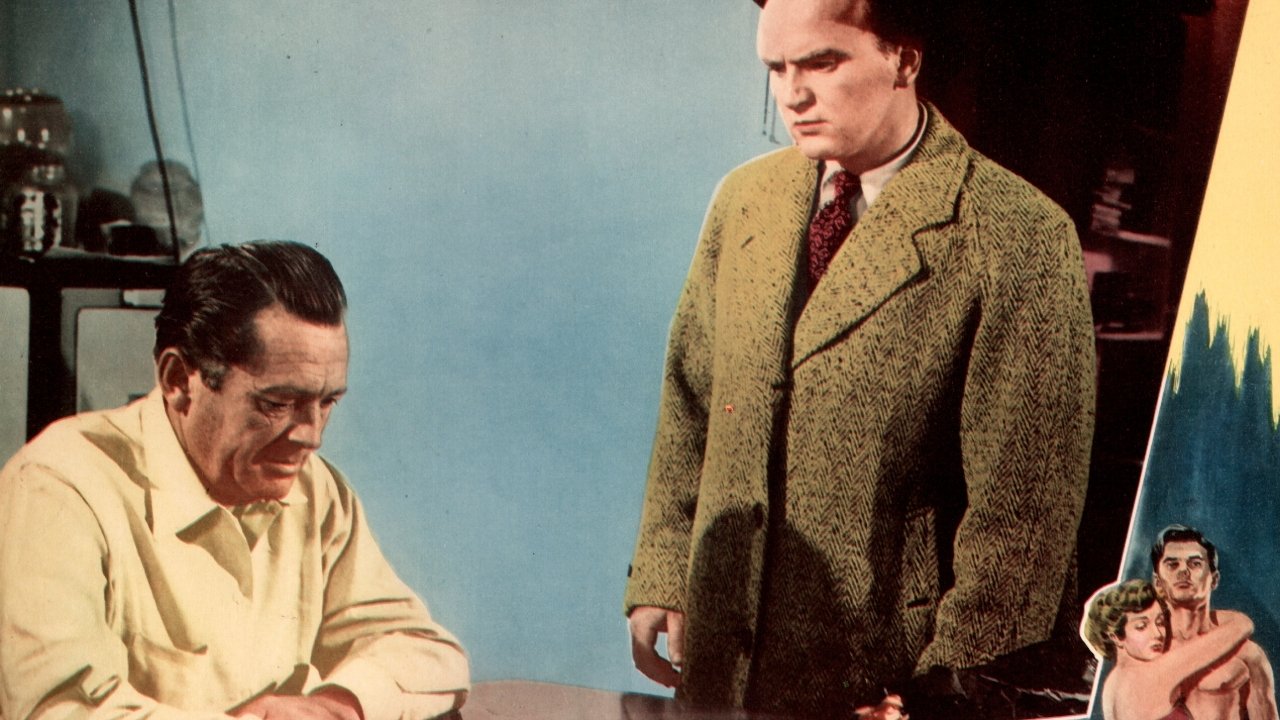

The Golden Gloves Story: full review
North American cinema of the first half of the twentieth century has insisted ad nauseam upon the mythology of proletarian upward mobility through sweat, canvas, and Friday night fight cards. They have sold us the squared circle as the ultimate sanctuary of working-class dignity, that mystic space where a man purifies himself through uppercuts and tearful speeches delivered before paternal trainers. Yet, when one delves into the seventy-six minutes that Felix E. Feist perpetrated under the umbrella of Central National Pictures Corp. in 1950, all that sentimental trinket-mongering crumbles with the muffled elegance of an accounting archive filing away worker disability claims. There is no suburban epic or operetta redemption here, but rather a cold dissection of how the institutional machinery processes young flesh with the exact same devotion a meat-packing plant reserves for cuts of pork.
It is fascinating to observe how the figure of Joe Riley, played with a dry authority by James Dunn, operates as the perfect commissar of this dismemberment plant. Riley is not the classic good-natured mentor who spits out wisdom while massaging aching shoulders; he is a human cog perfectly adapted to the strict rules of a tournament that rewards endurance over talent and obedience over creative impulse. Around him, the struggle between Nick Martel, defended by Dewey Martin, and Bob Gilmore, embodied by Kevin O'Morrison, to win the favor of Patty—Riley's daughter brought to life by Kay Westfall—does not respond to the usual mechanisms of bourgeois romantic melodrama. It is a mercantilist transaction where affections are quoted according to performance on the canvas and the capacity to absorb punishment without altering the promoter's statistics.
Feist's gaze deliberately bypasses the visual showmanship of big studio bouts to focus instead on the bureaucratic choreography of the amateur tournament. The Golden Gloves tournaments are not presented here as a celebration of American youth, but as a gigantic administrative sifting machine where dreams of grandeur are reduced to forms signed in cheap graphite and morning weigh-ins under fluorescent lights that reveal the genuine hunger of the contenders. The presence of real figures from the milieu like Arch Ward and Johnny Behr playing themselves reinforces that strange documentary texture, an anthropological document on how the system absorbs street violence and channels it into a perfectly regulated, aseptic spectacle that serves the interests of the industry.
The industrial context in which this work was born is key to understanding its formal and thematic radicalism. Far from the budgetary splendors of Metro-Goldwyn-Mayer or Warner Bros., Central National Pictures operated on the margins, forcing its creators to adopt an economy of means that here miraculously transforms into an absolute declaration of aesthetic principles. There is no room for visual pyrotechnics or crane shots; every dollar invested in production seems measured with the exact same stinginess with which the tournament promoters calculate the boys' purses. This financial limitation translates into a staging of surgical austerity, where every wide shot of empty stands or the bleak, dreary corridors of the arena conveys a hopelessness far removed from the false optimism of classic post-war Hollywood.
The architecture of the file
Feist's direction stands out for its absolute renunciation of visual lyricism. Every shot is measured with the precision of a window clerk who knows the workday is not shortened by speeding through routine paperwork. When the young competitors step into the ring, the camera does not seek the plastic beauty of movement or the aesthetic stylization of physical pain; it registers the systematic wear and tear of bodies with a distance that is almost clinical and devoid of any cheap empathy. The screenplay, also penned by Feist himself, completely dispenses with high-sounding dialogue, settling instead into a strictly functional register where every line spoken by Iris Anthony, played by Gregg Sherwood, sounds like a severe warning regarding the inescapable limitations of the social environment. It is a staging that makes the contemporary viewer uncomfortable, accustomed as they are to constant emotional underlining, preferring always the aridity of accomplished facts over artificial catharsis.
Flesh and statistics
The treatment of the main male characters oscillates permanently between blind ambition and the most absolute methodological resignation. Dewey Martin builds a Nick Martel who radiates a purely utilitarian urgency, while Kevin O'Morrison endows his Bob Gilmore with a structural fragility that the system itself will proceed to crush without remorse or consideration. There is no room whatsoever for the virile brotherhood so dear to traditional boxing cinema; here the contenders eye one another with the muffled distrust of employees fiercely competing for the exact same vacant position in a department on the verge of drastic staff cuts. The appearance of Kay Westfall as the supposed object of desire only underscores with greater crudeness the absolute functionality of the environment: Patty is not so much a woman to be fought for with chivalry as she is the administrative trophy that validates definitive integration into the petty-bourgeois success machine.
The gray score
Nor does Mack Stengler's cinematography seek the expressionist chiaroscuro so beloved by the film noir of the era; instead, a flat lighting is imposed, almost like that of a government office, which dissolves any hint of nocturnal romanticism. The faces of the main and supporting actors appear weathered by overhead lighting that betrays the genuine fatigue of bodies subjected to low-budget filmmaking. There are no bombastic orchestral scores dictating when we should feel euphoria or compassion; the sound design relies on the dry echo of gloves striking flesh and the indifferent murmur of an audience that has paid cheap admission to consume fresh meat. This absence of musical artifice reinforces the sensation of witnessing an anonymous industrial process where spilled blood leaves no stain on the promoter's accounting ledgers.
The best
- Expository honesty: The flat-out refusal to romanticize the misery of neighborhood gyms and amateur tournaments.
- Restrained performances: The absolute sobriety of James Dunn in portraying a referee who has internalized the system's rules down to the marrow.
- Implacable pacing: The tight runtime that prevents any temptation toward moralistic digression or edifying speeches.
The worst
- Formal rigidity: A certain narrative coldness that may completely bewilder those seeking the traditional catharsis of sports cinema.
- Economy of means: The budgetary limitations of Central National Pictures Corp. translated into a mise-en-scène that is at times excessively austere and functional.
The Verdict of Claqueta Ácida
The Golden Gloves Story is a precious anomaly within studio sports cinema, an artifact that prefers the bureaucratic tedium of the office to the false glow of Hollywood spotlights. Felix E. Feist understood better than anyone that the squared circle was the perfect precursor to modern human resources: a place where the productivity of blood is measured and talent is filed away before the contract expires. It is not an undisputed masterpiece, but it possesses the incalculable virtue of never lying to the viewer about the parasitic nature of spectacle. A piece of industrial archaeology that deserves to be rescued from administrative oblivion. 💀
The Golden Gloves Story: frequently asked questions
- What is the rating of "The Golden Gloves Story" on Claqueta Ácida?
- "The Golden Gloves Story" scored 7.6/10 on Claqueta Ácida in the review by Odin Lagbert.
- Is "The Golden Gloves Story" worth watching?
- Yes. We gave it 7.6/10 (Nuclear Fusion), our rating for must-see films.
- Who directed "The Golden Gloves Story"?
- "The Golden Gloves Story" was directed by Felix E. Feist.
Theater Collateral Damage Report
Psychophysical impact certificate issued by Odin Lagbert
Imposible el parpadeo ante semejante maquinaria de asfixia burocrática y deportiva.
Cero tentaciones de revisar el cronómetro en este engranaje implacable.
Café negro y frío, tomado con la misma rigidez implacable que un juez de disciplina deportiva.
"Cuando el torneo deja de ser una promesa de ascenso social para revelarse como un matadero administrativo."

The rebuttal from Dante Sangre (Blockbuster Scalpel)
In stark disagreement with the review given by Odin Lagbert.
“Esta basura industrial vale un 2.7 y punto. Odin Lagbert vive en una realidad paralela. Ve alta literatura donde solo hay cartón piedra barato. "The Golden Gloves Story" es un puto pestiño infumable de 1950. Felix E. Feist no disecciona ninguna maquinaria. Duerme al espectador. En *Rocky* o *Raging Bull* sentías el dolor real en cada puto golpe. Aquí los boxeadores parecen marionetas de saldo con retraso mental. James Dunn pone cara de estreñido durante setenta y seis minutos eternos. Cero tensión. Cero sudor auténtico. Este bodrio es un chiste malo en blanco y negro. Una estafa barata para rellenar sesiones dobles de mierda. No hay crudeza obrera. Solo plástico oxidado y aburrimiento puro. El cine clásico a veces apesta. Esta cosa lo demuestra.
💬 Community Verdict
What did you think of the film? Rate it from 0 to 10 to compare it with the editorial review.
You haven't voted yet
📢 ¿Te ha gustado el ácido?
Comparte esta crítica con tus amigos cinéfilos o desata la polémica en redes.
⚡ THE CINEMATIC VENOM YOUR INBOX CRAVES
No sugarcoated ratings, no corporate fluff. Subscribe for our uncensored weekly analysis or join the private Telegram for press previews, poll clashes, and instant alerts.
Alertas de estrenos en 1 segundo, encuestas en caliente y audios al salir de pases de prensa.
Recibe la dosis semanal en tu mail + regalo inmediato del PDF con 50 joyas ocultas de culto.
Related Reviews
Recommended autopsies for demanding film buffs.
 🔥 Fusión Nuclear 8.5
*Alleluia: Love as a Terminal Illness (or How to Turn Crimes of Passion into a Sweaty, Fleshy Spectacle)*
⚡ Afinidad temática directa en atmósfera, estilo y fijaciones visuales.
Fabrice Du Welz reimagines the myth of the lonely hearts killers in a feverish whirlwind of jealousy, submission, and blood, led by Lola Dueñas in a performance that’s equal parts hypnotic and harrowing.
 🔥 Fusión Nuclear 8.5
*High Tension (Haute Tension): The Brutal Birth of the New French Extremism – Or How to Turn Flesh into Poetry with a Machete*
⚡ Afinidad temática directa en atmósfera, estilo y fijaciones visuales.
Alexandre Aja shocked global screens with a relentless rural bloodbath, redefined by breakneck pacing and a divisive twist that splits serious cinephiles right down the middle.
 🔥 Fusión Nuclear 8.5
*Aterrados: The Rebirth of Ghost Stories in the Raw Grit of Buenos Aires*
⚡ Afinidad temática directa en atmósfera, estilo y fijaciones visuales.
Demian Rugna revolutionizes paranormal horror—possessions, poltergeists, and all—by transplanting it to a residential neighborhood in Buenos Aires, armed with a devastating sound design that rattles your bones.
Editorial Ecosystem
Cinephile connections, archive interviews and related analyses.
💬 Debate Cinéfilo & Autopsia de Lectores
0 veredictos¿Discrepas con nuestra nota? ¿Es una obra maestra o veneno puro? Deja tu veredicto abajo sin necesidad de registro.


Aún nadie ha dejado su veredicto para esta película.
Sé el primero en clavarle el colmillo rellenando el formulario de arriba.