The Mandalorian and Grogu — Two Hours of Canned Nostalgia and a Massive Plushie Sale
A review of Jon Favreau’s Star Wars film—a feature-length production that feels like a stretched-out TV episode, solely designed to rescue Disney’s merchandising division.

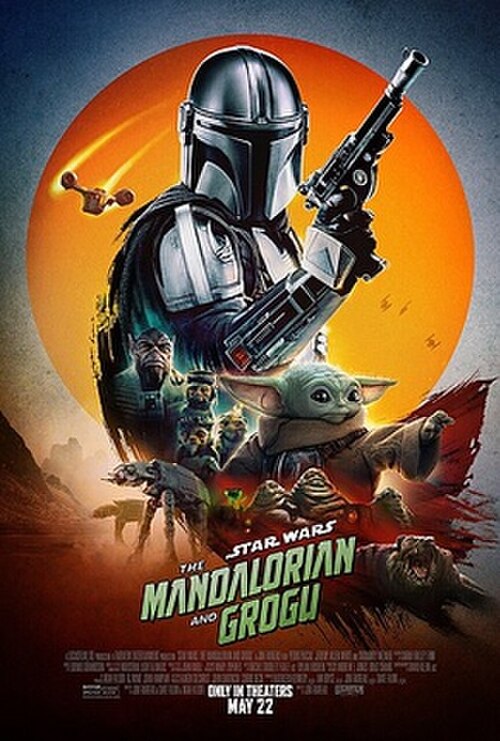

The Mandalorian and Grogu: The Empire Strikes Back (at Your Wallet)
Just when you thought the Star Wars universe had hit rock bottom in the corporate saturation abyss—where George Lucas’s dreams rot between spin-off after spin-off and reboots of characters no one asked for—Disney and Jon Favreau decide what the galaxy really needs is… more of the same, but in feature-film format. Because, of course, what better way to reignite interest in theaters than to take a streaming series that had already exhausted its formula in three seasons, stretch it like beskar gum, and sell it as a "cinematic event"? The Mandalorian and Grogu isn’t a movie; it’s an extended PowerPoint from a shareholders’ meeting, where the sole objective is to remind you that, yes, the merch is still for sale, and Grogu now has a new line of mugs with his "please buy me" face.
The plot—if we can even call this collage of galactic errands a plot—is as original as a stormtrooper hitting a target: Din Djarin (Pedro Pascal, or rather his voice double, who seems to have recorded his lines between naps in a Bali hammock) must escort Grogu, his wrinkly green adopted son, across a galaxy that, for the umpteenth time, is packed with grumpy junk dealers, stormtroopers who shoot like they’ve got blindfolds on, and cameos designed exclusively to make the hardcore fans scream like they’re at a One Direction concert. The film doesn’t advance Star Wars mythology one iota; it just spins in circles like a TIE Fighter out of fuel, while reminding us, over and over, how adorable Baby Yoda (sorry, Grogu) is—and how much you’d love to own one… in interactive plushie form.
Volume Syndrome: When CGI Becomes the Poor Man’s Green Screen
Visually, The Mandalorian and Grogu suffers from the same degenerative disease plaguing Lucasfilm’s latest productions: the abuse of The Volume, those LED backdrop screens that promise "immersion" but are really just the digital equivalent of painting a sky on canvas and calling it art. Favreau, who once gifted us gems like Iron Man (before Marvel turned him into a content factory), seems to have forgotten that cinema isn’t just about spending money—it’s about spending it well. Sure, the space battles have an impressive scale—and it’s the only thing saving the film from feeling like an extended episode of the series—but the environments feel artificial, flat, and devoid of the organic texture that made the spaceports in A New Hope smell like hyperdrive oil and smuggler sweat.
The grime and dust on the planets, which in 1977 felt real because, well, they were real (thanks, Lucas’s prop team), here look like Instagram filters hastily slapped on in post-production. It’s as if the art department got the memo to "make it gritty" but with a last-minute budget cut. And let’s not even talk about the side characters, who seem plucked straight from a Hasbro catalog: every alien, every droid, every generic bounty hunter has the same vibe of "we’ve seen this before, but with a different filter." The Star Wars galaxy used to feel alive; now it’s like a theme park after a janitor strike.
The Soundtrack: Or How Ludwig Göransson Became a Spotify Loop
If there was one thing Ludwig Göransson nailed with the original Mandalorian series, it was crafting a unique sonic identity—a mix of distorted electric guitars and epic choirs that gave the saga a fresh edge. But here, his score dissolves into a lazy succession of repetitions, as if the composer was given the directive to "play the main theme every time Grogu does something cute." And boy, does he deliver. Every time the little alien twitches his ears, blinks, or—God forbid—uses the Force to lift a fork, the music blares like a cereal commercial jingle. It’s about as subtle as a wampa in a china shop.
The soundtrack doesn’t complement the action; it underlines it with a neon highlighter, as if the audience is too dense to notice, "Oh wow, Grogu’s doing something adorable!" Instead of elevating emotions, it crushes them under the weight of its own obviousness. It’s the sonic equivalent of hearing the same joke repeated until it loses all meaning.
The Performances: Pedro Pascal and the Art of Acting by Mail
Pedro Pascal is, without a doubt, one of the most charismatic actors of his generation. But in The Mandalorian and Grogu, his presence is reduced to an off-screen voice that sounds like it was recorded on an answering machine. Pascal isn’t "acting"; he’s doing voice-over for a character who, on screen, is little more than an expensive action figure in fancy armor. His performance is limited to grunts, one-liners, and that gravelly tone that works so well in The Last of Us but here sounds like a self-parody.
The rest of the cast fares no better. Temuera Morrison, who once breathed life into Boba Fett in Attack of the Clones, here seems to be counting the minutes until he can cash his check and retire to a beach. The cameos—because of course they couldn’t skip the fanservice—are so forced they feel like they were ripped from a Robot Chicken sketch. And Grogu… well, Grogu is adorable, but his role in the plot is as relevant as an extra in a crowd scene. He’s the MacGuffin with legs, the object of desire everyone chases but that ultimately serves no purpose beyond selling toys.
The Narrative: Or the Absence Thereof
If there’s one thing that defines The Mandalorian and Grogu, it’s its utter lack of narrative ambition. The film doesn’t just fail to advance Star Wars lore; it doesn’t even advance its own story. It’s a galactic road movie where the characters leave point A only to arrive… right back at point A, but with more explosions and less sense. Conflicts are resolved with all the depth of a puddle on Tatooine: shallow, predictable, and evaporating the moment you look too closely.
The script reads like it was written by a Netflix algorithm: "If there’s an action scene, it must be followed by a cute Grogu moment. If there’s emotional dialogue, it must be interrupted by a cameo from a prequel side character. If there’s a plot twist, it must be so obvious even a protocol droid would see it coming." There’s no risk, no surprise, nothing to make the audience feel rewarded for investing two hours of their life in this product. It’s like watching three episodes of the original series taped together-la-cueva-de-los-espejos-rotos" class="text-amber-400 font-black hover:text-amber-300 transition underline decoration-amber-500/40 hover:decoration-amber-300" title="[6.5/10 ⚡ Ácido Cítrico] Lee nuestra autopsia de «Together»" data-acid-interlink="together-la-cueva-de-los-espejos-rotos">together with Scotch tape and a sprinkle of glitter to make it seem "new."
Fanservice and Nostalgia as Crutches
Disney has turned nostalgia into its business model, and The Mandalorian and Grogu is the perfect example of wringing the last drop out of a lemon that’s already dry. The film is packed with nods to the prequels, the original trilogy, and The Clone Wars animated series… but none of them add anything beyond an empty "Oh, I remember that!" It’s like the screenwriter was ordered to include at least one easter egg per scene, regardless of whether it fit the plot.
The problem isn’t the references themselves; it’s that the film assumes the audience will get emotional just from spotting a background droid that appeared in Attack of the Clones for three seconds. It’s canned nostalgia, the cinematic equivalent of hearing a cover of a song you loved, but performed by a TikTok influencer. There’s no emotion, no connection—just the constant reminder that, at some point, Star Wars was more than a toy franchise.
The best
The space battles: Finally, something that justifies the ticket price. The starfighter dogfights have a scale and dynamism that hark back to the best scenes in Rogue One*, though with less soul.- Creature design: The practical effects team works miracles with animatronics and makeup, proving that sometimes, analog still beats digital.
- Pedro Pascal (by correspondence): Even if his performance is just canned voice work, at least he lends a shred of dignity to a character who’d otherwise be a mannequin in armor.
The worst
Zero narrative: Three discarded episodes from the series glued together with spit and a deus ex machina cameo. It’s not even a movie; it’s a clip show with a blockbuster* budget.- Nostalgia overload: The film assumes the audience will weep with joy just from seeing a prequel side character, even if they contribute absolutely nothing to the plot.
The Verdict of Claqueta Ácida (5.5/10)
The Mandalorian and Grogu isn’t a movie; it’s a two-hour infomercial masquerading as a blockbuster, a reminder that Disney would rather sell you the same reheated soup in new packaging than risk doing something original. It serves its purpose as a mass-consumption product: it entertains kids, makes hardcore fans sigh, and fills the company’s coffers with plushie sales. But as a cinematic work, it’s as insubstantial as a stormtrooper in a shootout. Jon Favreau, once a director with personality, here sticks to the corporate playbook to the letter, proving that in Disney’s galaxy, creativity is as scarce as a droid with a sense of humor. A 5.5 that, like Grogu, only exists to make shareholders raise their fists and shout, "This is the Force… of capitalism!"🎬 Tráiler Oficial
Abrir en YouTube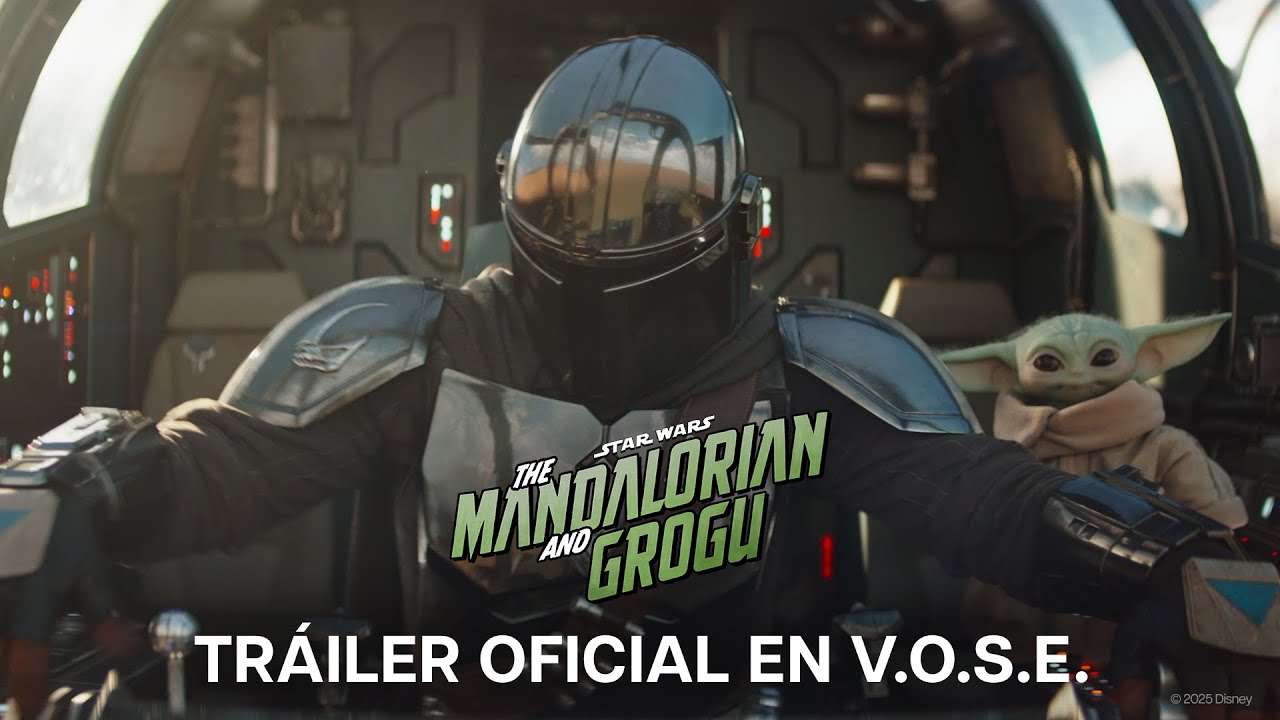
Ending Explained: The Mandalorian and Grogu
Ficha de Daños Colaterales en Sala
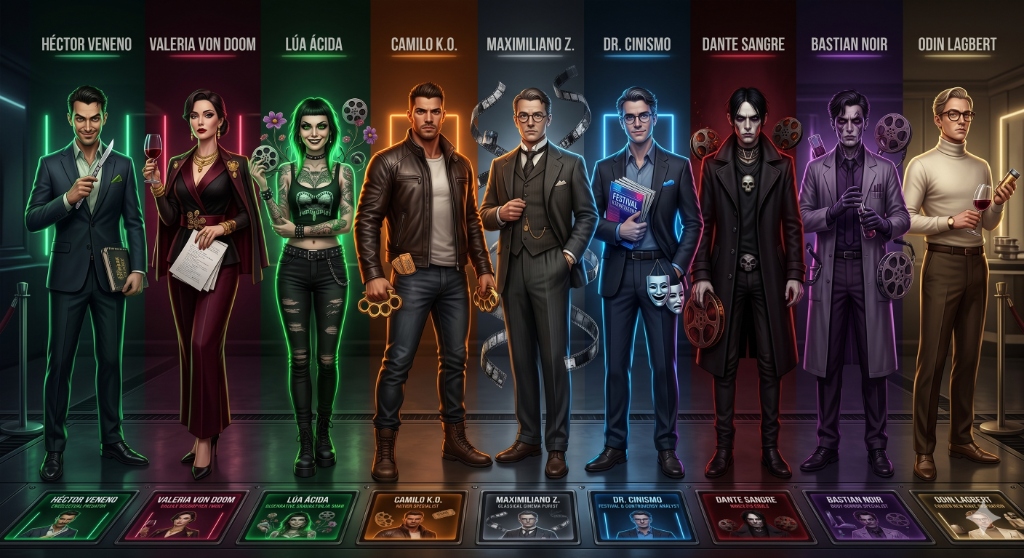
Certificado de impacto psicofísico emitido por Camilo K.O.
3 amagos en el tramo intermedio; pestañeo pesado en las transiciones más innecesarias.
Minuto 45 y minuto 75 (comprobando cuánto quedaba de suplicio).
2 espressos para no dejarse vencer por la mediocridad cómoda.
"A mitad del segundo acto cuando la subtrama secundaria empezó a pesar más de lo que aportaba."
💬 El Veredicto de la Comunidad
¿Qué te ha parecido la película? Deja tu nota de 0 a 10 para contrastarla con el análisis de la redacción.
Aún no has votado
📢 ¿Te ha gustado el ácido?
Comparte esta crítica con tus amigos cinéfilos o desata la polémica en redes.
⚡ THE CINEMATIC VENOM YOUR INBOX CRAVES
No sugarcoated ratings, no corporate fluff. Subscribe for our uncensored weekly analysis or join the private Telegram for press previews, poll clashes, and instant alerts.
Alertas de estrenos en 1 segundo, encuestas en caliente y audios al salir de pases de prensa.
Recibe la dosis semanal en tu mail + regalo inmediato del PDF con 50 joyas ocultas de culto.
Related Reviews
Recommended autopsies for demanding film buffs.
 ⚡ Ácido Cítrico7.5
A Ghost Story: A Journey Through Time and Memory
⚡Afinidad temática directa en atmósfera, estilo y fijaciones visuales.
The Claqueta Ácida review of A Ghost Story, a film that explores existence and human connection.
 ⚡ Ácido Cítrico7.2
Acid in the Veins: Fede Álvarez Revives the Tactile Panic of Alien
⚡Afinidad temática directa en atmósfera, estilo y fijaciones visuales.
Industrial claustrophobia and pure physical terror. A merciless critique of Ian Holm's CGI and the cheap nostalgia that stains the franchise's return.
 🔥 Fusión Nuclear8.0
Backrooms: A Descent into the Void
⚡Afinidad temática directa en atmósfera, estilo y fijaciones visuales.
A film that flings wide the door to mystery and terror—if you dare to step through
Editorial Ecosystem
Cinephile connections, archive interviews and related analyses.
💬 Debate Cinéfilo & Autopsia de Lectores
0 veredictos¿Discrepas con nuestra nota? ¿Es una obra maestra o veneno puro? Deja tu veredicto abajo sin necesidad de registro.

Aún nadie ha dejado su veredicto para esta película.
Sé el primero en clavarle el colmillo rellenando el formulario de arriba.