The Mummy — The Mummification of Family Sanity
Lee Cronin takes the Universal classic, strips off its golden bandages of nostalgia, and drags it through the muck of visceral body-horror and demonic possession.

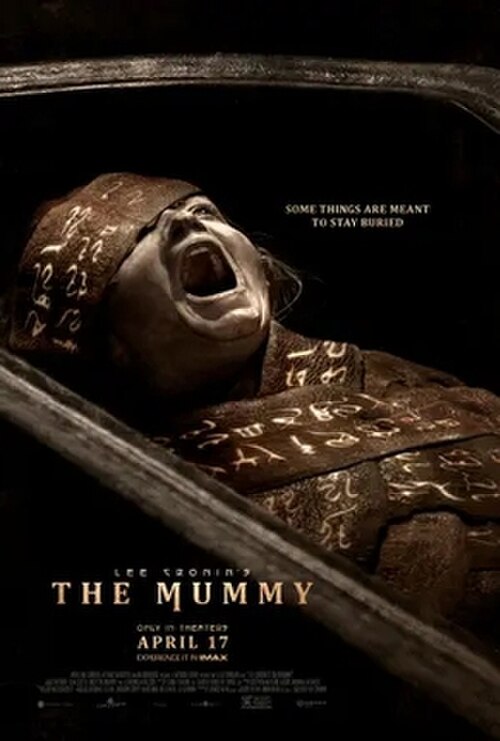

At the Claqueta Ácida offices, where sarcasm is our daily bread and cynicism our favorite seasoning, we were already prepping the hydrochloric acid to dissolve the mummified remains of The Mummy franchise. Because let’s be honest—after Tom Cruise treated us to that epic 2017 sprint in front of a sandstorm that looked like it was designed by a hungover Pixar intern, any attempt to revive this cinematic corpse deserved at least a healthy dose of skepticism the size of the Great Pyramid of Giza. But lo and behold, Lee Cronin, that Irish director with an unhealthy obsession for bodily fluids and spaces that squeeze like a Victorian corset, has decided that cheap Egyptology, golden sarcophagi, and square-jawed archaeologists could take a hike. And boy, did he deliver.
With The Mummy (2026), Cronin doesn’t just bury Brendan Fraser’s legacy—let’s be fair, it was already deader than Imhotep after his 2000s trilogy—he replaces it with something far more interesting: an analog, grimy, and deeply uncomfortable horror, where the real monster isn’t a millennia-old demon but family trauma dressed up as a mummy. The premise is as simple as it is effective: Charlie (Jack Reynor, in a role that seems tailor-made for him, as if the screenwriter said, “We need someone who can cry, sweat, and curse in the same shot”) and Larissa (Laia Costa, fighting tooth and nail to give depth to a character the script insists on treating like an emotional punching bag) recover their daughter Katie (Natalie Grace) eight years after she vanished in the Nevada desert. But Katie doesn’t return with a “Hi, Mom and Dad, I missed you” and a group hug. No. Katie comes back as the biological vessel for Nasmaranian, an Egyptian demon who, instead of patiently waiting in a British museum for some clueless archaeologist to set him free, prefers to mummify his victims from the inside out—like a Cronenberg flick filtered through a The X-Files episode directed by an ‘80s gore fanatic.
finalExplicado_en: "In the climax, the ancient curse fully awakens within the family home, forcing the mother to confront her own repressed trauma as her children begin mummifying themselves in ritualistic denial of reality. She ultimately chooses to entomb them—and herself—alive in the basement, completing the cycle of inherited madness. The ending symbolizes the suffocating preservation of familial dysfunction: mummification as a metaphor for emotionally deadening generations to maintain a facade of normalcy, where love becomes a tomb that nobody escapes."
Cronenberg in the Desert: When Body-Horror Meets Family Melodrama
What’s most refreshing—and, let’s be honest, the only thing saving this film from being a Syfy direct-to-video dumpster fire—is that Cronin has zero respect for nostalgia. There are no exotic adventures, no ancient curses recited in badly pronounced hieroglyphics, no Brendan Fraser goofing around with a whip. Instead, we get a claustrophobic nightmare where the real horror isn’t a pyramid but a prefab house in the middle of nowhere, with walls that sweat humidity and a fridge that seems to hide more secrets than the CIA. Cronin, who already proved in Evil Dead Rise (2023) that he’s a master of enclosed spaces and bodily fluids—from vomit to menstrual blood, nothing grosses him out—takes his obsession to the next level here. With the help of cinematographer Dave Garbett, who reunites with the director and seems to have studied every frame of The Texas Chain Saw Massacre (1974) and Andrzej Żuławski’s Possession (1981), the film wallows in the texture of decay. Cracking skin like rice paper, sand oozing from impossible wounds, eyes injected with a sickly yellow... Everything in The Mummy (2026) feels coated in a layer of dust and sweat, as if the movie itself is undergoing an organic metamorphosis before our eyes.
It’s impossible not to see the echoes of David Cronenberg, especially The Fly (1986), where Jeff Goldblum’s physical transformation was a metaphor for human decay. But Cronin doesn’t stop at body-horror; he also draws from Ari Aster’s family melodrama, particularly Hereditary (2018), where grief and guilt manifest as demonic possession. Nasmaranian isn’t just a monster with yellow eyes and a voice like dragging chains down a hospital hallway; he’s the physical embodiment of unresolved pain for the Cannon family. Katie isn’t just a possessed girl—she’s a living reminder that Charlie and Larissa never got over their loss, that their marriage rotted like their daughter’s flesh, that the desert didn’t just swallow Katie but any chance of redemption.
Performances: When Suffering Becomes Art (or at Least Something Decent)
Jack Reynor, that actor who seems born to play fathers on the verge of a nervous breakdown—like someone told him, “Hey, can you cry while holding a hammer? Here’s a check”—is surprisingly solid. He’s not reinventing the wheel; his character is the archetype of the “man shattered by guilt trying to piece his life back together-la-cueva-de-los-espejos-rotos" class="text-amber-400 font-black hover:text-amber-300 transition underline decoration-amber-500/40 hover:decoration-amber-300" title="[6.5/10 ⚡ Ácido Cítrico] Lee nuestra autopsia de «Together»" data-acid-interlink="together-la-cueva-de-los-espejos-rotos">together while the world crumbles around him.” But Reynor brings a raw vulnerability that, at times, makes you forget you’re watching a monster movie and believe you’re at a Sundance indie drama. His chemistry with Laia Costa is, at best, tense and realistic, like they both know their marriage is a corpse barely breathing on life support.
Speaking of Costa, the Spanish actress—who already proved in Holy Blood (2022) that she can carry a film with just a look—fights tooth and nail to give dignity to a character the script treats like an emotional punching bag. Larissa is the classic mother swinging between hope and despair, love and resentment, and Costa makes those shifts feel real, not clichéd. That said, the script doesn’t do her any favors: more than once, her character seems to exist only to scream, “That’s not our daughter!” while Nasmaranian cackles from Katie’s body.
And then there’s Natalie Grace, the film’s true revelation. Her portrayal of Katie—or rather, Nasmaranian possessing Katie—is unnerving from the first frame. Grace nails that eerie mix of childlike innocence and ancient malice, making every scene she’s in deeply uncomfortable, like watching a kid play with a knife without fully grasping the danger. Her performance is so strong that, more than once, she steals the movie from her co-stars, which is no small feat when you’ve got Reynor crying his eyes out in the next scene. If Grace doesn’t become the next “scream queen,” it’s because Hollywood still doesn’t know what to do with young talent.
The Script: Between Originality and Self-Sabotage
Cronin’s script is a double-edged sword. On one hand, it’s refreshing that someone decided The Mummy doesn’t need pyramids, ancient curses, or archaeologists in Indiana Jones hats. On the other, the film falls into the trap of thinking “gross-out” shock value can replace character development or a well-built mystery. There are moments when The Mummy (2026) feels more like an episode of Fear Factor than a horror movie—the sand-soup scene (yes, you read that right) is as unnecessary as it is memorable, but not in the way Cronin probably intended. It’s not bad; it’s just a distraction from the real horror, which should be psychological, not visceral.
The problem worsens in the third act, where the film seems to realize it’s running out of time and decides to wrap things up with clichéd demonic possession tropes. Suddenly, Nasmaranian, who had been a subtle and unsettling presence, turns into a generic monster screaming, smashing things, and rolling his eyes like he’s in an episode of Supernatural. It’s a shame because the idea of a mummy that mummifies from the inside out was fascinating. Imagine: instead of bandages, flesh drying and cracking like old leather, organs petrifying in real time, blood turning to dust... It could’ve been a unique visual nightmare, but Cronin defaults to the same old tropes.
Score and Editing: Silence as an Ally (and Noise as the Enemy)
Jed Kurzel’s score—who also worked with Cronin on Evil Dead Rise—is so subtle it’s almost invisible, and in a horror movie, that’s a compliment. Kurzel understands that the real horror in The Mummy isn’t in jump scares or screams but in the oppressive silence before Nasmaranian appears. The most tense moments are those where the music retreats, leaving only ambient sound: the creaking of the house’s wood, wind rattling the windows, the characters’ ragged breathing. When the score does appear, it does so with dissonant strings and ethereal choirs, like we’re hearing the lament of a spirit trapped between worlds.
The editing, meanwhile, is efficient but unadventurous. Cronin and his editor, Colin Campbell, opt for a pace that swings between slow—building tension—and frantic—when Nasmaranian decides it’s time to raise hell. There are a couple of sequences, like the mirror or basement scenes, that are brilliantly choreographed, but overall, the editing doesn’t bring anything we haven’t seen before. That said, it knows when to shut up: the scene where Katie first reveals her true nature is shot and edited with the elegance of the best ‘80s body-horror, without relying on CGI or gratuitous gore.
Cinematic Comparisons: What Movie Is The Mummy (2026) Really?
If we had to place The Mummy (2026) in the family tree of modern horror, we’d say it’s the bastard child of The Fly and Hereditary, with a dash of The Babadook and a distant grandparent named The Thing. From Cronenberg, it inherits the obsession with physical transformation as a metaphor for human decay; from Aster, the idea that the real horror isn’t the monster but the dysfunctional family harboring it; from Jennifer Kent, the exploration of grief as the driving force of terror; and from Carpenter, the love for enclosed spaces and practical effects that reek of sweat and latex.
But above all, The Mummy (2026) is a film of its time. In an era where horror has become increasingly reliant on jump scares and cheap thrills, Cronin bets on something slower, grimier, and more despairing. It’s not a movie that leaves you smiling; it leaves you with a lingering sense of discomfort, like sand stuck in your shoes that you just can’t shake. And in today’s landscape, that’s almost an act of rebellion.
The best
- Natalie Grace as Katie Cannon: Her performance is so unsettling you’ll wonder if The Exorcist’s Regan should’ve taken notes. Every time she opens her mouth, Nasmaranian seems ready to leap off the screen and mummify you.
- Dave Garbett’s cinematography: Earthy tones, dim lighting, and chiaroscuro that turns every corner of the house into an adobe tomb. If hell exists, it probably looks like this.
The worst
- The overuse of “gross-out”: There’s a sand-soup scene that’s as unnecessary as it is memorable—for all the wrong reasons. Cronin seems more interested in turning stomachs than developing Nasmaranian’s mystery.
- A rushed third act: The film forgets its own premise and falls back on generic demonic possession clichés. Suddenly, Nasmaranian is screaming and smashing things like a steroid-pumped ghost from Poltergeist (1982).
The Verdict of Claqueta Ácida (6.8/10)
The Mummy (2026) isn’t the horror masterpiece Blumhouse and Atomic Monster tried to sell us with their cryptic teasers and posters promising “the ultimate mummy’s return.” But in a genre that lately smells more like corporate air freshener than real rot, this film is a punch of mud, sweat, and bodily fluids that kicks a franchise deader than Imhotep right in the ass. Lee Cronin proves he’s more at home in decay than a surgeon in a slaughterhouse, and Jack Reynor suffers on-screen with the dignity of a Christian martyr. It’s not for sensitive stomachs, Egyptology purists, or anyone expecting another Brendan Fraser adventure flick. But if you’re looking for gritty, uncomfortable, and deeply human horror, here’s your analog mummy fix. Just don’t say we didn’t warn you when you start dreaming of sand in your lungs.🎬 Tráiler Oficial
Abrir en YouTube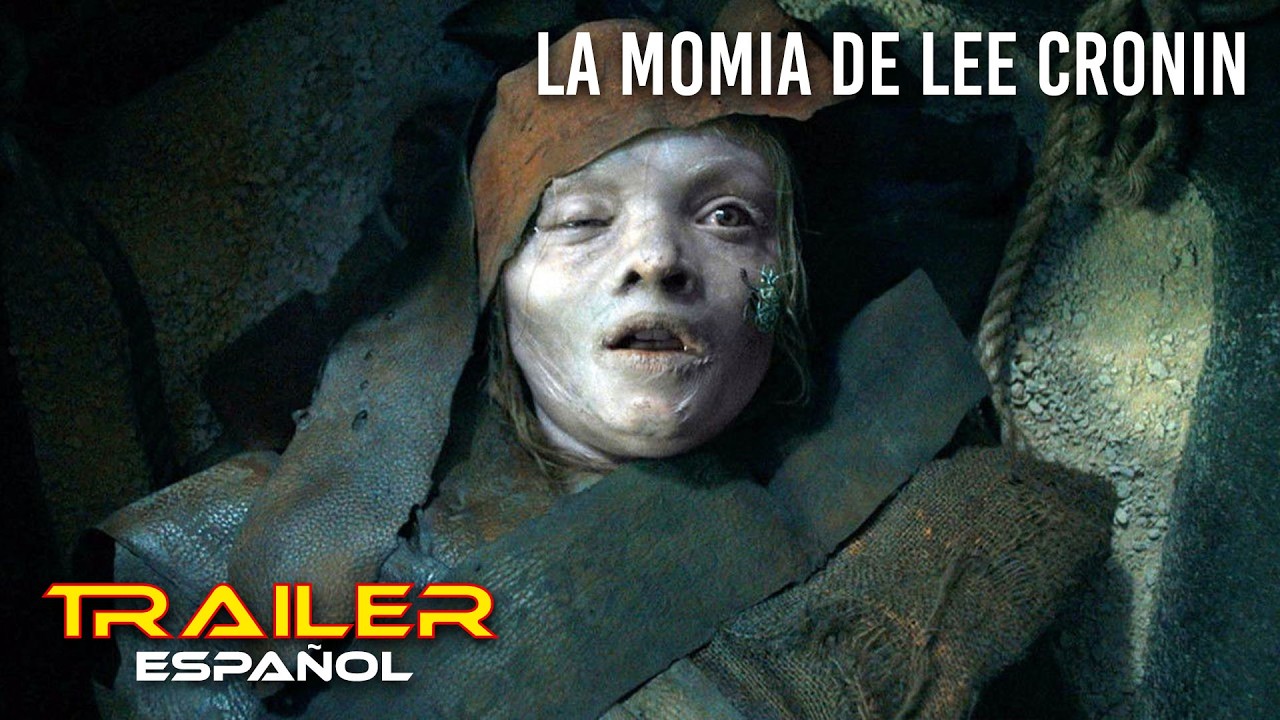
Ending Explained: The Mummy
Ficha de Daños Colaterales en Sala
Certificado de impacto psicofísico emitido por Bastian Noir
1 amago en el tramo intermedio; pestañeo pesado en las transiciones más innecesarias.
Minuto 41 y minuto 89 (comprobando cuánto quedaba de suplicio).
2 espresso para no dejarse vencer por la mediocridad cómoda.
"A mitad del segundo acto cuando la subtrama secundaria empezó a pesar más de lo que aportaba."
💬 El Veredicto de la Comunidad
¿Qué te ha parecido la película? Deja tu nota de 0 a 10 para contrastarla con el análisis de la redacción.
Aún no has votado
📢 ¿Te ha gustado el ácido?
Comparte esta crítica con tus amigos cinéfilos o desata la polémica en redes.
⚡ THE CINEMATIC VENOM YOUR INBOX CRAVES
No sugarcoated ratings, no corporate fluff. Subscribe for our uncensored weekly analysis or join the private Telegram for press previews, poll clashes, and instant alerts.
Alertas de estrenos en 1 segundo, encuestas en caliente y audios al salir de pases de prensa.
Recibe la dosis semanal en tu mail + regalo inmediato del PDF con 50 joyas ocultas de culto.
Related Reviews
Recommended autopsies for demanding film buffs.
 ⚡ Ácido Cítrico5.8
Evil Dead Rise: Or How to Flog the Same Exorcism in a Luxury High-Rise
⚡Del mismo director (Lee Cronin): analiza la evolución o degradación de su estilo.
Lee Cronin revives Sam Raimi’s demons with a bigger budget and zero soul. Sequel or scam? Claqueta Ácida dissects the corpse.
 ⚡ Ácido Cítrico7.5
A Ghost Story: A Journey Through Time and Memory
⚡Afinidad temática directa en atmósfera, estilo y fijaciones visuales.
The Claqueta Ácida review of A Ghost Story, a film that explores existence and human connection.
 ⚡ Ácido Cítrico7.2
Acid in the Veins: Fede Álvarez Revives the Tactile Panic of Alien
⚡Afinidad temática directa en atmósfera, estilo y fijaciones visuales.
Industrial claustrophobia and pure physical terror. A merciless critique of Ian Holm's CGI and the cheap nostalgia that stains the franchise's return.
Editorial Ecosystem
Cinephile connections, archive interviews and related analyses.
🎞️ In Claqueta Cinematheque1

💬 Debate Cinéfilo & Autopsia de Lectores
0 veredictos¿Discrepas con nuestra nota? ¿Es una obra maestra o veneno puro? Deja tu veredicto abajo sin necesidad de registro.


Aún nadie ha dejado su veredicto para esta película.
Sé el primero en clavarle el colmillo rellenando el formulario de arriba.