"Jaws — The Film That Taught Us to Fear the Ocean (And Capitalism)"
A scathing, sarcastic deep-dive into Jaws (1975), Steven Spielberg’s masterclass in turning a malfunctioning shark puppet into the most terrifying villain in cinema history.

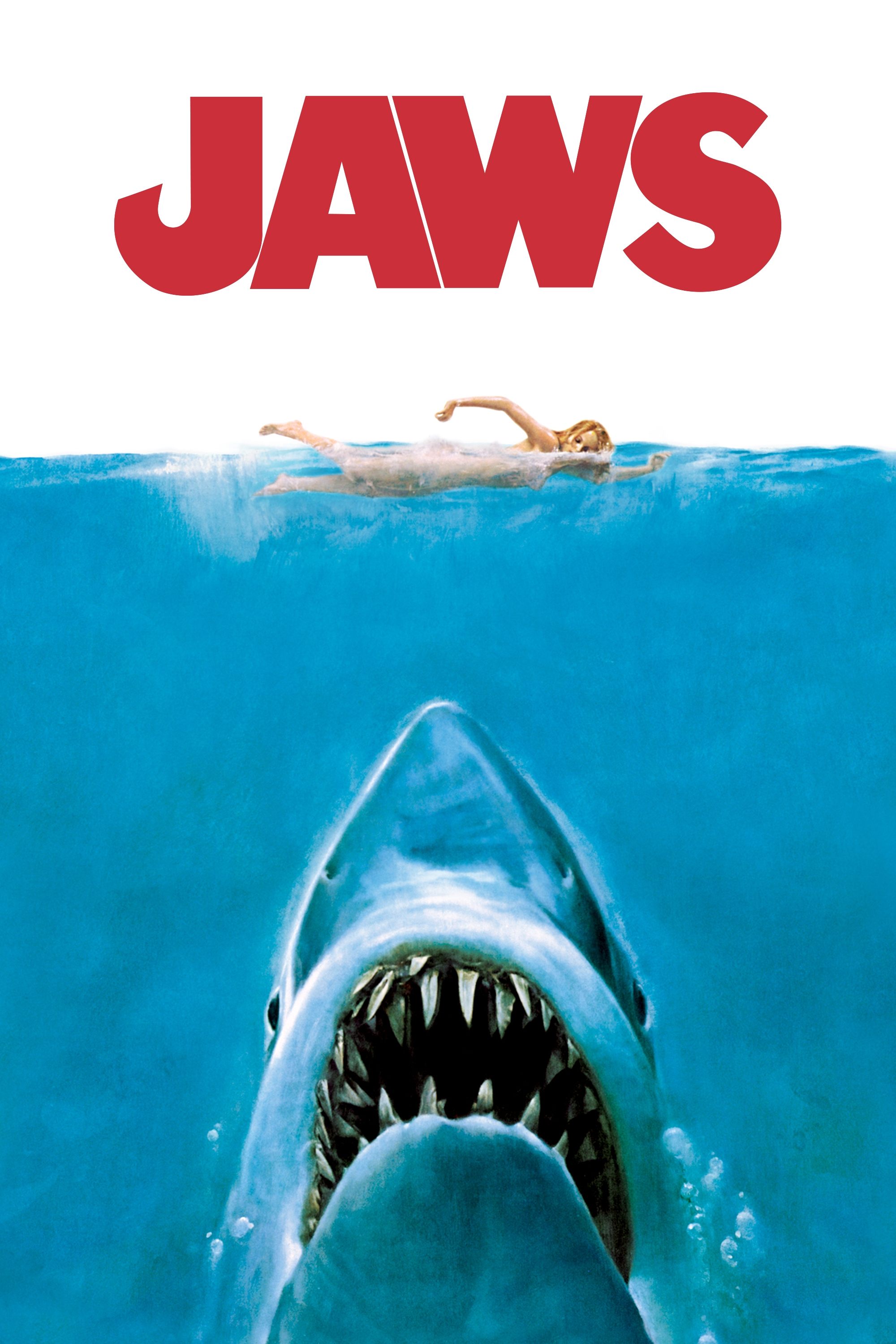


The summer of 1975 didn’t just bring scorching heatwaves and the nauseating stench of cheap sunscreen mixed with public pool chlorine. No, that year, the ocean coughed up something far more terrifying: Jaws, Steven Spielberg’s cinematic leviathan that emerged from the depths of celluloid to devour the complacency of horror films at the time. With a budget that today would barely cover a Hollywood executive’s spare change—just $9 million—Spielberg pulled off the impossible: turning a chunk of fiberglass with teeth into the most iconic monster in film history, one that made generations eye the sea with the same suspicion a cat reserves for a bathtub full of water. $470 million later, the world learned a priceless lesson: never underestimate the power of a good scare, an unforgettable score, and human cowardice disguised as economic pragmatism. Jaws wasn’t just a movie; it was a collective exorcism, a purification ritual where the audience, strapped to their seats like sacrificial victims on an altar, purged decades of repressed aquatic terror. And all thanks to a director who, at just 28, already understood something many filmmakers never grasp: fear isn’t shown—it’s planted, watered, and harvested with the patience of a psychopathic farmer.
The making of Jaws is one of those Hollywood tales it loves to recycle in its "underdog vs. the system" movies: a young director, a skeptical studio, a chaotic shoot, and a result that defies all expectations. Based on Peter Benchley’s novel—a book Spielberg despised for its sensationalist tone and flat characters—the film faced skepticism from Universal Pictures from the start, which saw the project as little more than a pretentious B-movie. The shoot on Martha’s Vineyard became a logistical nightmare: the mechanical sharks, affectionately nicknamed "Bruce" (a nod to Spielberg’s lawyer), sank, malfunctioned, and generally behaved like divas with million-dollar contracts. But here’s the magic of cinema: what should have been a disaster turned into a narrative advantage. Spielberg, with the instincts of a predator, decided not to show the shark for most of the film, turning its absence into its most terrifying presence. The ocean, vast and indifferent, became the true villain, and every shadow beneath the water, every fin breaking the surface, was a potential threat. Fear, like fine wine, gets better with age.
But Jaws isn’t just a lesson in turning limitations into virtues; it’s also a manual on how cinema can manipulate the audience’s emotions with the precision of a sadistic surgeon. Spielberg didn’t settle for scaring us—he wanted to traumatize us. And boy, did he succeed. The opening attack scene, where Chrissie Watkins (played by Susan Backlinie) is dragged through the water in a ballet of terror and despair, is a masterclass in how sound—or rather, the absence of sound—can be more terrifying than any image. The silence, broken only by the splashing water and the victim’s muffled screams, is a symphony of inevitability. Then, the camera submerges, and we see the world from the shark’s perspective: cold, calculating, relentless. Spielberg doesn’t show us a monster; he turns us into one. And when we finally hear the first notes of John Williams’ score—that dun-dun... dun-dun... seared into the collective unconscious—the audience is already lost. The shark could’ve been a foam rubber prop with teeth, but the music turned it into the embodiment of primordial evil. Williams didn’t compose a score; he cast a spell.
The town of Amity Island is another key character in this aquatic nightmare, a microcosm of human stupidity and greed disguised as progress. Mayor Larry Vaughn (played by Murray Hamilton), with his used-car-salesman smile and immaculate white suit, is the perfect villain: a man who’d rather risk human lives than lose a single tourist-season dollar. Amity Island isn’t a town; it’s an all-you-can-eat human buffet, and the mayor is the maître d’ insisting the guests keep piling their plates. The scene where Vaughn pressures Police Chief Martin Brody (a Roy Scheider in top form) to keep the beaches open is a masterful example of how capitalism can be deadlier than any predator. Brody, a city guy trapped in a beachside hell, is the only one who seems to grasp the gravity of the situation—but even he underestimates the shark. The real horror of Jaws isn’t the shark; it’s the certainty that when the shit hits the fan, those in charge will always find an excuse not to act.
The Direction: Spielberg and the Art of Psychological Torture
If there’s one thing that defines Steven Spielberg’s direction in Jaws, it’s his ability to turn the ordinary into the extraordinarily terrifying. The ocean, which for most people symbolizes vacation and relaxation, becomes a nightmarish setting under his gaze. Spielberg doesn’t just direct a horror film—he directs a documentary on human fear, and he does it with surgical precision. Every shot, every camera movement, is calculated to maximize the audience’s discomfort. The scene where Brody, from the beach, watches in horror as the shark attacks a child in the water is a perfect example. Spielberg uses a dizzying zoom to convey Brody’s desperation, as if the camera itself is being dragged into the chaos. This isn’t a shot; it’s a visual scream.
But where Spielberg truly shines is in his handling of suspense. Jaws is, at its core, a slow-burn thriller where the real terror lies not in what’s seen, but in what’s imagined. The director toys with the audience’s patience like a cat with a dying mouse, stretching moments of calm before delivering the payoff. The barrel scene, where the shark drags Quint (a Robert Shaw at his best) and Brody in a desperate, absurd chase, is a study in how dark humor can coexist with pure terror. Cinema, after all, is an act of manipulation, and Spielberg is its grandmaster. Nothing in Jaws is accidental: every frame, every transition, every musical note is designed to keep the audience in a state of constant tension. Spielberg doesn’t invite you to watch a movie; he kidnaps you and subjects you to a psychological experiment. And the worst part? After 49 years, it still works.
The Cast: Three Men and a Shark (Or How to Survive an Aquatic Hell)
The trio of protagonists in Jaws is one of those rare alchemical perfections that cinema seldom replicates. Roy Scheider, Robert Shaw, and Richard Dreyfuss don’t just play their characters—they embody them with an intensity that transcends the screen. Scheider, as Police Chief Martin Brody, is the film’s emotional core. An everyman, a family man, a guy who’d rather be anywhere but on a boat hunting a killer shark. His performance is a masterclass in restraint: Brody isn’t an action hero but an ordinary man thrust into an extraordinary situation. Scheider conveys Brody’s fear, determination, and vulnerability with a naturalism that makes every scene painfully real. When he yells, “You’re gonna need a bigger boat!,” it’s not just an iconic line—it’s the moment Brody accepts his fate and, in the process, gifts us one of cinema’s most memorable quotes.
Robert Shaw, meanwhile, is pure dynamite as Quint, the shark hunter with a dark past and an even darker personality. Shaw, who had already proven his talent in films like The Sting and Battle of Britain, elevates Quint to near-mythological status. His monologue about the USS Indianapolis, where he recounts how sharks devoured the survivors of a WWII shipwreck, is one of the most chilling scenes in cinema. Shaw doesn’t just recite the lines—he lives them, suffers them, spits them out with a contained rage that raises goosebumps. It’s a moment of pure cinema, where acting, writing, and direction fuse into something transcendent. Quint isn’t a character; he’s a force of nature, a man who’s stared into the abyss and decided the abyss owes him money.
Then there’s Richard Dreyfuss as oceanographer Matt Hooper, the intellectual of the group, the guy who knows too much and is thus the most dangerous. Dreyfuss, then a relatively unknown actor, steals every scene he’s in. Hooper is the perfect foil to Brody and Quint: young, arrogant, but also brave and competent. Dreyfuss gives Hooper a nervous energy that contrasts with Shaw’s gravitas and Scheider’s restraint. Their chemistry is palpable, and though tensions simmer between them at first, they gradually become a team united by a common goal: kill the damn shark before the shark kills them. The scene where the three sing “Show Me the Way to Go Home” while drinking is a moment of camaraderie that humanizes the characters and reminds us that, at the end of the day, they’re just three guys on a boat, trying not to piss themselves.
The Technical Aspects: When Craft Becomes Art
If Jaws proves anything, it’s that cinema is a collective art, where every department contributes to creating something greater than the sum of its parts. Bill Butler’s cinematography is largely responsible for the film’s oppressive atmosphere. Butler, who had worked with directors like Francis Ford Coppola and Milos Forman, captures the beauty and terror of the ocean with a color palette that oscillates between turquoise blue and leaden gray. The sea in Jaws isn’t a setting; it’s a character—one that breathes, watches, waits. Butler uses subjective shots to put us in the characters’ shoes, especially in the underwater scenes, where the camera becomes the shark’s eyes. This isn’t cinematography; it’s hypnosis.
Verna Fields’ editing, known as “Mother Cutter” for her ability to shape raw footage, is another pillar of the film. Fields, who had worked with Spielberg on The Sugarland Express, understands that pacing is key in a suspense film. Jaws isn’t a slow movie—it’s a movie that knows when to speed up and when to slow down. Fields uses quick cuts for action scenes but also knows when to linger on a shot to build tension. The attack on the boy at the beach, for example, is edited with near-surgical precision: every cut, every camera movement, is designed to maximize emotional impact. This isn’t editing; it’s cinematic surgery.
John Williams’ score is, without a doubt, one of Jaws’ most iconic elements. Williams, who had already demonstrated his genius in films like Fiddler on the Roof, composes a score that is both simple and devastatingly effective. The main theme, with its ominous dun-dun... dun-dun..., isn’t just music—it’s a premonition, a warning, a threat. Williams doesn’t need complex melodies to convey terror; two notes are enough to make the audience feel the shark’s presence. The music in Jaws doesn’t accompany the film; it stalks it, pursues it, devours it. And when Williams introduces the triumphant theme in the end credits, it’s as if the ocean itself breathes a sigh of relief. This isn’t a score; it’s an exorcism.
Joe Alves’ production design and Ruth Myers’ costumes also deserve special mention. Alves, who had worked as a production designer on Close Encounters of the Third Kind, creates a world that is both realistic and stylized. Amity Island isn’t just any town; it’s a place where the sun always shines, but darkness lurks beneath the surface. The design of the mechanical shark, though problematic during filming, is an engineering marvel. Bruce isn’t a shark; he’s a fiberglass and metal nightmare, a Frankenstein of the deep brought to life by the magic of cinema. Meanwhile, Myers’ costumes help define the characters: Brody in his police uniform, always slightly out of place in the beach setting; Quint in his worn-out clothes and sea-wolf demeanor; Hooper in his scientist’s attire, pristine but impractical. The costumes in Jaws aren’t just clothes; they’re extensions of the characters.
The Best
- Steven Spielberg’s direction: A masterclass in building suspense, where every shot, every camera movement, is designed to keep the audience on the edge of their seats. Spielberg doesn’t direct a movie; he orchestrates a nightmare.
- Robert Shaw’s performance: Quint is one of cinema’s most memorable characters, and Shaw plays him with an intensity that borders on the supernatural. His USS Indianapolis monologue is pure acting dynamite.
- John Williams’ score: Two notes are all it takes for the audience to feel the shark’s presence. Williams didn’t compose a score; he cast a spell.
- Bill Butler’s cinematography: The ocean has never been so beautiful and terrifying at the same time. Butler doesn’t film the sea; he turns it into a character.
- The screenplay by Peter Benchley and Carl Gottlieb: Though the original novel had its issues, the script balances terror, humor, and drama with surgical precision. This isn’t a screenplay; it’s a manual on how to write a horror film.
The Worst
- The shark’s special effects: Bruce, the mechanical shark, was a technical disaster that constantly malfunctioned. Instead of a terrifying predator, he sometimes looked like an anxious pool toy. Fortunately, Spielberg turned this limitation into a strength.
- The development of some secondary characters: Characters like Mayor Vaughn or Brody’s wife, Ellen (played by Lorraine Gary), are little more than stereotypes. Vaughn is the perfect villain, but his motivation boils down to “money is more important than human lives.”
- Some forced transitional scenes: There are moments when the film seems to rush to the next action scene, as if afraid the audience might get bored. The pacing is generally excellent, but there are a couple of bumps.
- The slightly rushed ending: After so much built-up tension, the film’s climax resolves too quickly, leaving the audience feeling like they’ve been robbed of dessert. It’s not a bad ending, but after so much anticipation, you expect something more... epic.
The Verdict of Claqueta Ácida
Jaws isn’t just a movie—it’s a cinematic rite of passage, a reminder that cinema, at its best, can be as powerful as the ocean: vast, unpredictable, and capable of dragging you into the depths before you realize it. Spielberg, with his genius for suspense and his ability to turn limitations into virtues, created a masterpiece that continues to terrify and fascinate nearly five decades later. This isn’t a horror film; it’s a manual on how fear can be as addictive as sugar. Scheider, Shaw, and Dreyfuss deliver performances that are pure dynamite, and Williams’ score is the sonic equivalent of a gut punch. Jaws doesn’t invite you to watch a movie; it forces you to live an experience, then spits you out on the shore, trembling, with the certainty that you’ll never look at the sea the same way again.
But like all great works, Jaws has its shadows: special effects that aged worse than cheap wine, forgettable secondary characters, and an ending that, while satisfying, leaves you wanting more after so much built-up tension. It’s like a gourmet feast with a disappointing dessert—you’re left hungry in the end. Yet these flaws don’t dim its greatness. Jaws is, and always will be, the great white shark of cinema: imposing, relentless, and eternal. If you haven’t seen it yet, do yourself a favor: buy a ticket to Amity Island, but don’t get too close to the water. 💀
🎬 Tráiler Oficial
Abrir en YouTube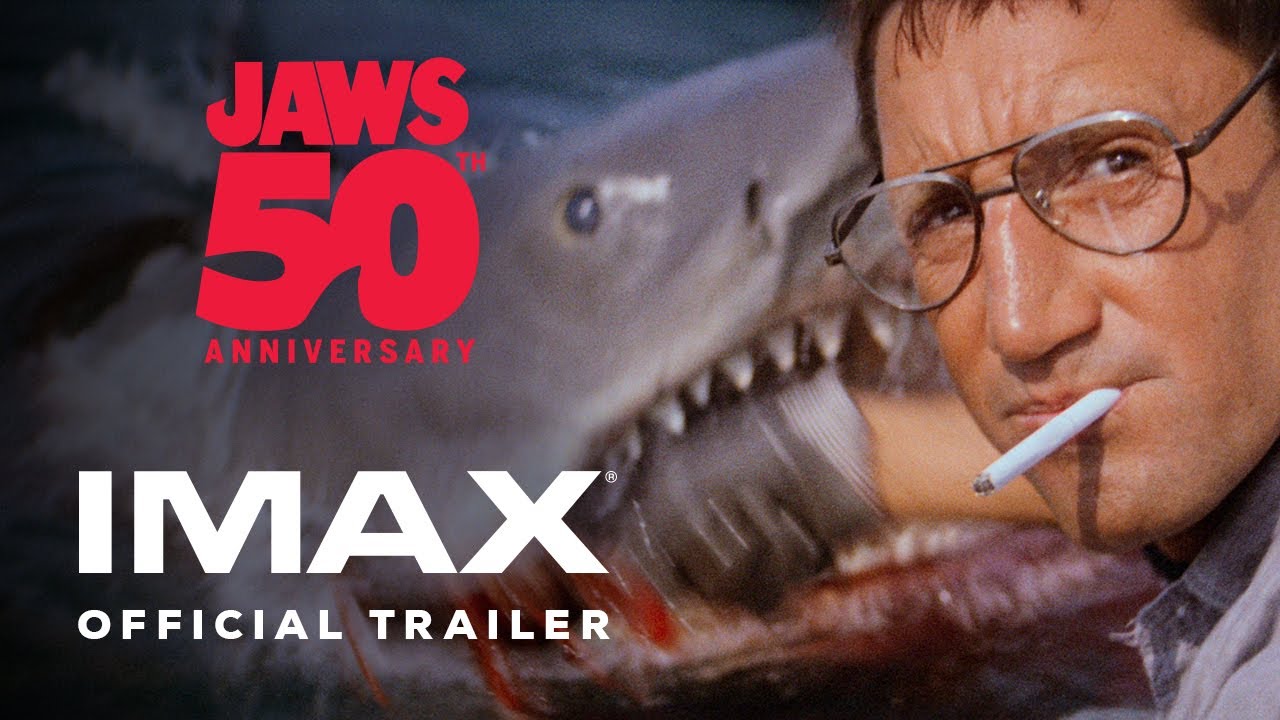
Ending Explained: "Jaws
Ficha de Daños Colaterales en Sala
Certificado de impacto psicofísico emitido por Valeria Von Doom
Ni un solo parpadeo voluntario. El asiento, inusualmente cómodo.
El móvil permaneció en el bolsillo donde debía estar.
Ninguna. Esta obra no necesita muletas estimulantes.
"No hubo. La coherencia se mantuvo hasta el último fotograma."
💬 El Veredicto de la Comunidad
¿Qué te ha parecido la película? Deja tu nota de 0 a 10 para contrastarla con el análisis de la redacción.
Aún no has votado
📢 ¿Te ha gustado el ácido?
Comparte esta crítica con tus amigos cinéfilos o desata la polémica en redes.
⚡ THE CINEMATIC VENOM YOUR INBOX CRAVES
No sugarcoated ratings, no corporate fluff. Subscribe for our uncensored weekly analysis or join the private Telegram for press previews, poll clashes, and instant alerts.
Alertas de estrenos en 1 segundo, encuestas en caliente y audios al salir de pases de prensa.
Recibe la dosis semanal en tu mail + regalo inmediato del PDF con 50 joyas ocultas de culto.
Related Reviews
Recommended autopsies for demanding film buffs.
 🔥 Fusión Nuclear9.5
*2001: A Space Odyssey – A Monkey, a Monolith, and Two Hours of Cosmic Pretentiousness*
⚡Afinidad temática directa en atmósfera, estilo y fijaciones visuales.
We dissect Stanley Kubrick’s magnum opus. A visual feast of minimalism and space hypnosis that cemented "serious" sci-fi—and bored half of humanity to tears.
 🔥 Fusión Nuclear9.3
2001: A Space Odyssey — The Day Kubrick Left Us Speechless (and Oxygenless)
⚡Afinidad temática directa en atmósfera, estilo y fijaciones visuales.
Kubrick turned science fiction into pure art: 149 minutes of eloquent silence, bone-wielding apes, and a psychopathic computer. Masterpiece or pretentious fraud? Here’s the verdict.
 🔥 Fusión Nuclear8.5
*A Clockwork Orange: The Sweet, Rusty Aftertaste of Violent Haute Couture*
⚡Afinidad temática directa en atmósfera, estilo y fijaciones visuales.
A scathing review of Kubrick’s masterpiece, where ultraviolence meets 60s fashion in a twisted pas de deux.
Editorial Ecosystem
Cinephile connections, archive interviews and related analyses.
🎞️ In Claqueta Cinematheque1
💬 Debate Cinéfilo & Autopsia de Lectores
0 veredictos¿Discrepas con nuestra nota? ¿Es una obra maestra o veneno puro? Deja tu veredicto abajo sin necesidad de registro.


Aún nadie ha dejado su veredicto para esta película.
Sé el primero en clavarle el colmillo rellenando el formulario de arriba.