Gran Torino — Clint Eastwood’s Last Stand in a Neighborhood Without Horses
Clint Eastwood bids farewell to cinema with an urban western that’s a hymn to loneliness and redemption—if by "hymn" you mean a raspy growl from a man who’d rather spit on your shoes than sing you a lullaby.

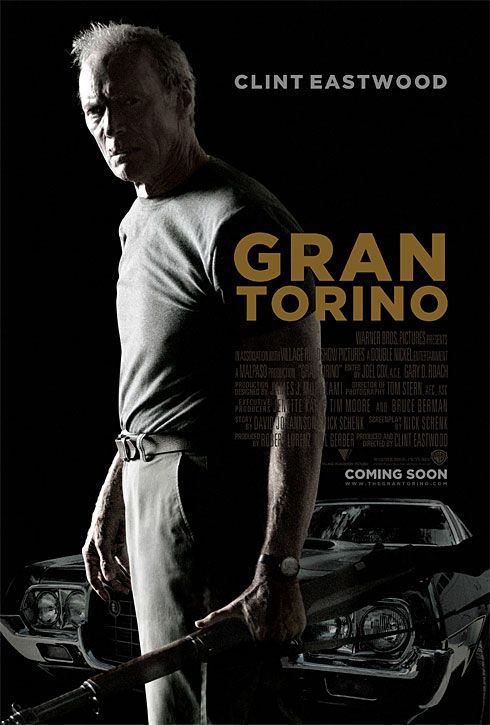


Clint Eastwood, that grizzled old salt of cinema who’s spent decades spitting both metaphorical and literal bullets with the same precision he reserves for spitting on political correctness, gifts us Gran Torino (2008)—one of his last great works as both actor and director. And he does it in true Eastwood fashion: no concessions, no sugarcoating, and a dose of cynicism so potent even the most naive viewer will leave the theater wondering if they just watched a movie or a survival manual for post-industrial America. Because Gran Torino isn’t just an urban western—it’s an epitaph. The epitaph of Walt Kowalski, of Detroit, of the white working class, and, ultimately, of Eastwood’s own legend. And what a gloriously bitter epitaph it is.
finalExplicado: "Walt Kowalski se sacrifica deliberadamente. Provoca a la pandilla frente a la casa de Thao y Sue, los incita a dispararle a sangre fría delante de decenas de testigos, y muere acribillado en su propio césped. Su muerte es un acto calculado: con ella libera a Thao de la venganza, condena a los asesinos a cadena perpetua y salva al barrio. Simbólicamente, es la última barricada del cowboy obsoleto. Walt expía su racismo, su violencia y su culpa de guerra ofreciéndose como chivo expiatorio redentor. Muere para que el joven inmigrante viva, y en ese gesto final el dinosaurio racista se convierte en mártir laico, dejando atrás un mundo que ya no le pertenece."
The Last Cowboy in a Neighborhood Without Horses
Walt Kowalski is a living fossil. A Korean War veteran clinging to his house as if it were the last bastion of a fallen empire, while around him, Detroit crumbles like a mud pie in the rain. His neighborhood, once a proud enclave of white workers, is now a mosaic of Hmong immigrants, gangs, and abandoned homes straight out of a zombie-apocalypse documentary. But Walt isn’t a zombie. He’s something worse: a living man who refuses to accept that the world is no longer his. And that’s the genius of Eastwood as both director and actor—he makes us hate Walt as much as we pity him, laugh at his stubbornness as much as we shudder at his loneliness.
The film opens with Walt’s wife’s funeral, a moment Eastwood films with almost surgical coldness. No tears, no emotive music, just the uncomfortable silence of a man who’s buried his lifelong partner and is now left alone with his dog, his beer, and his rifle. It’s a prologue that says it all: Walt doesn’t need words to express his grief because, deep down, he doesn’t even know how. His language is silence, brusque gestures, grunts. It’s the tongue of men who grew up believing emotions were a luxury they couldn’t afford. And Eastwood, who’s spent decades perfecting the art of communicating with a look rather than dialogue, nails it.
The Script: When Racism Is Just the Tip of the Iceberg
Nick Schenk’s script is one of those rare beasts that works because, instead of moralizing, it shows. Walt Kowalski is a textbook racist. A guy who hurls slurs at his Hmong neighbors with the same ease he spits on the ground. But Schenk and Eastwood don’t fall into the trap of turning him into a one-dimensional villain. No, Walt is a racist because he’s a scared man. Scared of losing what little he has left, scared the world he knew is vanishing, scared of growing old and realizing he’s no longer the tough guy he once was. His racism isn’t ideological; it’s visceral, almost animalistic. And that’s where the character’s complexity lies: he hates others because, deep down, he hates himself.
Walt’s relationship with his Hmong neighbors—especially the young Thao (Bee Vang) and his sister Sue (Ahney Her)—is the film’s heart. Thao is a shy, awkward teenager who tries to steal Walt’s Gran Torino as part of a gang initiation ritual. When Walt catches him, instead of calling the cops, he subjects him to medieval punishment: working for him. What starts as a master-slave dynamic (with Walt as the feudal lord and Thao as the resigned serf) evolves into something far more complex. Walt, unintentionally, becomes a father figure to Thao, a mentor who teaches him what no other man in his life has: discipline, respect, and, above all, how to stand up for himself. But as with everything in this film, redemption comes at a price.
Schenk’s script is smart because it avoids black-and-white morality. The Hmong aren’t saints, and Walt isn’t a monster. They’re people trapped in a system that ignores them, pushes them to the margins, and offers only two options: submit or rebel. The gangs terrorizing the neighborhood aren’t just an abstract threat; they’re the logical result of an environment where violence is the only currency. And Walt, with his outdated code of honor and arsenal of guns, is as much part of the problem as he is the solution.
The Direction: Eastwood in "Less Is More" Mode
Clint Eastwood understands a fundamental truth about cinema: sometimes, what you don’t show is more powerful than what you do. Gran Torino is full of moments where the camera lingers, observing, as characters bare their souls without uttering a word. A perfect example is the scene where Walt, drunk, confesses to his dog that he misses his wife. No music, no dramatic close-ups—just an old man talking to his dog as if it were the only creature in the world that won’t judge him. It’s a scene that could’ve been ridiculous in another director’s hands, but Eastwood films it with brutal honesty.
Another key moment is the sequence where Walt teaches Thao how to use a hammer. No dialogue, just the sound of blows and Thao’s concentrated gaze. It’s a scene that encapsulates the entire film: Walt can’t give Thao a better future, but he can give him the tools to defend himself. And he does it without sentimentality, without grand speeches. Because Walt isn’t a hero. He’s a man who, in the twilight of his life, discovers that the only way to redeem himself is by accepting he can’t change the world—only one person.
Tom Stern’s cinematography is another highlight. Stern, a frequent Eastwood collaborator, captures Detroit as if it were a character itself: dirty, decaying, but with a melancholic beauty. The wide shots of abandoned houses, rusted cars, and empty streets convey a sense of desolation that mirrors Walt’s emotional state. And when the film ventures into the Hmong neighborhood, Stern uses warmer, almost saturated colors to contrast with the coldness of Walt’s home. It’s a smart visual choice that reinforces the idea that, no matter how much Walt resists, the world around him is no longer black and white.
The Performances: When Silence Speaks Louder Than Words
Clint Eastwood isn’t an actor who needs a lot of dialogue to convey emotion. His performance in Gran Torino is a masterclass in expressive economy. Every glance, every gesture, every sigh carries more weight than a Shakespearean monologue. Walt Kowalski is a man who’s spent his entire life repressing his emotions, and Eastwood plays him with a restraint that borders on the superhuman. When he finally explodes—whether in a burst of violence or a moment of vulnerability—the impact is devastating.
But if Eastwood is the film’s heart, Bee Vang is its soul. Thao could’ve been a cliché—the young immigrant who needs a white mentor to "save" him—but Vang plays him with a naturalness that disarms. There’s nothing forced about his performance; it’s as if he’s living Thao’s story. His chemistry with Eastwood is palpable, and it’s that chemistry that makes Walt and Thao’s relationship work. They’re not friends, not father and son—just two lost souls who find each other at the right moment.
Ahney Her, who plays Sue, Thao’s sister, also deserves mention. Sue is a fascinating character because she’s the only one who openly challenges Walt. She’s not afraid of him, doesn’t idealize him, and that drives him crazy. Her plays Sue with a mix of sweetness and steel that makes her one of the film’s most memorable characters.
The Score: When Silence Is the Best Music
The music by Kyle Eastwood (Clint’s son) and Michael Stevens is another of Gran Torino’s strengths. It’s not an intrusive score but a subtle accompaniment that enhances the film’s atmosphere. There are moments where the music is absent—like at Walt’s wife’s funeral, where silence speaks louder than any orchestral swell. And when the music does appear, it’s understated: an acoustic guitar here, a melancholic piano there. It’s a score that doesn’t manipulate the audience’s emotions but accompanies them.
The Ending: When Redemption Comes at a Price
No spoilers, but the ending of Gran Torino is one of those cinematic moments that leaves you breathless. Not because it’s unexpected (it’s not), but because it’s inevitable. Eastwood doesn’t lie to us with false hope; he shows us that redemption isn’t free, that sometimes you have to pay a steep price for it. And he does it without sentimentality, without concessions. It’s an ending that hurts but also comforts, because it reminds us that sometimes the only way to find peace is by accepting there’s nothing left to do.
The best
- Clint Eastwood’s performance: A reminder that the guy can say more with a grunt than most actors can with a three-page soliloquy.
- The chemistry between Eastwood and Bee Vang: Two generations, two worlds, one language: silence.
The worst
- The priest, flatter than a cardboard cutout: Christopher Carley tries, but not even he can save a character written with the depth of a self-help pamphlet.
- The ending, as predictable as a soap opera: Inevitable? Yes. But you can’t help wishing Eastwood had thrown us a curveball.
The Verdict of Claqueta Ácida (8.5/10)
Gran Torino smells like burnt gasoline, cheap beer, and toxic nostalgia. Clint Eastwood delivers his last great acting role—a performance that’s both a farewell and a middle finger to anyone who thought he was washed up. It’s not a perfect film (what is?), but it’s honest, raw, and, above all, necessary. Because in a world where cinema is overrun with invincible superheroes and cardboard happy endings, Gran Torino is a reminder that sometimes redemption doesn’t come with a hug—it comes with a gunshot. And that, dear readers, is art in its purest form. ☠️🎬 Tráiler Oficial
Abrir en YouTube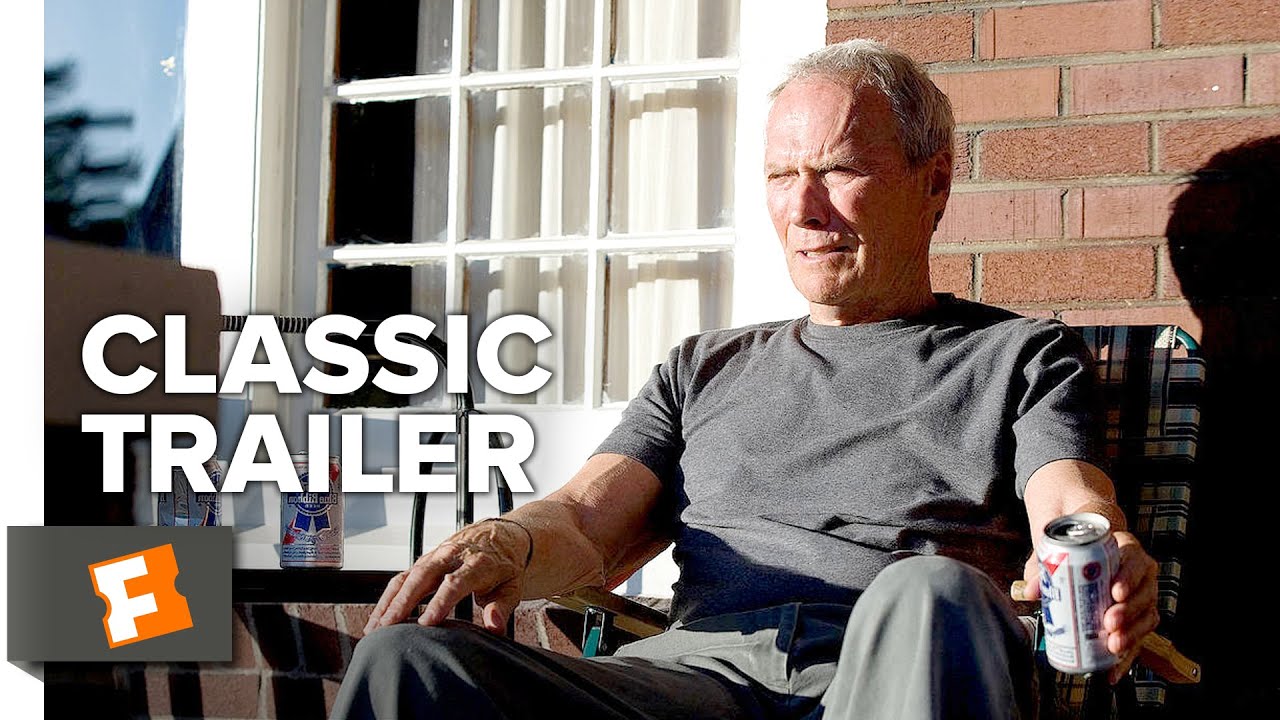
Ending Explained: Gran Torino
Ficha de Daños Colaterales en Sala
Certificado de impacto psicofísico emitido por Lúa Ácida
Cero bostezos. Pupilas dilatadas y tensión mandibular constante.
Ninguna comprobación del tiempo. Se agradece la rareza.
Ninguna. Esta obra no necesita muletas estimulantes.
"No aplica. La obra se sostiene sola."
💬 El Veredicto de la Comunidad
¿Qué te ha parecido la película? Deja tu nota de 0 a 10 para contrastarla con el análisis de la redacción.
Aún no has votado
📢 ¿Te ha gustado el ácido?
Comparte esta crítica con tus amigos cinéfilos o desata la polémica en redes.
⚡ THE CINEMATIC VENOM YOUR INBOX CRAVES
No sugarcoated ratings, no corporate fluff. Subscribe for our uncensored weekly analysis or join the private Telegram for press previews, poll clashes, and instant alerts.
Alertas de estrenos en 1 segundo, encuestas en caliente y audios al salir de pases de prensa.
Recibe la dosis semanal en tu mail + regalo inmediato del PDF con 50 joyas ocultas de culto.
Related Reviews
Recommended autopsies for demanding film buffs.
 🔥 Fusión Nuclear8.5
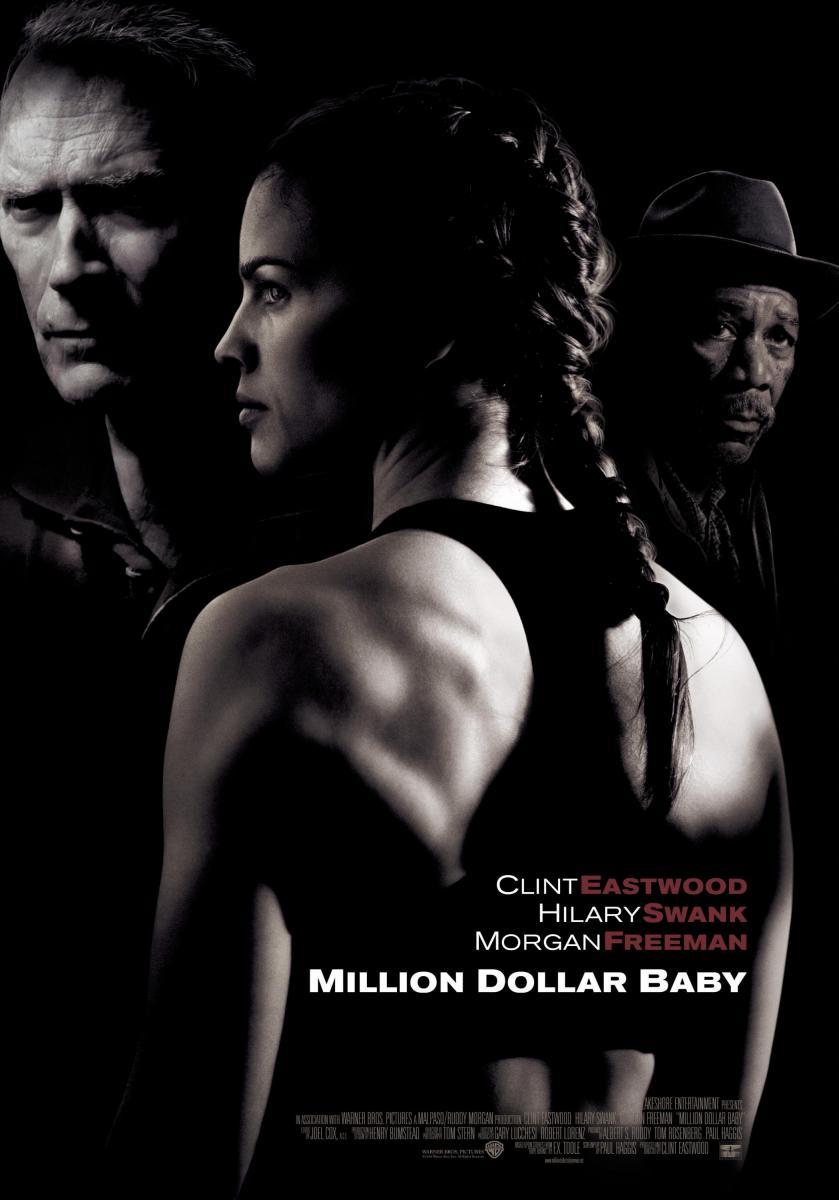
*Million Dollar Baby: The Ring’s Fable That Knocked Us Out with Its Gilded Bile*
⚡Del mismo director (Clint Eastwood): analiza la evolución o degradación de su estilo.
Clint Eastwood turns a boxing drama into a premature funeral. Maggie Fitzgerald reminds us that the real knockout punch is life itself.
 🔥 Fusión Nuclear9.5
*2001: A Space Odyssey – A Monkey, a Monolith, and Two Hours of Cosmic Pretentiousness*
⚡Consagradas en el olimpo transgresor con 🔥 Fusión Nuclear.
We dissect Stanley Kubrick’s magnum opus. A visual feast of minimalism and space hypnosis that cemented "serious" sci-fi—and bored half of humanity to tears.
 🔥 Fusión Nuclear9.3
2001: A Space Odyssey — The Day Kubrick Left Us Speechless (and Oxygenless)
⚡Consagradas en el olimpo transgresor con 🔥 Fusión Nuclear.
Kubrick turned science fiction into pure art: 149 minutes of eloquent silence, bone-wielding apes, and a psychopathic computer. Masterpiece or pretentious fraud? Here’s the verdict.
Editorial Ecosystem
Cinephile connections, archive interviews and related analyses.
🎞️ In Claqueta Cinematheque1
💬 Debate Cinéfilo & Autopsia de Lectores
0 veredictos¿Discrepas con nuestra nota? ¿Es una obra maestra o veneno puro? Deja tu veredicto abajo sin necesidad de registro.

Aún nadie ha dejado su veredicto para esta película.
Sé el primero en clavarle el colmillo rellenando el formulario de arriba.