Through the Glass Darkly — A Spanish Descent into the Abyss of the Human Soul
A scathing review of the 1986 Spanish film that dissects the darkness of the human soul—without anesthesia.

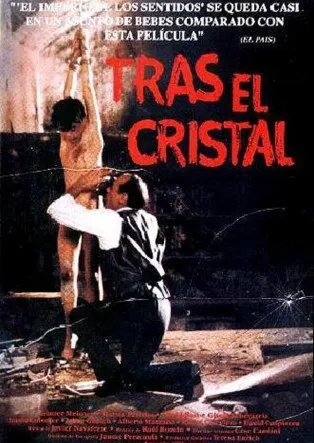

The celluloid writhes like a corpse’s skin under the Mallorcan sun, and from that glorious rot emerges ‘In a Glass Cage’, Agustí Villaronga’s cursed masterpiece, which arrived in 1986 to remind us that Spanish cinema could reek of burnt flesh and unspeakable secrets. This isn’t a movie—it’s an exorcism filmed with the precision of a Nazi surgeon (irony of fate, indeed) and the sensitivity of a poet who’s seen too much. Villaronga, that Catalan with an icy gaze and trembling hands, had already proven with ‘Anta Woman’ (1976) that he didn’t flinch when dissecting human decay. But here, with ‘In a Glass Cage’, he outdoes himself in a symphony of shadows, sweat, and silence. The film emerged at a time when Spanish cinema was still licking its wounds from the Transition, trapped between cheap nudity and textbook social realism, like a wounded animal growling through gritted teeth. Villaronga, however, chose the howl: a guttural scream echoing through the dark corridors of a decaying mansion, where every painting seems painted with the blood of the damned and every mirror reflects not a face, but a sin.
The genesis of ‘In a Glass Cage’ is almost as twisted as its plot. Villaronga, obsessed with the traumas of World War II and the scars left by abuse, drew inspiration from real events—or at least, their most sordid version—to craft his tale. The script, co-written with Isabel Clara Simó, is a labyrinth of flashbacks and half-truths where memory plays both executioner and victim. The production, modest but ambitious, had the backing of Spanish Television (TVE) and Profile Films, a marriage of convenience that allowed Villaronga to shoot on a tight budget but without creative shackles. That said, the shoot wasn’t a bed of roses: tensions between the crew and cast—especially with Günter Meisner, that German giant with a steel gaze—were so palpable you could’ve cut them with the same scalpel that appears on screen. But, as Villaronga himself might say, art is born from conflict, and ‘In a Glass Cage’ is living proof that hell can be a film set if you know how to stoke the flames.
The film opens with a tracking shot that warns us right away: this won’t be a stroll through Retiro Park. The camera, like a predator stalking its prey, glides through the halls of a mansion straight out of a fever dream by Mario Bava, with walls sweating humidity and furniture draped in white sheets like shrouds. Ángelo, played by the young David Sust, bursts onto the scene like a fallen angel in a world of corrupt adults, his presence so unsettling you don’t know whether to hug him or call an exorcist. But the true gravitational center of the film is Klaus, the German doctor played by Günter Meisner, a man trapped in his own glass prison—literally, since his paralyzed body forces him to live in a methacrylate urn—and figuratively, in the ghosts of his past. Meisner, a German theater actor with more wrinkles than an ancient map, delivers a performance that’s pure alchemy: a mix of fragility and monstrosity, vulnerability and sadism. His Klaus isn’t a typical villain but a broken man who’s turned his pain into a weapon, his voice—a deep, whispering rasp—like fingernails scraping a chalkboard full of secrets.
But ‘In a Glass Cage’ wouldn’t be the masterpiece it is without the rest of the cast, who seem plucked from a nightmare by Luis Buñuel at his most surreal. Marisa Paredes, as Griselda, Klaus’s wife, is a blend of decaying elegance and repressed desperation, as if Bette Davis and Ana Torrent had a child in an asylum. Her gaze, heavy with reproach and desire, can freeze blood with a single blink. And then there’s Gisèle Echevarría, playing Rena, the nurse who cares for Klaus with a devotion bordering on the sick. Echevarría, with her porcelain face and broken-doll smile, conveys a disturbing sexuality, as if Lolita and Rosemary’s Baby had a clandestine rendezvous in a psychiatric hospital. The supporting cast, though less developed, serve their purpose: they’re shadows moving at the edges of the frame, like ghosts whispering truths no one wants to hear.
Direction: The Art of Filming Rot
Agustí Villaronga doesn’t direct ‘In a Glass Cage’—he sculpts it with a scalpel, carving every shot as if it were the final act of a macabre ritual. His mise-en-scène is a masterclass in turning the mundane into something sinister: a simple family meal becomes a cannibalistic feast, and a stroll through the garden feels like a descent into hell. Influenced by German Expressionism and Italian giallo, Villaronga plays with shadows like a sadistic puppeteer, stretching silhouettes until they deform and using light not to illuminate, but to reveal the darkness lurking in every corner. The close-ups—a half-open eye, trembling hands, an insect crawling across the floor—are so disturbing you’ll feel the need to scrub your retinas afterward.
The film’s use of color is another triumph. Villaronga and cinematographer Jaume Peracaula opt for a palette of sickly earth tones and greens, as if the movie were shot underwater or inside a stomach. When reds appear, they do so like splatters of blood on a white canvas, a reminder that beneath civilization’s polished surface, something far more primal and dangerous lurks. The camera moves with deliberate slowness, as if sedated, but this apparent calm only heightens the tension. When violence erupts—and it does, with the force of a volcano—it’s all the more shocking by contrast.
But what truly elevates Villaronga’s direction to art is his ability to make the audience feel the weight of guilt. There’s no cheap moralizing in ‘In a Glass Cage’, no easy lessons about good and evil. Instead, Villaronga forces us to stare into the abyss and ask ourselves if, in their shoes, we would’ve acted differently. And that, dear readers, is more terrifying than any jump scare from James Wan.
Performances: The Theater of the Damned
If ‘In a Glass Cage’ proves anything, it’s that 1980s Spanish cinema wasn’t dead—it was just sleeping in a coffin of cheap celluloid. And when it woke up, it did so with a cast that seemed handpicked from a luxury asylum. Günter Meisner, as Klaus, is the film’s black heart, an actor seemingly born to play men broken by war and remorse. His performance is a masterclass in restraint: every gesture, every glance, every whisper is calculated to the millimeter, as if he were playing a wheelchair-bound Hamlet. Meisner doesn’t act—he inhabits Klaus, with an intensity that’s almost obscene. When he whispers lines like «Pain is the only thing that makes us feel alive», you won’t know whether to applaud or run screaming from the theater.
But ‘In a Glass Cage’ wouldn’t be the same without Marisa Paredes, an actress who seems plucked from a Goya painting at his darkest. Her Griselda is a woman trapped between duty and desire, love and hate, and Paredes conveys that duality with a naturalness that’s downright eerie. There’s one scene in particular—the kitchen confrontation between Griselda and Ángelo—that’s pure theater of the absurd: the dialogue is razor-sharp, and the sexual tension between them is so thick you could cut it with a knife. Paredes, with her gravelly voice and fiery gaze, turns every line into a poisoned dart, and you can’t help but wonder how the hell Villaronga managed to keep a scene so laden with subtext from collapsing under its own weight.
And then there’s David Sust, the young actor playing Ángelo, the catalyst for the entire plot. With his angelic face and bad-boy smile, Sust conveys an innocence that borders on the uncanny. His Ángelo isn’t a hero, nor even an antihero—he’s a distorting mirror in which the other characters (and the audience) see their worst instincts reflected. There’s something deeply unsettling about Sust’s performance, as if he’s channeling the demons of Dennis Hopper in ‘Blue Velvet’ and Malcolm McDowell in ‘A Clockwork Orange’. When Ángelo smiles, you know something bad is about to happen. And he’s almost always right.
Technical Aspects: The Anatomy of a Nightmare
If direction and performances are the skeleton and muscles of ‘In a Glass Cage’, the technical aspects are its nervous system: the elements that make the film not just seen, but felt, like a knife slowly twisting in your gut. Let’s start with Jaume Peracaula’s cinematography, a work that deserves an altar in the temple of psychological horror. Peracaula, a frequent Villaronga collaborator, creates an oppressive atmosphere with a near-miraculous economy of means. Every frame seems plucked from a fever dream: high-angle shots that make you feel like you’re peering down from the ceiling, elongated shadows slithering across walls like snakes, and those close-ups that capture every wrinkle, every bead of sweat, every micro-expression with near-pornographic rawness. The lighting, inspired by Caravaggio’s chiaroscuro, turns every scene into a living painting, where light and darkness battle for dominance.
The production design, by Lina Montero, is another standout. The mansion where most of the action takes place isn’t just a set—it’s a character in its own right, a living space that breathes decay and secrets. The endless hallways, the staircases that seem to lead nowhere, the mirrors that reflect not just images but uncomfortable truths: everything is designed to make the audience feel trapped, as if wandering the halls of their own mind. And then there are the details: Klaus’s personal effects—medical books with macabre illustrations, glass jars with suspicious liquids, the broken toys of a child who never grew up. Montero doesn’t decorate; she builds a personalized hell for each character.
The score, composed by Javier Navarrete, is minimalist but effective, like the buzz of a fly in an empty room. Navarrete, who later gained fame for his work on ‘Pan’s Labyrinth’, opts here for an ambient soundscape: the creak of a door, the drip of a faucet, the whisper of wind through the trees. When music does appear—usually in the form of tense strings or a piano played as if with boxing gloves—it’s to underscore moments of peak tension, like a finger pressing on an open wound. It’s not a score you’ll hum on your way out of the theater, but it’s impossible to forget, because it lodges in your brain like a traumatic memory.
The editing, by Teresa Font—a frequent collaborator of Pedro Almodóvar—is another element that makes ‘In a Glass Cage’ such an intense experience. Font plays with pacing like a lion tamer, alternating scenes of apparent calm with bursts of explosive violence. The flashbacks, in particular, are integrated with supernatural mastery: they’re not just time jumps but open wounds bleeding into the film’s present. And then there are the fades to black, which aren’t mere transitions but dramatic pauses that force us to ask what the hell just happened—and, more importantly, what’s coming next.
The Best
Agustí Villaronga’s direction: A masterclass in cinematic sadism that turns the mundane into something sinister, as if David Lynch and Luis Buñuel teamed up to shoot an episode of ‘The Twilight Zone’* in an abandoned mansion.
- Günter Meisner’s performance: An acting tour de force that oscillates between the sublime and the grotesque, like if Klaus Kinski and Anthony Hopkins had a bastard child in an asylum. His Klaus isn’t a villain—he’s a broken mirror reflecting all of us.
- Jaume Peracaula’s cinematography: A work that deserves to be studied in film schools, where every frame seems painted with the blood of the damned and light has the consistency of fog in a graveyard.
Lina Montero’s production design: The mansion in ‘In a Glass Cage’* isn’t a set—it’s a living organism that breathes decay and secrets, as if Tim Burton designed Sigmund Freud’s personal hell.
The chemistry between Marisa Paredes and David Sust: A toxic, fascinating relationship, like if ‘Lolita’ and ‘What Ever Happened to Baby Jane?’* had a child in a psychiatric ward. Every scene between them is a duel to the death disguised as dialogue.
The Worst
Underdeveloped secondary characters: While Klaus, Griselda, and Ángelo are sculpted with surgical precision, others—like nurse Rena—are left in limbo, as if Villaronga forgot they deserved a little attention. It’s like ‘In a Glass Cage’* is a feast where only three guests get seconds.
Pacing issues: Some scenes drag on longer than necessary, as if the film is savoring its own oppressive atmosphere a little too much. At times, you get the sense that ‘In a Glass Cage’* could’ve been even more impactful with tighter editing, like a ‘Psycho’ without filler.
The score: While effective, Javier Navarrete’s soundtrack is so minimalist it sometimes feels like the film has run out of music. It’s not a cardinal sin, but you can’t help wondering how ‘In a Glass Cage’ would’ve sounded with a more elaborate score, like ‘The Shining’ or ‘Suspiria’*.
- Lack of historical context: The film unfolds in a temporal limbo that could be the 50s, 60s, or even the 80s. While this reinforces the timelessness, it can also be confusing—are we watching a postwar drama or a contemporary psychological thriller?
The ending: Without spoilers, let’s just say the conclusion of ‘In a Glass Cage’ is so ambiguous you won’t know whether to applaud its boldness or curse its cowardice. Villaronga opts for ambiguity, but sometimes ambiguity is just a fancy way of saying «I have no idea how to end this.»*
The Verdict of Claqueta Ácida
‘In a Glass Cage’ isn’t a film for everyone. It’s not light entertainment, nor a conventional thriller, nor even a standard drama. It’s an open wound, a mirror reflecting not just the horrors of war and abuse, but the demons we all carry inside. Agustí Villaronga, with the gaze of a surgeon and the heart of a damned poet, has created a work that hurts, fascinates, and repulses in equal measure, like a Francis Bacon painting shot on 16mm. The performances are out of this world, the direction is masterful, and the technical aspects are so impeccable you’ll want to kneel before the screen. But above all, ‘In a Glass Cage’ is a film you won’t forget, because it lodges in your memory like a rusty knife and refuses to leave. If cinema is, as Hitchcock said, life with the boring parts cut out, then ‘In a Glass Cage’ is cinema in its purest form: a nightmare you can’t wake up from. So, if you dare to stare into the abyss—and the abyss stares back—don’t miss this masterpiece of Spanish psychological horror. But don’t say we didn’t warn you: after watching it, the glass of your soul will never be clean again 💀.
🎬 Tráiler Oficial
Abrir en YouTube
Ending Explained: Through the Glass Darkly
Ficha de Daños Colaterales en Sala
Certificado de impacto psicofísico emitido por Odin Lagbert
Cero. La pantalla absorbió cada segundo de atención disponible.
El móvil permaneció en el bolsillo donde debía estar.
Ninguna. Guarda el café para la sesión siguiente.
"Inexistente: pulso de hierro hasta los créditos finales."
💬 El Veredicto de la Comunidad
¿Qué te ha parecido la película? Deja tu nota de 0 a 10 para contrastarla con el análisis de la redacción.
Aún no has votado
📢 ¿Te ha gustado el ácido?
Comparte esta crítica con tus amigos cinéfilos o desata la polémica en redes.
⚡ THE CINEMATIC VENOM YOUR INBOX CRAVES
No sugarcoated ratings, no corporate fluff. Subscribe for our uncensored weekly analysis or join the private Telegram for press previews, poll clashes, and instant alerts.
Alertas de estrenos en 1 segundo, encuestas en caliente y audios al salir de pases de prensa.
Recibe la dosis semanal en tu mail + regalo inmediato del PDF con 50 joyas ocultas de culto.
Related Reviews
Recommended autopsies for demanding film buffs.
 🔥 Fusión Nuclear9.5
*2001: A Space Odyssey – A Monkey, a Monolith, and Two Hours of Cosmic Pretentiousness*
⚡Consagradas en el olimpo transgresor con 🔥 Fusión Nuclear.
We dissect Stanley Kubrick’s magnum opus. A visual feast of minimalism and space hypnosis that cemented "serious" sci-fi—and bored half of humanity to tears.
 🔥 Fusión Nuclear9.3
2001: A Space Odyssey — The Day Kubrick Left Us Speechless (and Oxygenless)
⚡Consagradas en el olimpo transgresor con 🔥 Fusión Nuclear.
Kubrick turned science fiction into pure art: 149 minutes of eloquent silence, bone-wielding apes, and a psychopathic computer. Masterpiece or pretentious fraud? Here’s the verdict.
 🔥 Fusión Nuclear8.5
*A Clockwork Orange: The Sweet, Rusty Aftertaste of Violent Haute Couture*
⚡Consagradas en el olimpo transgresor con 🔥 Fusión Nuclear.
A scathing review of Kubrick’s masterpiece, where ultraviolence meets 60s fashion in a twisted pas de deux.
Editorial Ecosystem
Cinephile connections, archive interviews and related analyses.
💬 Debate Cinéfilo & Autopsia de Lectores
0 veredictos¿Discrepas con nuestra nota? ¿Es una obra maestra o veneno puro? Deja tu veredicto abajo sin necesidad de registro.

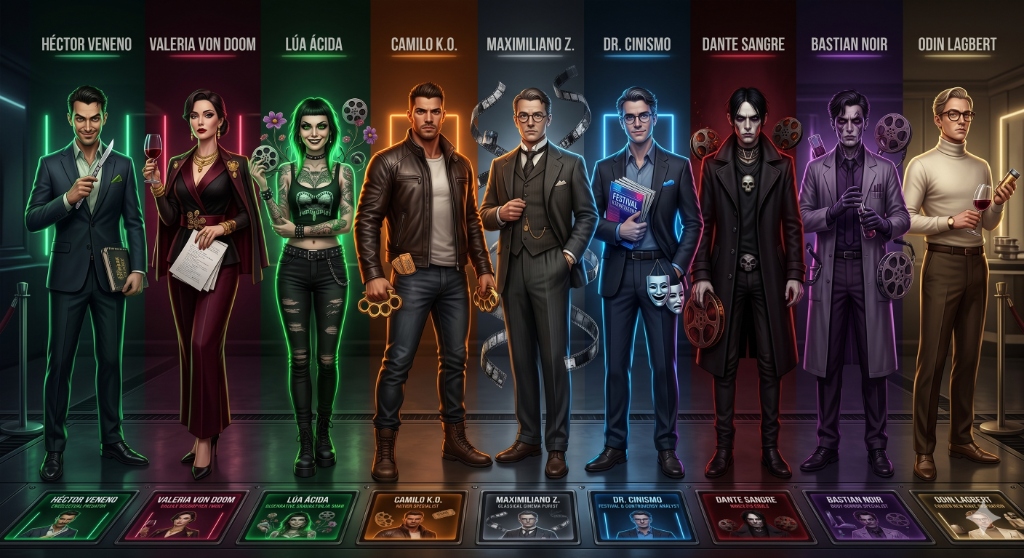
Aún nadie ha dejado su veredicto para esta película.
Sé el primero en clavarle el colmillo rellenando el formulario de arriba.