The Village — M. Night Shyamalan’s Twist That Just Won’t Turn
M. Night Shyamalan builds a cardboard village with bargain-bin monsters and a twist so stale it smells like mothballs. Roger Deakins lights up the boredom.

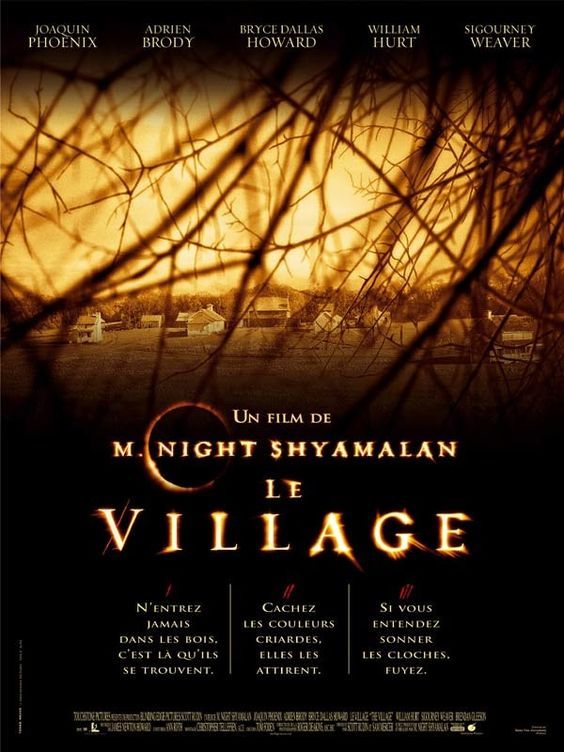

Celluloid groans under the weight of expectations—yes, but in the case of The Village (or El bosque, for those purists who think the Spanish title gives it some kind of arthouse pedigree, as if saying it in the language of Cervantes could save it from its own mediocrity), the crack isn’t the sound of fresh film stock. It’s the sound of the audience’s spines snapping in two: those who bowed at the altar of M. Night Shyamalan and those who stormed out of the theater, spitting bile. It was 2004, and the Indian director—after turning fear into gold with The Sixth Sense and Signs—had already crowned himself the new messiah of the plot twist. But here, in this Gothic fable disguised as a moral tale, King Midas learned that not everything he touched turned to gold. Sometimes, it just turned into a shiny pile of trash for critics to sift through for the next two decades.
finalExplicado: "En el clímax, Ivy Walker (cega de nacimiento) atraviesa el bosque, descubre que los monstruos son solo disfraces de los ancianos del pueblo y regresa con medicinas para salvar a Lucius. El “giro” revela que la aldea está en la Pensilvania actual, rodeada de una reserva natural, y que todo el terror fue fabricado por los fundadores para mantener aislada a su comunidad. Simbólicamente, el desenlace confirma que el verdadero monstruo no es la criatura del bosque, sino el miedo deliberadamente cultivado por una élite que prefiere la mentira y el control paternalista antes que la libertad y la verdad. El bosque nunca giró; solo sirvió de cortina para que los adultos nunca tuvieran que crecer."
The Hubris of a Director Who Mistook Success for Infallibility
Shyamalan in 2004 was like a kid with a hammer: everything looked like a nail. After the cultural earthquake of The Sixth Sense (1999) and the box-office triumph of Signs (2002), studios were kissing his feet, actors were lining up to work with him, and fans awaited his next plot twist like it was the Second Coming. But instead of delivering the crowd-pleasing thriller Disney expected—something with chases, screams, and a monster jumping out of a closet—Shyamalan locked himself in his ivory tower and wrote The Village: a film about a community that chooses ignorance to escape the horrors of the outside world. Or so it seemed.The problem wasn’t the premise itself—which, in fact, had potential to be a powerful allegory about fear and control—but the execution. Shyamalan, in his quest to anoint himself the new Hitchcock (a goal as ambitious as it is ridiculous, given that Hitchcock didn’t just direct—he created suspense from nothing, while Shyamalan just sweeps the truth under the rug), stretched the suspense so thin it snapped. And he did it with the arrogance of someone who thought his name in the credits was enough to justify any nonsense.
The cultural climate of the time didn’t help. America was drowning in post-9/11 paranoia, with Bush selling fear on every news broadcast like a used-car salesman. The Village fit perfectly into that zeitgeist: a community that isolates itself from the world to protect itself from an evil that, ironically, turns out to be a fabrication. But here’s the paradox: while the real country was bleeding in Iraq and Afghanistan, Shyamalan offered us a fable about a village that chooses not to know. For some, it was a brilliant critique of authoritarianism and manipulation; for others, it was such an obvious underline it might as well have been written by a first-year screenwriting student. And in the middle of that debate, the director strutted around like he’d just discovered fire—when all he’d really done was light a bonfire to burn his own reputation.
The Twist: The Moment Shyamalan Became His Own Worst Enemy
Ah, the twist. The infamous Shyamalan Moment that, in The Village, wasn’t so much a gut punch as a slap in the face. Because let’s be honest: the ending of this movie is one of those twists that splits the audience into two irreconcilable camps. On one side, you’ve got the people who saw it coming from the first frame (and no, they weren’t smarter—Shyamalan left so many breadcrumbs even a five-year-old could’ve figured it out). For them, the big reveal was a collective yawn, a cheap trick that shattered the unspoken contract between film and viewer, turning the whole thing into a cinematic bait and switch.Then there’s the other camp: the ones who swallowed the hook, line, and sinker. For them, the twist wasn’t a gimmick but a brilliant deconstruction of Gothic horror, a narrative U-turn that transformed a monster story into a heart-wrenching human drama. Who’s right? As always in Shyamalan’s cinema, it depends on how much you’re willing to forgive. If you accept that the director toys with audience expectations like a cat with a dying mouse, then The Village is a masterpiece of psychological suspense. If, on the other hand, you believe cinema shouldn’t punish its viewers for not being mind readers, then it’s a scam dressed up as art.
The funny thing is, despite the divide, the movie raked in $256 million worldwide. An undeniable commercial success that proved even when Shyamalan stumbles, people still flock to his films like rubberneckers at a car crash: they know it’s going to be ugly, but they can’t look away.
The Direction: A Stylistic Exercise That Drowns in Its Own Pretension
M. Night Shyamalan directs The Village like he’s filming a luxury perfume ad: every shot is composed with the precision of a plastic surgeon, every frame looks like it was ripped from a Pre-Raphaelite painting, and Roger Deakins’ cinematography is, without a doubt, a masterpiece. But here’s the problem: when style eclipses substance, the film becomes a vanity project that drowns in its own beauty.Shyamalan takes so much time building the atmosphere that the tension mutates into lethargy. The first forty minutes of The Village are like a museum stroll: everything’s pretty, but after a while, you start wondering when something’s going to happen. And when it finally does, the director insists on underlining it with grandiose dialogue that oscillates between poetic and ridiculous. Lines like "Fear is the most powerful tool" or "We do not speak of them" sound like they were written by a teenager who just discovered Nietzsche—but instead of reading Thus Spoke Zarathustra, he settled for Instagram memes.
And then there are the creatures. The infamous "Those We Do Not Speak Of," those red-clad beings lurking in the woods. For some, their design is genius: rustic, theatrical, almost Shakespearean. For others, they look like Halloween costumes bought at a discount store. The truth is, beyond personal opinions, their presence is a constant reminder that The Village isn’t a horror movie—it’s a moral fable dressed up as a thriller. And that’s the problem: Shyamalan wants us to take him seriously as an auteur, but he can’t resist falling back on genre clichés.
The Cast: A Star-Studded Ensemble Wasted on a Cardboard Script
Talking about The Village’s cast is like talking about a feast where only three dishes are edible. You’ve got Sigourney Weaver (a sci-fi legend), Adrien Brody (fresh off his Oscar for The Pianist), William Hurt (an actor with the gravitas of a glacier), and Joaquin Phoenix (in his pre-Joker phase, when he could still afford to make bad movies without backlash). And yet, most of them are stuck in supporting roles that do them no justice.Weaver, for example, plays the village leader—a character who could’ve been fascinating if the script had given her anything beyond pompous speeches about fear. Brody’s role is so small it feels like a cameo. And Hurt, though reliable as always, is trapped in a part that’s little more than a symbol: the patriarch guarding a secret.
But then there’s the trio of leads: Bryce Dallas Howard, Joaquin Phoenix, and William Hurt (yes, again, but this time in a meatier role). And this is where The Village redeems itself—partially. Howard, in her first leading role, carries the film’s emotional weight like a cross. Her portrayal of Ivy Walker, the blind young woman who must venture into the woods to save her beloved, is moving without slipping into cheap melodrama. Phoenix, meanwhile, gives Lucius Hunt a restrained melancholy that elevates the romance above the script. And Hurt, as always, brings the dignity needed to make the founders’ secret sound almost plausible.
The problem is, for every brilliant moment from these three actors, there’s a line or situation that drags them back to earth. Shyamalan writes characters like symbols, not people, and it shows. Ivy isn’t a blind woman—she’s innocence in peril; Lucius isn’t a young lover—he’s the necessary sacrifice; and Ivy’s father isn’t a man with a dark past—he’s the embodiment of fear. When cinema becomes allegory, actors have to work twice as hard to avoid sounding like they’re reciting a pamphlet.
The Technical Aspect: When Form Outshines—and Drowns—Substance
If there’s one thing about The Village that’s beyond debate, it’s its technical prowess. There’s no argument here: this is one of the best-photographed films of the 2000s. Roger Deakins, the master behind the camera, turns every shot into a moving painting. The color palette shifts between autumnal ochres and forbidden yellows, creating an atmosphere that’s both lyrical and oppressive. There are moments when the light seems to breathe through the forest mist, as if the landscape itself were alive. And then there’s the use of red—not just in the monsters’ outfits but in subtle details, like the doors of the houses or the flowers in the field, foreshadowing the twist without a word.The production design, meanwhile, is obsessively detailed. The village, built from scratch on a soundstage, perfectly recreates late 19th-century rural life. The wooden houses, dirt paths, kitchen utensils—everything is designed to feel authentic. But paradoxically, that formal perfection is also one of the film’s weaknesses. The village looks like a theme park set, a place so pristine and orderly it feels artificial. And that artificiality, instead of immersing the viewer, distances them, as if they’re watching a documentary about the Amish rather than a horror fable.
James Newton Howard’s score is another triumph. Nominated for an Oscar, the soundtrack is a mix of melancholy, suspense, and epic grandeur that injects emotion into the images when Shyamalan’s script falters. The solo violin, in particular, is heartbreaking, as if it’s mourning Ivy’s lost innocence. But even here, there’s a problem: the music is so good that at times, it feels like it’s competing with the film instead of complementing it. There are scenes where the score is so dominant it drowns out the dialogue, as if Howard is saying, "Don’t worry about what the characters are saying—listen to me."
The editing, on the other hand, is another battleground. For some, it’s a masterclass in cinematic tempo, a slow burn that culminates in an explosive climax. For others, it’s an exercise in patience that borders on unbearable. Shyamalan takes his time with every detail, every glance, every sigh, as if he’s filming a three-hour epic instead of a 108-minute movie. And while it’s true that this slowness helps build atmosphere, there are moments when the film seems to grind to a halt, like a car running out of gas on the highway.
The Best
Roger Deakins’ cinematography: An unmatched visual masterpiece that turns every frame into a work of art. If The Village* were a painting, it’d hang in the MoMA.- James Newton Howard’s score: A masterful soundtrack that weeps, whispers, and screams when the script falls silent. It deserved the Oscar just for saving the film from itself.
- The lead trio: Bryce Dallas Howard, Joaquin Phoenix, and William Hurt prove that even in a script full of holes, acting talent can shine like a beacon in the fog.
- The box office: $256 million worldwide. Shyamalan may be a divisive director, but he knows how to fill seats. And in Hollywood, that’s the only sin that gets forgiven.
The Worst
M. Night Shyamalan’s script: Pretentious, repetitive, and packed with dialogue that sounds like it was written by a barroom philosopher. "Fear is the most powerful tool"*—yes, M. Night, we get it. The twist: A plot twist* that splits the audience like the Red Sea. For some, genius; for others, a cheap magic trick that breaks the pact with the viewer. The pacing: So slow you could brew tea, watch an episode of Friends*, and come back before anything happens. Patience is a virtue, but cinema shouldn’t be a endurance test.- The wasted supporting cast: Sigourney Weaver and Adrien Brody deserved more than filler roles. Even in a bad movie, their talent shines like a diamond in a pile of manure.
The Verdict of Claqueta Ácida (6/10)
The Village isn’t the epic failure some claimed in 2004, but it’s not the masterpiece its most die-hard defenders still proclaim. At best, it’s a failed experiment by a director who mistook ambition for pretension and suspense for boredom dressed up as depth. Visually, it’s flawless (thank you, Deakins); emotionally, it’s moving in moments (thank you, Howard and Phoenix); and commercially, it’s a resounding success (thank you, masochistic audiences). But at its core, it’s a film that drowns in its own symbolism, like a poet who writes such convoluted verses he forgets the meaning of words. If you like plot twists, pretty shots, and dialogue that sounds profound even when it’s not, go ahead: The Village is your movie. If, on the other hand, you prefer cinema that doesn’t treat you like an idiot, maybe it’s better to stay home and rewatch Signs. At least there, the twist catches you by surprise. 💀🎬 Tráiler Oficial
Abrir en YouTube
Ending Explained: The Village
Ficha de Daños Colaterales en Sala
Certificado de impacto psicofísico emitido por Dr. Cinismo
1 amago en el tramo intermedio; pestañeo pesado en las transiciones más innecesarias.
Minuto 46 y minuto 66 (comprobando cuánto quedaba de suplicio).
1 espresso para no dejarse vencer por la mediocridad cómoda.
"A mitad del segundo acto cuando la subtrama secundaria empezó a pesar más de lo que aportaba."
💬 El Veredicto de la Comunidad
¿Qué te ha parecido la película? Deja tu nota de 0 a 10 para contrastarla con el análisis de la redacción.
Aún no has votado
📢 ¿Te ha gustado el ácido?
Comparte esta crítica con tus amigos cinéfilos o desata la polémica en redes.
⚡ THE CINEMATIC VENOM YOUR INBOX CRAVES
No sugarcoated ratings, no corporate fluff. Subscribe for our uncensored weekly analysis or join the private Telegram for press previews, poll clashes, and instant alerts.
Alertas de estrenos en 1 segundo, encuestas en caliente y audios al salir de pases de prensa.
Recibe la dosis semanal en tu mail + regalo inmediato del PDF con 50 joyas ocultas de culto.
Related Reviews
Recommended autopsies for demanding film buffs.
 ⚡ Ácido Cítrico5.0
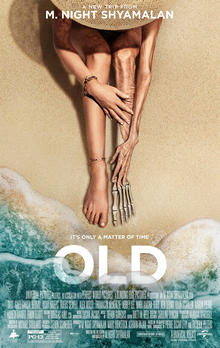
"Old: The Twist That Doesn’t Turn, or How M. Night Shyamalan Aged Worse Than His Characters"
⚡Del mismo director (M. Night Shyamalan): analiza la evolución o degradación de su estilo.
M. Night Shyamalan delivers a beachside thriller that ages worse than its own protagonists—a feast of predictable twists and self-help manual dialogue set against a tropical backdrop.
 ⚡ Ácido Cítrico6.6
28 Years Later: The Rage Virus Returns... Along with the Boredom
⚡Comparten trinchera editorial en la sección de Perros Verdes.
Danny Boyle and Alex Garland attempt to resurrect post-apocalyptic terror with an iPhone 15 Pro Max. Spoiler: it doesn’t work.
 ⚡ Ácido Cítrico7.1
28 años después
⚡Comparten trinchera editorial en la sección de Perros Verdes.
Una secuela que huele a podrido desde el primer fotograma. Garland y DaCosta intentan revivir el género, pero el resultado es un KO técnico disfrazado de obra maestra.
Editorial Ecosystem
Cinephile connections, archive interviews and related analyses.
🎞️ In Claqueta Cinematheque1
💬 Debate Cinéfilo & Autopsia de Lectores
0 veredictos¿Discrepas con nuestra nota? ¿Es una obra maestra o veneno puro? Deja tu veredicto abajo sin necesidad de registro.


Aún nadie ha dejado su veredicto para esta película.
Sé el primero en clavarle el colmillo rellenando el formulario de arriba.