American Psycho — The Cracked Mirror of Wall Street (And Ours)
Christian Bale disembowels capitalism with an axe and an Armani suit. Mary Harron films it like a cologne commercial. Masterpiece or style guide for yuppies?

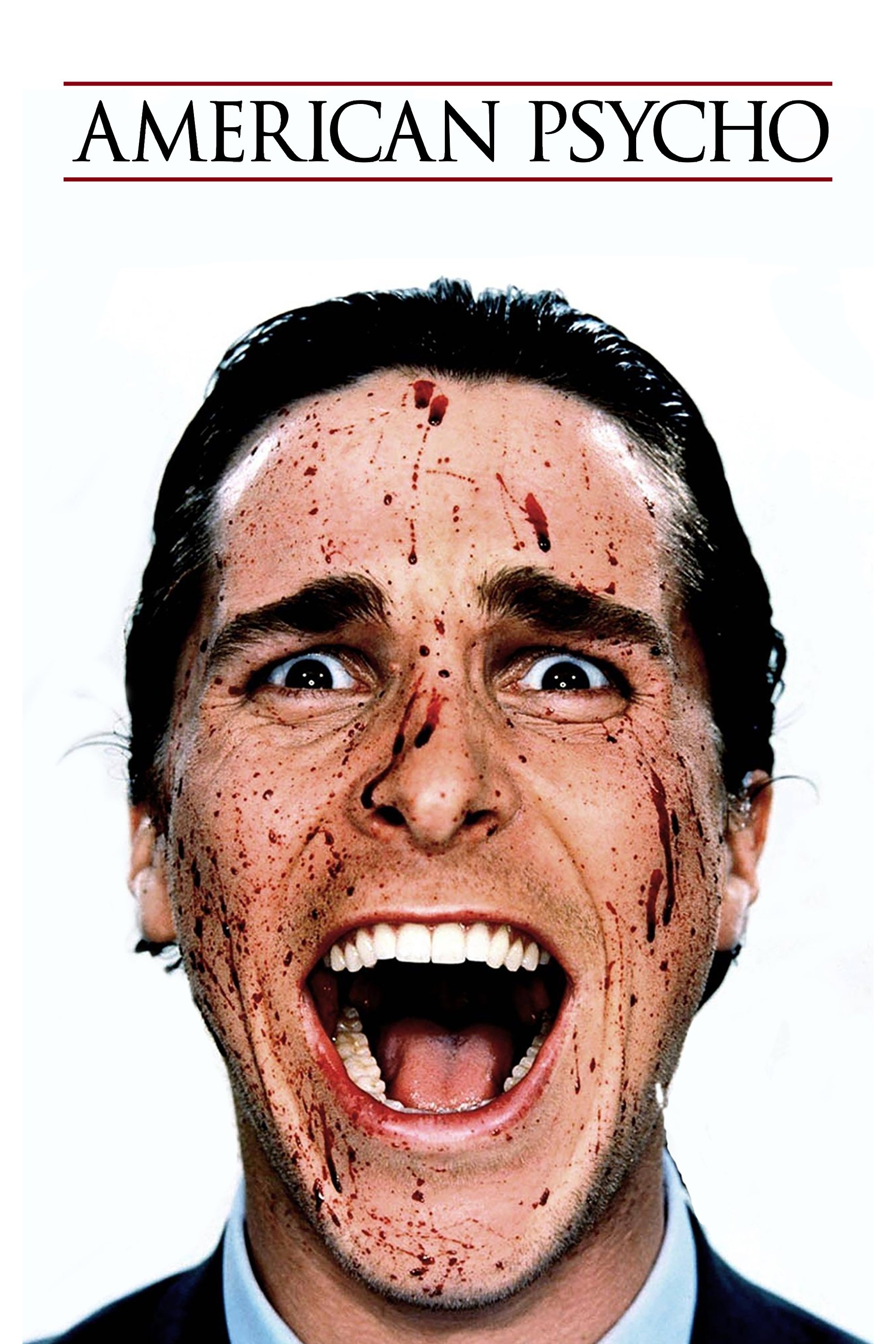


The year 2000 was supposed to be the end of the world—or at least, that’s what they had us believe. While the planet braced for the Y2K tech apocalypse, Mary Harron and Christian Bale snuck into theaters with American Psycho, a film seemingly designed to offend everyone: Bret Easton Ellis fans, moralists, Wall Street execs, and even the producers who didn’t understand what the hell they were financing. Lionsgate, in a stroke of bravery or sheer desperation, bet a measly $7 million to adapt the most controversial novel of the ‘90s—a book its own author had described as “a black comedy about a man who hates women.” Harron, however, wasn’t interested in making a conventional horror film. Her American Psycho isn’t a slasher, a psychological thriller, or even a drama about madness. It’s a funhouse mirror of ‘90s America, a portrait so exaggerated it hurts, so dazzling it blinds, and so hollow it leaves you craving vomit (or an Armani suit, whichever comes first).
The shoot was a controlled hell. Bale, then a cult actor with empty pockets, obsessed over the role to the point of isolating himself for months to perfect Bateman’s accent and mannerisms. Rumor has it no one on set dared make eye contact with him off-camera, as if the character had lodged itself permanently in his body. Harron, meanwhile, had to contend with the long shadow of Bret Easton Ellis, who initially supported the project only to later publicly criticize it for “softening” his work. But the director knew exactly what she was doing: she didn’t want an homage—she wanted an autopsy. And damn, did she deliver. The film premiered at Sundance to a mix of applause and boos, and while it wasn’t a box office smash (grossing a modest $34 million), its legacy has metastasized like a benign tumor. Today, it’s impossible to imagine 2000s cinema without its influence—from Fight Club to The Wolf of Wall Street, not to mention the legion of YouTubers reciting the Huey Lewis monologue like it’s the Lord’s Prayer.
But the most fascinating thing about American Psycho isn’t its violence, its black humor, or even Bale’s performance (though, God, that performance). What’s truly terrifying is how the film ages like fine wine. In 2026, with capitalism on life support and influencers hawking productivity courses while filming themselves chopping lettuce in their designer kitchens, Bateman no longer seems like a monster—he’s a mirror. A filthy mirror, smeared with blood and cologne, but a mirror nonetheless. Harron didn’t just predict the future; she filmed it with a smile and an axe.
And then there’s that final shot: Bateman confessing his crimes in an empty restaurant as the camera pulls away. No one listens. No one believes him. Everyone’s too busy comparing business cards. That’s the real horror of American Psycho—not that Bateman is a killer, but that the world has no time for his crimes because it’s too busy being just as shallow as he is.
Direction: Mary Harron and the Art of Laughing in Capitalism’s Face
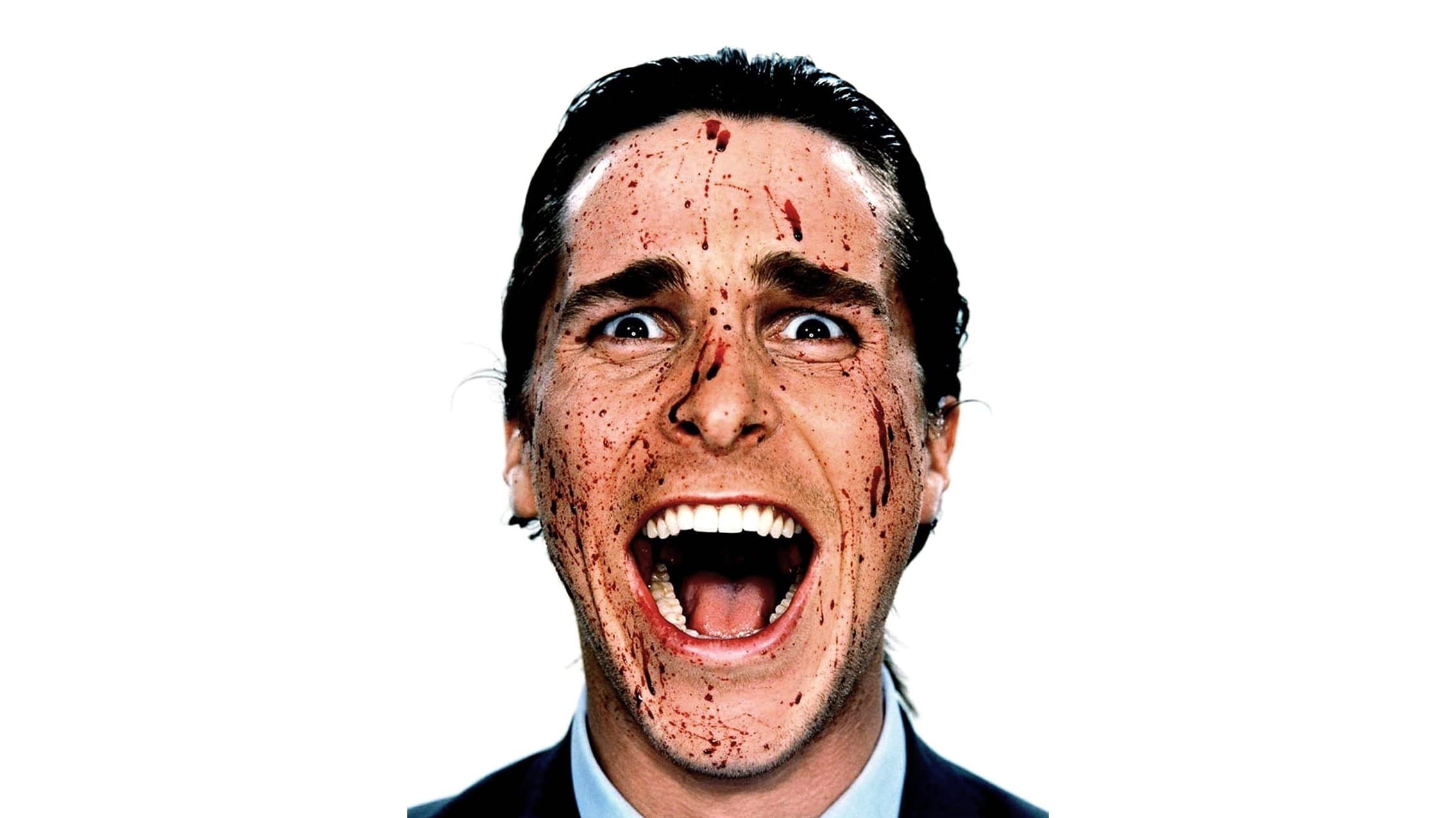
Mary Harron doesn’t direct American Psycho—she dismantles it like a Swiss watch, then reassembles it with all the wrong parts. Her greatest achievement is understanding that the film’s violence isn’t the point; it’s the backdrop. What truly matters is Bateman’s existential void, that black hole he tries to fill with designer suits, overpriced restaurant dates, and, when all else fails, an axe. Harron films each murder with clinical detachment bordering on comedy, as if documenting the habits of an exotic animal. The result is a film that makes you laugh, then leaves a bitter aftertaste, like chugging a cocktail of champagne and blood.
The screenplay, co-written with Guinevere Turner, is a masterclass in satire. Every line sounds like a self-help manual for psychopathic yuppies: “I don’t want to sell anything, buy anything, or process anything as a commodity. I don’t want to sell, buy, or process anything.” Bateman says this while applying a face mask, the irony so thick you could cut it with a knife. Harron and Turner take the worst excesses of ‘90s corporate culture and exaggerate them to absurdity—without ever losing touch with reality. That’s what stings: it all sounds too damn familiar.
The pacing is another strength. The film moves like a freight train: slow at first, then picking up speed until suddenly you’re in the middle of a murder-by-drill and you don’t know how you got there. The editing, by Andrew Marcus, is flawless, especially in the transition scenes, where Harron plays with sound and image to create a sense of total disconnection. One moment, Bateman’s dining with his friends; the next, you’re in his apartment, listening to Phil Collins as he preps for a kill. The music is key here: it’s not an accompaniment—it’s another character, as hollow and superficial as the world it depicts.
Performances: Christian Bale and the Rest of the Cast (Who Are Just Set Dressing)
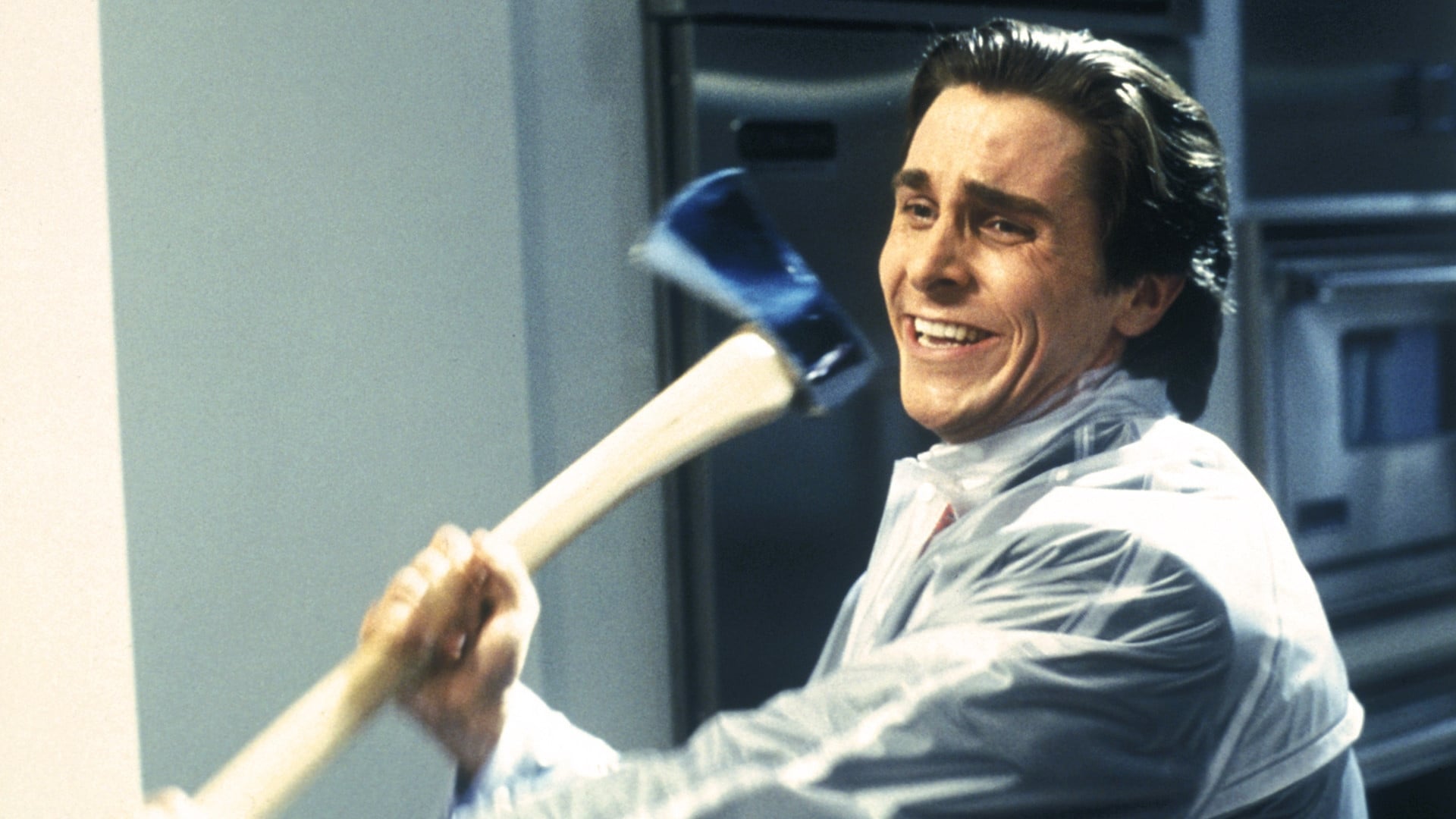
Christian Bale doesn’t play Patrick Bateman. He embodies him with surgical precision that’s downright terrifying. His voice—that nasal, affected whisper—is like nails on a chalkboard, but in a deliberately hypnotic way. Every gesture, every glance, every fake smile is calculated to convey his character’s absolute superficiality. Bale doesn’t just slip into Bateman’s skin; he becomes him, to the point where it’s impossible to imagine another actor in the role. When he recites the Huey Lewis monologue, he does so with a passion bordering on the pathetic, as if he’s preaching his own religion. And in a way, he is.
The rest of the cast, however, looks like they were plucked from a Wall Street modeling catalog. Justin Theroux, Josh Lucas, and Bill Sage do what they can with characters who are little more than human props, designed to highlight Bateman’s isolation. Chloë Sevigny, as Jean, Bateman’s lovestruck secretary, has a few standout moments, especially in the scene where Bateman invites her to dinner—unaware she’s about to become his next victim. Reese Witherspoon, meanwhile, is wasted as Evelyn, Bateman’s fiancée. Her character is nothing more than a stereotype of a shallow woman, and while Witherspoon plays it with charm, the script gives her zero opportunities to shine.
But the real scene-stealer is Bateman’s apartment. Mirrors everywhere, designer furniture, a record collection straight out of an ‘80s catalog. The production design, by Gideon Ponte, is so meticulous it hurts. Every object on screen is there for a reason: to remind us that Bateman isn’t a man—he’s a brand. A brand slowly unraveling, like his perfectly manicured nails after a murder.
The best
- Christian Bale’s performance: A method-acting extreme. Bale doesn’t act—he possesses. His Patrick Bateman is both repulsive and mesmerizing, a monster you might run into at any cocktail party.
- The screenplay by Mary Harron and Guinevere Turner: A satire so sharp it could cut diamonds. Every line is a stab disguised as a compliment, every scene a veiled critique of late capitalism.
- Andrzej Sekuła’s cinematography: Cold, impersonal, almost commercial. The shots of Bateman applying creams or doing push-ups are masterpieces of existential emptiness.
- The soundtrack: From Huey Lewis to Genesis to Whitney Houston, the music isn’t just background noise—it’s an ironic commentary on ‘80s and ‘90s pop culture.
- The ending: That shot of Bateman confessing his crimes in an empty restaurant as the camera pulls away and no one listens. It’s the perfect summary of the film: a scream into the void.
The worst
- Reese Witherspoon: Her character, Evelyn, is so flat she might as well be a poster. Witherspoon does her best, but the script gives her nothing to work with.
Some forced humor: Scenes like the Les Misérables* video break the film’s tone and feel like they were ripped from a teen comedy.
- Pacing in the second act: The film loses steam in places, especially during transitions between murders. Not every edit is flawless.
- Underdeveloped side characters: All of Bateman’s friends are interchangeable, and while that’s part of the critique, it’s still frustrating.
- The violence: Though not graphic, some murders feel too stylized, almost like choreographed dance numbers. That undercuts the impact in key moments.
The Verdict of Claqueta Ácida
American Psycho isn’t a film about a serial killer. It’s a film about loneliness, emptiness, and the obsession with image in a world that values business cards over human lives. Mary Harron and Christian Bale turned potentially exploitative material into a satire so smart it hurts, so funny it’s frightening, and as relevant today as it was in 2000. It’s not perfect—it has its weak moments, flat characters, and uneven pacing—but it’s one of those films that lodges in your memory like a knife in the wall of a luxury apartment. Patrick Bateman is the monster we all carry inside, the one who stares into the mirror and doesn’t recognize his own reflection. And that, dear readers, is far more terrifying than any axe. 💀
tweets_alternativos:
- "@MaryHarron convirtió una novela misógina en una sátira feminista sin que nadie se diera cuenta. Eso es magia negra. #AmericanPsycho"
- "@ChristianBale en su mejor momento: cuando era flaco, psicópata y no llevaba capa. ¿Dónde quedó ese actor? #WallStreetNeverDies"
- "@Lionsgate apostó por una película sobre un asesino en serie con presupuesto de indie. El resultado: un clásico instantáneo. El capitalismo se devora a sí mismo. #IroníaDelSistema"
🎬 Tráiler Oficial
Abrir en YouTube
Ficha de Daños Colaterales en Sala
Certificado de impacto psicofísico emitido por Maximiliano Z.
Cero bostezos. Pupilas dilatadas y tensión mandibular constante.
Ni una sola mirada al móvil.
Ninguna. Guarda el café para la sesión siguiente.
"No hubo. La coherencia se mantuvo hasta el último fotograma."
💬 El Veredicto de la Comunidad
¿Qué te ha parecido la película? Deja tu nota de 0 a 10 para contrastarla con el análisis de la redacción.
Aún no has votado
📢 ¿Te ha gustado el ácido?
Comparte esta crítica con tus amigos cinéfilos o desata la polémica en redes.
⚡ THE CINEMATIC VENOM YOUR INBOX CRAVES
No sugarcoated ratings, no corporate fluff. Subscribe for our uncensored weekly analysis or join the private Telegram for press previews, poll clashes, and instant alerts.
Alertas de estrenos en 1 segundo, encuestas en caliente y audios al salir de pases de prensa.
Recibe la dosis semanal en tu mail + regalo inmediato del PDF con 50 joyas ocultas de culto.
Related Reviews
Recommended autopsies for demanding film buffs.
 🔥 Fusión Nuclear8.5
*American History X: Claqueta Ácida’s Verdict – A Descent into the Abyss of Hate*
⚡Hermana de saga: otro capítulo diseccionado con rigor forense.
*A Journey into the Abyss of Hate. A devastating critique of the film that drags us into the depths of racism and violence in a fractured California.*
🔥 Fusión Nuclear8.5*American History X: Claqueta Ácida’s Veredict – A Descent into the Heart of Hate*
⚡Hermana de saga: otro capítulo diseccionado con rigor forense.
*A Journey into the Abyss of Hate. A devastating critique of the film that drags us into the depths of racism and violence in a fractured California.*
 🔥 Fusión Nuclear9.5
*2001: A Space Odyssey – A Monkey, a Monolith, and Two Hours of Cosmic Pretentiousness*
⚡Afinidad temática directa en atmósfera, estilo y fijaciones visuales.
We dissect Stanley Kubrick’s magnum opus. A visual feast of minimalism and space hypnosis that cemented "serious" sci-fi—and bored half of humanity to tears.
Editorial Ecosystem
Cinephile connections, archive interviews and related analyses.
💬 Debate Cinéfilo & Autopsia de Lectores
0 veredictos¿Discrepas con nuestra nota? ¿Es una obra maestra o veneno puro? Deja tu veredicto abajo sin necesidad de registro.

Aún nadie ha dejado su veredicto para esta película.
Sé el primero en clavarle el colmillo rellenando el formulario de arriba.