Fight Club (1999) — The Satire the Gen X Deserved and Capitalism Couldn’t Stomach
An in-depth review of Fight Club (1999). We dissect David Fincher’s cult masterpiece—a scathing take on consumerism, the crisis of masculinity, and human-soap alchemy.

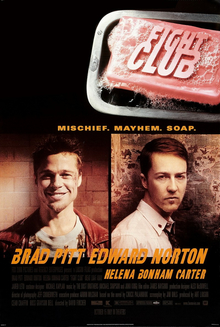


Fight Club (1999): The Satire a Generation X Deserved and Capitalism Choked On
Released in 1999 like a sucker punch to the gut of the pearl-clutching critics—who branded it fascist, irresponsible, and a menace to youth with the same robotic fervor as a marketing exec chanting their own slogan—Fight Club didn’t just survive its own scandal. It became the shattered mirror where Gen X saw its nihilistic glory and consumerist squalor reflected in all their gory detail. David Fincher, that surgeon of darkness with more obsessions than a Joy Division vinyl collector, didn’t just make a movie: he autopsied an era’s corpse with the precision of a coroner who really enjoys their job.
And what a corpse it was. Because Fight Club isn’t just a satirical comedy—though it is, and razor-sharp at that—but an instruction manual for hating the 21st century before it even began. Fincher, with a script Jim Uhls adapted from Chuck Palahniuk’s novel with the devotion of a zealot transcribing scripture, turned alienation into art, insomnia into aesthetics, and human soap into a metaphor for a society that would rather scrub its conscience with organic products than face its own rot.
finalExplicado: "El clímax revela que Tyler Durden nunca existió: es la personalidad disociada del Narrador, una proyección de su rabia reprimida. El Narrador se pega un tiro en la boca para matar a Tyler y recuperar el control de su mente, mientras Project Mayhem detona los edificios de crédito y borra las deudas de la sociedad. Simbólicamente, el desenlace significa el fracaso inevitable del nihilismo revolucionario: la liberación masculina no es más que una fantasía suicida que termina en colapso total. El Narrador solo puede destruir al dios que inventó para salvarse a sí mismo; el jabón humano se convierte en el símbolo final de que la purificación solo llega a través de la autodestrucción. Fincher cierra la comedia satírica más negra de los 90 con una carcajada amarga: la revolución también era de Ikea."
The Nameless Narrator: The Office Drone Who Mistook Ikea for God
Edward Norton delivers one of those career-defining performances: a man so hollow even his name is a blank space on his business card. The Narrator—who might as well be called "Everyman," "Anonymous Consumer," or "Guy Who Shops at Zara"—is the perfect archetype of the '90s slacker: a corporate drone with chronic insomnia, trying to fill the black hole of his existence with Scandinavian coffee tables, $80 throw pillows, and the delusion that one day he’ll get a cubicle with a window.
His life is a loop of gray offices, endless meetings, and subway rides where colonoscopy ads remind him that, hey, at least his body still works. Until he meets Tyler Durden, that gym-messiah, artisanal-soap hawker, and walking fortune cookie played by Brad Pitt in his most sex symbol and least serious actor mode. Tyler isn’t a man: he’s the mirage of masculinity Gen X dreamed of being—rebellious, free, master of his destiny—but as fake as the muscles in a protein powder ad.
together-la-cueva-de-los-espejos-rotos" class="text-amber-400 font-black hover:text-amber-300 transition underline decoration-amber-500/40 hover:decoration-amber-300" title="[6.5/10 ⚡ Ácido Cítrico] Lee nuestra autopsia de «Together»" data-acid-interlink="together-la-cueva-de-los-espejos-rotos">Together, they found Fight Club, a space where men—all of them slightly worse versions of the Narrator—can feel something, even if it’s pain. Fincher’s genius lies in how he frames this ritual: not as a celebration of violence, but as a grotesque parody of self-help groups. The guys brawling in that basement aren’t seeking redemption; they’re looking for an excuse to stop crying in silence while watching Seinfeld in their pajamas. Fight Club isn’t a solution—it’s the last refuge of a masculinity in crisis, a place where sweat and blood replace tears because, at least, physical pain is real.
But here’s the masterstroke: what starts as shock therapy mutates into a proto-fascist cult. Tyler Durden, that two-bit guru, evolves from charismatic leader to tin-pot dictator, surrounded by bald acolytes in black shirts chanting slogans like they’re mantras. Fincher doesn’t glorify this descent; he eviscerates it with an irony so corrosive it burns. Project Mayhem isn’t a revolution—it’s the wet dream of a teenager who confuses anarchy with torching a Starbucks. And that’s satire at its finest: capitalism isn’t destroyed with homemade bombs—it’s destroyed by the same stupidity that fuels it.
Marla Singer: The Only Sane Person in a Testosterone Asylum
If the Narrator and Tyler are two sides of the same rotten coin, Helena Bonham Carter’s Marla Singer is the acid dissolving it. With her perpetual cigarette, threadbare coat, and a glare that screams "this is all bullshit and you know it," Marla is the only character who smells the con from the get-go. It’s no accident she’s addicted to support groups for terminal illnesses: she’s already accepted life is a terminal disease, which is why she can laugh at men trying to cure themselves with fistfights.
Marla isn’t a femme fatale; she’s a survivor in a world of overgrown boys playing rebel. Her relationship with the Narrator is as dysfunctional as everything else in the film: two people who hate each other but can’t live apart because, at least, they recognize each other as frauds. When she says, "You’re the most stupid, shallow, self-absorbed person I’ve ever met," she’s not just insulting the Narrator—she’s describing an entire generation.
The chemistry between Bonham Carter and Norton crackles, but not in a romantic way—more like two exposed wires sparking before short-circuiting. Marla is the constant reminder that Fight Club isn’t a solution; it’s another symptom of the same problem: the inability of '90s men to confront their fragility without retreating into power fantasies.
The Cyan Grain Aesthetic: When Fincher Turned Capitalism Into a Visual Nightmare
David Fincher doesn’t film Fight Club—he dissects it like a specimen under a microscope, bathing every detail in a cold, clinical light that brooks no mercy. With Jeff Cronenweth (his go-to cinematographer for this and other nightmares like The Game), he crafts a color palette straight out of a toxic waste catalog: bilious greens, sickly cyan blues, and blacks so deep you’d swear the film reeks of gasoline and sweat.
The use of film grain isn’t accidental: it’s the perfect texture for a movie about analog in the digital age. While Hollywood was obsessing over pristine CGI, Fincher chose to grime up every frame, as if the film itself were soaked in the grease of the cars Tyler and his goons steal. The digital effects—like the famous sequence where the camera "navigates" the Narrator’s apartment, tagging Ikea furniture with price tags—don’t aim to impress. They alienate the viewer, reminding them they’re watching an artificial construct, just like the protagonist’s life.
And then there’s the editing. Fincher and his editor, James Haygood, slice the film like a punk collage: subliminal flashes of Tyler Durden (appearing in single frames before he’s introduced), jump cuts that accelerate the pace to unbearable speeds, and a soundtrack that oscillates between The Dust Brothers’ industrial techno and the distorted chords of Pixies’ Where Is My Mind?. The result is a sensory overload as overwhelming as the Narrator’s insomnia.
The climax, with bank towers crumbling to the tune of the Pixies, isn’t just iconic—it’s the perfect culmination of the film’s irony. Fincher isn’t celebrating capitalism’s destruction; he’s laughing at the idea that a bunch of guys in black shirts with homemade bombs could change anything. The towers fall, but the system stands. As Tyler says: "The things you own end up owning you." And boy, do they ever.
The Legacy: From Cursed Film to Sacred (and Misunderstood) Text
Fight Club doesn’t age—it rots, like all good things. What was met with outrage and confusion in 1999 is now a reference manual for understanding the '90s zeitgeist—and, by extension, any era where capitalism and the crisis of masculinity shake hands to birth monsters.
The problem, of course, is that the film was tragically misunderstood. For every viewer who got the satire, there was another who took Tyler Durden as a guru, an influencer avant la lettre of toxic masculinity. People who mistook the critique of consumerism for a call to burn their credit cards, or who saw Fight Club as a solution rather than a warning. Fincher didn’t glorify violence—he exposed its absurdity. But when you’ve got Brad Pitt with six-pack abs spouting lines like "Self-destruction is the answer," it’s easy for teenagers to confuse satire with a manifesto.
And yet, that misunderstanding is part of the film’s genius. Fight Club is a mirror: it shows you what you want to see. If you see an anarchist anthem, it’s because you need to believe in something. If you see a critique of capitalism, it’s because you’re already sick of it. If you see a dark comedy, it’s because you’ve got a sense of humor. And if you see a fascist film... well, maybe the problem isn’t the movie.
The best
Brad Pitt as Tyler Durden: A performance so over-the-top charismatic it makes fascism look like a Calvin Klein ad. Few actors could sell lines like "You’re a slave to your job, your clothes, your couch"* with such a perfect blend of conviction and ridiculousness.- Jeff Cronenweth’s cinematography: A visual feast of cyan hues, greasy shadows, and film grain that reeks of desperation and cheap car air freshener. Fincher turned capitalism into an aesthetic nightmare, and damn if he didn’t nail it.
The worst
Project Mayhem veers into the implausible, like Fincher mistook satire for an episode of 24*. At times, the film feels like a B-movie action thriller, and that undercuts its message.- The legion of fans who worship Tyler Durden as a god, proving human stupidity knows no bounds. If the film is a critique of toxic masculinity, its reception is proof the message didn’t reach those who needed it most.
The Verdict of Claqueta Ácida (9/10)
Fight Club isn’t just a movie—it’s a cinematic exorcism, a spew of bile and human soap that David Fincher hurled in the face of a generation that mistook consumerism for happiness. With a script that dismantles the myth of masculinity with the same ferocity Tyler Durden disassembles an Ikea dresser, a visual style plucked from a toxic waste catalog, and performances that range from sublime (Norton, Bonham Carter) to ridiculously iconic (Pitt), this masterpiece remains as uncomfortable, brilliant, and necessary as the first punch in a dark basement. That real-life fight clubs keep misinterpreting it only proves that sometimes, the best satire is the kind that takes itself too seriously. 9/10, and may God have mercy on our souls.🎬 Tráiler Oficial
Abrir en YouTube
Ending Explained: Fight Club (1999)
Ficha de Daños Colaterales en Sala
Certificado de impacto psicofísico emitido por Odin Lagbert
Cero bostezos. Pupilas dilatadas y tensión mandibular constante.
Ninguna comprobación del tiempo. Se agradece la rareza.
Ninguna: la adrenalina cinematográfica es suficiente.
"No aplica. La obra se sostiene sola."
💬 El Veredicto de la Comunidad
¿Qué te ha parecido la película? Deja tu nota de 0 a 10 para contrastarla con el análisis de la redacción.
Aún no has votado
📢 ¿Te ha gustado el ácido?
Comparte esta crítica con tus amigos cinéfilos o desata la polémica en redes.
⚡ THE CINEMATIC VENOM YOUR INBOX CRAVES
No sugarcoated ratings, no corporate fluff. Subscribe for our uncensored weekly analysis or join the private Telegram for press previews, poll clashes, and instant alerts.
Alertas de estrenos en 1 segundo, encuestas en caliente y audios al salir de pases de prensa.
Recibe la dosis semanal en tu mail + regalo inmediato del PDF con 50 joyas ocultas de culto.
Related Reviews
Recommended autopsies for demanding film buffs.
 🔥 Fusión Nuclear9.0
*Seven*: The Darkness That Defines Us
⚡Del mismo director (David Fincher): analiza la evolución o degradación de su estilo.
A descent into the abyss of the human condition—bring a vomit bag and a therapist on standby
 🔥 Fusión Nuclear9.5
*2001: A Space Odyssey – A Monkey, a Monolith, and Two Hours of Cosmic Pretentiousness*
⚡Afinidad temática directa en atmósfera, estilo y fijaciones visuales.
We dissect Stanley Kubrick’s magnum opus. A visual feast of minimalism and space hypnosis that cemented "serious" sci-fi—and bored half of humanity to tears.
 🔥 Fusión Nuclear9.3
2001: A Space Odyssey — The Day Kubrick Left Us Speechless (and Oxygenless)
⚡Afinidad temática directa en atmósfera, estilo y fijaciones visuales.
Kubrick turned science fiction into pure art: 149 minutes of eloquent silence, bone-wielding apes, and a psychopathic computer. Masterpiece or pretentious fraud? Here’s the verdict.
Editorial Ecosystem
Cinephile connections, archive interviews and related analyses.
💬 Debate Cinéfilo & Autopsia de Lectores
0 veredictos¿Discrepas con nuestra nota? ¿Es una obra maestra o veneno puro? Deja tu veredicto abajo sin necesidad de registro.


Aún nadie ha dejado su veredicto para esta película.
Sé el primero en clavarle el colmillo rellenando el formulario de arriba.