Housebound — When Kiwi Horror Decides to Stay in Its Pajamas
Gerard Johnstone delivers a horror-comedy with more jokes than scares and a cast that barely keeps the furniture from collapsing. New Zealand, where’s your gothic soul hiding?

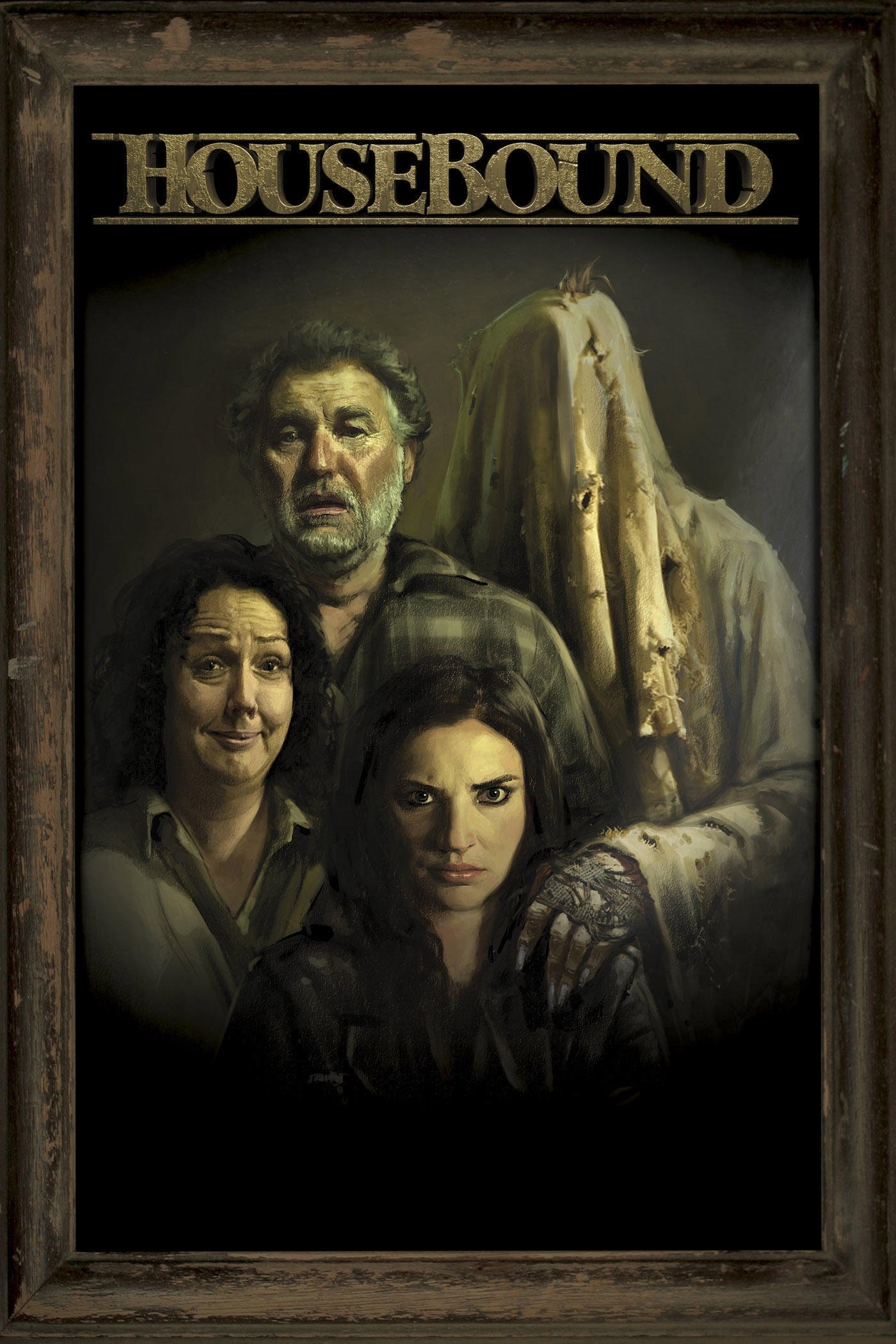


Some films are born with the ambition to become the defining work of a genre, only to end up as a quirky stylistic exercise that vanishes from memory by morning. Housebound is one of those. Gerard Johnstone, a New Zealand director whose résumé until then consisted of shorts and local TV episodes, set out to blend psychological horror, black comedy, and family drama in a haunted house that, in theory, should be scarier than a quantum physics exam. In practice, however, the result is a film that wavers between unintentional charm and self-satisfaction, as if Johnstone had binge-watched Poltergeist and Shaun of the Dead over a weekend and decided he could match them with a shoestring budget and a cast plucked from a probiotic yogurt commercial audition.
The context doesn’t help. New Zealand isn’t exactly a hotbed of horror cinema. When you think of Kiwi film, you picture epic Lord of the Rings landscapes, family dramas like Whale Rider, or absurdist comedies like What We Do in the Shadows. Horror? Nowhere to be seen. Housebound attempts to fill that void, but it does so with the clumsiness of a teenager discovering alcohol for the first time: it knows it’s supposed to be fun, but it never quite nails the point. The film premiered at SXSW in 2014, where it received lukewarm reviews oscillating between “interesting” and “seriously, this is the best you’ve got?” The audience, however, defended it tooth and nail, as tends to happen with oddities no one understands but everyone wants to adopt. On IMDb, it scores a 6.3; on Rotten Tomatoes, a 72% approval (with a 61% audience score, which says it all); and on Filmaffinity, a 5.8. together-la-cueva-de-los-espejos-rotos" class="text-amber-400 font-black hover:text-amber-300 transition underline decoration-amber-500/40 hover:decoration-amber-300" title="[6.5/10 ⚡ Ácido Cítrico] Lee nuestra autopsia de «Together»" data-acid-interlink="together-la-cueva-de-los-espejos-rotos">Together, these numbers paint the portrait of a film that isn’t bad, but isn’t good either: it’s curious, like a weird bug in a jar.
The premise is simple: Kylie, a small-time delinquent, is sentenced to house arrest in her mother’s home, a place that reeks of mothballs and family secrets. What starts as a domestic drama with black comedy undertones suddenly veers into a ghost story, complete with possessions and conspiracy theories involving a neighbor who looks like a serial killer and a plumber straight out of a Monty Python sketch. The problem isn’t the premise; it’s the execution. Johnstone wants everything to work at once: the humor, the horror, the family drama, the supernatural mystery... and the result is a film that can’t make up its mind, like a teenager torn between punk rebellion and a banking career. There are brilliant moments, yes, but they’re drowned in a sea of scenes that feel like first drafts someone forgot to polish.
And then there’s the ghost. Or ghosts. Or whatever’s lurking in that house. Because Housebound plays with ambiguity to the point of exhaustion, as if Johnstone were afraid to commit to a concrete explanation. Is it a vengeful spirit? A collective hallucination? A setup by the mother to keep Kylie from leaving? The film spends two hours circling these questions without daring to answer any, like a dog chasing its own tail. And when it finally seems ready to deliver something solid, it unravels with a plot twist so absurd it leaves you feeling like you’ve been had. It’s not that the mystery is clever; it’s lazy.
Direction and mise-en-scène: the framing that frames nothing
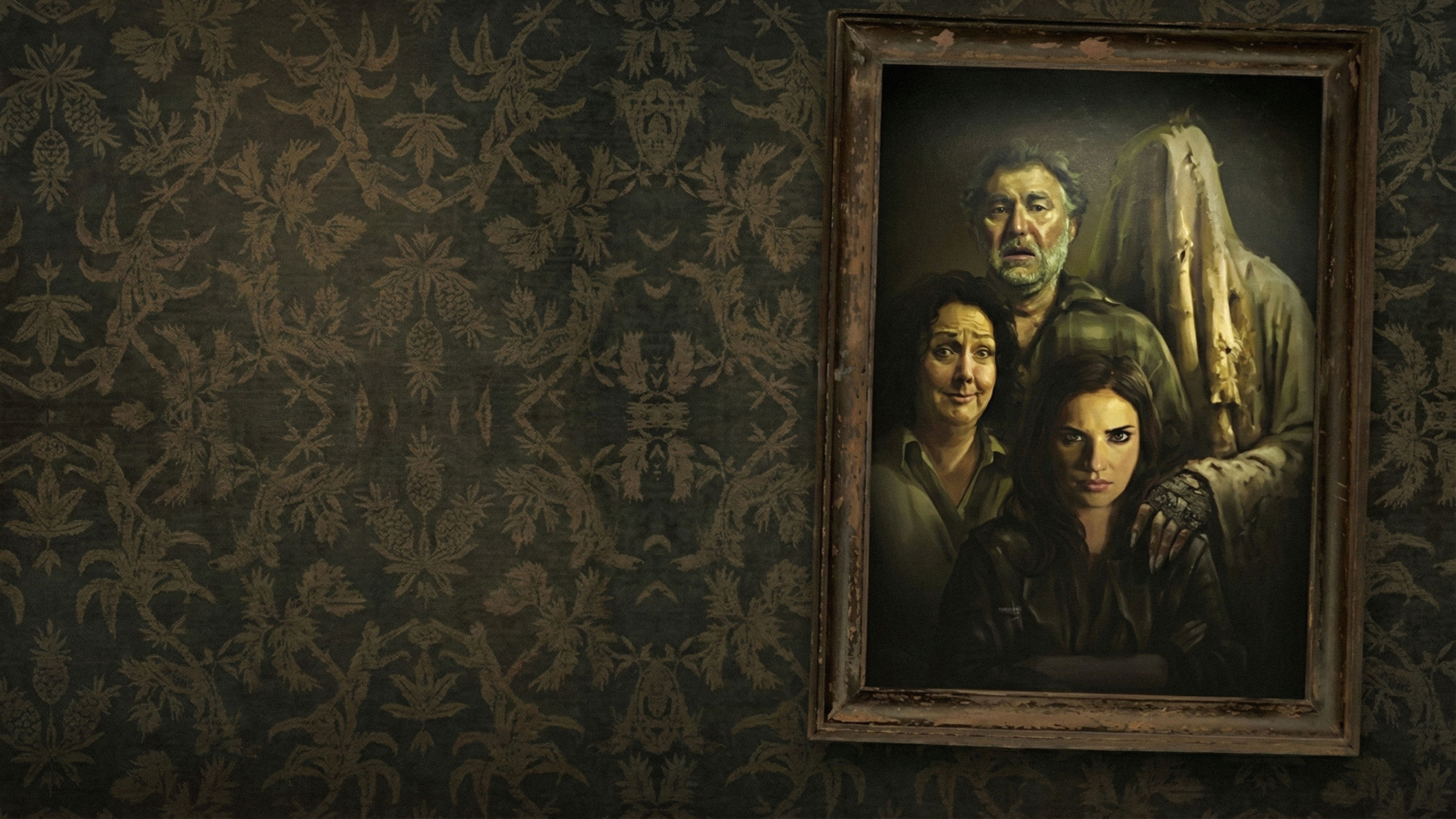
Gerard Johnstone has an interesting eye for composition, and that’s worth acknowledging. There are shots in Housebound that faintly echo the best 70s horror: low angles, elongated shadows, the kind of stuff that turns a normal house into a labyrinth of nightmares. The problem is that as soon as the camera moves, everything falls apart. Johnstone seems obsessed with long takes, but he lacks the patience or talent of a Béla Tarr or an Andrei Tarkovsky to make them work. Instead of flowing, his sequences feel forced, as if someone had said, “Let’s do an epic long take,” then forgotten to rehearse. The result is a visually uneven film: there are moments when Simon Riera’s cinematography shines (those muted tones, that palette of grays and greens evoking the Kiwi climate), but others where it looks like an episode of CSI: Auckland.
The editing, meanwhile, is a disaster. Some scenes drag on too long, others cut abruptly, and the overall rhythm swings between frantic and soporific. Johnstone wants Housebound to be an emotional rollercoaster, but it ends up more like a bus ride with unexpected stops at places no one asked to visit. There’s a moment near the end where the film seems poised to explode into a spectacular climax... and then it fizzles into nothing. It’s as if Johnstone had watched The Sixth Sense and decided he, too, could pull off a shocking twist—without bothering to plant the necessary clues for the audience to see it coming. The result is an ending that leaves everyone looking like they’ve just been punked.

Performances: the cast that saves the furniture (and the film)
If Housebound works at all, it’s thanks to its cast. Morgana O’Reilly, as Kylie, pulls off something nearly impossible: making an insufferable protagonist somehow compelling. Kylie is selfish, foul-mouthed, violent, and generally the kind of person you wouldn’t want to share an elevator with for five minutes. But O’Reilly layers her with a vulnerability that, against all odds, makes you care about what happens to her. It’s not a perfect performance (there are moments where she seems to be in a different film), but it’s good enough to keep you from reaching for the remote every time she opens her mouth.
The rest of the cast delivers, though none reach O’Reilly’s level. Rima Te Wiata, as the mother, is a delight: she blends sweetness and madness in a way that leaves you unsure whether to hug her or run for the hills. Glen-Paul Waru, as the suspicious neighbor, is the kind of actor you’d expect in a 90s TV movie, but somehow, it works. And then there’s Cameron Rhodes, as the plumber/psychologist/possible killer, who is, by far, the film’s funniest character. Rhodes has impeccable comic timing, and there’s a scene where he explains his ghost theory that is, arguably, the film’s best moment. If Housebound had been a straight comedy, Rhodes would’ve stolen the show. As it stands, he’s a memorable supporting player.
Screenplay: when humor and horror fight like cats and dogs
The Housebound script is, in one word, confused. It’s not bad, but it’s not good either: it’s the kind of script written by someone who’s seen a lot of films but hasn’t quite figured out how they work. Johnstone blends black comedy, psychological horror, family drama, and supernatural mystery with all the subtlety of a bull in a china shop. There are moments when the film feels like a comedy, others when it feels like a thriller, and others when it feels like one of those afternoon family dramas on Antena 3. The problem is that none of these tones fully gel, and the result is a film that doesn’t know what it wants to be.
The humor, in particular, is the most uneven aspect. Some jokes land (mostly thanks to the cast, not the script), but others crash and burn. Johnstone seems obsessed with absurdist humor, but he lacks the talent of a Taika Waititi to make it work. Instead of flowing, the humor in Housebound feels forced, as if someone had declared, “This has to be funny,” then written a joke no one laughs at. There’s a scene, for example, where Kylie and her mother argue about whether the house’s ghost is real, and the dialogue is so clunky it feels lifted from an episode of Aquí no hay quien viva. It’s not bad; it’s lazy.
The horror, meanwhile, is almost nonexistent. There are a couple of cheap jump scares (the classic “BOO!” with blaring music), but nothing that makes you leap out of your seat. Johnstone seems more interested in playing with ambiguity and mystery than in actually scaring anyone, and the result is a film that, at best, leaves you mildly intrigued. It’s not that the horror is bad; it’s lazy. As if Johnstone decided that, since he was making a ghost movie, he could skip the effort of actually frightening anyone.
The best
- Morgana O’Reilly: The sole reason you don’t walk out in the first twenty minutes. Her portrayal of Kylie is good enough to make you care about her, even when her character is unbearable.
- Cameron Rhodes: The plumber/psychologist/possible killer is, by far, the film’s funniest character. He has a couple of scenes that are pure comedic gold.
Simon Riera’s cinematography: There are moments when the palette of grays and greens, combined with low angles, creates an unsettling atmosphere. It’s no The Shining*, but it has its charm.
- The concept: The idea of blending house arrest, supernatural horror, and black comedy is original and full of potential. Too bad the execution doesn’t measure up.
The worst
- The pacing: The film doesn’t know what it wants to be, and it shows in an edit that swings between frantic and sleep-inducing. Some scenes drag on too long, while others cut off abruptly.
- The humor: Some jokes work, but most fall flat. Johnstone seems obsessed with absurdist humor but lacks the talent to pull it off.
- The horror: Almost nonexistent. A couple of cheap jump scares, but nothing that makes you jump. Johnstone prefers ambiguity over actual scares.
- The ending: A plot twist so absurd it leaves you feeling like you’ve been played. It feels like it was lifted from an 80s B-movie.
The Verdict of Claqueta Ácida
Housebound isn’t a bad film, but it’s not a good one either: it’s the kind of film you watch on a Saturday night with a beer in hand and your brain in “this could be worse” mode. Gerard Johnstone has interesting ideas, but he lacks the finesse to execute them. The cast saves the furniture, the cinematography has its moments, and the concept is original, but the script is muddled, the pacing is uneven, and the horror is nowhere to be found. In the end, you’re left with the feeling that Housebound could’ve been something more, but it settled for being a quirky, forgettable stylistic exercise. Like a ghost that doesn’t scare you, but doesn’t leave either. 💀
tweets_alternativos:
- "Gerard Johnstone (@gerardjohnston) dirige Housebound como si Tarkovski y Ed Wood hubieran hecho un hijo en un motel de carretera. El resultado: fascinante, pero no por las razones que él cree. #CineDeCulto"
- "Morgana O'Reilly (@morganaoreilly) en Housebound: la única actriz que puede hacer que un mono naranja de arresto domiciliario parezca un accesorio de alta costura. #ActuacionesQueSalvan"
- "La New Zealand Film Commission (@nzfilmcom) financia Housebound y el mundo sigue sin saber que existe el terror kiwi. ¿Dónde están los festivales? ¿Dónde está el amor? #CineInvisible"
🎬 Tráiler Oficial
Abrir en YouTube
Ficha de Daños Colaterales en Sala
Certificado de impacto psicofísico emitido por Odin Lagbert
1 amago en el tramo intermedio; pestañeo pesado en las transiciones más innecesarias.
Minuto 42 y minuto 78 (comprobando cuánto quedaba de suplicio).
2 espressos para no dejarse vencer por la mediocridad cómoda.
"A mitad del segundo acto cuando la subtrama secundaria empezó a pesar más de lo que aportaba."
💬 El Veredicto de la Comunidad
¿Qué te ha parecido la película? Deja tu nota de 0 a 10 para contrastarla con el análisis de la redacción.
Aún no has votado
📢 ¿Te ha gustado el ácido?
Comparte esta crítica con tus amigos cinéfilos o desata la polémica en redes.
⚡ THE CINEMATIC VENOM YOUR INBOX CRAVES
No sugarcoated ratings, no corporate fluff. Subscribe for our uncensored weekly analysis or join the private Telegram for press previews, poll clashes, and instant alerts.
Alertas de estrenos en 1 segundo, encuestas en caliente y audios al salir de pases de prensa.
Recibe la dosis semanal en tu mail + regalo inmediato del PDF con 50 joyas ocultas de culto.
Related Reviews
Recommended autopsies for demanding film buffs.
 ⚡ Ácido Cítrico7.1
28 años después
⚡Afinidad temática directa en atmósfera, estilo y fijaciones visuales.
Una secuela que huele a podrido desde el primer fotograma. Garland y DaCosta intentan revivir el género, pero el resultado es un KO técnico disfrazado de obra maestra.
 ⚡ Ácido Cítrico5.8
**A Serbian Film: The Snuff That Thought It Was Art (and Ended Up a High-School Nightmare)**
⚡Afinidad temática directa en atmósfera, estilo y fijaciones visuales.
**Srđan Spasojević serves up a depravity feast swinging between gratuitous shock and social commentary. Genius or pretentious trash? Claqueta Ácida dissects it with surgical precision.**
 ⚡ Ácido Cítrico6.0
Adolescence, Sex, and Death at Camp Miasma: The Slasher That Reeks of Teen Sweat and a Recycled Script
⚡Afinidad temática directa en atmósfera, estilo y fijaciones visuales.
Jane Schoenbrun turns a summer camp into a dumpster fire of hormones and clichés. Art or autopsy of a dying subgenre?
Editorial Ecosystem
Cinephile connections, archive interviews and related analyses.
💬 Debate Cinéfilo & Autopsia de Lectores
0 veredictos¿Discrepas con nuestra nota? ¿Es una obra maestra o veneno puro? Deja tu veredicto abajo sin necesidad de registro.


Aún nadie ha dejado su veredicto para esta película.
Sé el primero en clavarle el colmillo rellenando el formulario de arriba.