The Shawshank Redemption — A Redemption That Never Ages
A scathing critique that celebrates the masterful alchemy of Darabont, Freeman, and Robbins, without losing the irony of an immortal classic.
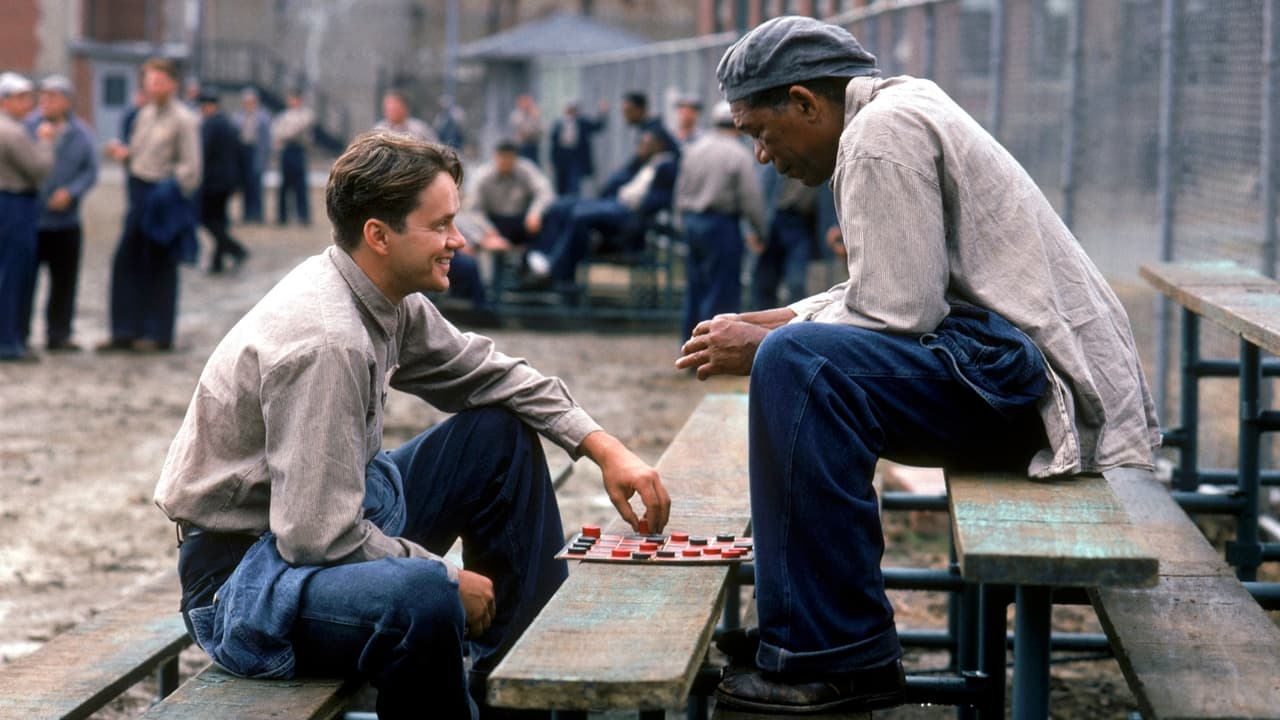

The Shawshank Redemption: full review


As an Amazon Associate, Claqueta Ácida earns from qualifying purchases.
The year 1994 was a turning point for Hollywood: the era of special effects blockbusters was beginning to peek its nose out, but in the darkest corners of cinema, projects were emerging that sought humanity over spectacle. Frank Darabont, fresh out of the shadow of "The Blob" and several scripts for "The X-Files", launched himself into directing his first film with an original script based on Stephen King's novel. The industrial context was one of studios betting on safe formulas, and yet Castle Rock Entertainment bet on a prison story that no one wanted to finance in the midst of the action fever.
Filming took place at the old Ohio State Penitentiary, a brick building that still reeks of sweat and distrust. With a budget of just 25 million dollars, the production had to improvise: the corridors were filmed in a single long take, and the iconic library courtyard was built with recycled wood. Darabont insisted that the actors live inside the cell for several days to capture authentic claustrophobia. That obsession translated into an atmosphere so dense that you can almost hear the echo of the guards' footsteps.
Upon its release, the film was a commercial failure, grossing a mere 28 million in the US.
The first scene that marked me was the opening shot: the camera slowly slides along the prison facade, while a light rain hits the asphalt. The sound of thunder mixes with the voice of Morgan Freeman, announcing that "the fear of death is the worst of all dangers." That moment, so simple and yet so loaded, left me with the sensation of having entered a ritual. Every time the projector crackles, I remember the texture of the concrete and the smell of wet paper from the library, and I understand why this film continues to resonate.

Direction and Staging
Darabont constructs the narrative like an hourglass: each scene accumulates with millimetric precision. The use of natural light in the exteriors, filtered through the bars, creates shadows that seem to draw the years Andy (Robbins) spends in prison. The shot of the escape, with the camera following Andy running in the rain, is a choreography of freedom that brutally contrasts with the oppressive corridors that precede it. Every cut is designed so that the viewer feels the pressure of time, and the music of Thomas Newman, with its subtle strings, accompanies without overloading.
The cinematography by Roger Deakins is, without a doubt, one of the technical jewels of the film. The color palette remains in sepia and gray tones, but in moments of hope —such as the scene of the open sky after the rain— a faint blue is introduced that symbolizes the breaking of confinement. Deakins manages to make the camera a silent observer, almost an accomplice to Andy's resistance. The editing, handled by Richard Francis-Bruce, respects the slow pace of the script, allowing each revelation to have its emotional weight.

Performances and Script
Tim Robbins portrays Andy Dufresne with a calculated coldness that only becomes warm when his gaze meets Red's. The chemistry between Robbins and Freeman is the engine of the film; their dialogues, especially Red's monologue about hope, are imbued with a truth that transcends the script. Bob Gunton, as Warden Norton, embodies institutional hypocrisy with a smile that never reaches his eyes. Every secondary character —from the brutal Bogs (Rolston) to the melancholic Brooks (Whitmore)— adds a layer of realism that enriches the plot.
The script, adapted by Darabont, distills the essence of King's novel without falling into over-explanation. The dialogues are scarce but powerful; the famous phrase "Get busy living or get busy dying" becomes a mantra that resonates in every subsequent scene. The three-act structure is perfectly balanced: the arrival at Shawshank, the building of the friendship, and the culmination of the escape. The production design, with its narrow cells and the library workshop, reinforces the sensation of confinement and, at the same time, of community.
The best
- Direction by Frank Darabont: Turns a prison story into a meditation on hope.
- Morgan Freeman's performance: His voice is a lighthouse that illuminates the darkness of the script.
- Cinematography by Roger Deakins: A color palette that transforms concrete into visual poetry.
- Soundtrack by Thomas Newman: Subtle strings that accompany without stealing the spotlight.
- Adapted script: Scarce dialogues but loaded with meaning.
The worst
- Slow initial pace: The first 30 minutes can be tedious for impatient audiences.
- Lack of depth in some secondary characters: Characters like Heywood receive little development.
- Excess of sentimentality in the climax: The final scene borders on melodrama.
- Scarce female representation: The film focuses almost exclusively on men.
The Verdict of Claqueta Ácida
Shawshank is not just a movie; it is a lesson in how cinema can turn the mud of routine into pure gold of emotion. With impeccable direction, performances that transcend time, and cinematography that turns the prison into a canvas of hope, Darabont's work remains a lighthouse for those who believe that art can redeem even the darkest places. If you are looking for a film that makes you reflect while making you feel comforted, this is the answer. 💀
🎬 Tráiler Oficial
Abrir en YouTube
The Shawshank Redemption: frequently asked questions
- What is the rating of "The Shawshank Redemption" on Claqueta Ácida?
- "The Shawshank Redemption" scored 8.7/10 on Claqueta Ácida in the review by Dr. Cinismo.
- Is "The Shawshank Redemption" worth watching?
- Yes. We gave it 8.7/10 (Nuclear Fusion), our rating for must-see films.
- Who directed "The Shawshank Redemption"?
- "The Shawshank Redemption" was directed by Frank Darabont.
Theater Collateral Damage Report
Psychophysical impact certificate issued by Dr. Cinismo
Cero bostezos. Pupilas dilatadas y tensión mandibular constante.
Ninguna comprobación del tiempo. Se agradece la rareza.
Ninguna. Esta obra no necesita muletas estimulantes.
"No hubo. La coherencia se mantuvo hasta el último fotograma."
💬 Community Verdict
What did you think of the film? Rate it from 0 to 10 to compare it with the editorial review.
You haven't voted yet
📢 ¿Te ha gustado el ácido?
Comparte esta crítica con tus amigos cinéfilos o desata la polémica en redes.
⚡ THE CINEMATIC VENOM YOUR INBOX CRAVES
No sugarcoated ratings, no corporate fluff. Subscribe for our uncensored weekly analysis or join the private Telegram for press previews, poll clashes, and instant alerts.
Alertas de estrenos en 1 segundo, encuestas en caliente y audios al salir de pases de prensa.
Recibe la dosis semanal en tu mail + regalo inmediato del PDF con 50 joyas ocultas de culto.
Related Reviews
Recommended autopsies for demanding film buffs.
 🔥 Fusión Nuclear 9.3
2001: A Space Odyssey — The Day Kubrick Left Us Speechless (and Oxygenless)
⚡ Afinidad temática directa en atmósfera, estilo y fijaciones visuales.
Kubrick turned science fiction into pure art: 149 minutes of eloquent silence, bone-wielding apes, and a psychopathic computer. Masterpiece or pretentious fraud? Here’s the verdict.
 🔥 Fusión Nuclear 8.5
*A Clockwork Orange: The Sweet, Rusty Aftertaste of Violent Haute Couture*
⚡ Afinidad temática directa en atmósfera, estilo y fijaciones visuales.
A scathing review of Kubrick’s masterpiece, where ultraviolence meets 60s fashion in a twisted pas de deux.
 🔥 Fusión Nuclear 8.5
*Airbag: The 90s’ Orgy of Chaos with Style (or How the Decade Taught Us to Laugh at Death)*
⚡ Afinidad temática directa en atmósfera, estilo y fijaciones visuales.
Juanma Bajo Ulloa turns mayhem into art with this psychedelic road movie, where the A/C reeks of cheap whiskey and the celluloid sweats testosterone. A cult gem that time hasn’t been able to tarnish.
Editorial Ecosystem
Cinephile connections, archive interviews and related analyses.
💬 Debate Cinéfilo & Autopsia de Lectores
0 veredictos¿Discrepas con nuestra nota? ¿Es una obra maestra o veneno puro? Deja tu veredicto abajo sin necesidad de registro.


Aún nadie ha dejado su veredicto para esta película.
Sé el primero en clavarle el colmillo rellenando el formulario de arriba.