Christine — The Most Toxic and Brilliant Mechanical Romance in Cinema History
John Carpenter takes Stephen King’s eponymous novel and soups it up to deliver a staggering fable about teenage obsession, rock ‘n’ roll, and a 1958 Plymouth Fury with the jealous rage of a scorned lover.

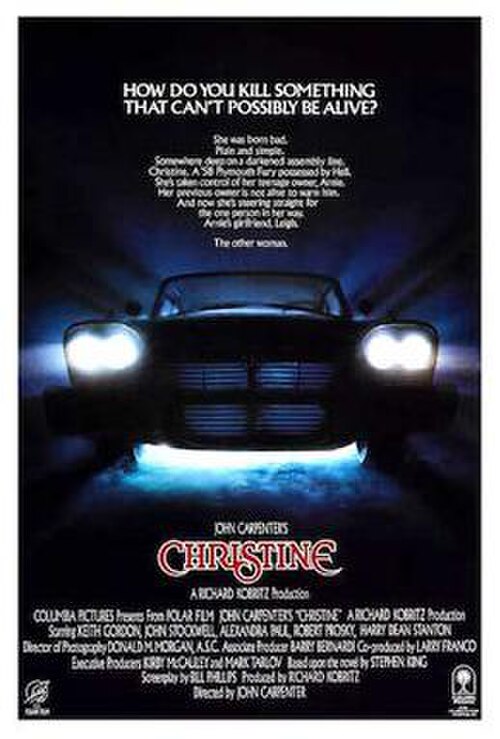

Here at the hallowed halls of Claqueta Ácida, where we’ve dissected human relationships so toxic they’d make a nuclear waste dump look like a spa retreat, few have been as gloriously destructive—and as aesthetically flawless—as the romance between a socially irrelevant teen and a 1958 Plymouth Fury the color of fresh arterial spray, assembled from the bones of James Dean and the breath of Beelzebub himself. Christine (1983), that cursed gem from John Carpenter, is irrefutable proof that horror cinema can be smart enough to mock itself while simultaneously driving a screwdriver into your cortex. Because let’s be real: on paper, the premise sounds like the drunken ramblings of a mechanic at a convention ("What if a car is possessed and falls in love with its owner?"). But Carpenter, that sorcerer of low-budget filmmaking with more style than a dandy at a funeral, turns the absurd into a biting parable about American automotive fetishism, teenage rage simmering at 200 degrees, and jealousy so sick it’d make Othello look like an altar boy.
At its core, the plot is as simple as an IKEA instruction manual: Arnie Cunningham (Keith Gordon, delivering a performance that oscillates between pathetic and chilling with the precision of a neurosurgeon) is the quintessential high school nerd—life has kicked him more times than a football in a Friday night game. His only friend, Dennis (John Stockwell), is the kind of guy who sticks around out of pity. But everything changes when Arnie, in a fit of existential despair, locks eyes with Christine, a Plymouth Fury rotting in a junkyard, looking deader than a politician’s career after a corruption scandal. The attraction is instant, visceral, almost erotic: Arnie sees in that pile of rust and memories a chance to reinvent himself, to stop being the class joke and become the owner of something cool. What he doesn’t know—or maybe he does, and he just doesn’t care—is that Christine isn’t just a car. She’s an entity with consciousness, memory, and a voracious appetite for the blood of anyone who dares come between her and her "beloved."
The Metal That Whispers to Cowards: Christine as a Character
What elevates Christine above the heap of possessed-car movies (yes, there’s a heap, and most of them reek of cheap gasoline and unemployed screenwriters) is how Carpenter makes that 1958 Plymouth Fury not just a deus ex machina on wheels, but a complex, seductive, and terrifying character. Christine isn’t your typical demonic vehicle that just rams people like a bull in a china shop; she’s a scorned woman, a femme fatale of sheet metal and paint who demands absolute loyalty. And, like any jealous lover, she has her ways of communicating: the radio, that modern oracle, spits out rock ‘n’ roll classics from the ‘50s ("Keep A-Knockin’" by Little Richard, "Not Fade Away" by Buddy Holly) as if they were coded messages, warnings, or outright threats. It’s impossible not to see Christine as a distorted reflection of America’s obsession with the automobile: that object promising freedom but actually chaining you to debt, accidents, and—in this case—a Faustian pact with the devil.
The car restoration scenes are pure cinematic alchemy. Carpenter, with the help of practical effects maestro Roy Arbogast (the same genius behind The Thing), makes Christine regenerate herself in a dark garage like a living organism. Dents smooth out, paint renews, and headlights gleam with an almost orgasmic intensity, all while Carpenter’s synth score—a sound like an electronic nightmare—wraps the scene in an atmosphere of uncanny beauty. It’s a sequence that, even today, leaves anyone who values cinema as a hands-on art form slack-jawed. Because let’s be clear: in the age of CGI, watching a car repair itself with practical effects is like finding a diamond in a landfill of digital blockbusters.
Direction and Cinematography: Carpenter at the Wheel
John Carpenter is a director who’s made a virtue out of working with budgets tighter than a Victorian corset, yet he’s created some of the most iconic images in horror cinema. With Christine, however, he takes it a step further: he doesn’t just direct the film—he drives it like a race car pilot in the 24 Hours of Le Mans of suspense. Stepping away from his usual collaborator, Dean Cundey (the cinematographer behind Halloween and The Thing), Carpenter entrusts Donald M. Morgan to capture the essence of suburban America—an environment as suffocating as the highways that crisscross it. Morgan, with his cold color palette and obsession with chiaroscuro, makes every frame breathe an atmosphere of everyday nightmare, as if David Lynch had decided to shoot an episode of Happy Days after a caffeine overdose.
The film’s crowning sequence—and one of the most beautiful in ‘80s cinema—is undoubtedly the moment Christine, engulfed in flames, chases Buddy Repperton (the high school bully) down a deserted road. The car, transformed into an unstoppable fireball, advances like a vengeful specter while Carpenter’s camera captures every detail with surgical precision. It’s a shot that distills everything that makes Christine great: terror, beauty, symbolism, and, above all, the sense that you’re witnessing something that transcends the genre. It’s not just a chase; it’s a macabre dance between man and machine, between desire and destruction.
Performances: Keith Gordon and the Descent into Madness
Keith Gordon, as Arnie Cunningham, delivers one of those performances that fly under the radar at first but reveal themselves over time as small masterpieces of psychological transformation. At the start, Arnie is a shy, insecure teen with self-esteem lower than a worm in a well. But as Christine regains her splendor, Arnie becomes arrogant, violent, almost unrecognizable. Gordon conveys this shift with a subtlety that borders on the disturbing: it’s not a sudden change but a slow metamorphosis, like an insect shedding its shell to reveal something far more dangerous. It’s impossible not to feel a mix of pity and revulsion for his character, especially in scenes where Christine "possesses" his mind, like when he retrieves the car after it’s been wrecked and murmurs with a psychopath’s smile: "She needs me."
John Stockwell, as Dennis, fulfills his role as the loyal friend with competence, though his character is somewhat overshadowed by Christine’s magnetic presence. Alexandra Paul, as Leigh (Arnie’s girlfriend), provides the necessary emotional counterpoint, though her arc feels a bit rushed. What’s truly interesting is how Carpenter uses the secondary characters not as mere obstacles for the protagonist but as victims of a force beyond their understanding. Because, in the end, Christine isn’t a movie about a possessed car; it’s a movie about how love—or whatever Arnie feels for that heap of metal—can corrupt the soul to its core.
Soundtrack: Rock ‘n’ Roll as the Devil’s Language
If there’s one thing Carpenter understands better than anyone, it’s the power of music in cinema. In Christine, the soundtrack isn’t just background noise—it’s another character, a Greek chorus that comments, warns, and sometimes laughs at the protagonists. The ‘50s rock ‘n’ roll classics blaring from Christine’s radio aren’t chosen at random: they’re the car’s thoughts, her jealousy, her rage. When "Bad to the Bone" by George Thorogood plays, it’s no coincidence; it’s Christine showing off her violent nature. When Arnie and Leigh dance to "Not Fade Away," the irony is so thick you could cut it with a knife: Arnie’s love for Leigh fades, but his obsession with Christine is eternal.
And then there’s Carpenter’s original score, that synth sound as if recorded in hell and mixed with the hum of an idling engine. It’s music that doesn’t just accompany the scenes but infects them, adding an extra layer of tension and melancholy. Because, in the end, Christine is also a modern Greek tragedy: the story of a man who falls in love with something he can’t control and, in the process, loses his humanity.
Cinematic Comparisons: Is Christine the Carrie of Cars?
If Brian De Palma’s Carrie (1976) is the story of a teenage girl who discovers her power can be as destructive as her oppression, Christine is its masculine, automotive counterpart: the tale of a teen who finds in an inanimate object the strength to avenge a world that’s rejected him. Both films explore the theme of possession—whether demonic, supernatural, or simply psychological—and how it can corrupt even the most innocent. But while Carrie is an explosion of violence and blood, Christine is a slow nightmare, a gradual erosion of sanity that culminates in a climax as spectacular as it is inevitable.
There are also echoes of Steven Spielberg’s Duel (1971), that TV gem where a truck becomes the silent, lethal antagonist of an everyman. But while Duel’s truck is a force of nature, an embodiment of chance and fate, Christine is something far more personal, almost intimate. She’s not a faceless monster; she’s a mirror of Arnie’s desires and fears, an extension of his fractured psyche.
What Was Lost in Adaptation: The Novel vs. the Film
Stephen King, that prolific manufacturer of literary nightmares, wrote Christine in 1983, the same year the Carpenter adaptation hit theaters. And, as is often the case with King adaptations, the film captures the essence of the novel but simplifies some of its most interesting elements. In the book, for example, there’s a much stronger spectral component: the ghost of Roland D. LeBay, Christine’s previous owner, plays an active role in the car’s possession and Arnie’s corruption. In the film, however, this element is reduced to a couple of dream sequences and the presence of Robert Prosky as LeBay’s brother, which strips the story’s supernatural backstory of some of its depth.
Some of the novel’s more grotesque and visceral details are also missing, like the scene where Christine runs over a group of bullies and then literally "eats" the bodies, leaving only puddles of blood and scraps of clothing. Carpenter, instead, opts for a more subtle, classic approach, making the film less explicit but, in a way, more terrifying for what it suggests than for what it shows.
The Ending: Too Rushed or Pure Carpenter?
The climax of Christine, where Arnie and the car are destroyed in a garage after a showdown with a crane, is as satisfying as it is frustrating. On one hand, it’s an epic ending, full of symbolism: man and machine, united in death as they were in life. On the other, it feels a bit rushed, as if Carpenter suddenly remembered he had to wrap things up and opted for the most spectacular (and noisy) solution possible. The resolution of the secondary characters, especially Leigh, feels underdeveloped, as if Carpenter lost interest in them once Christine and Arnie became the absolute center of the story.
But deep down, isn’t that what makes Christine great? That, in the end, it’s not a movie about people but about an obsession. And Carpenter, like any good storyteller, knows that obsessions rarely have clean or happy endings. They have explosive, chaotic, noisy endings. Like Christine’s.
finalExplicado: "Christine se autodestruye en una orgía de furia metálica. Tras ser destrozada a golpes por un bulldozer, la Plymouth Fury se regenera una última vez en un espasmo mecánico y se lanza contra Arnie y Leigh en un intento final de matarlos a ambos. Arnie se interpone, abraza el volante y muere desangrado dentro de ella mientras el coche, agonizante, se apaga para siempre con las luces parpadeando como un corazón que falla. Simbólicamente, el final es una boda necro-mecánica: el adolescente y su amante demoníaca mueren unidos en un abrazo mortal. Christine no acepta ser abandonada; prefiere destruirse y destruir a su dueño antes que perderlo. Es la consumación perfecta de una obsesión tóxica: el amor posesivo convertido en chatarra ardiente."
The Best
Christine’s Regeneration: A scene that proves that before CGI ruined everything, cinema was an art of illusionists, not nerds* with computers.- Keith Gordon: An actor who makes you hate and pity his character in the same scene, like a politician on the campaign trail.
The Worst
Simplifying the Novel: Carpenter cuts the book’s most spectral elements, leaving Christine* with a supernatural backstory as shallow as a puddle.- The Pacing at the End: The resolution feels rushed, as if Carpenter suddenly remembered he had to finish the movie and floored the accelerator.
The Verdict of Claqueta Ácida (8.2/10)
Christine is that rare bird that proves horror cinema can be smart enough to mock its own conventions and visceral enough to leave your heart in your throat. Carpenter turns a ridiculous premise into a meditation on obsession, love, and destruction, all wrapped in an aesthetic that smells of gasoline, teenage sweat, and ‘80s nightmares. It’s a film that will make you eye your car suspiciously the next time you start the engine, wondering if that strange noise is just the engine... or something more. And let’s be honest, deep down, we all know our cars hate us. 🚗💀🎬 Tráiler Oficial
Abrir en YouTube
Ending Explained: Christine
Ficha de Daños Colaterales en Sala
Certificado de impacto psicofísico emitido por Lúa Ácida
Cero bostezos. Pupilas dilatadas y tensión mandibular constante.
Ni una sola mirada al móvil.
Ninguna. Esta obra no necesita muletas estimulantes.
"No hubo. La coherencia se mantuvo hasta el último fotograma."
💬 El Veredicto de la Comunidad
¿Qué te ha parecido la película? Deja tu nota de 0 a 10 para contrastarla con el análisis de la redacción.
Aún no has votado
📢 ¿Te ha gustado el ácido?
Comparte esta crítica con tus amigos cinéfilos o desata la polémica en redes.
⚡ THE CINEMATIC VENOM YOUR INBOX CRAVES
No sugarcoated ratings, no corporate fluff. Subscribe for our uncensored weekly analysis or join the private Telegram for press previews, poll clashes, and instant alerts.
Alertas de estrenos en 1 segundo, encuestas en caliente y audios al salir de pases de prensa.
Recibe la dosis semanal en tu mail + regalo inmediato del PDF con 50 joyas ocultas de culto.
Related Reviews
Recommended autopsies for demanding film buffs.
 🔥 Fusión Nuclear8.5
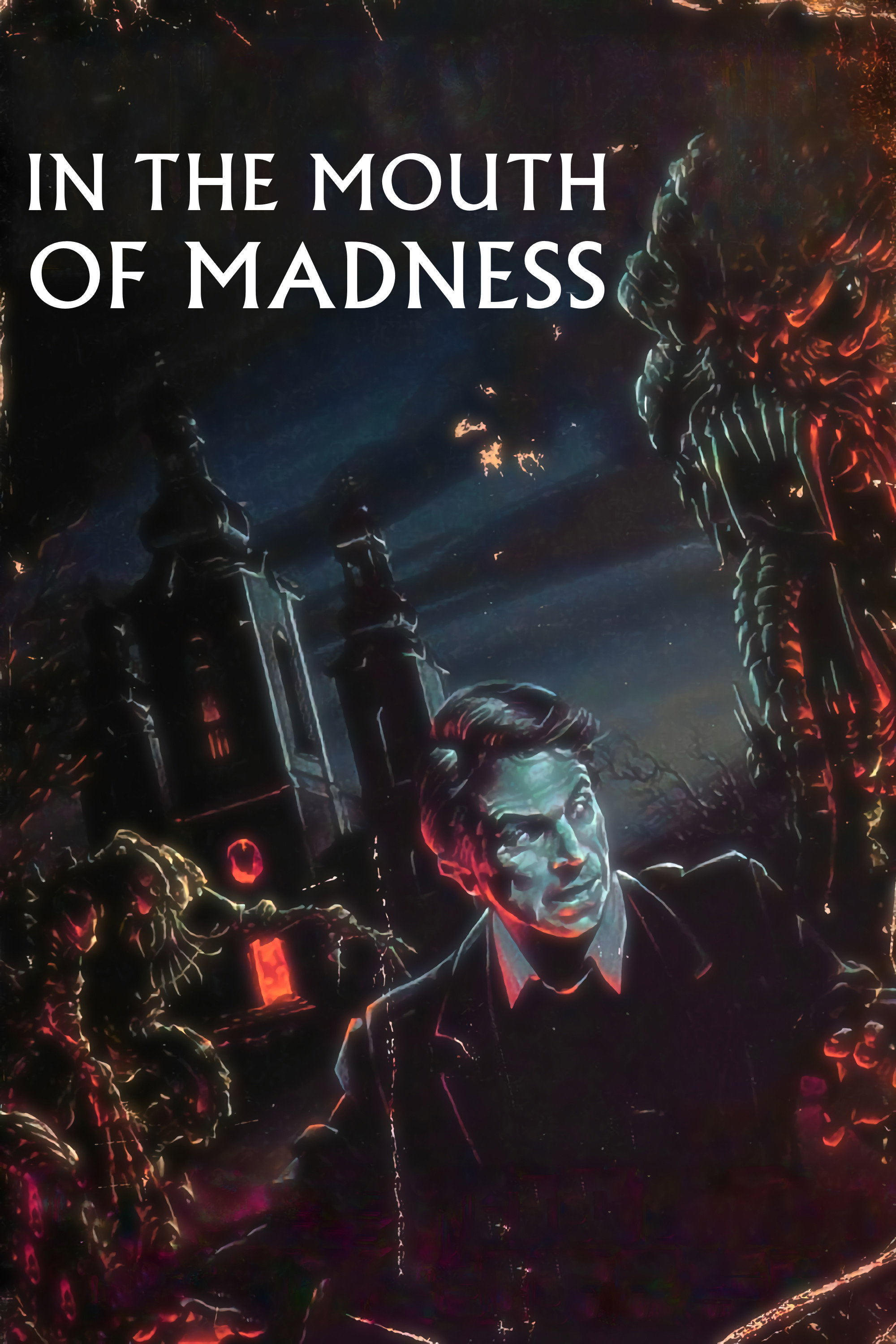
In the Mouth of Madness: When John Carpenter Swallowed Lovecraft (And Spat Out Our Sanity)
⚡Del mismo director (John Carpenter): analiza la evolución o degradación de su estilo.
John Carpenter delivers a Lovecraftian nightmare with Sam Neill teetering on the edge of the abyss. A masterpiece of cosmic horror or a self-parody with literary pretensions? Here’s the autopsy.
 🔥 Fusión Nuclear8.5
"They Live: The Satire Capitalism Would’ve Buried Alive (If It Hadn’t Already Sold It as Merch)"
⚡Del mismo director (John Carpenter): analiza la evolución o degradación de su estilo.
In 1988, John Carpenter handed us a shattered mirror of alienating consumerism. Today, it’s a meme with legs—but its acid still burns hotter than a Monopoly bill on Wall Street.
 🔥 Fusión Nuclear8.0
Halloween Night: The Psychopath Born from a Shit Budget (And Saved Us from Mediocrity)
⚡Del mismo director (John Carpenter): analiza la evolución o degradación de su estilo.
John Carpenter turned $300,000 and a guy in a William Shatner mask into the slasher that redefined horror. Claqueta Ácida dissects its cheap genius.
Editorial Ecosystem
Cinephile connections, archive interviews and related analyses.

💬 Debate Cinéfilo & Autopsia de Lectores
0 veredictos¿Discrepas con nuestra nota? ¿Es una obra maestra o veneno puro? Deja tu veredicto abajo sin necesidad de registro.


Aún nadie ha dejado su veredicto para esta película.
Sé el primero en clavarle el colmillo rellenando el formulario de arriba.