The Corpse Collector — An Acidic Review of Lúa
A biting review that unravels the baroque horror of the 1968 film, amidst Karloff, shadows, and macabre sculptures.
The Corpse Collector: full review

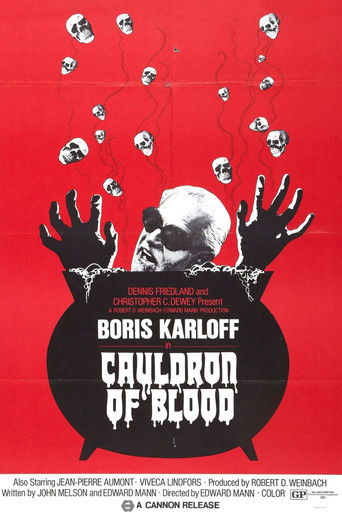
Plaster dust rises on the screen like a fog of sixties memories, and I, still trembling, attempt to untangle the web of images I have just devoured. "The Corpse Collector" arrives as a whisper from the corridors of Hispamer studios, a co-production between Spain and the USA that seems to have been born from a bet between European genre cinema and the American need to fill theaters with cheap horror. Santos Alcocer and Edward Mann, two names that rarely appear together, join forces to bring to life a story that already sounds like an old-school horror tale: a blind sculptor who, with the help of his wife, turns corpses into molds for his works. The premise, as macabre as it is intriguing, feels like an invitation to a ritual of blood and marble.
Alcocer's career had been marked by low-budget works, but always with an aesthetic that sought the deepest shadow. Edward Mann, for his part, had directed several exploitation thrillers in the USA, and his visual style is recognizable in the way the camera slowly slides over disfigured faces, as if it wanted to extract every wrinkle of pain. The filming, according to anecdotes from the time, took place in the Madrid studios under a rain of financing problems; the scarcity of light forced Francisco Sempere to play with extreme contrasts, creating a photography that looks like a moving woodcut.
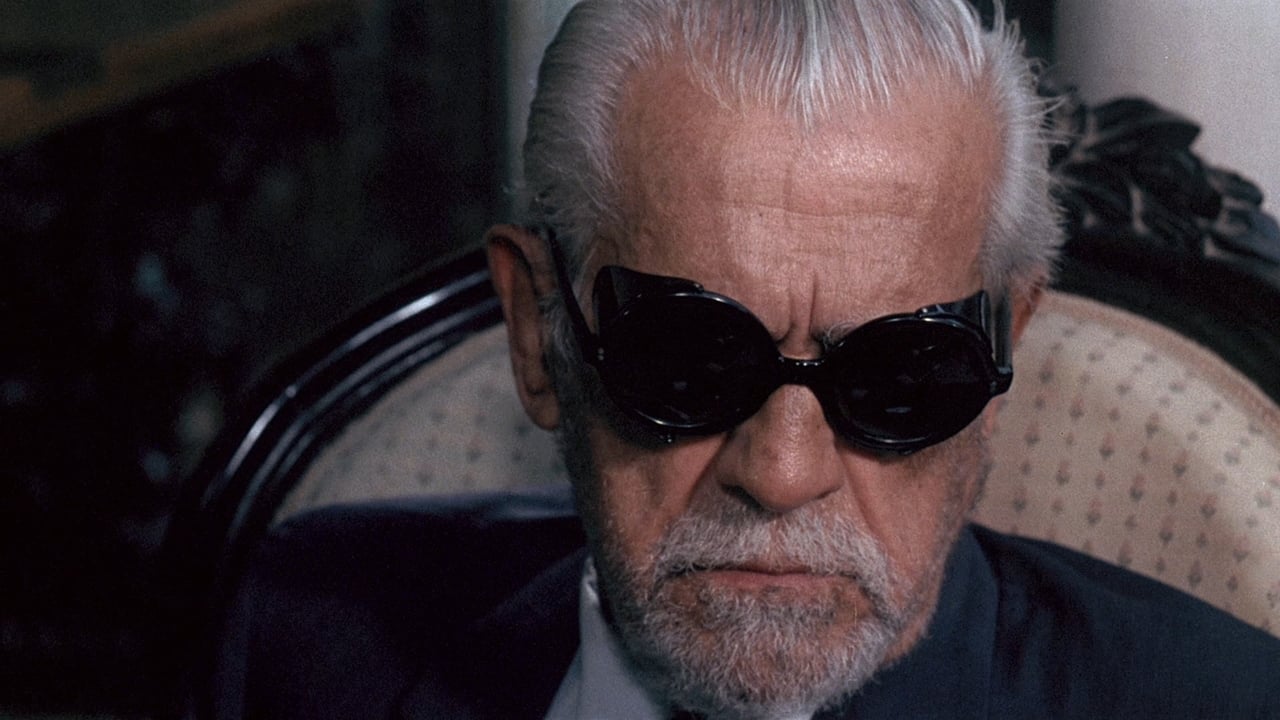
Upon entering the room, the first shot that captures me is that of Karloff, embodying Franz Badulescu, with the empty gaze of one who has lost sight but not inner vision. The camera remains fixed on his face, while light seeps through a crack, drawing shadows that stretch like skeletal fingers. Each hammer blow heard by the audience is a heartbeat of death itself, and the sound reverberates in the room like a cemetery echo. Ray Ellis's soundtrack, composed with dissonant strings and metallic percussion, accompanies that scene with a precision that borders on the uncanny.
John Melson's script, although laden with disturbing ideas, suffers from a structure that wobbles between the poetic and the merely sensationalist. The dialogues of Jean-Pierre Aumont, who plays journalist Claude Marchand, are sometimes too literary for a film that aims to be pure horror. However, Viveca Lindfors' performance as Tania Badulescu adds a layer of vulnerability that contrasts with Karloff's coldness, creating a tension that feels real amidst the nightmare atmosphere.
Direction and Staging
Alcocer and Mann alternate their styles like someone changing knives during an operation. In the first minutes, the camera moves with deliberate slowness, almost like a funeral dance, while the sculptor prepares his workshop. In the workshop scene, the framing becomes claustrophobic: the camera is placed at ground level, looking at the work tools as if they were weapons. The light comes from a single hanging lamp, creating shadows that are projected onto the inert bodies, turning them into living sculptures. When the wife, played by Rosenda Monteros, enters the scene, the camera briefly opens, showing a contrast between the intimacy of the workshop and the coldness of the outside, a decision that underscores the duality between creation and destruction.
Performances and Script
Karloff, at 78 years old, delivers a performance that borders on the mythical. His physical presence, even blind, feels like a force of nature; every gesture is measured, every whisper, a heartbeat. Aumont, on the other hand, seems trapped between the role of detective and omniscient narrator, sometimes too explanatory. Lindfors, however, shines with a melancholy that makes her character more than a simple accomplice; her gaze reveals a complicity that transcends violence. The script, although plagued with moments of macabre brilliance, suffers from forced dialogues and a progression that sometimes feels dragged, as if the rhythm were tied to the slowness of the chisel.
Technical Aspects
Francisco Sempere, the director of photography, uses a palette of muted colors: grays, ochres, and blacks that recall gothic horror films. The use of hard light focus on the characters' faces creates a relief effect that accentuates the texture of skin and bones. The editing, handled by an anonymous editor, relies on abrupt cuts during murder moments, contrasting with long takes in dialogues, which generates a dissonance that sometimes confuses but also maintains tension. Ray Ellis's soundtrack, with its dissonant strings and metallic percussion, acts as a constant heartbeat that accompanies the action without overloading it.
The best
- Francisco Sempere's photography: Light contrasts that turn each corpse into a macabre work of art.
- Boris Karloff's interpretation: A blind villain who remains an imposing and chilling presence.
- Production design: The sculptor's workshop, with its rusted tools and sinister detailed molds, creates a claustrophobic atmosphere.
- Ray Ellis's soundtrack: Dissonant strings that accompany each chisel blow like a heartbeat of death.
The worst
- John Melson's script: Forced dialogues and a narrative that drags in unnecessary moments.
- Uneven rhythm: Long exposition scenes that break the tension of horror.
- Jean-Pierre Aumont's performance: Sometimes too literary, it detracts from the credibility of the journalist role.
- Inconsistent editing: Abrupt cuts that clash with long takes, creating an irregular visual experience.
The Verdict of Claqueta Ácida
"The Corpse Collector" is a cult piece that manages to be unsettling without pretending to be a masterpiece. Karloff shines as always, the photography and sound are worthy of praise, but the script and rhythm leave it halfway between art and pulp. If you are looking for a horror experience with an aesthetic worth observing, it is worth giving it a chance, although do not expect the chisel to cut deeper than what is already carved. 💀
The Corpse Collector: frequently asked questions
- What is the rating of "The Corpse Collector" on Claqueta Ácida?
- "The Corpse Collector" scored 5.5/10 on Claqueta Ácida in the review by Lúa Ácida.
- Is "The Corpse Collector" worth watching?
- With reservations. We gave it 5.5/10 (Citric Acid), our rating for uneven films with something worth saving.
- Who directed "The Corpse Collector"?
- "The Corpse Collector" was directed by Santos Alcocer, Edward Mann.
Theater Collateral Damage Report
Psychophysical impact certificate issued by Lúa Ácida
1 amago en el tramo intermedio; pestañeo pesado en las transiciones más innecesarias.
El reloj aparece en escena justo cuando la subtrama secundaria pide paciencia.
2 espressos para no dejarse vencer por la mediocridad cómoda.
"A mitad del segundo acto cuando la subtrama secundaria empezó a pesar más de lo que aportaba."
💬 Community Verdict
What did you think of the film? Rate it from 0 to 10 to compare it with the editorial review.
You haven't voted yet
📢 ¿Te ha gustado el ácido?
Comparte esta crítica con tus amigos cinéfilos o desata la polémica en redes.
⚡ THE CINEMATIC VENOM YOUR INBOX CRAVES
No sugarcoated ratings, no corporate fluff. Subscribe for our uncensored weekly analysis or join the private Telegram for press previews, poll clashes, and instant alerts.
Alertas de estrenos en 1 segundo, encuestas en caliente y audios al salir de pases de prensa.
Recibe la dosis semanal en tu mail + regalo inmediato del PDF con 50 joyas ocultas de culto.
Related Reviews
Recommended autopsies for demanding film buffs.
 🔥 Fusión Nuclear 9.3
2001: A Space Odyssey — The Day Kubrick Left Us Speechless (and Oxygenless)
⚡ Comparten trinchera editorial en la sección de Clásicos.
Kubrick turned science fiction into pure art: 149 minutes of eloquent silence, bone-wielding apes, and a psychopathic computer. Masterpiece or pretentious fraud? Here’s the verdict.
 🔥 Fusión Nuclear 8.5
*A Clockwork Orange: The Sweet, Rusty Aftertaste of Violent Haute Couture*
⚡ Comparten trinchera editorial en la sección de Clásicos.
A scathing review of Kubrick’s masterpiece, where ultraviolence meets 60s fashion in a twisted pas de deux.
 🔥 Fusión Nuclear 8.5
*Airbag: The 90s’ Orgy of Chaos with Style (or How the Decade Taught Us to Laugh at Death)*
⚡ Comparten trinchera editorial en la sección de Clásicos.
Juanma Bajo Ulloa turns mayhem into art with this psychedelic road movie, where the A/C reeks of cheap whiskey and the celluloid sweats testosterone. A cult gem that time hasn’t been able to tarnish.
Editorial Ecosystem
Cinephile connections, archive interviews and related analyses.
💬 Debate Cinéfilo & Autopsia de Lectores
0 veredictos¿Discrepas con nuestra nota? ¿Es una obra maestra o veneno puro? Deja tu veredicto abajo sin necesidad de registro.


Aún nadie ha dejado su veredicto para esta película.
Sé el primero en clavarle el colmillo rellenando el formulario de arriba.