Event Horizon — A Voyage into the Void of Space
A scathing critique that dissects the cosmic horror of Event Horizon with erudition and biting sarcasm.
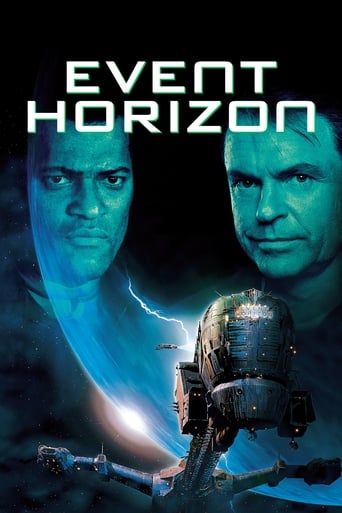
Event Horizon: full review

As an Amazon Associate, Claqueta Ácida earns from qualifying purchases.
The nineties closed its cycle with an obsession for the limits of space and the mind, and Paul W. S. Anderson, fresh out of the glorious but ephemeral Mortal Kombat, wanted to dive into that current with Event Horizon. The director, still under the shadow of action successes, decided to bet on a cosmic horror that pretended to rival Alien and The Thing. The project, a co-production between the UK and the US, had the backing of Impact Pictures and Paramount, a combination that promised resources but, as we will see, fell short on several fronts.
Philip Eisner’s script, written in the hallways of Hollywood while the arrival of CGI was debated, mixes 70s science fiction with the gothic aesthetic of the 90s. The plot, based on the mysterious reopening of the experimental ship Event Horizon in Neptune’s orbit, feeds on the premise that space is a void that devours sanity. The film premiered in 1997, just as the industry began to blindly trust digital effects, but Anderson opted for a mix of models, miniatures, and fake blood that, although it sometimes creaks, retains a texture that pure CGI will never reach.
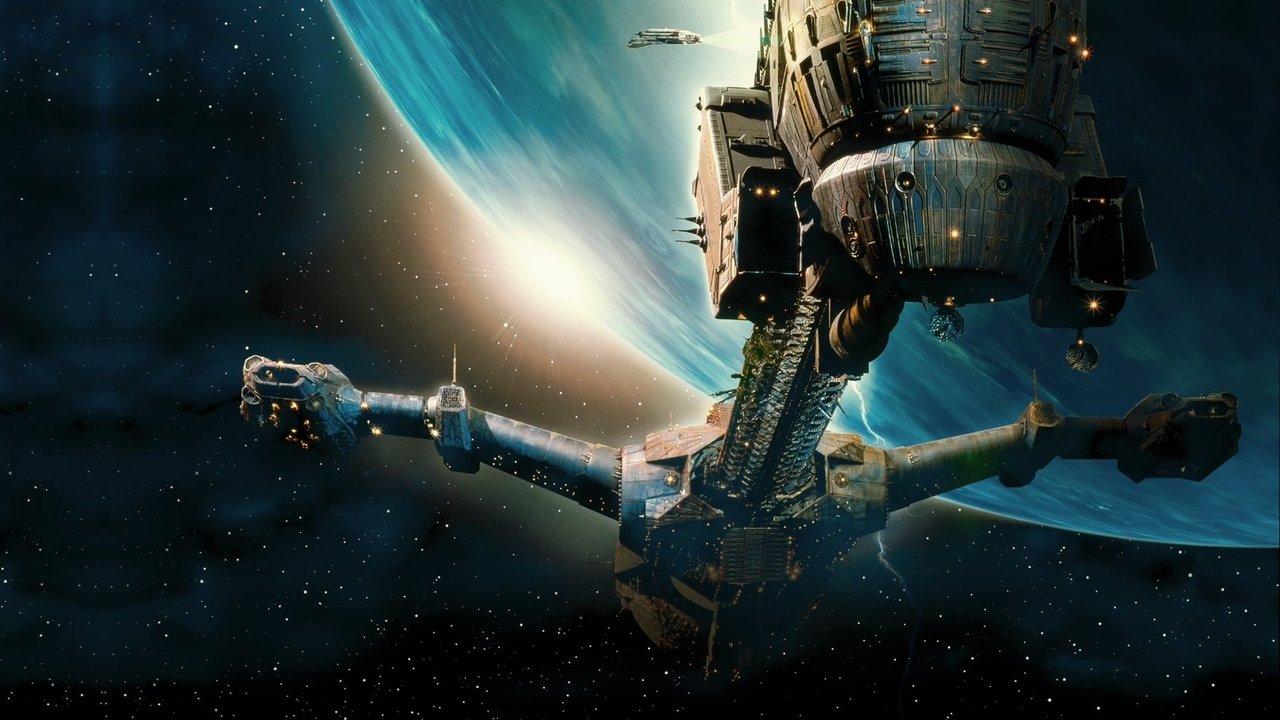
In the theater, the first shot of the ship emerging from the darkness is a lesson in composition: the black silhouette against the stellar glow, the slow motion that stops on the detail of the burned panels, all of this wraps the viewer in a sensation of cosmic claustrophobia. Michael Kamen’s music, with its dissonant strings and metallic percussion, acts as a heartbeat that accompanies the rhythm of the story, reminding us that terror is not only in what we see, but in what we hear.
I left the theater with the sensation of having been dragged by a current of steam and blood. The scene where Dr. Weir (Sam Neill) discovers the record of the last transmission, with the camera shaking and the red light pulsing, left me breathless. It is not just cheap horror; there is an intention to explore the psychology of fear, although the execution sometimes gets lost in science fiction clichés. In short, Event Horizon is a piece that deserves to be seen with the eye of a Nouvelle Vague scholar, capable of recognizing the beauty of its shots even if the script slides into banality.

Direction and Staging
Anderson shows an ambition that borders on pretentious, but also a visual sensitivity that recalls the masters of auteur cinema. The decision to use green neon light for the ship’s corridors creates an atmosphere that evokes the aesthetic of Blade Runner, although without Ridley Scott’s subtlety. The long takes inside the engine room, where the camera follows the technicians as pressure builds, are an exercise in tension that works as a mirror of psychological claustrophobia. The staging, however, sins by overloading spaces with sets that pretend to be futuristic but end up looking like low-budget sets.

Performances and Script
Laurence Fishburne, as Captain Miller, brings a dignity that contrasts with the decay of the environment. His deep voice and upright posture are the moral anchor that holds the narrative when the script becomes vague. Sam Neill, always the melancholic intellectual, delivers a performance that borders on theatrical, but which, in moments of crisis, manages to convey the desperation of a man trapped between science and the supernatural. Eisner’s script, although loaded with interesting ideas –the concept of a door to another dimension, the exploration of human guilt–, drowns in expository dialogues and a structure that advances with the slowness of a ship without an engine. The “door cut” scene is, without a doubt, the climax, but the rest of the story feels like an attempt to fill the void with visual effects.
Technical Aspects
Adrian Biddle, in charge of cinematography, manages to create contrasts that highlight the coldness of space and the bloody warmth of the interiors. The cold colors of the exterior mix with the blood red that floods the ship, generating a visual dichotomy that, although sometimes forced, works in key moments. The editing, by David Gamble, alternates between frenetic rhythm and contemplative pauses; however, the lack of coherence in the editing of some horror sequences reduces the impact of the scares. Michael Kamen’s soundtrack, with its dissonant strings, is the element that most elevates the film, creating a tension that persists long after the credits end.
The best
- Adrian Biddle’s Cinematography: Light contrasts that turn the ship into a visual nightmare stage.
- Laurence Fishburne’s Performance: A captain who maintains dignity amidst chaos.
- Production Design: Practical effects that recall the classics of 80s horror.
- Michael Kamen’s Soundtrack: Strings that pulse like the heartbeat of the ship.
- The door cut scene: A visual climax that still gets people talking.
The worst
- Philip Eisner’s Script: Forced dialogues and excessive exposition that hinder the plot.
- Paul W. S. Anderson’s Direction: Ambition that exceeds resources, resulting in incoherent scenes.
- Irregular Pacing: Alternation between slowness and frenzy that disorients the viewer.
- Limited Digital Effects: Some CGI sequences reveal the era and break immersion.
- Secondary Character Development: Lack of depth that leaves the crew as mere archetypes.
The Verdict of Claqueta Ácida
Event Horizon manages to be a cult piece because, despite its structural defects, it retains an intensity that few 90s sci-fi films achieved. Anderson delivers an atmosphere that, although sometimes drowns in its own pretension, reminds us that cosmic horror remains a fertile frontier for experimentation. With solid performances and cinematography that still impresses, the film deserves a second look, although with the awareness that its script and pacing do not always match its ambition. In sum, a journey worth undertaking, even if the destination is an abyss of mediocrity. 💀
🎬 Tráiler Oficial
Abrir en YouTube
Event Horizon: frequently asked questions
- What is the rating of "Event Horizon" on Claqueta Ácida?
- "Event Horizon" scored 6.6/10 on Claqueta Ácida in the review by Odin Lagbert.
- Is "Event Horizon" worth watching?
- With reservations. We gave it 6.6/10 (Citric Acid), our rating for uneven films with something worth saving.
- Who directed "Event Horizon"?
- "Event Horizon" was directed by Paul W. S. Anderson.
Theater Collateral Damage Report
Psychophysical impact certificate issued by Odin Lagbert
3 amagos en el tramo intermedio; pestañeo pesado en las transiciones más innecesarias.
El reloj aparece en escena justo cuando la subtrama secundaria pide paciencia.
2 espresso para no dejarse vencer por la mediocridad cómoda.
"A mitad del segundo acto cuando la subtrama secundaria empezó a pesar más de lo que aportaba."
💬 Community Verdict
What did you think of the film? Rate it from 0 to 10 to compare it with the editorial review.
You haven't voted yet
📢 ¿Te ha gustado el ácido?
Comparte esta crítica con tus amigos cinéfilos o desata la polémica en redes.
⚡ THE CINEMATIC VENOM YOUR INBOX CRAVES
No sugarcoated ratings, no corporate fluff. Subscribe for our uncensored weekly analysis or join the private Telegram for press previews, poll clashes, and instant alerts.
Alertas de estrenos en 1 segundo, encuestas en caliente y audios al salir de pases de prensa.
Recibe la dosis semanal en tu mail + regalo inmediato del PDF con 50 joyas ocultas de culto.
Related Reviews
Recommended autopsies for demanding film buffs.
 ⚡ Ácido Cítrico 7.1
28 Years Later: The Bone Temple: when cult cinema trips over its own shadow
⚡ Afinidad temática directa en atmósfera, estilo y fijaciones visuales.
A sequel that smells rotten from the very first frame. Garland and DaCosta try to revive the genre, but the result is a technical knockout dressed up as a masterpiece.
 ⚡ Ácido Cítrico 5.8
A Serbian Film: The Snuff That Thought It Was Art (and Ended Up a High-School Nightmare)
⚡ Afinidad temática directa en atmósfera, estilo y fijaciones visuales.
Srđan Spasojević serves up a depravity feast swinging between gratuitous shock and social commentary. Genius or pretentious trash? Claqueta Ácida dissects it with surgical precision.
 ⚡ Ácido Cítrico 6.0
Adolescence, Sex, and Death at Camp Miasma: The Slasher That Reeks of Teen Sweat and a Recycled Script
⚡ Afinidad temática directa en atmósfera, estilo y fijaciones visuales.
Jane Schoenbrun turns a summer camp into a dumpster fire of hormones and clichés. Art or autopsy of a dying subgenre?
Editorial Ecosystem
Cinephile connections, archive interviews and related analyses.
💬 Debate Cinéfilo & Autopsia de Lectores
0 veredictos¿Discrepas con nuestra nota? ¿Es una obra maestra o veneno puro? Deja tu veredicto abajo sin necesidad de registro.


Aún nadie ha dejado su veredicto para esta película.
Sé el primero en clavarle el colmillo rellenando el formulario de arriba.