The Exorcist — A Cynical Possession
A scathing review of The Exorcist, the horror classic with a razor-sharp edge.

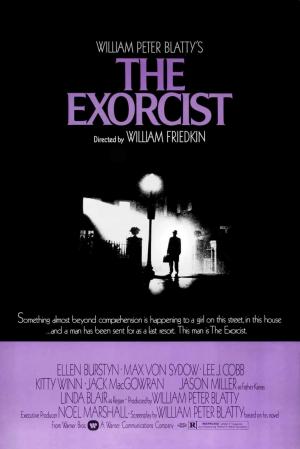


In the murky swamp of the 1970s, when cinema still dared to get its hands dirty with uncomfortable themes instead of retreating into the cotton candy of corporate blockbusters, a film emerged that didn’t just redefine horror—it nailed it to the cross of pop culture like a vampire at high noon: The Exorcist. Directed by the ever-controversial William Friedkin—that enfant terrible who went from filming car chases in The French Connection to chasing demons with equal ferocity—the film is an exorcism in itself: a purge of genre conventions, a vomit of practical effects, and a black mass celebrated on the altar of Warner Bros.
The plot, based on William Peter Blatty’s novel (who, by the way, wrote the screenplay and produced the film, proving that sometimes authors can be more annoying than the demon itself), follows Regan MacNeil (played by Linda Blair, a twelve-year-old girl who went from promising actress to eternal victim of her own success), a pre-teen whose demonic possession makes puberty blues look like a stroll through Disneyland. Her mother, Chris MacNeil (an Ellen Burstyn in a state of desperate grace), watches as her daughter transforms into a spectacle of paranormal phenomena that would make any TikTok influencer pale: levitations, pea-soup vomit, 360-degree head spins, and a vocabulary that would make a drunk sailor blush. Faced with such horror, Chris turns to two priests: Father Damien Karras (Jason Miller), a Jesuit with a crisis of faith and a guilt complex over his mother’s death, and Father Lankester Merrin (Max von Sydow), an archaeologist of the occult who looks like he was plucked from a catalog of "Exotic Priests for Your Next Horror Film."
Direction: Friedkin, the Demon of Technique
If there’s one thing William Friedkin understood from the start, it’s that horror isn’t built on cheap scares but on an atmosphere so thick you could cut it with a butter knife. The director, who had already proven his mastery of suspense in The French Connection, brought that same obsession for realism to the horror genre—but with a twist: here, realism wasn’t about police work; it was psychological. Friedkin didn’t want the audience to believe in the demon; he wanted them to feel its presence, like a stench that clings to your clothes and won’t wash out, no matter how much bleach you use.To achieve this, the filmmaker employed a series of technical tricks that, seen today, seem straight out of a manual on "How to Traumatize an Entire Generation." The lighting, courtesy of the great Owen Roizman, is a character in itself: dark, oppressive, with shadows slithering like snakes and lights flickering like candles about to go out. The scenes in the MacNeils’ house are bathed in a palette of sickly grays and greens, as if hell itself had decided to redecorate the place with IKEA furniture. And then there’s the sound: that constant, almost subliminal hum that accompanies Regan in her most demonic moments, as if evil had its own ringtone.
But where Friedkin truly shines is in the editing. The final exorcism scene, for example, is a masterclass in building tension to the point of suffocation. There are no quick cuts or gratuitous jump scares (well, maybe one or two, but who am I to judge?); instead, there are long, almost theatrical takes where every gesture, every word, every bead of sweat on the characters’ brows seems laden with meaning. It’s as if Friedkin himself were possessed by the spirit of Stanley Kubrick, but instead of a spaceship, his obsession was a girl with her head spinning like a broken fan.
Performances: When Hell Has a Human Face
If The Exorcist works, it’s largely thanks to its cast, who pull off the impossible: making the unbelievable believable. Linda Blair, as Regan, is simply terrifying. Not because of the special effects (which, by the way, still hold up), but because of her ability to convey the pain, confusion, and rage of a girl trapped in a body that no longer belongs to her. Her performance is so visceral you can almost smell the sulfur wafting off the screen. And when she’s not vomiting pea soup or masturbating with a crucifix, Blair delivers moments of tenderness that make her possession even more heart-wrenching. It’s as if Jodie Foster and Linda Manz had a baby possessed by the devil.Ellen Burstyn, meanwhile, delivers one of those performances that leaves you exhausted just watching it. Chris MacNeil is a mother on the verge of collapse, a woman who goes from denial ("My daughter isn’t possessed, she’s just going through a phase") to utter despair ("Do something, for God’s sake!"). Burstyn doesn’t just scream and cry; she feels every blow, every humiliation, every moment of helplessness. Her scene in the hospital, where doctors tell her Regan might have a brain tumor, is a tour de force of restrained acting, where every glance, every sigh, carries more weight than any dialogue.
And then there are the priests. Jason Miller, in his film debut, plays Father Karras with a vulnerability that makes him deeply human. Karras isn’t a hero; he’s a broken man, a priest who doubts his faith and who, deep down, feels as possessed by his own demons as Regan is by Pazuzu. His performance is subtle, almost minimalist, but every word, every gesture, is loaded with meaning. As for Max von Sydow, Father Merrin is the very embodiment of spiritual authority: serene, imposing, with a presence that almost makes you believe the exorcism might work. Von Sydow, with his deep voice and piercing gaze, is like an Ingmar Bergman of satanic rites.
Screenplay: Blatty, the Architect of Theological Horror
William Peter Blatty’s screenplay is a rare beast: a mix of psychological thriller, family drama, and theological treatise disguised as a horror film. Blatty, who took the "based on a true story" bit very seriously (the novel was inspired by a 1949 exorcism case), crafts a narrative that explores themes like faith, guilt, and the nature of evil with a seriousness that would be unthinkable in Hollywood today. There are no bad jokes, no unnecessary comic relief—just a downward spiral into darkness, as if the script itself were possessed by the need to torment the audience.One of Blatty’s greatest strengths is how he handles character development. Chris MacNeil isn’t a generic mother; she’s a successful actress, an independent woman living in Georgetown who suddenly finds herself dragged into a world where science and reason have no place. Her arc is that of someone who must accept the inexplicable, and that internal struggle is as fascinating as the paranormal phenomena themselves. The same goes for Father Karras, whose crisis of faith isn’t a cheap dramatic device but the heart of the film. Karras doesn’t save Regan out of heroism but out of redemption: he’s a man seeking to exorcise his own demons through the ritual.
And then there’s the demon. Pazuzu, the entity possessing Regan, isn’t an operatic villain; it’s an ancient force of evil, a presence that mocks human faith and enjoys playing with its victims like a cat with a mouse. Blatty’s script avoids the trap of over-explaining (What is Pazuzu? Where does it come from? Why did it choose Regan?); instead, it presents the demon as a primordial force, something that exists beyond human comprehension. It’s a smart approach because the real terror isn’t in what you see but in what you feel.
Cinematography and Score: Hell on Celluloid
Owen Roizman’s cinematography is, in one word, oppressive. Every shot is designed to make the viewer uncomfortable, as if they’re trapped in the same room as Regan. The framing is often asymmetrical, with characters off-center, as if evil had distorted even the visual composition. And then there are the famous Dutch angles, which Friedkin uses sparingly but with devastating effect. When Regan’s head spins 180 degrees, it’s not just a shocking moment; it’s a violation of the laws of physics, a reminder that the world we know has been corrupted.As for the score, Jack Nitzsche and Mike Oldfield (yes, that Mike Oldfield, the Tubular Bells guy) created a soundtrack that’s as unsettling as the film itself. The main theme, with its obsessive repetition of dissonant notes, is like a satanic mantra: once it gets into your head, there’s no getting it out. And then there’s the use of silence. Friedkin understands that horror doesn’t always need music; sometimes, the scariest thing is hearing nothing but the sound of your own breathing as you wait for something to jump.
Legacy: Why Does It Still Scare Us?
More than fifty years after its release, The Exorcist remains the yardstick by which all horror films are measured. It’s not just because of the practical effects (though, let’s be honest, the levitation scene is still one of the most shocking in cinema history), nor the performances, nor even the script. It’s because Friedkin and Blatty achieved something very few horror films manage: making evil feel real.In an era where horror has become a genre of endless franchises (insidious-la-puerta-roja" class="text-amber-400 font-black hover:text-amber-300 transition underline decoration-amber-500/40 hover:decoration-amber-300" title="[6.5/10 ⚡ Ácido Cítrico] Lee nuestra autopsia de «Insidious»" data-acid-interlink="insidious-la-puerta-roja">insidious" class="text-amber-400 font-black hover:text-amber-300 transition underline decoration-amber-500/40 hover:decoration-amber-300" title="[7.2/10 ⚡ Ácido Cítrico] Lee nuestra autopsia de «Insidious»" data-acid-interlink="insidious">insidious-fuera-del-mas-alla" class="text-amber-400 font-black hover:text-amber-300 transition underline decoration-amber-500/40 hover:decoration-amber-300" title="[6.8/10 ⚡ Ácido Cítrico] Lee nuestra autopsia de «Insidious»" data-acid-interlink="insidious-fuera-del-mas-alla">Insidious, The Conjuring, Paranormal Activity), The Exorcist is a reminder that true horror isn’t in ghosts or demons but in human fragility. It’s a film about faith, but also about doubt; about love, but also about the fear of losing those we love. And, above all, it’s a film that understands that the devil doesn’t always show up with horns and a tail—sometimes, it hides in the smile of a twelve-year-old girl.
finalExplicado: "En el clímax, el padre Karras, consumido por la culpa y la rabia, invita al demonio a abandonar el cuerpo de Regan y posesionarlo a él. Una vez dentro, se arroja por la ventana de la habitación y muere estrellado contra los escalones, derrotando a Pazuzu al sacrificarse. Simbólicamente, el desenlace significa que el verdadero exorcismo no es un ritual religioso, sino un acto de voluntad humana radical: la renuncia absoluta al ego y la culpa a través del sacrificio. Karras no vence al demonio con fe ciega, sino asumiendo su propia oscuridad y eligiendo la autodestrucción para salvar a la inocente. El mal no se expulsa; se absorbe y se muere con él."
The Best
- William Friedkin’s direction: A manual on how to torture the audience without resorting to cheap scares. If hell exists, Friedkin surely has a front-row seat.
- Linda Blair’s performance: Regan isn’t just a possessed girl; she’s a nightmare made flesh. Blair makes you feel pity, fear, and, at some point, even sympathy for the demon.
The Worst
The development of some secondary characters: Detective Kinderman (Lee J. Cobb) has the potential to be a fascinating character but ends up reduced to a plot device* with a hat. A shame, because Cobb deserved better.- The pacing in the second act: There are moments when the film seems to stall, as if Friedkin were enjoying his own oppressive atmosphere a bit too much. A little editing wouldn’t have hurt.
The Verdict of Claqueta Ácida (8.5/10)
The Exorcist isn’t just a horror film; it’s an exorcism in itself, a purge of the genre’s conventions that left generations of viewers traumatized, fascinated, and, above all, converted. Friedkin and Blatty didn’t make a movie; they created a myth, a collective nightmare that lives on because, in the end, we all carry a little Pazuzu inside. Does it scare you? Of course it does. But what’s truly terrifying isn’t the demon—it’s the idea that, at some point, we might all need our own exorcism. 🔥💀🎬 Tráiler Oficial
Abrir en YouTube
Ending Explained: The Exorcist
Ficha de Daños Colaterales en Sala
Certificado de impacto psicofísico emitido por Maximiliano Z.
Ni un solo parpadeo voluntario. El asiento, inusualmente cómodo.
Ni una sola mirada al móvil.
Ninguna: la adrenalina cinematográfica es suficiente.
"No aplica. La obra se sostiene sola."
💬 El Veredicto de la Comunidad
¿Qué te ha parecido la película? Deja tu nota de 0 a 10 para contrastarla con el análisis de la redacción.
Aún no has votado
📢 ¿Te ha gustado el ácido?
Comparte esta crítica con tus amigos cinéfilos o desata la polémica en redes.
⚡ THE CINEMATIC VENOM YOUR INBOX CRAVES
No sugarcoated ratings, no corporate fluff. Subscribe for our uncensored weekly analysis or join the private Telegram for press previews, poll clashes, and instant alerts.
Alertas de estrenos en 1 segundo, encuestas en caliente y audios al salir de pases de prensa.
Recibe la dosis semanal en tu mail + regalo inmediato del PDF con 50 joyas ocultas de culto.
Related Reviews
Recommended autopsies for demanding film buffs.
 🔥 Fusión Nuclear9.5
*2001: A Space Odyssey – A Monkey, a Monolith, and Two Hours of Cosmic Pretentiousness*
⚡Afinidad temática directa en atmósfera, estilo y fijaciones visuales.
We dissect Stanley Kubrick’s magnum opus. A visual feast of minimalism and space hypnosis that cemented "serious" sci-fi—and bored half of humanity to tears.
 🔥 Fusión Nuclear9.3
2001: A Space Odyssey — The Day Kubrick Left Us Speechless (and Oxygenless)
⚡Afinidad temática directa en atmósfera, estilo y fijaciones visuales.
Kubrick turned science fiction into pure art: 149 minutes of eloquent silence, bone-wielding apes, and a psychopathic computer. Masterpiece or pretentious fraud? Here’s the verdict.
 🔥 Fusión Nuclear8.5
*A Clockwork Orange: The Sweet, Rusty Aftertaste of Violent Haute Couture*
⚡Afinidad temática directa en atmósfera, estilo y fijaciones visuales.
A scathing review of Kubrick’s masterpiece, where ultraviolence meets 60s fashion in a twisted pas de deux.
Editorial Ecosystem
Cinephile connections, archive interviews and related analyses.
💬 Debate Cinéfilo & Autopsia de Lectores
0 veredictos¿Discrepas con nuestra nota? ¿Es una obra maestra o veneno puro? Deja tu veredicto abajo sin necesidad de registro.

Aún nadie ha dejado su veredicto para esta película.
Sé el primero en clavarle el colmillo rellenando el formulario de arriba.